
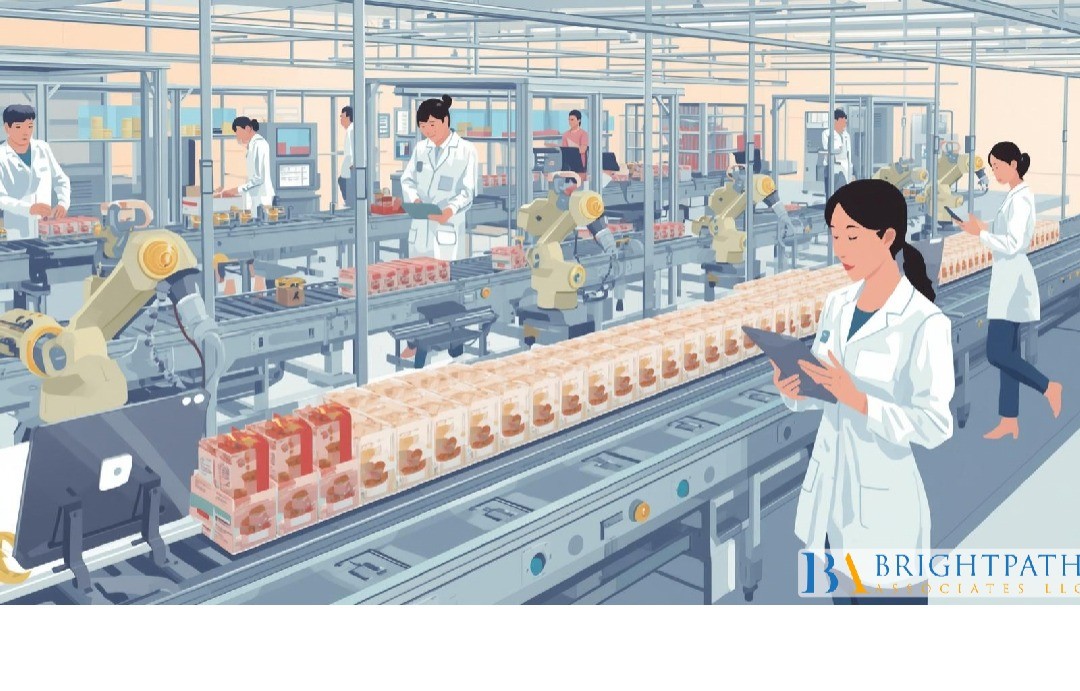
Understanding Automation in Food Manufacturing
The Role of Automation in Food Production Transformation
Automation is rapidly transforming the global #FoodManufacturing landscape. As consumer demand for quality, consistency, and safety increases, food manufacturers are turning to advanced automation technologies to streamline production processes and enhance operational efficiency. Automated systems such as robotics, intelligent sensors, and digital monitoring platforms are reshaping the way food is processed, packaged, and distributed.
Automation enables food manufacturers to maintain precise control over production variables, ensuring that every product meets strict safety and quality standards. In an industry where contamination risks and regulatory requirements are significant concerns, automated solutions help reduce human error and improve traceability across the supply chain.
For small to mid-sized food manufacturing companies, adopting automation is no longer optional. It has become a strategic necessity for maintaining competitiveness, reducing production costs, and meeting growing consumer expectations. However, the success of automation initiatives depends largely on the ability to attract and retain a workforce with the right technical and operational skills.
Emerging Trends in Food Production Technology
Technological innovation is driving new trends in food production automation. Robotics systems are increasingly used for tasks such as sorting, packaging, palletizing, and quality inspection. These machines are capable of handling repetitive processes with remarkable speed and accuracy, enabling manufacturers to achieve higher levels of productivity.
Artificial intelligence and machine learning are also making their way into food production environments. These technologies allow manufacturers to analyze production data in real time, predict equipment failures, and optimize processing parameters. Smart factories equipped with connected devices and automated control systems can respond quickly to operational changes, improving efficiency and minimizing downtime.
In addition, automated sanitation systems and advanced food safety monitoring technologies are becoming standard in modern manufacturing facilities. These innovations help companies comply with strict regulatory standards while maintaining product quality and operational integrity. As automation continues to evolve, the demand for professionals who understand both food production and advanced technology will continue to grow.
Identifying Key Skills for Automation in Food Manufacturing
Core Competencies in Robotics and Machine Management
Automation-driven food manufacturing requires employees with specialized technical competencies. Professionals working in automated facilities must be familiar with robotics systems, programmable logic controllers, machine sensors, and digital production platforms. These technologies require skilled operators who can configure, monitor, and troubleshoot automated systems efficiently.
Robotics technicians and #AutomationEngineers play a crucial role in ensuring that machines operate smoothly. Their responsibilities include programming robotic systems, calibrating sensors, maintaining equipment, and analyzing production data to improve performance. Without skilled personnel capable of managing these complex technologies, automation investments may fail to deliver expected returns.
Technical knowledge of machine learning applications, data analytics, and predictive maintenance tools is also becoming increasingly valuable. Food manufacturers that integrate advanced analytics into their operations rely on skilled professionals who can interpret system data and translate insights into actionable production improvements.
Integration of Technical and Traditional Skills
While automation introduces new technological requirements, traditional manufacturing skills remain equally important. Food manufacturing still relies on professionals who understand ingredient handling, product formulation, quality control, and food safety regulations.
The most successful organizations combine these traditional competencies with modern technical expertise. Employees who understand both food science and automation technologies are particularly valuable, as they can bridge the gap between production processes and digital systems.
Cross-functional collaboration between engineers, food scientists, machine operators, and quality specialists is essential for maintaining efficient operations. This integration ensures that automated systems not only improve efficiency but also preserve product integrity and regulatory compliance.
Impact of Automation on Workforce and Staffing
Balancing Automation with Human Expertise
Despite the growing role of machines, automation does not eliminate the need for human expertise. Instead, it shifts the nature of work within food manufacturing facilities. Employees are increasingly responsible for supervising automated systems, analyzing operational data, and resolving technical challenges.
Human oversight remains essential for maintaining quality standards, ensuring food safety, and responding to unexpected production issues. Skilled professionals are required to interpret machine-generated data and make informed decisions that keep production lines running smoothly.
Companies that strike the right balance between automation and #HumanExpertise often achieve the highest levels of operational performance. By empowering employees with advanced tools and training, organizations can create highly efficient production environments while maintaining the flexibility needed to adapt to changing market demands.
Upskilling and Reskilling Programs: A Necessity
As automation reshapes the workforce, upskilling and reskilling initiatives have become critical for long-term success. Many food manufacturers are investing in training programs designed to equip employees with the technical knowledge needed to operate advanced machinery and digital systems.
Training initiatives often focus on robotics programming, industrial automation maintenance, data analysis, and digital system integration. These programs help employees transition from traditional manual roles to more advanced technical positions within automated facilities.
Workforce development strategies also play a vital role in improving employee retention. When organizations invest in the professional growth of their workforce, they foster a culture of innovation and continuous improvement. Employees who feel empowered to develop new skills are more likely to remain engaged and contribute to long-term operational success.
Strategies for Successful Staffing in Automated Food Manufacturing
Executive Search Recruitment for Leadership Talent
While #TechnicalSpecialists are essential for operating automated systems, strong leadership is equally important for guiding transformation efforts. Executives responsible for automation initiatives must possess a deep understanding of both manufacturing operations and emerging technologies.
Leaders in automated food manufacturing environments are expected to oversee digital transformation strategies, manage complex production systems, and build multidisciplinary teams capable of driving innovation. These responsibilities require a unique combination of technical insight, operational expertise, and strategic vision.
#ExecutiveSearchRecruitment plays a vital role in identifying leaders who possess these capabilities. Specialized recruitment approaches allow organizations to identify candidates with proven experience in automation-driven manufacturing environments. By securing the right leadership talent, companies can ensure that automation initiatives align with long-term business objectives and operational strategies.
Leveraging Technology for Smarter Hiring
Technology is also transforming the recruitment process itself. Data-driven hiring tools, digital assessment platforms, and AI-powered talent analytics are enabling companies to identify candidates with the specific skills required for automated manufacturing environments.
These tools help organizations evaluate both technical proficiency and leadership potential, ensuring that new hires are well-equipped to operate in technology-driven production settings. In addition, digital recruitment platforms allow companies to reach a broader pool of qualified candidates across different regions and industries.
By combining advanced hiring technologies with strategic recruitment expertise, food manufacturers can build teams capable of supporting automation initiatives while maintaining operational stability and product quality.
Conclusion
Embracing Automation: Future of Food Manufacturing
Automation represents a transformative force within the food manufacturing industry. From robotics-driven production lines to intelligent #DataAnalytics systems, technological innovation is enabling companies to achieve unprecedented levels of efficiency, quality, and operational reliability.
However, the true value of automation lies not only in the technology itself but in the people who design, manage, and optimize these systems. Skilled professionals with expertise in robotics, machine management, and food production processes are essential for ensuring that automation investments deliver sustainable results.
The Importance of Adaptation in Food Production Growth Strategy
For food manufacturing companies, adapting to the evolving technological landscape is critical for maintaining competitiveness and driving long-term growth. Organizations that invest in workforce development, strategic recruitment, and leadership capabilities are better positioned to navigate the complexities of automated production environments.
By focusing on the right mix of technical skills, operational knowledge, and visionary leadership, food manufacturers can successfully harness automation to enhance productivity, improve product quality, and achieve sustainable business growth.
Find your next leadership role in Food Production Industry today!
Stay informed with the latest insights on Food Production Industry!