
Introduction
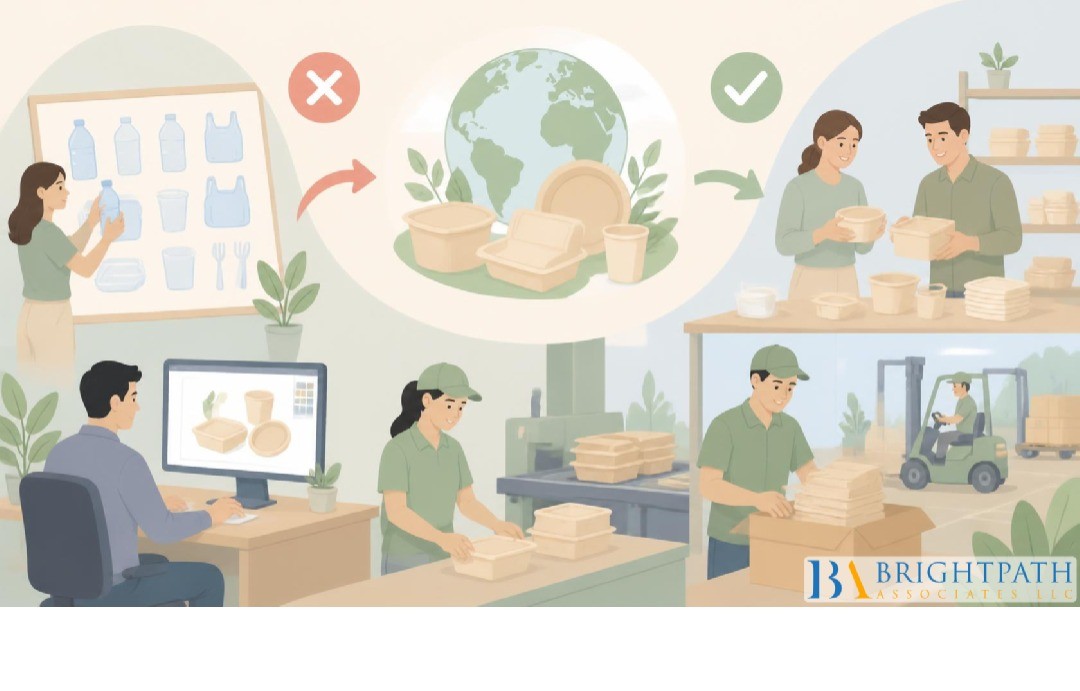
Small and medium-sized businesses are under increasing pressure to rethink traditional packaging materials as customers, regulators, retailers, and supply-chain partners place greater emphasis on environmental performance. Fiber-based packaging, including paperboard, molded fiber, corrugated materials, and other renewable alternatives, is becoming an important option for businesses seeking to reduce their dependence on conventional plastics. However, making this transition requires more than replacing one material with another. Businesses must evaluate product protection, cost, machinery compatibility, supplier reliability, certifications, workforce capabilities, and customer expectations. A carefully planned #SustainablePackaging strategy can help SMBs achieve environmental objectives while maintaining operational efficiency and commercial competitiveness.
For smaller companies, packaging decisions can have a significant effect on margins and customer relationships. Fiber-based alternatives may offer opportunities to improve recyclability and brand positioning, but they can also introduce new technical requirements. Moisture resistance, barrier performance, strength, printing quality, shelf life, and transportation conditions must all be considered before implementation.
The transition should therefore be treated as a business transformation rather than a simple packaging substitution. With the right planning, SMBs can use sustainable materials to strengthen brand value, improve supply-chain resilience, and prepare for changing market expectations.
Why Fiber-Based Packaging Is Gaining Momentum
Fiber-based packaging is attracting attention because many businesses are looking for alternatives that can align with sustainability goals without completely redesigning their products. Paperboard cartons, corrugated shipping boxes, molded fiber trays, paper wraps, and other fiber solutions can serve applications that traditionally depended on plastic.
Consumer expectations are also influencing packaging decisions. Customers increasingly examine how products are packaged and whether packaging can be recycled or responsibly sourced. Retailers are responding to these expectations by establishing packaging requirements for suppliers.
For SMBs, adopting fiber-based packaging can therefore become an opportunity to differentiate products while responding to evolving environmental expectations. However, the material must still perform effectively throughout storage, transportation, and use.
Before making a transition, SMBs should conduct a comprehensive evaluation of their current packaging system. This should include material costs, packaging volumes, transportation requirements, equipment capabilities, waste generation, labor requirements, and product-protection performance.
Fiber-based alternatives may have different unit costs from conventional plastic formats. However, comparing only material prices can produce an incomplete picture. Businesses should also consider recycling potential, disposal costs, storage requirements, transportation efficiency, and potential changes in equipment utilization.
A broader cost analysis can reveal whether a fiber-based solution provides long-term value. Businesses can also use #PredictiveAnalytics to examine historical packaging consumption, damage rates, production volumes, and purchasing patterns before selecting a new material.
Understanding Sustainable Packaging Certifications
Certification can play an important role in communicating the environmental attributes of fiber-based packaging. Depending on the application and market, businesses may need to evaluate certifications related to responsible fiber sourcing, recyclability, compostability, or other sustainability characteristics.
SMBs should avoid assuming that every paper-based material automatically qualifies as sustainable. Coatings, adhesives, inks, additives, and composite structures can influence recyclability and environmental performance.
Understanding Sustainable packaging certifications can help companies select materials that align with customer requirements and applicable market expectations. Certification requirements should be reviewed early in the transition process rather than after packaging has already been redesigned.
The transition from plastic to fiber-based materials can become more effective when it is connected to broader Circular economy packaging principles. A circular approach considers what happens to packaging after its primary use rather than focusing only on material selection.
Businesses should evaluate whether packaging can be collected, sorted, recycled, reused, or responsibly managed after disposal. Design decisions should support existing recycling infrastructure where possible.
This requires collaboration among packaging designers, suppliers, manufacturers, retailers, waste-management organizations, and customers. Designing for #CircularEconomy outcomes can help SMBs move beyond short-term material substitution toward more comprehensive resource efficiency.
Exploring Bioplastic Packaging Development
Fiber-based packaging does not necessarily eliminate the role of polymers in every application. Some products require moisture barriers, heat resistance, flexibility, or other properties that can be difficult to achieve with untreated fiber.
In such situations, Bioplastic packaging development may provide another pathway. Bio-based or biodegradable polymer technologies can potentially complement fiber structures in selected applications.
However, SMBs should carefully evaluate claims around bioplastics, including feedstocks, end-of-life requirements, industrial composting availability, and actual environmental performance. The objective should be to select the most appropriate material for the specific application rather than replacing one material with another without considering its full lifecycle.
Packaging changes can affect the entire supply chain. A new fiber material may come from different suppliers, require different storage conditions, or have different lead times compared with conventional plastic packaging.
This makes Supply chain resilience packaging an important consideration. SMBs should avoid becoming dependent on a single supplier when the new packaging format is critical to production.
Businesses can strengthen resilience by qualifying alternative suppliers, maintaining appropriate safety stocks, establishing clear quality specifications, and monitoring supplier performance. These measures can reduce the risk of production interruptions caused by material shortages.
A diversified supplier strategy can also improve negotiating power while providing greater flexibility during market disruptions.
Addressing the Packaging Industry Labor Shortage
The transition to new packaging formats can increase the need for technical expertise. Employees may need to understand new materials, machinery settings, quality requirements, inspection processes, and maintenance procedures.
The #PackagingIndustry labor shortage can make this transition more difficult for SMBs because smaller organizations may already have limited access to experienced packaging engineers and technicians.
Companies should therefore invest in cross-training existing employees while developing relationships with external technical specialists. Training operators and maintenance teams before full-scale implementation can reduce disruptions and accelerate adoption.
Workforce planning should be treated as an essential part of packaging transformation rather than an activity that begins after equipment has been purchased.
Fiber-based materials may behave differently from conventional plastic packaging during forming, sealing, cutting, filling, folding, labeling, and transportation processes. Existing machinery may require adjustments or modifications to handle the new material effectively.
This makes Packaging machinery optimization critical. Businesses should test equipment compatibility before committing to large-scale packaging conversion.
Machine speed, pressure, temperature, feeding systems, cutting mechanisms, folding accuracy, and sealing processes may all require adjustments. Pilot production can help identify technical problems before they affect commercial orders.
A successful machinery transition should also consider maintenance requirements and spare-parts availability. Equipment reliability must remain a priority throughout the packaging change.
Packaging Industry Digital Transformation
Digital technology can make packaging transitions more measurable and manageable. Sensors, production monitoring systems, enterprise software, and connected machinery can provide information about material consumption, machine performance, downtime, waste, and production quality.
Packaging industry digital transformation allows SMBs to move from reactive packaging management toward data-driven decision-making. Digital dashboards can help managers identify whether new packaging materials are causing higher waste, slower production, or increased equipment downtime.
Digital systems can also support traceability. Businesses can monitor material batches, supplier performance, production conditions, and quality results, creating a stronger foundation for continuous improvement.
Packaging transformation generates large amounts of operational data. Businesses can use this information to understand demand patterns, material consumption, equipment performance, product damage, and production efficiency.
Predictive analytics packaging applications can help organizations anticipate material requirements and identify potential equipment problems before failures occur. Predictive models can also support inventory planning by estimating future packaging demand.
For SMBs, even relatively simple data-analysis systems can provide value. Historical production information can reveal seasonal patterns and help companies avoid excessive inventory while maintaining sufficient packaging availability.
The long-term objective is to integrate packaging data into broader business planning rather than treating packaging as an isolated purchasing function.
Managing Packaging Equipment Investment
Transitioning to fiber-based alternatives may require equipment upgrades, tooling modifications, or entirely new packaging machinery. SMBs should evaluate these investments according to expected production volumes and future packaging requirements.
Equipment should not be selected solely according to its initial purchase price. Businesses should also evaluate energy consumption, maintenance costs, changeover times, operator requirements, scalability, automation capabilities, and supplier support.
A phased approach can reduce financial risk. Companies can begin with selected product lines, evaluate performance, and expand the program once the new packaging system has demonstrated reliability.
As packaging systems become more sophisticated, leadership expertise becomes increasingly important. #ExecutiveSearchRecruitment can help organizations identify professionals who understand sustainable materials, packaging operations, automation, supply chains, regulatory expectations, and commercial strategy.
For SMBs, hiring the right packaging leader can have a significant impact because a senior professional may influence supplier selection, equipment investment, sustainability strategy, workforce development, and production optimization.
Leadership candidates should therefore be evaluated not only on packaging knowledge but also on their ability to manage cross-functional transformation.
Packaging Equipment and Technical Leadership
The adoption of advanced machinery creates demand for specialized technical leaders. Packaging equipment executive search can help businesses identify professionals with experience in automation, machinery integration, maintenance strategy, controls, production engineering, and packaging technology.
The right technical leader can help an SMB determine whether existing equipment can be modified or whether new machinery is necessary. They can also oversee commissioning, employee training, maintenance planning, and performance optimization.
Strong technical leadership reduces the risk of making expensive equipment decisions without sufficient operational analysis.
SMBs should approach fiber-based packaging adoption in stages. The first stage involves understanding customer expectations, product requirements, current packaging performance, and sustainability objectives.
The next stage involves material testing. Candidate fiber solutions should be evaluated for strength, moisture resistance, barrier properties, recyclability, print quality, storage performance, and transportation durability.
Once the material is selected, businesses can conduct pilot production using existing or modified equipment. Results should be measured carefully before moving to full-scale production.
Employee feedback should also be included throughout the process. Operators and technicians often identify practical issues that may not appear during laboratory testing or supplier demonstrations.
Measuring Long-Term Performance
A packaging transition should be evaluated continuously rather than treated as a one-time project. Businesses should monitor material usage, packaging waste, product damage, production speed, machine downtime, customer feedback, and total packaging cost.
#EnvironmentalPerformance should also be assessed using appropriate and transparent criteria. Companies should avoid relying solely on marketing claims and instead evaluate the actual lifecycle characteristics of the selected packaging.
Continuous measurement allows SMBs to refine their approach and identify opportunities for further improvement.
The success of packaging transformation ultimately depends on people as much as materials and machinery. Executive Search Recruitment can help SMBs identify leaders who can connect sustainability objectives with operational performance and commercial realities.
Executives with experience in packaging, manufacturing, supply chain management, technology adoption, and workforce development can provide the strategic direction required for successful transformation.
As packaging systems become increasingly automated and data-driven, organizations will need leaders who understand both technological change and human capability. Strong leadership can help ensure that sustainable packaging initiatives become part of the organization’s long-term operating model rather than a temporary sustainability project.
Conclusion
Transitioning from plastic to fiber-based alternatives can provide SMBs with opportunities to improve packaging sustainability, respond to changing customer expectations, and strengthen long-term competitiveness. However, successful adoption requires careful evaluation of materials, machinery, suppliers, workforce capabilities, certifications, technology, and supply-chain requirements.
The most effective approach is not simply to replace plastic with fiber. It is to redesign the packaging system around performance, efficiency, recyclability, resilience, and long-term business value.
SMBs that combine #SustainablePackaging practices with Packaging industry digital transformation, strong supplier relationships, effective equipment management, and workforce development can create more adaptable packaging operations.
At the leadership level, Packaging executive search, Packaging equipment executive search, and Executive Search Recruitment can help organizations identify the expertise required to manage this transition successfully. As sustainable materials and packaging technologies continue to evolve, companies that invest in both innovation and people will be better positioned to build efficient, resilient, and commercially sustainable packaging operations.
Find your next leadership role in Packaging and Containers Industry today!
Stay informed with the latest insights on Packaging and Containers Industry!