
Introduction
Returns are often treated as an unavoidable cost of doing business. For small and mid-sized businesses, that approach can be particularly expensive. Every returned product creates additional #TransportationRequirements, handling costs, inventory complications, inspection needs, and customer-service interactions. Yet returns also represent an important opportunity.
A well-designed reverse logistics operation can transform a frustrating customer experience into a reason for customers to continue doing business with a company. When customers know that returning or exchanging a product is simple, transparent, and reliable, they may feel more confident purchasing in the first place.
This is particularly important as E-commerce logistics continues to expand and customers become accustomed to convenient delivery and return experiences. SMBs competing with larger organizations cannot always match their scale, but they can differentiate themselves through responsiveness, flexibility, and personalized service.
Reverse logistics connects transportation, inventory management, customer service, technology, and operational strategy. When these elements work together, returns can become more than a cost center. They can become a customer retention tool.
The Economics Behind Reverse Logistics
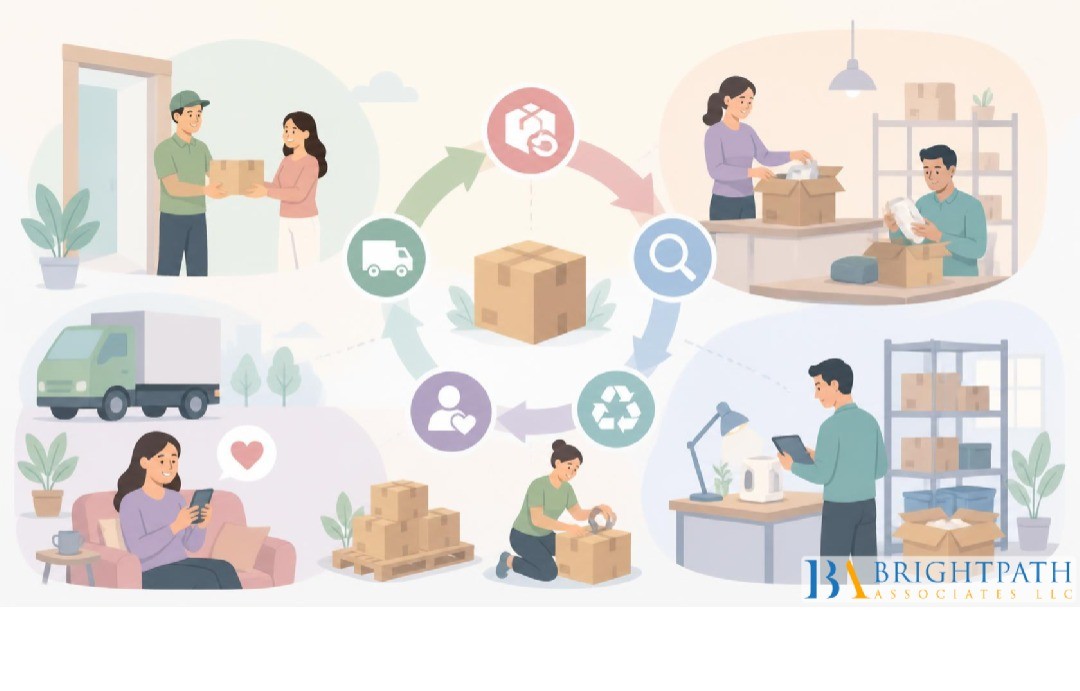
Traditional logistics focuses primarily on moving products from a supplier or manufacturer toward the customer. Reverse logistics operates in the opposite direction, moving products from customers back to businesses for inspection, exchange, repair, refurbishment, resale, recycling, or disposal.
The process can become complicated quickly.
A returned item may need to be transported, received, inspected, categorized, repackaged, repaired, restocked, or redirected to another destination. Each step creates cost and requires coordination.
For SMBs, inefficient processes can consume valuable working capital.
However, the financial impact of returns should not be evaluated only through transportation expenses. Customer lifetime value also matters.
If a smooth return experience encourages a customer to make another purchase, the company may recover the cost of the original return through future revenue.
This changes the strategic question from “How much do returns cost?” to “How can returns create customer value while controlling operational costs?”
Customers generally do not separate logistics from customer service. They view the entire return process as part of their relationship with the company.
If a return requires complicated instructions, unclear communication, long processing times, or unexpected shipping charges, customer frustration can increase.
By contrast, a simple return process can strengthen trust.
SMBs have an opportunity to use their size as an advantage. They can often respond to individual customer situations more flexibly than large organizations with highly standardized policies.
A customer who experiences a problem but receives quick support may remain loyal because of how the company handled the problem.
This makes reverse logistics a customer-experience function as much as a transportation function.
E-Commerce Logistics and the Return Challenge
The growth of online commerce has made reverse logistics increasingly important.
Customers cannot physically inspect products before purchasing them online, which can increase the likelihood of returns related to fit, appearance, expectations, or product suitability.
At the same time, customers increasingly expect convenient return processes.
For SMBs, this creates pressure to build scalable E-commerce logistics systems without taking on excessive costs.
Technology can help.
Digital return portals, automated notifications, tracking systems, inventory integrations, and data analytics can improve visibility.
The objective should be to make the return process feel simple to the customer while maintaining operational control behind the scenes.
Modern #DeliveryTechnology can support reverse logistics by improving visibility and communication.
Customers can receive notifications when a return is initiated, when the parcel is collected, when it reaches the facility, and when a replacement or refund is processed.
Internally, businesses can use technology to track returned inventory and determine the next action.
This reduces uncertainty.
For example, a returned product may be identified as suitable for immediate resale rather than automatically being placed into a general returns area.
Technology can also help companies analyze return patterns.
If a particular product generates unusually high return rates, management can investigate whether the issue relates to product quality, packaging, product descriptions, customer expectations, or shipping damage.
Returns can therefore become a source of operational intelligence.
Parcel Delivery and the Last Mile of Returns
Parcel delivery plays an important role in customer convenience.
Customers often expect returns to be as easy as receiving the original product. This may involve prepaid labels, pickup services, drop-off locations, or scheduled collections.
SMBs need to evaluate which model fits their customer base and economics.
A premium customer segment may value doorstep pickup. Another customer group may prefer convenient drop-off locations.
The right approach depends on product type, geographic coverage, return frequency, and customer expectations.
Companies should also consider the cost of transporting individual returns.
Consolidating returns where possible can improve efficiency while maintaining reasonable customer service.
Reverse logistics becomes more complex when products are too large for standard parcel networks.
Industrial equipment, furniture, machinery, appliances, and other heavy products may require specialized Freight shipping.
These returns can involve scheduling, loading equipment, packaging requirements, insurance, and coordination between multiple parties.
SMBs should establish clear processes for these situations before a major return occurs.
A return involving large or high-value equipment can create significant financial exposure if transportation and handling are not properly coordinated.
In these cases, specialized logistics partners may provide greater efficiency than attempting to manage every activity internally.
Logistics Consulting Services for Reverse Logistics Design
Some SMBs may benefit from logistics consulting services when designing or restructuring their returns operations.
A logistics assessment can identify where returns are creating unnecessary costs or delays.
Consultants can evaluate transportation networks, warehouse processes, carrier relationships, inventory systems, customer communication, and technology.
The objective should be to design a reverse logistics process that matches the company’s actual return volume rather than copying a large enterprise model.
A small business may not need an elaborate returns center.
It may instead benefit from a simple centralized process with clear product classifications and reliable carrier relationships.
#FreightBrokerageServices can provide flexibility for businesses handling larger or irregular return volumes.
Instead of maintaining direct relationships with a large number of carriers, an SMB can work with brokerage partners to identify appropriate transportation capacity.
This can be useful when return shipments vary by geography, size, urgency, or product type.
However, transportation partners should be evaluated based on more than price.
Reliability, communication, tracking capabilities, claims handling, and customer service can all influence the overall return experience.
The lowest freight rate may not produce the lowest total cost if poor service causes delays or damages.
Shipping Optimization Can Reduce Return Costs
Shipping optimization is not limited to outbound orders.
The same principles can be applied to reverse flows.
Businesses can evaluate shipment consolidation, carrier selection, transportation modes, return locations, packaging, and pickup schedules.
Data can help identify geographic patterns.
If a company receives a large concentration of returns from a particular region, it may make sense to establish a regional processing relationship.
If certain products are frequently returned because of shipping damage, packaging improvements may reduce the problem.
The most effective reverse logistics strategy therefore addresses root causes rather than simply processing returns faster.
The strongest reason to improve reverse logistics is customer retention.
Customers remember how companies respond when something goes wrong.
A business that communicates clearly, resolves issues quickly, and makes returns convenient can turn a negative event into a positive interaction.
SMBs can reinforce this experience by providing proactive communication.
Customers should understand what happens after a return is initiated and when they can expect a resolution.
Transparency reduces uncertainty.
Businesses can also use returns as an opportunity to understand customer needs.
A customer returning one product may be interested in a different model, size, configuration, or service. Customer-service teams can use this interaction to provide relevant alternatives rather than treating the return as the end of the relationship.
Transportation Industry Trends and Reverse Logistics
Current Transportation industry trends are increasing the importance of flexible and technology-enabled reverse logistics.
Digital tracking, automated routing, electric delivery vehicles, warehouse automation, data analytics, and distributed fulfillment networks are changing how goods move.
These developments can create new opportunities for SMBs.
However, technology adoption should be based on business requirements.
A small company with a modest return volume may not need advanced automation. A growing e-commerce business may benefit significantly from integrated return-management software.
The correct technology strategy depends on scale, complexity, and customer expectations.
The #DeliveryIndustry is becoming increasingly focused on speed, visibility, convenience, and sustainability.
Reverse logistics is part of this evolution.
Customers increasingly expect companies to manage returns responsibly. Businesses are therefore examining how returned products can be refurbished, resold, recycled, or redirected instead of automatically becoming waste.
This creates a connection between reverse logistics and sustainability.
A product that can be successfully refurbished represents recovered economic value. Packaging that can be reused can reduce material consumption. Consolidated return shipments can potentially reduce transportation inefficiency.
SMBs can therefore align customer experience with sustainability goals.
Building Talent for Modern Logistics Operations
Technology is changing the skills required within logistics organizations.
SMBs increasingly need employees who understand transportation, data, digital platforms, customer experience, inventory management, and technology integration.
This creates growing demand for Delivery sector tech talent.
The challenge is finding professionals who can bridge traditional logistics expertise with digital capabilities.
An employee who understands both transportation operations and data analytics can help identify inefficiencies that might otherwise remain hidden.
Similarly, technology-oriented managers can help integrate delivery platforms with inventory and customer-service systems.
As reverse logistics becomes more strategic, leadership requirements are changing.
#ExecutiveSearchRecruitment can help growing companies identify executives capable of managing transportation networks, technology adoption, customer experience, and operational transformation.
A strong logistics leader should understand both cost control and customer value.
Reducing transportation costs is important, but cutting costs at the expense of customer satisfaction can damage long-term revenue.
The strongest leaders understand this balance.
They can design logistics strategies that improve efficiency while supporting retention and brand reputation.
Conclusion: Make Returns Part of the Customer Value Proposition
Reverse logistics is no longer simply an operational necessity. For SMBs, it can become an important source of customer loyalty and competitive differentiation.
By combining logistics consulting services, Freight brokerage services, Delivery technology, and better Parcel delivery processes, businesses can make returns more predictable and efficient.
Strong E-commerce logistics systems can improve customer confidence, while Shipping optimization can reduce unnecessary costs. Understanding Transportation industry trends can help companies prepare for changing customer expectations and technology developments.
Most importantly, businesses should recognize that a return represents a customer interaction rather than merely a shipment moving in the opposite direction.
Handled poorly, it can end a customer relationship. Handled effectively, it can demonstrate reliability, transparency, and commitment.
The future of reverse logistics will increasingly depend on technology, data, flexible transportation networks, and skilled people. Companies will need employees capable of combining logistics expertise with digital capabilities, making Delivery sector tech talent increasingly valuable.
With the right systems, processes, technology, and leadership, reverse logistics can move beyond cost recovery and become a powerful customer-retention strategy that strengthens operational resilience and long-term business growth.
Find your next leadership role in Packaging and Freight Industry today!
Stay informed with the latest insights on Packaging and Freight Industry!