
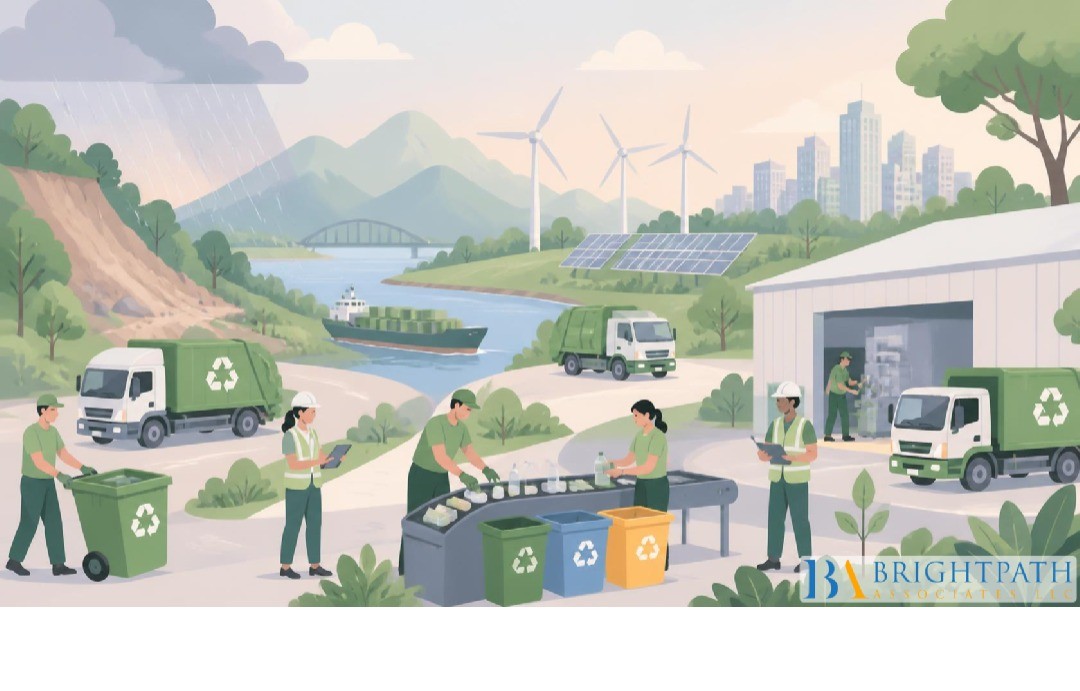
[Bethany, Connecticut – 21 August 2026] — BrightPath Associates has highlighted the growing need for businesses in the Environmental Services Industry to build more resilient supply chains as climate-related disruptions become an increasing operational and strategic concern. Its latest industry analysis examines how extreme weather, changing regulations, resource shortages, transportation disruptions, and supplier vulnerabilities can affect business continuity. The analysis encourages C-Suite executives to combine risk planning, supplier diversification, technology, environmental expertise, and strong leadership to create supply chains that can respond faster to climate-related challenges.
Climate Risk Is Becoming a Supply Chain Priority
Climate-related events can affect businesses far beyond the location where a disruption occurs. Flooding can close production or distribution facilities, extreme heat can reduce workforce productivity, drought can restrict water availability, and severe storms can delay transportation. For organizations operating across the Environmental industry, these risks can also affect access to equipment, chemicals, treatment materials, energy, technology, and specialized services.
The latest BrightPath Associates analysis, “Building a Resilient Supply Chain: Mitigating Climate-Related Disruptions,” emphasizes that resilience requires organizations to understand where their supply chains are most exposed. Instead of reacting only after a disruption occurs, executives can map critical suppliers, assess geographic risks, identify alternative sources, and establish contingency plans. This approach can help companies protect operations while supporting long-term Environmental sustainability goals.
Supply chain resilience is particularly important for businesses involved in Environmental services, where customers may depend on continuous access to essential services. Companies involved in waste management, environmental consulting, remediation, resource management, and infrastructure support must often maintain reliable operations even during severe environmental events.
Technology Can Strengthen Supply Chain Resilience
Technology is becoming an important part of climate risk management. Digital platforms can provide greater visibility into suppliers, transportation routes, inventory levels, and operational dependencies. Predictive analytics can also help companies identify potential disruptions earlier and evaluate alternative supply options.
The move toward Environmental innovation can further strengthen resilience. Organizations investing in Clean technology, Green technology, automation, data platforms, and connected monitoring systems can improve both operational performance and their ability to respond to changing conditions. In areas such as air pollution control and Water treatment, reliable equipment, replacement parts, materials, and technical expertise are essential for maintaining service continuity.
The article highlights the importance of taking a proactive approach rather than treating climate disruption as an isolated event. Companies can develop risk scenarios around extreme weather, resource constraints, transportation interruptions, and supplier failures. These scenarios can then be connected to business continuity plans, procurement strategies, and investment decisions.
Leadership and Talent Are Central to Resilience
Technology alone cannot create a resilient supply chain. Organizations also need experienced leaders who can turn risk information into practical decisions. Executive search recruitment can help C-Suite teams find executives with the combination of industry knowledge, strategic thinking, technology experience, and change-management skills needed to build stronger supply networks.
As the Environmental industry continues to evolve, leadership teams must also consider how talent strategies support long-term resilience. Specialists in sustainability, compliance, supply chain management, engineering, clean technology, and environmental operations can help organizations respond to disruption while identifying new opportunities for innovation.
Organizations seeking deeper guidance can review BrightPath Associates’ analysis on Resilient Supply Chain Mitigating Climate Risks for practical considerations around climate-related supply chain disruptions. Executives can also explore resources focused on the Environmental Services Industry when evaluating leadership and talent requirements in this evolving market.
About BrightPath Associates
BrightPath Associates is an executive recruitment and talent solutions firm that helps organizations identify high-quality leadership and specialized professionals for critical business needs. The company supports organizations with executive search, recruitment, workforce planning, and talent strategies across multiple industries. Its mission is to connect businesses with exceptional talent while helping organizations build capable teams prepared for long-term growth and change.
Media Contact:
Name: Corporate Communications Team
Company: BrightPath Associates
Email: media@brightpathassociates.com
Website: https://brightpathassociates.com