
Introduction
The #RailroadManufacturingIndustry plays a critical role in global transportation infrastructure, supporting the movement of goods, raw materials, and passengers across vast distances. From locomotive production to railcar component manufacturing, this sector remains fundamental to economic growth and supply chain reliability. However, rail manufacturers are facing increasing pressure to modernize operations, reduce maintenance costs, and improve the longevity of their production assets.
The complexity of rail manufacturing systems—combined with aging infrastructure, fluctuating demand, and rising operational costs—has intensified the need for innovative solutions that enhance efficiency and reliability. As a result, manufacturers are increasingly turning to advanced technologies that enable proactive maintenance strategies and data-driven decision-making.
Technology and innovation have become essential drivers of competitiveness in the rail manufacturing sector. Companies that successfully integrate digital tools, automation, and predictive technologies into their operations can significantly improve asset performance and production efficiency. Among these technological advancements, predictive maintenance has emerged as a transformative solution capable of reshaping how rail manufacturers manage equipment, minimize downtime, and extend the lifespan of critical assets.
Understanding Predictive Maintenance
Predictive maintenance refers to the use of advanced analytics, monitoring technologies, and data-driven insights to anticipate equipment failures before they occur. Unlike traditional maintenance approaches that rely on scheduled inspections or reactive repairs, predictive maintenance uses real-time data to identify patterns that signal potential issues. This approach allows manufacturers to perform maintenance only when necessary, avoiding unnecessary downtime while preventing costly equipment breakdowns.
In the railroad manufacturing industry, predictive maintenance is particularly valuable due to the complexity and scale of production equipment. Rail manufacturing facilities often rely on large, specialized machinery used for metal fabrication, welding, component assembly, and precision engineering. Any disruption in these systems can halt production lines and significantly impact operational output.
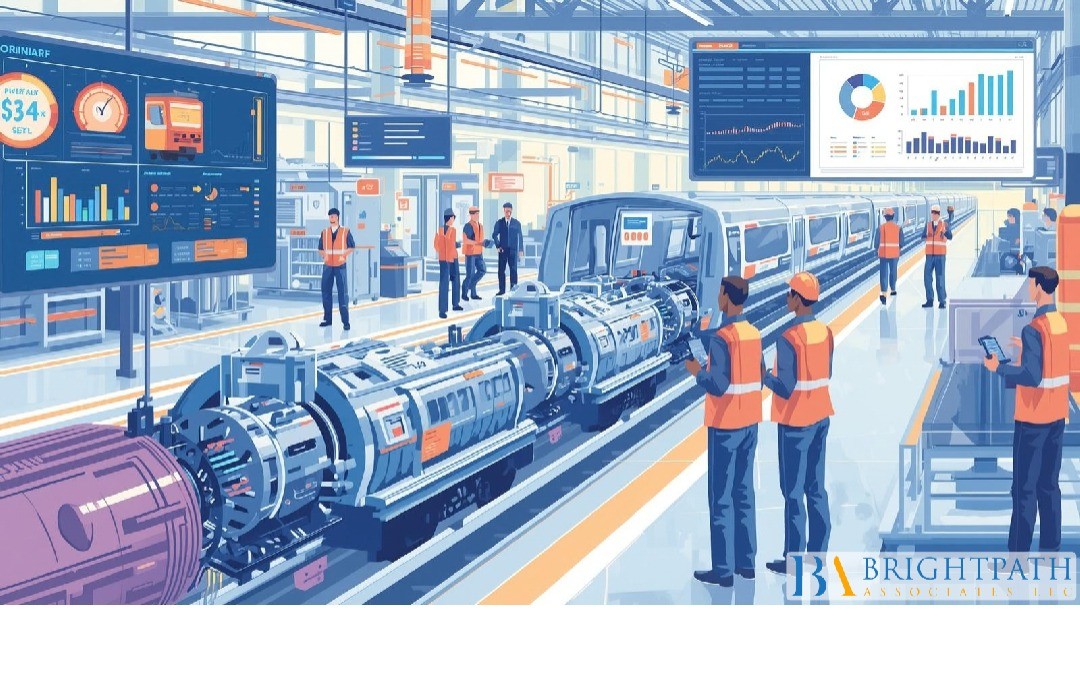
Predictive maintenance systems utilize sensors, machine monitoring technologies, and advanced data analytics to track equipment performance continuously. These systems collect information on vibration levels, temperature fluctuations, energy consumption, and operational cycles. By analyzing this data, manufacturers can identify early warning signs of wear or malfunction, allowing maintenance teams to intervene before equipment failure occurs.
This proactive approach improves operational efficiency and significantly reduces maintenance costs. Instead of replacing components on fixed schedules, companies can optimize maintenance activities based on actual equipment conditions. As a result, rail manufacturers benefit from reduced downtime, extended equipment lifespan, and improved production reliability.
Rail Industry Innovations
The rail industry is experiencing a wave of technological innovation as manufacturers adopt digital transformation strategies to enhance productivity and competitiveness. Advancements in automation, advanced manufacturing techniques, and digital monitoring systems are redefining how rail equipment is designed, produced, and maintained.
One of the most significant developments in this transformation is the integration of predictive maintenance with big data analytics, Internet of Things (IoT) technologies, and automated monitoring systems. IoT-enabled sensors installed on manufacturing equipment generate continuous streams of operational data that can be analyzed to detect performance anomalies and potential failures.
Big data platforms allow manufacturers to process and interpret these massive datasets, uncovering insights that would be impossible to identify through manual monitoring. Predictive algorithms analyze historical performance data alongside real-time sensor inputs, enabling companies to forecast maintenance needs with remarkable accuracy.
Automation also plays an important role in maximizing the benefits of predictive maintenance. Smart manufacturing systems can automatically trigger alerts when certain performance thresholds are exceeded, prompting technicians to perform targeted inspections or repairs. This integration of automation and analytics not only reduces manual oversight but also enhances the precision of maintenance interventions.
For rail manufacturers, adopting predictive maintenance technologies offers numerous advantages. These include improved production uptime, enhanced safety conditions, reduced maintenance expenses, and greater asset reliability. As manufacturing systems become increasingly complex, predictive maintenance provides a powerful tool for maintaining consistent #OperationalPerformance.
Key Challenges in Rail Manufacturing
Despite the benefits of technological innovation, the rail manufacturing industry continues to face several structural challenges. One of the most pressing issues is the growing shortage of experienced leadership and technical talent capable of managing advanced manufacturing environments.
The integration of predictive maintenance technologies requires specialized knowledge in areas such as data analytics, industrial automation, mechanical engineering, and digital infrastructure management. However, many rail manufacturers struggle to recruit professionals who possess both technical expertise and strategic leadership capabilities.
Leadership roles within the industry are also evolving rapidly. Executives are now expected to oversee digital transformation initiatives, manage complex manufacturing systems, and implement advanced asset management strategies. These expanded responsibilities require leaders who can bridge the gap between engineering expertise and business strategy.
The demand for skilled rail engineers and manufacturing specialists is particularly high. Engineers capable of designing predictive maintenance systems, analyzing equipment data, and implementing smart manufacturing solutions are essential for companies seeking to modernize their operations.
To address these talent shortages, many organizations are turning to executive search recruitment strategies. Specialized recruitment approaches enable companies to identify high-caliber leadership candidates with expertise in advanced manufacturing technologies, predictive analytics, and operational management. Executive search recruitment also helps organizations build strong leadership teams capable of guiding long-term digital transformation initiatives.
In addition to recruitment, leadership development programs play an important role in preparing existing employees for evolving roles within the industry. By investing in workforce training and technical education, rail manufacturers can strengthen their internal talent pipelines and ensure that employees are equipped to manage emerging technologies.
Competitive Advantage through Predictive Maintenance
The adoption of predictive maintenance provides rail manufacturers with a significant competitive advantage in an increasingly demanding industry environment. By shifting from reactive maintenance practices to proactive #AssetManagementStrategies, companies can dramatically improve operational efficiency and equipment performance.
One of the most immediate benefits of predictive maintenance is the reduction of unplanned equipment downtime. Manufacturing interruptions can disrupt production schedules, delay deliveries, and increase operational costs. Predictive maintenance minimizes these risks by identifying potential failures before they occur, allowing maintenance teams to address issues during planned service intervals.
Another important advantage is the extension of asset lifespan. Manufacturing equipment represents a substantial capital investment for rail companies, and maximizing the longevity of these assets is critical for maintaining profitability. Predictive maintenance enables manufacturers to optimize equipment performance and avoid unnecessary component replacements.
Leading railroad manufacturing companies have successfully implemented predictive maintenance strategies to enhance their operational capabilities. By leveraging sensor technologies and predictive analytics, these organizations have achieved significant improvements in production reliability and cost management.
In addition, predictive maintenance supports innovation across the rail industry. Manufacturers can use equipment performance data to refine production processes, improve product quality, and develop more efficient manufacturing techniques. This continuous improvement approach strengthens the competitive position of rail manufacturers while fostering a culture of technological advancement.
Future Outlook for the Rail Manufacturing Industry
The future of the rail manufacturing industry will be shaped by continued advancements in digital technology, automation, and advanced manufacturing techniques. As global demand for efficient transportation systems continues to grow, rail manufacturers must embrace innovative solutions that improve operational performance and sustainability.
Predictive maintenance is expected to play an increasingly central role in the evolution of rail technology. As sensor technologies become more sophisticated and data analytics capabilities expand, manufacturers will gain deeper insights into equipment performance and maintenance requirements.
Advanced manufacturing techniques, including robotics, artificial intelligence, and digital twin modeling, are also expected to influence the future of rail production. These technologies will enable manufacturers to simulate equipment performance, optimize production processes, and improve product design.
For the broader manufacturing sector in the United States, digital transformation initiatives will continue to drive productivity improvements and operational resilience. Rail manufacturers that invest in predictive maintenance and smart manufacturing systems will be better positioned to respond to market demands and technological change.
However, the successful adoption of these technologies will depend heavily on leadership capabilities. Companies must ensure that they have executives who understand both advanced manufacturing systems and strategic business management. Strong leadership will be essential for guiding organizations through technological transitions and maintaining competitive advantage.
Conclusion
Predictive maintenance represents one of the most powerful innovations transforming the rail manufacturing industry. By enabling proactive equipment monitoring and data-driven maintenance strategies, this technology helps manufacturers reduce downtime, extend asset lifespan, and improve operational efficiency.
The integration of predictive maintenance with IoT technologies, big data analytics, and automation systems is reshaping how rail manufacturers manage their production environments. Companies that adopt these solutions can achieve greater reliability, improved safety, and enhanced competitiveness in an increasingly complex industry landscape.
At the same time, the industry must address critical challenges related to leadership development and talent acquisition. The successful implementation of advanced manufacturing technologies requires skilled engineers, experienced executives, and strategic leadership teams capable of managing digital transformation initiatives.
#ExecutiveSearchRecruitment and leadership development programs provide valuable solutions for organizations seeking to strengthen their leadership capabilities. By investing in both technology and talent, rail manufacturers can position themselves for long-term success.
Ultimately, embracing predictive maintenance and innovative manufacturing strategies will allow rail companies to enhance operational performance, improve asset reliability, and maintain a strong competitive position in the evolving transportation industry.
Find your next leadership role in Railroad Industry today!
Stay informed with the latest insights on Railroad Industry!