
Introduction
The #RailroadManufacturingIndustry is entering one of its most transformative periods, with automation reshaping how rail infrastructure is designed, constructed, and maintained. As global and domestic transportation demands rise, modern rail welding techniques have become more sophisticated, enabling higher precision, improved safety, and reduced operational costs. For small to mid-sized companies navigating the evolving railroad manufacturing industry outlook, understanding the strategic role of automation is essential not only for strengthening manufacturing capabilities but for maintaining competitiveness in a rapidly advancing sector. Alongside technological innovations, the industry faces a parallel challenge: an escalating shortage of leadership talent capable of guiding these high-complexity transformations. Companies must now balance technological upgrades with leadership strategies that ensure long-term operational excellence, a demand that has fueled the rapid evolution of executive recruitment practices. More information about recruitment expertise can be found at BrightPath Associates.
The Rise of Automation in Rail Welding
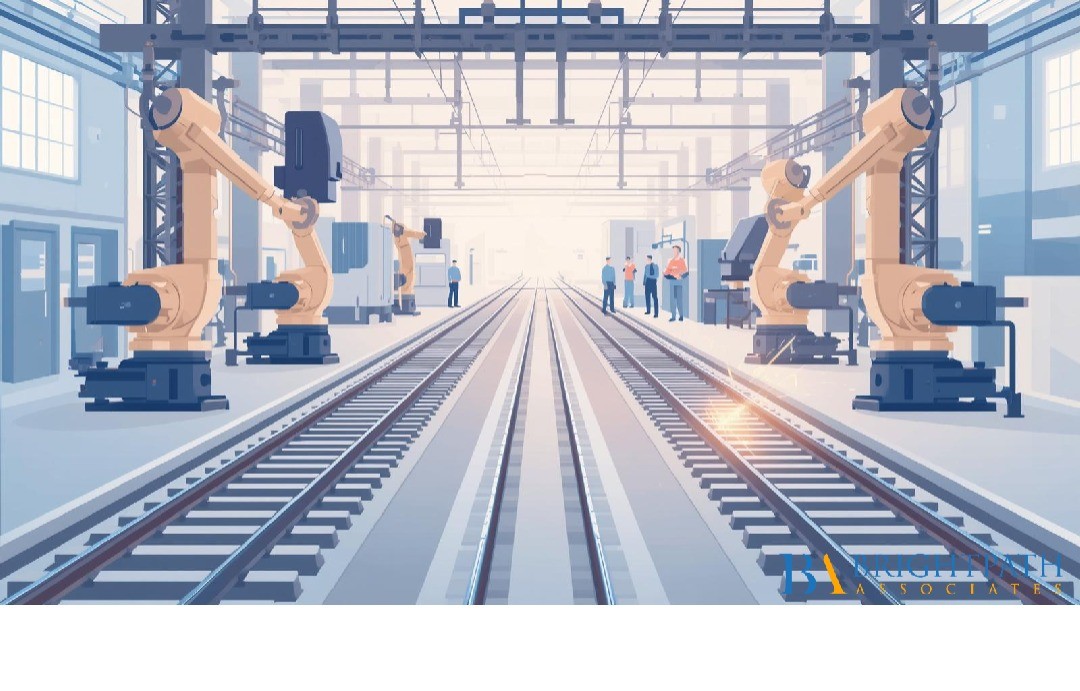
Automation has become the backbone of modern railroad manufacturing, particularly in rail welding applications where precision and consistency are mission-critical. Automated flash-butt welding, robotic welding arms, and AI-powered alignment systems have replaced traditional manual processes, enabling companies to meet higher safety standards and production volumes. As rail technology advancements accelerate, welding automation is no longer a competitive advantage but an operational necessity. Leading railroad equipment manufacturers in the US have adopted advanced welding systems capable of reducing defect rates by more than 40%, improving weld uniformity, and ensuring long-term rail durability.
These systems rely on real-time sensors, machine learning, and predictive analytics to deliver precision that manual operations cannot replicate. This shift reflects broader trends in the US manufacturing industry, where digital transformation is reshaping everything from locomotives to track components. As a result, companies must cultivate leadership capable of understanding advanced manufacturing systems and integrating them into broader operational strategies.
Automation’s Impact on Efficiency and Safety
#RailWelding demands exceptionally high accuracy, especially as trains operate at higher speeds and transportation networks expand. Automation enhances efficiency by minimizing human error, reducing cycle times, and enabling 24/7 continuous operation. Automated systems also lower workplace injuries by removing operators from high-risk environments, aligning with the rail industry’s growing emphasis on workforce safety.
These tools have become crucial as the rail sector faces increased demand for sustainable, reliable infrastructure. With many top railroad manufacturing companies in the US expanding into high-speed rail components and specialty track systems, precision welding ensures long-term performance while lowering maintenance costs. As rail industry innovations continue, automation will further improve quality assurance and provide data-backed insights into weld performance, empowering manufacturers to make informed decisions and adapt production strategies quickly.
The Talent Gap Challenges in Advanced Rail Manufacturing
While technological advancements bring enormous opportunities, they also intensify the pressure on leadership teams. From 2023 to 2025, the railroad manufacturing industry experienced a sharp rise in demand for executives who understand automation technologies, digital manufacturing, and rail system integration. Yet the supply of leaders with this blended expertise remains limited. Traditional railroad manufacturing backgrounds no longer suffice in an environment shaped by robotics, data analytics, and precision engineering.
Industry reports indicate that nearly 60% of small to mid-sized rail manufacturing companies struggle to find executives who possess the technical knowledge and strategic foresight required to oversee automation-centric operations. As welding robotics, predictive maintenance platforms, and AI-driven systems become standard, leadership roles evolve beyond conventional operational oversight. Executives must now interpret complex data, optimize advanced workflows, select appropriate technologies, and manage interdisciplinary teams across engineering, IT, and automation.
This leadership talent shortage represents a significant operational risk. When companies lack forward-thinking executives, even the most advanced automation technologies fail to generate full returns. Poor integration, misaligned priorities, and fragmented implementation can stall progress, creating inefficiencies rather than efficiencies. To address these gaps, organizations increasingly rely on executive search recruitment firms capable of identifying specialized leaders.
Shifting Leadership Expectations in an Automated Rail Environment
The shift toward automation has redefined what strong leadership looks like in rail manufacturing. Executives must bridge engineering expertise with digital innovation and workforce transformation. They are expected to oversee robotics integration, automate welding lines, and champion new technologies that support precision and reliability. At the same time, they must ensure that employees are upskilled to work with advanced systems.
Between 2023 and 2025, role expectations expanded even further as #ComplianceRequirements, safety protocols, and sustainability initiatives intensified. Leaders are now responsible for aligning welding automation strategies with environmental targets, cost-reduction goals, and industry-wide modernization agendas. These expectations require visionary decision-makers who can leverage automation to advance organizational efficiency and long-term resilience.
The Strategic Evolution of Recruitment Practices from 2023 to 2025
As leadership roles in railroad manufacturing grow increasingly complex, recruitment practices have undergone a significant transformation. Traditional hiring methods—reliant on narrow job descriptions or historical experience—are ineffective in a landscape shaped by automation and digitalization. Companies must adopt recruitment strategies that can identify leaders with multi-dimensional capabilities.
From 2023 to 2025, executive search recruitment firms played a pivotal role in this evolution. These firms leverage industry insights, technical understanding, and proactive talent mapping to identify candidates capable of driving modernization initiatives in welding automation and broader advanced manufacturing processes. Their reach extends beyond conventional talent pools, capturing leaders from adjacent industries such as aerospace, automotive robotics, and industrial automation—fields where precision engineering and digital transformation are deeply embedded.
BrightPath Associates, for example, specializes in sourcing leadership for advanced manufacturing sectors, including railroad manufacturing. Their expertise ensures companies can secure executives who understand not only rail industry news and technology shifts but also the nuances of automation, robotics, and AI-driven production environments.
Automation as a Catalyst for Long-Term Competitiveness
#IncorporatingAutomation into rail welding operations is more than a productivity strategy—it is a long-term competitiveness strategy. Companies that embrace automation are better positioned to reduce operational costs, enhance weld quality, and streamline production schedules. Automation also supports scalability, enabling manufacturers to respond rapidly to infrastructure developments, supply chain shifts, and market expansion opportunities.
However, the full potential of these advancements depends on leadership. Strong executives drive successful technology integration, make informed procurement decisions, and ensure that automation becomes a strategic asset rather than a costly experiment. Without the right leaders in place, companies risk falling behind competitors who are capitalizing on the precision, reliability, and speed that automated welding systems offer.
Conclusion
Automation has undeniably transformed modern rail welding techniques, providing unprecedented precision, safety, and operational efficiency. As the railroad manufacturing industry continues to evolve, companies must embrace advanced manufacturing tools while addressing the widening leadership talent gap. The years 2023 to 2025 have highlighted the critical need for #ExecutivesCapable of navigating digital transformation, robotics integration, and rail technology advancements.
To secure long-term success, small to mid-sized railroad manufacturing companies must pair their investments in automation with strategic executive recruitment. This ensures they have leaders capable of translating technology investments into measurable operational excellence. #ExecutiveSearchRecruitment, supported by partners like BrightPath Associates, offers a pathway to building strong leadership pipelines equipped for the future of rail manufacturing.
By securing visionary leaders and embracing automation, the industry can move forward with confidence, precision, and innovation—ensuring that modern rail welding techniques continue to set new standards for excellence across the global transportation network.