
Introduction
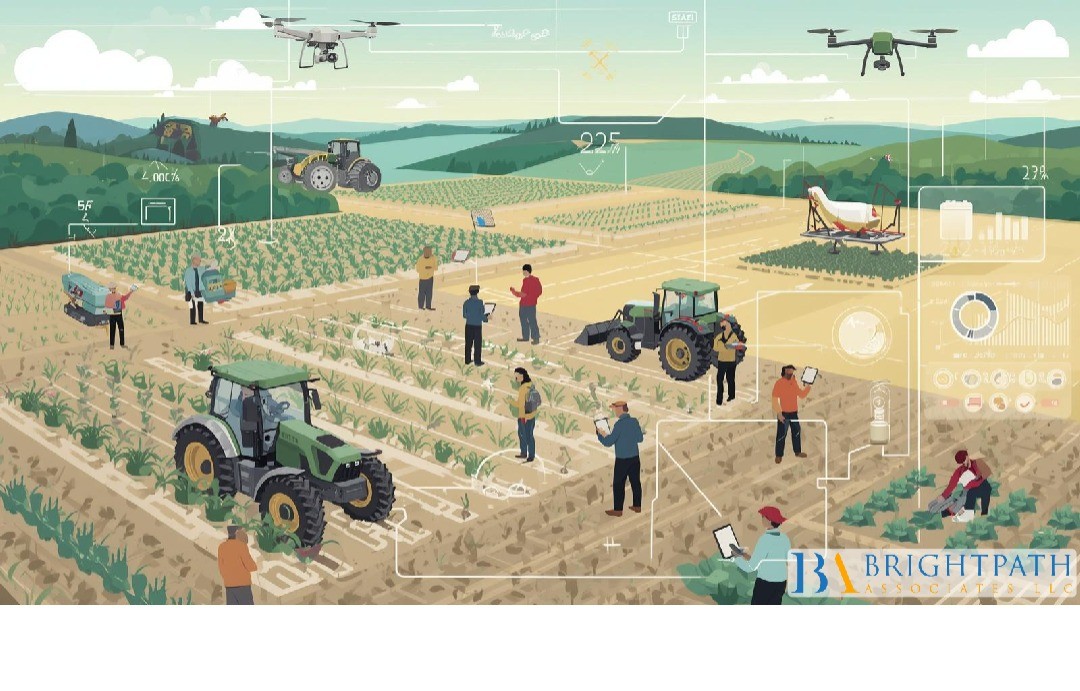
Precision agriculture represents a decisive shift in how farms create value, turning once-uniform fields into intelligently managed systems. By integrating sensors, analytics, automation, and connectivity, it transforms #AgriculturalTechnology from a set of isolated tools into an industrial operating model for Food production. This evolution delivers measurable outcomes: inputs are optimized at sub-field scale, yields become more stable despite climate variability, and traceable records underpin Agricultural sustainability, compliance, and access to new revenue streams. In an era where margins are tight and expectations for Sustainable farming rise each year, the promise of Precision agriculture is less about futuristic gadgets than about modern process control—observe, analyze, act, and verify.
The Industrial Logic of Precision Agriculture
The industrial logic behind precision management is compelling. First, variability exists in every field—soils differ in texture, organic matter, water-holding capacity, and residual nutrients. Treating all acres identically wastes inputs in low-response zones and starves high-potential areas. Precision agriculture replaces uniformity with intentional variability, using site-specific strategies that align rates, timing, and placement to local conditions. Second, interconnected sensors, machinery, and Farm management software now allow continuous feedback loops, so decisions are adjusted in-season and prescriptions are refined year over year. Third, the combination of geospatial records and digital workflows enables Monitoring, Reporting, and Verification, converting agronomy into auditable performance data that is increasingly required by buyers, lenders, and sustainability programs in Sustainable agriculture investment.
The Technology Stack: Sensing, Analytics, and Targeted Action
Remote and Proximal Sensing for Situational Awareness
At the foundation is situational awareness. Satellites, drones, and on-tractor cameras quantify canopy vigor, disease pressure, and water stress, while in-field probes capture soil moisture, salinity, temperature, and electrical conductivity. These data streams reveal patterns that eyes alone miss, from early nutrient deficiencies to drainage issues and compaction. The #DigitalFarming advantage appears as layers: historic yield maps, soil sampling by management zones, vegetation indices across the season, and thermal signals indicating transpiration and irrigation needs. When integrated, these layers inform zoning decisions and seasonal tactics, bringing rigor to what was once intuition.
Analytics and Prescriptions: Turning Data into Decisions
Data becomes valuable when translated into action. Analytics engines and Farm management software aggregate imagery, soil assays, weather, and machine logs to produce variable-rate prescriptions for seed, fertilizer, and crop protection. The objective is not novelty but control: right input, right rate, right place, right time. In high-variability fields, the payoff appears first as input savings without yield loss; as models mature and zones are refined, yield lift emerges from correcting chronic under-application in stronger zones and timing interventions to phenology and forecasted stress. Over successive seasons, these feedback loops harden into a disciplined production playbook.
Variable-Rate and Targeted Application: Actuating Precision
The actuation layer executes the plan. Guidance systems with GNSS and RTK enable repeatable passes and minimize overlap. Variable-rate controllers modulate seed density, nitrogen and #PhosphorusRates, and even micro-nutrient blends as equipment crosses zone boundaries. Precision irrigation applies water and nutrients directly to root zones through drip or pulse-controlled sprinklers informed by sensors and weather models, raising water-use efficiency while stabilizing yield under drought and heat episodes. In crop protection, see-and-spray technologies and UAV-based operations concentrate chemistry where weeds or pests are actually present, cutting volume, drift, and labor exposure. The result is a tighter ratio of output to input—the primary metric of farm efficiency.
Quantifying the Efficiency Dividend
Precision agriculture’s promise rests on measurable gains in resource-use efficiency and yield performance. For nutrients, variable-rate strategies routinely reduce total fertilizer applied across heterogeneous fields while holding yields steady, with specific deployments reporting meaningful savings when baseline practices were uniform and over-supplied. Site-specific nitrogen management, supported by zoning, remote sensing, and in-season sensing, has shown both rate reductions and incremental yield gains, particularly where fertigation or multiple split applications align supply with crop uptake. In cotton, localized planning frequently identifies fields that require less nitrogen than statewide recommendations, especially following years of cover crops or organic amendments that have raised soil nitrogen pools.
Water is a second major lever. Precision irrigation—rooted in soil moisture telemetry, canopy temperature insights, and weather-informed control—improves water-use efficiency compared with calendar-based schedules. Drip systems paired with fertigation deliver water and nutrients with the highest precision, reducing evaporation and runoff while enabling finer control of plant stress to preserve fruit quality and marketable yield. In many field trials and commercial deployments, the transition from manual scheduling to sensor-driven irrigation delivers double-digit reductions in applied water without sacrificing output—a critical win where water scarcity and pumping costs threaten profitability.
Crop protection adds a third strand of efficiency. Camera-guided booms, spot-spraying, and UAV applications reduce chemical use by targeting actual infestations and aligning droplet size and application geometry to canopy conditions. While performance depends on nozzle selection, canopy structure, and wind conditions, farms that standardize data capture and verification see consistent reductions in chemical loadings and improved worker safety, with the added benefit of accessing areas unsuitable for heavy machinery during narrow weather windows.
Environmental Performance as a Business Metric
The environmental dividend is not merely reputational; it is increasingly a business metric. Precision nutrient management raises nitrogen-use efficiency and curbs nitrous oxide risk by avoiding over-application and improving timing and placement. Improved irrigation scheduling reduces energy use for pumping and mitigates salinity and nutrient leaching. Targeted spraying lowers drift and off-target impacts. As buyers and financiers link terms to Agricultural sustainability outcomes, farms that quantify reductions in fertilizer, water, and chemical intensity gain a competitive edge. Critically, the same digital records that drive better agronomy create the evidentiary basis for #SustainableAgriculture investment, eco-label compliance, and performance-based contracts. The ability to translate field operations into trusted data streams is becoming a revenue enabler as well as a cost reducer.
Market Momentum and the Industrialization of Farm Operations
Market dynamics are reinforcing adoption. Hardware has become more reliable and modular, software is improving in usability and analytics depth, and service models now deliver drones, sensing, and analytics as turnkey offerings. As a result, precision farming is expanding from early adopters to mainstream operations across row crops, specialty crops, and mixed systems. Growth is particularly strong in software and data services, reflecting a shift from one-off equipment purchases to ongoing optimization. This evolution mirrors broader manufacturing trends in which digital twins, predictive maintenance, and continuous improvement reshape operations. On farms, Digital Farming is effectively a tailored version of this industrial transformation.
The workforce dimension matters as well. Agricultural innovation requires specific competencies in geospatial analysis, data engineering, agronomy, and machine systems. Executive Search Recruitment firms now place leaders and specialists who combine agronomic credibility with data fluency, recognizing that adoption hinges on people who can integrate sensors, models, and machinery into reliable, scalable workflows. Talent strategy is becoming as central as capital budgeting; organizations that recruit for interdisciplinary capability accelerate implementation and de-risk change.
Overcoming Adoption Barriers with Design and Discipline
Adoption barriers persist. Upfront costs, connectivity gaps, fragmented data standards, and digital literacy constraints limit uptake, particularly for smaller farms. The most successful adopters neutralize these constraints with a design-for-value approach. They begin with a single high-variability field, a single input, and clear metrics—fertilizer rate per acre, water applied per unit yield, gross margin per zone—then scale only what meets thresholds. They invest early in data hygiene: calibrated sensors, well-structured geospatial boundaries, and consistent as-applied and yield data capture. They select #FarmManagementSoftware that is interoperable, avoiding data silos and lock-in. Finally, they institute basic governance: naming conventions, audit trails, and version control for prescriptions and machine settings. Precision agriculture succeeds not by gadgetry alone but by repeatable processes and disciplined measurement.
For smallholders and emerging markets, thoughtful service models bridge capability gaps. Cooperatives and service providers can deliver drone scouting, variable-rate applications, and analytics on a fee-per-acre basis, while mobile-first interfaces simplify decision support. Public–private partnerships that expand rural connectivity and GNSS corrections amplify these benefits. When combined with transparent pricing and outcome-based support, such models democratize access to Agricultural technology and help spread the benefits of Sustainable farming across the value chain.
A Pragmatic Roadmap to Precision at Scale
A pragmatic roadmap starts with clarity of purpose. If nitrogen is the largest cost and environmental exposure, begin with variable-rate nitrogen and in-season sensing. If water is the constraint, start with sensor-guided irrigation where root-zone monitoring, weather forecasting, and automation can immediately reduce pumping hours while stabilizing yields. If disease or drift is the pain point, implement targeted spraying with high-quality calibration and in-field verification cards to evidence coverage and adjust parameters. Across all paths, treat year one as baseline building: gather historic yield maps, complete zone-aware soil sampling, implement standardized scouting, and digitize machine data. Use season-end reviews to refine zones and prescriptions, then widen the scope in year two. Within three seasons, most operations can establish a stable precision backbone: reliable guidance and logging, zone maps that change only incrementally, validated irrigation logic, and a crop protection strategy that is data-led rather than purely calendar-driven.
As capabilities mature, connect agronomic performance with financial outcomes. Record reductions in input intensity, energy per unit yield, and loss rates. Translate these into margin lift and cash conversion improvements. Evaluate opportunities to participate in sustainability-linked procurement, input rebate programs, or performance-based finance. Ensure that documentation standards meet auditor requirements, enabling claims on Agricultural sustainability that are not just credible but commercially valuable. This is where precision shifts from cost-saving project to enterprise strategy.
The Role of Organic and Regenerative Practices in a Precision World
Organic farming and regenerative practices are not at odds with precision; they are amplified by it. Cover cropping, residue retention, and compost or manure applications increase soil organic matter and nutrient cycling potential, but benefits are heterogeneous across a field. Precision mapping identifies zones that respond fastest to these interventions and those that need complementary tactics such as subsoiling, gypsum, or targeted nutrient supplementation. Sensor-informed irrigation reduces disease risk in organic systems by avoiding canopy-wetting excess; targeted mechanical weeding with vision guidance reduces labor and protects beneficial organisms. Over time, the combination of biologically driven fertility and data-driven placement improves both yield stability and soil function, aligning with the goals of #SustainableFarming while meeting commercial performance standards.
Talent, Culture, and Organizational Readiness
Technology adoption succeeds within a culture that values measurement and continuous improvement. Farms that designate an internal champion for Digital Farming, empower cross-functional collaboration between operators and agronomists, and upskill staff in geospatial and data basics progress faster. The external talent market recognizes this shift. #ExecutiveSearchRecruitment focused on agrifood now emphasizes hybrid skill sets—agronomy plus data science, machinery plus systems integration, sustainability plus finance. Investing in people is as decisive as investing in equipment; it ensures that Agricultural innovation becomes embedded practice rather than a short-lived pilot.
Conclusion: Precision as the New Performance Standard
Precision agriculture is the next frontier in farm efficiency because it applies proven industrial principles—measure, optimize, automate, and verify—to the field. It delivers a tangible efficiency dividend across nutrients, water, and crop protection; it converts compliance into advantage by generating trusted data on Agricultural sustainability; and it attracts Sustainable agriculture investment by linking practice to performance. The path forward is pragmatic: start with the highest-value constraint, build a clean data foundation, pilot with discipline, and scale what pays. As sensing improves, analytics mature, and robotics become more robust, the precision operating model will not only support profitable Food production; it will define it. Farms that embrace this model now position themselves at the vanguard of Agricultural technology, Digital Farming, and Agricultural innovation—ready to meet market demands, withstand climate variability, and lead the sector’s transition to a more resilient, data-driven future.
Find your next leadership role in Farming Industry today!