
Introduction
The #MedicalDeviceIndustry is experiencing a major shift in how products are designed, developed, and commercialized. Traditionally, medical device development focused heavily on technical performance, clinical effectiveness, regulatory compliance, and manufacturing reliability. While these factors remain essential, they are no longer enough to guarantee successful adoption. A device can meet every technical specification and still struggle in the market if patients and healthcare professionals find it difficult, confusing, uncomfortable, or inconvenient to use.
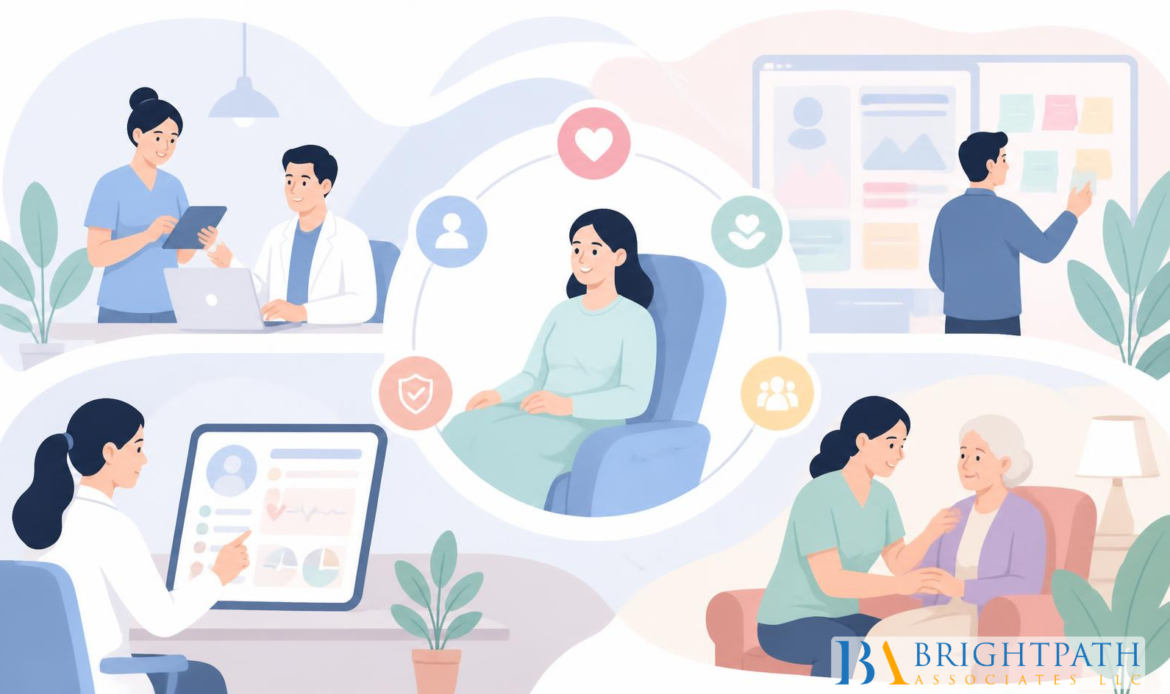
This is where patient-centric design becomes increasingly important. Patient-centric design places the real experiences, needs, behaviors, limitations, and expectations of patients at the center of product development. Importantly, becoming more patient-centric does not always require expensive redesigns or revolutionary Medical Device Innovation. In many cases, small improvements to interfaces, instructions, packaging, physical ergonomics, connectivity, or support systems can significantly improve user adoption.
As healthcare becomes increasingly digital and personalized, companies must understand that usability is directly connected to commercial performance. Medical Device AI, Medical Device Robotics, connected technologies, and sophisticated monitoring systems can create significant clinical value, but that value can only be realized when people are willing and able to use these technologies correctly and consistently.
Understanding the Importance of Patient-Centric Design
Patient-centric design begins with a simple principle: a medical device should be designed around the person who ultimately interacts with it. This may be a patient using a device independently at home, a caregiver assisting an elderly individual, or a clinician operating sophisticated equipment in a hospital.
Patients may have physical, cognitive, emotional, financial, and environmental challenges that engineers do not immediately recognize. A device that appears intuitive in a controlled testing environment may become difficult when used by an elderly patient with limited vision, someone experiencing pain, or a patient managing treatment without professional supervision.
Understanding these circumstances allows manufacturers to identify friction points before commercialization. Instead of asking only whether a device works, development teams should also ask whether users understand how it works, whether they feel confident using it, and whether they can integrate it into their everyday lives.
This approach can turn usability from a secondary consideration into a strategic advantage.
One of the simplest areas for improvement is the user interface. Medical devices increasingly contain digital screens, applications, dashboards, alerts, and interactive controls. Yet more features do not necessarily create a better experience.
Patients often benefit from simplified navigation, larger text, clearer instructions, recognizable icons, and fewer unnecessary steps. A blood glucose monitoring system, for example, may technically provide extensive information, but a patient may primarily need a clear indication of whether their reading is within the expected range and what action they should consider taking.
Reducing cognitive effort can make the device less intimidating. Simple language can replace technical terminology, while carefully designed visual feedback can help users understand information without reading lengthy instructions.
These improvements can also support Medical Device AI applications. AI-generated recommendations are only useful when patients and clinicians understand the information presented to them. Therefore, the design of the interface is just as important as the intelligence behind the algorithm.
Designing for Different Patient Abilities
Patient populations are rarely uniform. Age, mobility, vision, hearing, dexterity, health literacy, and technological familiarity can vary dramatically between users.
A patient-centric device should account for these differences during development. Controls that require precise finger movement may create problems for patients with limited dexterity. Small screens can create challenges for older users. Complex authentication procedures can discourage patients from consistently using connected devices.
Accessibility should therefore be incorporated into #MedicalDeviceInnovation from the earliest design stages rather than treated as a final modification.
Even relatively small changes can make a difference. Improving button size, simplifying physical controls, adding audible or visual confirmation, improving grip design, or reducing the number of required interactions can create a more inclusive experience.
Another common adoption barrier is the learning process. Medical devices often come with extensive instructions because manufacturers must address safety, regulatory, and operational requirements. However, comprehensive documentation does not necessarily mean that patients will understand what to do.
Companies can improve onboarding by separating essential instructions from detailed technical information. A patient should be able to quickly identify how to start, operate, clean, charge, store, and troubleshoot the device.
Visual instructions can complement written guidance, particularly for patients with limited health literacy. Step-by-step onboarding within a connected application can also reduce confusion.
This is particularly relevant to Medical Device Commercialization. A company may invest heavily in product development and market access, only to discover that poor onboarding results in low usage, product abandonment, or negative customer experiences.
Connecting Design With Medical Device Risk Management
Patient-centric design is not simply about convenience. It also has a direct relationship with safety.
Confusing controls, ambiguous alerts, poor labeling, or difficult maintenance procedures can contribute to user errors. Consequently, usability should be considered within Medical Device Risk Management processes.
Companies should examine how patients might misunderstand instructions, select the wrong option, ignore an alert, incorrectly attach a component, or fail to complete an important step. These potential scenarios can then inform product design and validation.
For example, an alert that uses an unclear symbol may technically function correctly but fail to communicate urgency. Replacing it with a clearer message or combining visual and audible signals could reduce the likelihood of user error.
The goal is not simply to design a device that prevents every possible mistake. Instead, manufacturers should design systems that anticipate realistic human behavior and make safe operation easier.
Medical Device Clinical Data can provide valuable insight into how products perform in real-world settings. Clinical studies can reveal more than whether a device achieves its intended clinical outcome. They can also identify patterns involving usability, adherence, patient satisfaction, and operational difficulties.
When companies analyze clinical data alongside user feedback, they can identify opportunities for targeted improvements.
For example, if clinical data indicates that patients frequently discontinue using a particular monitoring device, developers should investigate why. The problem could involve discomfort, charging requirements, complicated instructions, excessive notifications, or difficulty interpreting results.
This creates a feedback loop in which clinical evidence informs product improvement. Patient-centric design therefore becomes an ongoing process rather than a single development-stage activity.
Medical Device Cybersecurity Without Creating User Friction
Connected medical devices introduce another important consideration: cybersecurity. #MedicalDeviceCybersecurity is essential for protecting patient information, device functionality, and healthcare infrastructure.
However, security features that are unnecessarily complicated can negatively affect adoption. Patients may become frustrated by repeated authentication requests, complicated passwords, or unclear security notifications.
The challenge is to make cybersecurity effective without making the user experience unnecessarily difficult.
Manufacturers can explore simplified authentication methods, clear security messaging, automatic session management, and intuitive recovery processes. Security should operate as seamlessly as possible in the background while still providing users with meaningful control and transparency.
A patient should understand why a security action is required without being overwhelmed by technical explanations.
Personalization is becoming increasingly important as healthcare moves toward individualized treatment and monitoring. Medical Device AI can enable devices to analyze patient-specific information and provide customized insights.
However, personalization must remain understandable and trustworthy.
If an AI-enabled device provides recommendations without explaining the relevant context, patients may either blindly follow the recommendation or lose confidence in the technology. Patient-centric design can address this challenge by presenting AI outputs in clear, understandable language and providing appropriate context.
The objective should be to support decision-making rather than create unnecessary complexity. The best AI experience may sometimes be the one that requires the least effort from the user.
Robotics and the Human Experience
Medical Device Robotics represents another area where patient-centric thinking is particularly valuable. Robotic systems can improve precision, efficiency, and clinical capabilities, but patients may have concerns about unfamiliar technology.
Communication therefore becomes an important part of the patient experience.
Patients should understand the role of robotic technology in their treatment and know how healthcare professionals remain involved. Human-centered explanations can reduce anxiety and improve trust.
This demonstrates an important principle: innovation is not only about what technology can do. It is also about how comfortably people can understand and accept that technology.
Patient-centric development does not have to happen entirely within a manufacturer’s organization. Medical Device Strategic Partnerships can provide access to clinicians, hospitals, patient organizations, technology specialists, and research institutions.
These partnerships can provide different perspectives during product development. Clinicians can identify workflow challenges, patients can describe everyday usability issues, and technology specialists can identify opportunities for better digital integration.
Partnerships can therefore help companies avoid designing products based solely on internal assumptions.
Regulatory Considerations and International Expansion
Patient-centric improvements must also be considered alongside #MedicalDeviceRegulatory requirements. Any change to a medical device should be assessed carefully to determine whether it affects safety, performance, labeling, usability validation, or regulatory submissions.
This becomes particularly important when companies pursue Medical Device International Expansion. User expectations, healthcare workflows, accessibility needs, language requirements, and cultural preferences can vary significantly between markets.
A product designed for one market may require localized instructions, interface terminology, packaging, training, or support systems elsewhere.
International expansion should therefore involve more than translating product documentation. Companies should understand how different patient populations interact with healthcare technologies.
Successful patient-centric design requires collaboration between engineering, clinical research, regulatory affairs, marketing, cybersecurity, manufacturing, and customer support teams.
Leadership plays an important role in ensuring that these departments work toward a shared objective rather than optimizing individual functions independently.
Organizations may also need specialized leadership talent capable of connecting technology with commercial and clinical priorities. #ExecutiveSearchRecruitment can help medical device companies identify executives and senior specialists with experience in product development, regulatory strategy, digital health, commercialization, and patient-centered innovation.
The right leadership team can help transform patient-centric design from an isolated design initiative into an organizational culture.
From Small Improvements to Long-Term Adoption
The biggest lesson from patient-centric design is that innovation does not always mean adding more technology. Sometimes the most valuable improvement is removing an unnecessary step, simplifying a message, improving comfort, changing the placement of a button, reducing confusing notifications, or making instructions easier to understand.
These changes may appear small individually, but their combined impact can be substantial.
Companies that consistently observe how patients interact with their products can identify these opportunities before frustration becomes abandonment. They can use clinical evidence, usability research, customer feedback, and real-world data to continually improve the experience.
Conclusion
Patient-centric design is becoming a strategic requirement for modern medical device companies. Technical performance, regulatory compliance, cybersecurity, clinical evidence, and advanced technologies remain fundamental, but adoption ultimately depends on #HumanInteraction.
Whether a company is developing AI-enabled monitoring systems, robotic technologies, connected devices, or traditional medical equipment, the same principle applies: products must work not only technically but also practically for the people using them.
Small design improvements can reduce complexity, increase confidence, improve adherence, support safety, and strengthen long-term customer relationships. When these improvements are integrated with Medical Device Risk Management, Medical Device Clinical Data, Medical Device Commercialization, and international growth strategies, they can create meaningful competitive advantages.
The future of medical device innovation will therefore not be defined solely by increasingly sophisticated technology. It will be defined by the ability to make that technology understandable, accessible, safe, and genuinely useful to the people whose lives it is intended to improve
Find your next leadership role in Medical Device Industry today!
Stay informed with the latest insights on Medical Device Industry!