
Introduction
In the #SemiconductorIndustry, yield is not merely an operational metric; it is the central determinant of profitability, competitiveness, and long-term sustainability. For C-suite executives and founders of small to mid-sized semiconductor companies, optimizing yield directly impacts gross margins, capital efficiency, and customer trust. As fabrication complexity increases across semiconductor processors, semiconductor memory, and semiconductor sensors, the margin for error narrows significantly. A marginal improvement in wafer yield can translate into millions in additional revenue, while minor inefficiencies can erode profitability in an already capital-intensive environment.
The global semiconductor market continues to expand, fueled by demand for semiconductor AI chips, data center infrastructure, edge computing devices, and advanced automotive electronics. At the same time, fabrication costs have escalated dramatically due to advanced lithography systems, process node miniaturization, and material science innovation. Yield optimization has therefore evolved from a production concern into a board-level strategic priority.
Yield improvement strategies must address process variability, defect density, equipment calibration, materials engineering, and supply chain stability. However, technological tools alone cannot solve yield challenges. Leadership capability plays a decisive role in aligning engineering precision with operational execution and long-term innovation strategy.
Market Pressures Shaping Semiconductor Manufacturing
Semiconductor innovation is accelerating across multiple domains. Semiconductor nanotechnology enables smaller process nodes, improving performance and power efficiency. Semiconductor quantum computing research pushes the boundaries of material design and fabrication control. Meanwhile, semiconductor AI chips and specialized processors are transforming data centers and edge computing applications.
The demand surge for high-performance computing has intensified pressure on fabrication facilities. Data centers require increasingly energy-efficient semiconductor processors, while semiconductor memory capacity must scale to support artificial intelligence workloads. Automotive electrification and industrial automation add further complexity to production requirements.
However, heightened demand does not eliminate risk. Supply chain volatility, geopolitical trade considerations, and raw material constraints create operational uncertainty. Even minor disruptions in photoresist supply or rare earth materials can halt production cycles. In such a high-precision environment, yield variability compounds financial exposure.
Industry data consistently shows that yield improvements of even one or two percentage points can significantly enhance revenue streams for mid-sized fabrication plants. Conversely, suboptimal yield performance increases per-unit cost, undermines competitive pricing strategies, and strains customer relationships.
The interplay between market growth and operational precision underscores the need for disciplined leadership capable of balancing innovation with risk management.
Advanced Process Control, AI, and Nanotechnology in Yield Optimization
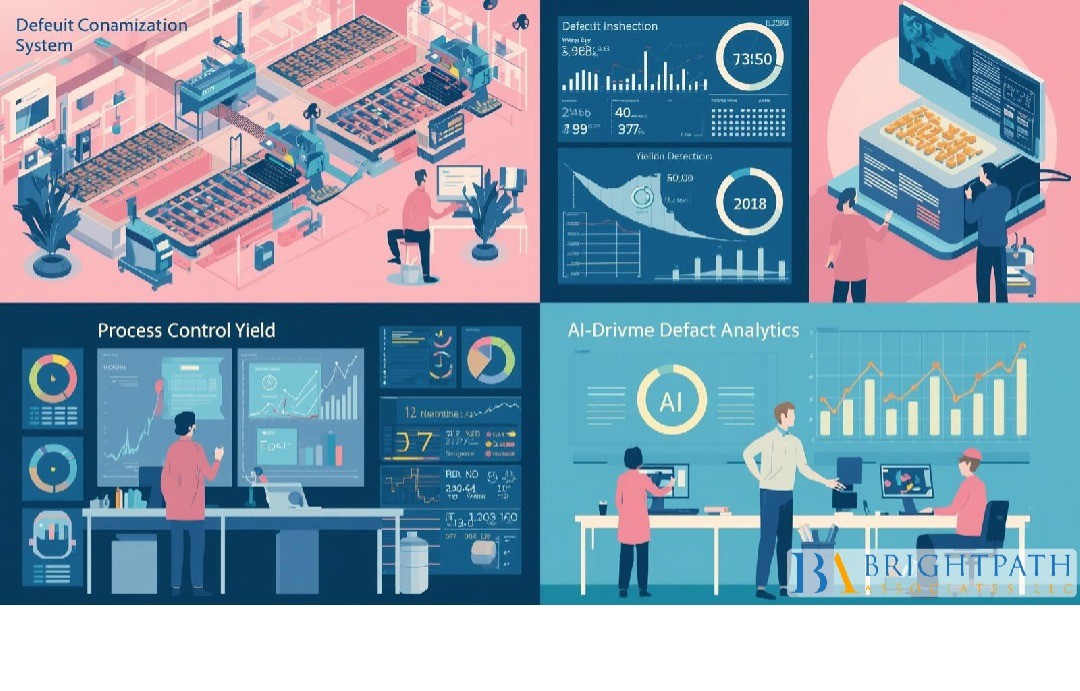
Modern semiconductor yield optimization relies heavily on advanced process control systems and artificial intelligence. Machine learning algorithms analyze real-time production data, detecting anomalies in deposition thickness, etching precision, and lithographic alignment. Predictive analytics reduces defect density by identifying patterns before they result in wafer rejection.
#SemiconductorNanotechnology introduces additional complexity. As transistor sizes shrink to atomic scales, minor environmental variations can cause significant yield deviations. Cleanroom management, vibration control, and contamination prevention demand meticulous oversight. AI-powered inspection tools now identify microscopic defects with unprecedented accuracy, improving yield rates and reducing scrap.
In addition, semiconductor sensors embedded within fabrication equipment provide continuous monitoring of pressure, temperature, and chemical composition. These systems enhance transparency and enable rapid corrective action. For companies operating in competitive segments such as semiconductor AI chips and memory production, yield optimization through digital transformation is no longer optional.
Yet implementing these systems requires executives who understand both technical nuance and financial implications. Leaders must allocate capital toward automation, cybersecurity, and data analytics platforms while maintaining cost discipline. They must also ensure workforce training aligns with technological advancement.
The complexity of semiconductor process innovation necessitates leadership that integrates engineering depth with strategic foresight.
The Expanding Role of Data Centers, Edge Computing, and AI Chips
The proliferation of cloud computing and edge computing has reshaped semiconductor demand patterns. Semiconductor data centers consume vast quantities of processors optimized for parallel workloads and energy efficiency. Semiconductor AI chips require advanced architectures and fabrication precision, increasing manufacturing complexity.
Edge computing devices demand compact, power-efficient semiconductor sensors and processors capable of operating in distributed environments. These trends intensify the importance of yield consistency, as large-volume contracts depend on predictable output and quality assurance.
For small to mid-sized semiconductor companies, competing against global giants requires operational excellence. Yield optimization becomes a differentiator, enabling firms to meet contract obligations while preserving margins. However, scaling production to meet data center demand without compromising quality demands coordinated leadership across engineering, operations, and finance functions.
The competitive landscape reinforces the importance of semiconductor leadership capable of navigating technological acceleration and market volatility simultaneously.
Leadership Talent Shortages in Semiconductor Innovation
Despite technological progress, the semiconductor industry faces a growing leadership talent shortage. Experienced fabrication executives, process engineers with management capability, and technology strategists are in high demand across multinational corporations, defense contractors, and emerging quantum computing ventures.
Mid-sized semiconductor firms often struggle to attract leaders with experience in advanced process nodes, semiconductor nanotechnology, and AI-driven yield optimization. The pool of executives who combine deep technical expertise with operational scalability remains limited.
Moreover, executive role expectations have expanded. The Chief Technology Officer must oversee semiconductor innovation while managing #IntellectualPropertyStrategy. The Chief Operating Officer must integrate AI-based quality control systems into fabrication lines. The Chief Executive Officer must engage with investors, secure capital for equipment upgrades, and navigate supply chain risk.
The competition for leadership talent has intensified compensation pressures and extended recruitment timelines. For companies operating in fast-moving markets such as semiconductor AI chips or semiconductor quantum computing research, delays in securing executive talent can hinder product roadmaps and customer commitments.
Leadership gaps translate directly into operational inefficiencies. Without strong executive direction, yield improvement initiatives may stall, digital transformation efforts may fragment, and cross-functional alignment may weaken.
Shifting Executive Expectations in a High-Precision Industry
Semiconductor leadership now demands adaptability, innovation orientation, and cross-disciplinary coordination. Executives must interpret real-time production data, align R&D investment with market demand, and foster a culture of continuous improvement. They must also anticipate emerging trends such as heterogeneous integration, advanced packaging, and chiplet architecture.
Boards increasingly evaluate leaders based on digital transformation capability and resilience planning. Cybersecurity preparedness, intellectual property protection, and global supply chain diversification are critical executive responsibilities. Yield optimization initiatives require not only technical insight but also change management expertise to ensure workforce adoption of AI-driven systems.
Traditional hiring criteria centered solely on tenure or operational experience are insufficient. Companies require leaders who demonstrate both semiconductor domain expertise and strategic agility.
The Strategic Evolution of Executive Search Recruitment
As semiconductor manufacturing grows more complex, recruitment strategies have evolved accordingly. Executive Search Recruitment has emerged as a strategic instrument for aligning leadership capability with business objectives. Rather than relying on generalized hiring channels, semiconductor companies increasingly partner with specialized search firms capable of identifying leaders with rare skill combinations.
Brightpath Associates supports semiconductor companies by delivering targeted Executive Search Recruitment solutions aligned with semiconductor innovation and yield optimization goals. Through rigorous candidate assessment and industry-specific expertise, organizations gain access to executives equipped to manage semiconductor processors, memory production, nanotechnology integration, and AI-driven manufacturing systems.
#StrategicRecruitment reduces misalignment risk and accelerates leadership onboarding. It ensures that executive hires possess the foresight to integrate advanced process control, semiconductor sensors, and digital analytics into cohesive operational frameworks.
Aligning Yield Strategy with Semiconductor Leadership Excellence
Optimizing semiconductor yield is a multidimensional challenge that intersects technology, capital allocation, supply chain resilience, and leadership capability. For C-suite executives and founders of small to mid-sized semiconductor companies, the path to sustained profitability lies in integrating advanced manufacturing tools with forward-thinking semiconductor leadership.
Yield optimization strategies supported by AI, nanotechnology, and predictive analytics can unlock significant financial value. However, without executives capable of orchestrating these systems effectively, potential gains remain unrealized.
The semiconductor industry will continue to evolve rapidly, driven by demand from data centers, edge computing platforms, AI applications, and quantum computing research. Competitive advantage will depend not only on fabrication precision but also on leadership precision.
By investing in #ExecutiveSearchRecruitment as a strategic function, semiconductor companies can secure the talent required to navigate complexity, drive semiconductor innovation, and transform yield efficiency into long-term market leadership.
Find your next leadership role in Semiconductor Industry today!
Stay informed with the latest insights on Semiconductor Industry!