
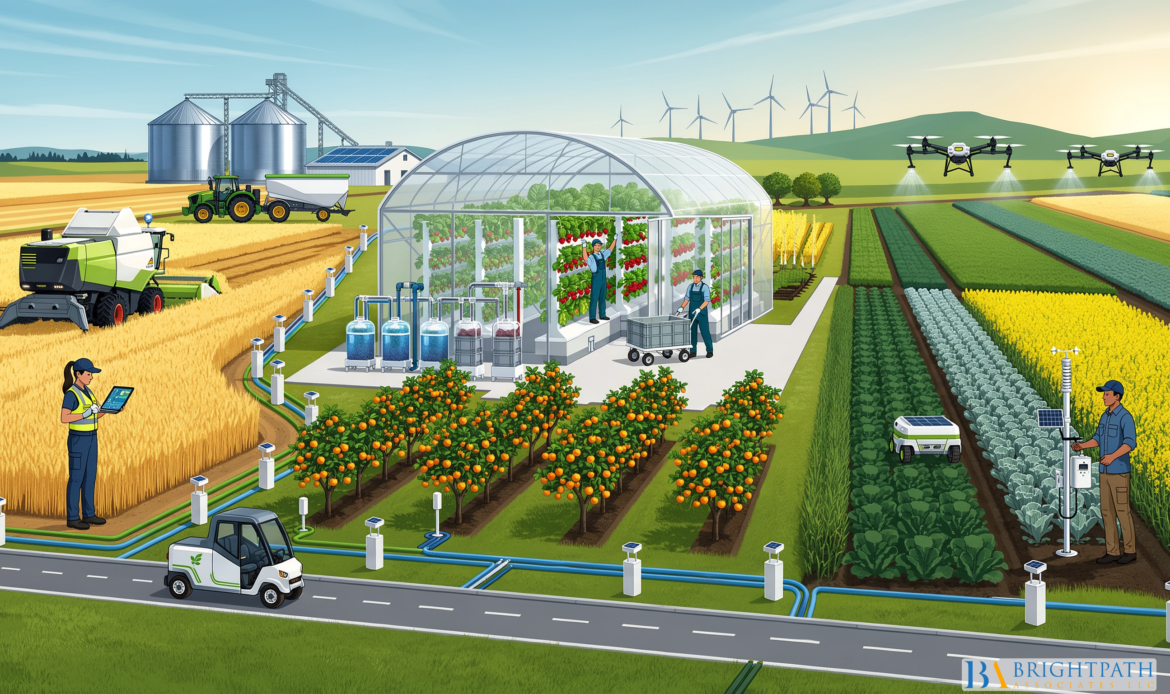
[Bethany, Connecticut – 13 November 2026] – BrightPath Associates has released an industry analysis examining the strategic decisions expected to shape the next decade of agribusiness in the United States. The analysis, titled “Next Decade of Agribusiness: Consolidate, Specialize, or Optimize?“, explores how farming businesses can strengthen profitability, improve operational performance, and prepare for changing market conditions through consolidation, specialization, and technology-driven optimization. It highlights the importance of capital discipline, leadership capabilities, agricultural innovation, and sustainable investment for C-suite executives navigating an increasingly competitive agricultural market.
The US agricultural sector is experiencing significant changes driven by rising operating costs, labor shortages, technological developments, changing consumer expectations, and increasing sustainability requirements. For farm owners and senior executives, choosing the right growth strategy is becoming essential. Rather than focusing only on expanding acreage or increasing production, businesses must evaluate whether their existing resources, workforce, technology, and management systems can support long-term growth.
Specialization and Sustainable Farming Create New Opportunities
Specialization offers another growth opportunity for agribusinesses looking to differentiate themselves in competitive markets. Businesses can focus on specialty crops, organic farming, branded agricultural products, controlled-environment production, or value-added food production. These approaches can help farms access premium markets, develop stronger customer relationships, and create more recognizable brands.
However, specialization also introduces new challenges. Higher-value products often require better quality control, post-harvest processing, packaging, storage, marketing, and dependable distribution channels. Businesses must also understand changing customer preferences and ensure that demand is strong enough to support long-term investment.
The growing importance of Sustainable farming and Agricultural sustainability is creating additional opportunities for businesses that adopt responsible production practices. Investments in water management, soil health, renewable energy, and efficient resource utilization can strengthen environmental performance while supporting long-term agricultural productivity. Leaders must evaluate these opportunities through both financial and operational perspectives before committing significant capital.
Agricultural Technology Is Transforming Farm Optimization
Technology-driven optimization is emerging as a practical starting point for many agricultural businesses. Instead of immediately purchasing additional land or expanding facilities, farm executives can improve the performance of existing resources through better planning, data management, and process improvements.
Precision agriculture is helping farmers make more informed decisions about irrigation, fertilizer application, crop monitoring, and equipment utilization. Similarly, Digital Farming solutions are improving access to operational information through connected equipment, sensors, automated systems, and data analytics. These technologies can help reduce unnecessary input costs, improve productivity, and identify operational problems earlier.
Farm management software is also becoming increasingly important for modern agricultural businesses. These platforms can bring together information about field operations, labor, machinery, inventory, maintenance, and financial performance. When supported by effective implementation and employee training, agricultural technology can improve decision-making and strengthen overall business efficiency.
However, technology investments should address clearly identified business challenges. The BrightPath analysis recommends measuring existing performance, identifying operational gaps, testing specific solutions, and evaluating financial returns before expanding technology adoption. This approach can help businesses avoid unnecessary spending and improve returns on investment.
Leadership and Executive Recruitment Will Shape Agribusiness Growth
As farming businesses become more technology-driven and commercially complex, leadership requirements are also changing. Executives increasingly need experience in financial planning, supply chain management, operational efficiency, workforce development, sustainability, and digital transformation.
Consolidation requires leaders who can manage acquisitions, integrate operations, control costs, and coordinate multiple locations. Specialization requires expertise in product development, quality management, customer relationships, and market expansion. Optimization requires professionals who understand technology adoption, data management, and continuous improvement.
This growing demand for specialized leadership makes strategic recruitment an important consideration for agricultural organizations. Hiring decisions should be based on business objectives, operational requirements, and the capabilities needed to deliver measurable results.
For organizations exploring new opportunities across the Farming Industry and Agricultural Business Sector, identifying experienced leadership talent can support successful business transitions and long-term growth. Executive recruitment can also help companies address leadership gaps that may otherwise delay expansion, technology implementation, and succession planning.
Preparing for the Next Decade of Agricultural Innovation
The future of agribusiness will not depend on a single growth strategy. Some farming businesses may benefit from consolidation, while others may achieve stronger results through specialization or optimization. The right approach will depend on financial resources, market demand, workforce capabilities, technology readiness, and operational conditions.
BrightPath Associates emphasizes that agricultural leaders should connect business strategy with leadership capacity and measurable financial outcomes. Investments in Agricultural innovation, sustainable agriculture investment, and digital transformation should support clearly defined business priorities rather than become technology projects without measurable returns.
As the agricultural sector continues to evolve, organizations that combine financial discipline, skilled leadership, and responsible innovation will be better positioned to manage uncertainty, improve productivity, and build resilient operations.
About BrightPath Associates
BrightPath Associates is an executive recruitment and talent solutions firm serving businesses across multiple industries in the United States. The company helps organizations identify experienced executives and specialized professionals who can support business growth, operational improvement, and long-term success. Its mission is to connect companies with the right talent while helping leaders build stronger and more effective teams.
Media Contact:
Name: Corporate Communications Team
Company: BrightPath Associates
Email: media@brightpathassociates.com
Website: https://brightpathassociates.com