
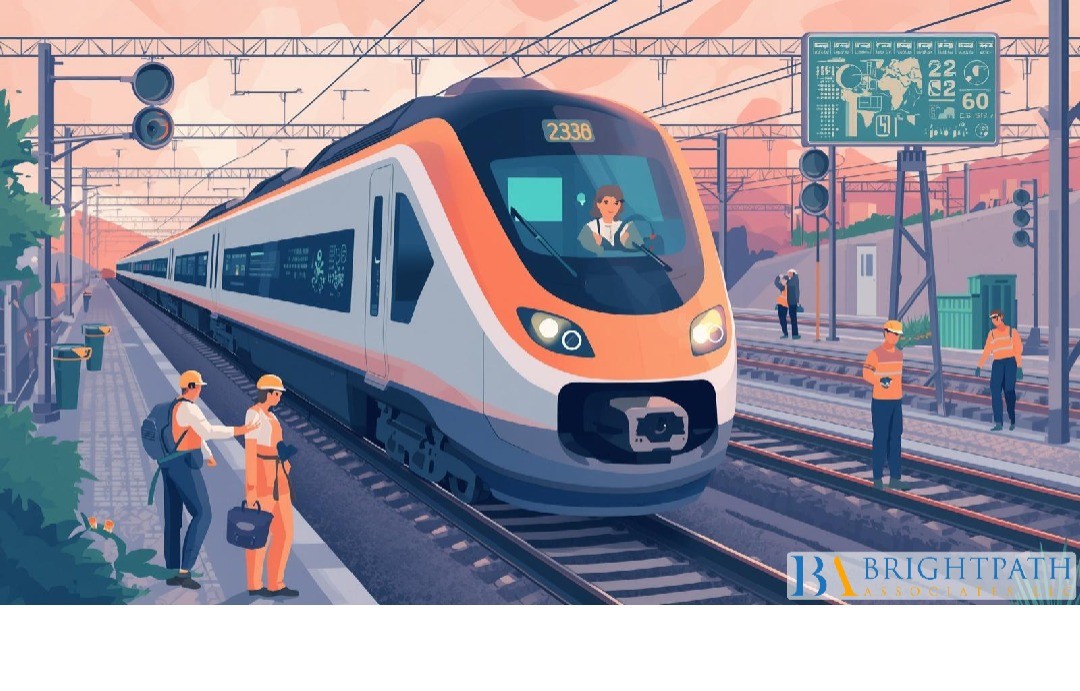
Modern #LocomotiveManufacturing is undergoing a profound transformation as the rail industry confronts decarbonization mandates, digital integration, supply chain instability, and workforce transitions. A clear Railroad manufacturing industry outlook shows that competitive advantage now hinges on the ability to integrate new propulsion systems, harness rail technology advancements, and industrialize consistently across global markets while meeting strict safety and regulatory expectations. This essay surveys the core challenges and opportunities shaping locomotive manufacturing and the broader rail industry, with a focus on how manufacturers, operators, and suppliers can align strategy and execution to realize dependable performance, lower lifecycle costs, and sustainable growth.
Decarbonization and Propulsion Transitions
The transition away from conventional diesel-electric platforms represents one of the most consequential shifts in Railroad manufacturing. It is not a simple component substitution but a re-architecture of energy, mass, thermal, and safety systems at the heart of locomotive manufacturing. Manufacturers are pursuing parallel pathways that include higher-efficiency diesel with advanced aftertreatment, hybridization that captures and redeploys braking energy, battery-electric solutions for yard and short-haul operations, and hydrogen-based approaches using fuel cells or hydrogen internal combustion. Each pathway imposes distinct requirements on weight distribution, crashworthiness, ventilation, fire detection and suppression, and maintenance accessibility.
Energy storage is at the core of these changes. Battery modules demand robust enclosures, effective thermal runaway mitigation, and disciplined electrical isolation and testing practices. The mass of batteries forces careful attention to axle loads, adhesion management, and bogie dynamics, while the additional volume competes with other systems for space within the carbody. Hydrogen introduces its own complexity, from storage pressures and materials compatibility to gas detection, purging strategies, and physical separation of high-energy components from crew areas. These realities make modularity essential, allowing manufacturers to configure platforms for specific duty cycles while protecting the ability to upgrade as infrastructure and policy evolve. In this context, Rail industry innovations such as regenerative braking optimization, lightweight materials, and high-efficiency auxiliaries become co-equal levers that enable credible range, reliability, and performance without overdesign. The most durable Railroad manufacturing industry outlook therefore favors propulsion-agnostic architectures that can incorporate emerging energy sources without wholesale redesigns.
Digitalization and the Software-Defined Locomotive
Software now defines a large share of locomotives’ capabilities, from traction and braking control to #EnergyManagement, condition monitoring, and driver assistance. The promise is better reliability, lower maintenance costs, and safer operation, but the integration burden is formidable. Multiple vendors contribute traction converters, Train Control and Monitoring Systems, and diagnostics modules, which must interoperate with deterministic timing and consistent data semantics. Achieving this demands open, well-governed interfaces and rigorous conformance testing to prevent vendor lock-in and minimize integration defects.
High-fidelity digital twins exemplify the most meaningful Rail technology advancements in this domain. Twins of propulsion, thermal systems, power electronics, and bogie dynamics allow design teams to front-load validation, compress physical testing, and inform commissioning and fleet operations. The challenge is maintaining model fidelity with authoritative data as locomotives move from design to production and into service. A disciplined data governance approach—standardized signal taxonomies, edge analytics for low-bandwidth corridors, secure over-the-air update frameworks—turns raw telemetry into actionable insights. Interoperability with signaling and safety overlays such as regional automatic train protection systems adds further complexity by imposing fail-safe design and stringent verification. For Railroad equipment manufacturers, maturity in safety-critical software development lifecycles, including configuration control, regression testing, and cybersecurity assurance, is now a baseline expectation rather than a differentiator.
Supply Chain Resilience and Materials Strategy
The US manufacturing industry and global suppliers have experienced repeated shocks in semiconductors, copper, high-grade steels, and resin systems that ripple through locomotive programs. Lead times are long, customization is high, and delivery penalties can be severe, so a single constrained component can imperil program schedules. Resilience must therefore be engineered from the outset. Design-for-substitution practices—such as adaptable electrical and mechanical footprints for inverters and sensors—allow multiple qualified sources without costly redesign. Strategic inventories for long-lead or obsolescence-prone parts, combined with collaborative forecasting and visibility into tier-2 and tier-3 suppliers, reduce surprises.
Material selection is both an opportunity and a risk. Lightweighting through advanced steels, aluminum extrusions, and selective composite use can counterbalance the mass added by batteries and aftertreatment systems, improving energy efficiency and axle load compliance. Yet each material shift brings manufacturability implications: weldability, distortion control, corrosion management, thermal behavior, and field repairability. Maintaining consistent quality across fabrication and assembly becomes more demanding as material portfolios diversify. Ethical sourcing and traceability for components like cobalt-containing batteries and rare earth magnets are also rising expectations, making responsible supply vital to brand and contractual credibility. In this environment, the Railroad manufacturing industry outlook rewards organizations that couple procurement strategy with engineering choices, closing the loop between design and sourcing to secure availability and quality.
Manufacturing Execution, Quality, and Throughput
#LocomotiveManufacturing sits at the intersection of heavy fabrication and precision assembly, with long cycle times, intricate assemblies, and high stakes for first-time-right quality. Advanced manufacturing approaches must remain flexible while enforcing repeatability. Reconfigurable fixtures, modular jigs, and programmable welding procedures enable variant-rich product mixes without incurring excessive changeover times. In parallel, dimensional scanning, non-destructive testing of welds, and standardized torque and press-fit verifications catch defects early when correction costs are lowest. In high-voltage assembly areas, careful electrostatic discharge control, clean-room-like practices, and robust insulation and isolation testing are essential to prevent latent failures triggered by vibration, moisture, or thermal cycling.
End-of-line testing and on-track validation are equally critical. Tractive effort characterization, braking performance verification, electromagnetic compatibility checks, and noise and vibration testing must be executed with repeatable procedures, instrumented rigor, and clear acceptance criteria. Digital capture of results and analytics can distinguish test artifacts from true faults, accelerating root-cause analysis and shorten rework loops. The core principle is simple but powerful: throughput grows from synchronized planning and disciplined process control, not from indiscriminate automation. For Railroad equipment manufacturers and their partners, the most effective advanced manufacturing investments are those that compress variability and enhance repeatability while preserving the flexibility demanded by customized orders.
Safety, Standards, and Certification
Safety is a multi-dimensional requirement encompassing crashworthiness, fire safety, braking performance, electromagnetic compatibility, and software integrity. The certification complexity increases when platforms serve multiple regions with different clearance profiles, climatic envelopes, coupler systems, and signaling interfaces. Requirements management tools that tie stakeholder needs to verifiable design artifacts are vital to prevent late-stage surprises. Fire and smoke compliance, material toxicity limits, and crash energy management must be resolved early in design by selecting certifiable materials and assemblies rather than retrofitting at the end.
For the rail industry, successful certification is not a final gate but an outcome of integrated decision-making throughout development. Change control and configuration management are central disciplines; each modification must be assessable against its safety case, homologation status, and regression test coverage. The organizations that excel here tend to maintain cross-functional governance spanning engineering, quality, and regulatory affairs, keeping documentation and test evidence synchronized with design evolution. This maturity shapes a positive Railroad manufacturing industry outlook by reducing time to market and minimizing costly re-tests.
Human Factors, Maintainability, and Operational Realities
A locomotive’s true value emerges in service, where maintainability, operator ergonomics, and environmental robustness determine availability and safety. Cab layouts that prioritize visibility, intuitive control placement, and clear alerting schemes reduce fatigue and incident risk. Human-in-the-loop simulations and mock-ups surface usability issues early, before they harden into costly redesigns. Maintainability by design—line-replaceable units, front-of-rack access, standardized fasteners, tool-less service panels, and safe high-voltage lock-out points—reduces mean time to repair and minimizes depot congestion.
Real-world environments impose dust, humidity, frost, and heat loads that mandate realistic derating curves and protective design features. Filters, drainage paths, corrosion-resistant coatings, and ingress protection must be specified for the actual operating theater, not only laboratory conditions. Documentation and training are linchpins of sustainable performance. Digital, visual service guides, searchable fault trees, and operator and maintainer simulators elevate the baseline of competence and consistency across fleets and geographies. These human-centered practices are not peripheral; they are core to locomotive manufacturing and to the broader Rail industry’s promise of safe, #ReliableMobility.
Cybersecurity in Connected Rail Systems
Connectivity expands both capability and risk. As locomotives become nodes in complex operational networks, cybersecurity must be designed in from architecture to maintenance. Defense-in-depth—segmented networks, secure boot, code signing, whitelisting, and strict isolation between safety-critical and non-critical domains—limits exploit pathways. A secure development lifecycle incorporating threat modeling, static and dynamic code analysis, penetration testing, and structured vulnerability management is essential, and must extend contractually to suppliers of embedded components.
Patch management embodies a central tension in safety-critical domains: the need for prompt updates versus the stability expectations of certified baselines. Over-the-air mechanisms with robust authentication, rollback, and tamper evidence can reconcile this tension when paired with disciplined configuration control and operator maintenance windows. In the near term, the Railroad manufacturing industry outlook favors manufacturers who make cybersecurity posture transparent and auditable, aligning with the expectations of both regulators and sophisticated operators.
Lifecycle Value, Cost, and Circularity
Operators buy service, availability, and predictable lifecycle cost, not hardware alone. Accurate total cost of ownership models—grounded in field data on energy use, maintenance intervals, spares consumption, downtime penalties, and residual value—help align offerings with operator priorities. Reliability-centered maintenance relies on sensors and analytics that predict failures of bearings, traction motors, converters, and cooling subsystems with high precision and low false alarms. Avoiding alert fatigue is as important as detecting anomalies; actionable insights must be prioritized and contextualized for maintainers.
Circularity is an increasingly central theme. Designing for disassembly, material labeling, and recycling pathways for batteries, copper, and electronics reduces environmental impact and supports regulatory and customer expectations. Mid-life overhauls and retrofit programs can extend fleet life while enabling technology refreshes, from upgraded converters and improved #HVACSystems to hybridization modules that capture new energy efficiencies. This approach connects directly to advanced manufacturing and design modularity, ensuring that upgrades can be incorporated without wholesale re-certification. In sum, lifecycle value is the hinge that connects Rail industry innovations to practical benefits on the balance sheets of operators.
Market Landscape and Top Railroad Manufacturing Companies US
A view of the Top railroad manufacturing companies US underscores the breadth of capabilities at play, from prime movers and traction systems to rolling stock and components. Manufacturers such as Wabtec and Progress Rail are central players in locomotive manufacturing and heavy freight solutions. Multinationals with substantial US footprints, including Siemens Mobility and Alstom, contribute high-power traction systems, signaling integration, and passenger rolling stock tailored to regional requirements. In the freight car segment, companies such as Trinity Industries, The Greenbrier Companies, and FreightCar America anchor capacity for wagons and specialty cars, while a vibrant ecosystem of Railroad equipment manufacturers supplies braking systems, couplers, bogies, HVAC, and electronics.
This ecosystem demonstrates how the US manufacturing industry integrates global technology pipelines with localized production, quality systems, and supply networks. It also illustrates the importance of platform commonality balanced with regional tailoring, ensuring that standardized backbones can accept regional signaling modules, HVAC sizing, and coupler systems without excessive engineering churn. As Rail technology advancements accelerate, the leaders will be those who sustain interoperability, invest in flexible capacity, and co-develop innovations with critical suppliers and operators.
Globalization, Localization, and Policy Context
Competing globally while executing locally remains a defining challenge for the rail industry. Track gauges, climate profiles, signaling systems, and industrial policies vary widely across markets. Localization strategies that meet content requirements without compromising process discipline depend on robust transfer-of-work plans, standardized quality controls, and consistent training. Platform commonality paired with regional modules—spanning software cores, cab signaling packages, and hardware interfaces—reduces engineering proliferation and shortens homologation cycles. In the United States, where federal and state investments are renewing rail corridors, the #RailroadManufacturingIndustry outlook is buoyed by long-horizon infrastructure commitments. These commitments encourage capital investment in advanced manufacturing, workforce development, and supplier capacity, creating a more predictable environment for long-cycle locomotive manufacturing programs.
Talent, Leadership, and Executive Search Recruitment
Technology shifts have sharpened the need for cross-disciplinary talent across high-voltage safety, power electronics, software engineering, cybersecurity, model-based systems engineering, and advanced fabrication. As platforms become more modular and software-defined, leadership must orchestrate complex supplier networks and integrate safety, compliance, and cost objectives into coherent roadmaps. #ExecutiveSearchRecruitment has therefore become a strategic lever for Railroad equipment manufacturers and operators seeking leaders who can bridge mechanical, electrical, and digital domains while driving cultural change toward data-driven, safety-critical execution. Recruiting and developing this talent base—engineers, technicians, program managers, and cybersecurity specialists—requires partnerships with universities, apprenticeships, and internal academies that align curricula with the realities of shop floors and depots. The organizations that invest consistently in people and leadership will be best positioned to translate Rail industry innovations into reliable, certifiable, and maintainable products.
Strategic Execution for Sustainable Advantage
Bringing these threads together, sustainable advantage in locomotive manufacturing arises from a handful of disciplined practices. Modular, upgradable architectures allow propulsion swaps and regional adaptations without destabilizing the platform. Model-based systems engineering binds requirements, simulations, and verification into a coherent digital thread that reduces integration risk. Supplier co-development, anchored by transparent roadmaps and shared validation assets, reduces obsolescence risk and accelerates industrialization. Factory strategies emphasize flexible advanced manufacturing that stabilizes processes without sacrificing variant agility. Governance enforces evidence-based phase gates, synchronized configuration management, and continuous improvement grounded in transparent performance metrics.
These practices create a resilient operating model attuned to the cadence of #RailTechnology advancements and the realities of certification, supply variability, and lifecycle value. They also support a more confident Railroad manufacturing industry outlook by aligning capital deployment, talent strategy, and market positioning with the evolving needs of freight and passenger operators.
Conclusion: Engineering for Change in the Rail Industry
The rail industry stands at a pivotal juncture. Decarbonization imperatives, digitalization, and shifting supply chains have raised the bar for locomotive manufacturing and for Railroad equipment manufacturers across the ecosystem. The path forward favors propulsion-agnostic, software-defined platforms, disciplined data governance, resilient supply strategies, and advanced manufacturing methods that deliver quality and flexibility in equal measure. It also demands leadership that can integrate engineering rigor with safety, compliance, and cost realism, supported by robust Executive Search Recruitment and workforce development. As Top railroad manufacturing companies US and their global peers adapt to these demands, the winners will be those who design for change, industrialize with precision, and manage lifecycle value as the central promise to their customers. In doing so, they will shape a Railroad manufacturing industry outlook defined by credible decarbonization, durable reliability, and the sustained competitiveness of the US manufacturing industry within a global marketplace.
Find your next leadership role in Railroad Industry today!
Stay informed with the latest insights on Railroad Industry!