
Introduction
Global crop production is entering one of the most consequential decades in its history. Between climate volatility, tightening #EnvironmentalRegulations, rising input costs, and increasing food demand, farming enterprises are under pressure to produce more with fewer resources. By 2050, global food production must increase by nearly 60 percent to meet population needs, according to estimates frequently cited by international agricultural bodies. For small to mid-sized farming companies, this challenge is not merely agronomic—it is deeply strategic. Decisions around technology adoption, sustainable farming practices, and leadership capability are now central to competitiveness. As the industry shifts from traditional farming models to data-driven, technology-enabled operations, leadership quality has emerged as a defining factor in determining which organizations scale successfully and which fall behind.
Industry Trends Reshaping Agricultural Productivity (2023–2025)
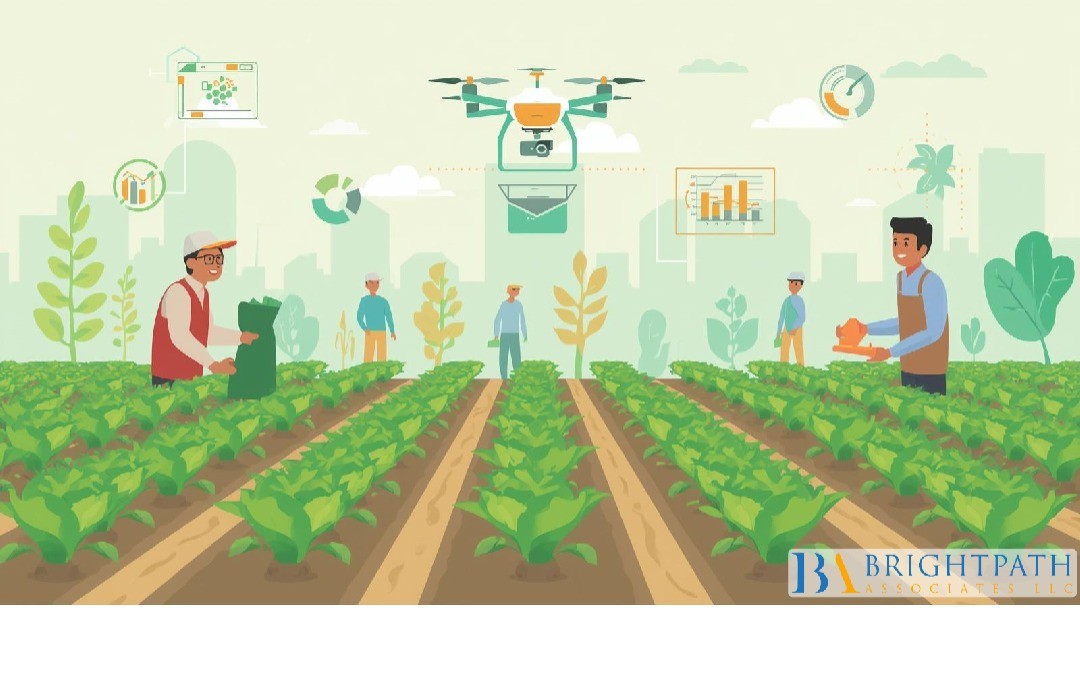
From 2023 to 2025, the agricultural sector has experienced accelerated transformation driven by agricultural innovation and digital agriculture technology. Precision agriculture tools such as GPS-guided machinery, soil sensors, satellite imagery, and farm management software have moved from early adoption to operational necessity. Market analyses indicate that farms using precision agriculture techniques can improve yields by 10 to 20 percent while reducing fertilizer and water usage by up to 15 percent. At the same time, sustainable farming practices and organic farming methods are no longer niche segments. Consumer demand for traceable, environmentally responsible food production has pushed sustainability from a marketing advantage to a compliance and profitability requirement.
The food production market analysis across North America and Europe shows increasing consolidation among agribusinesses, while small to mid-sized operators are focusing on specialization, operational efficiency, and technology-led differentiation. Digital farming platforms are enabling real-time decision-making, but they also require a higher level of managerial and technical oversight. This shift has fundamentally changed what it means to lead a modern farming enterprise.
Technology-Led Farming Models and the Leadership Imperative
#AgriculturalTechnology adoption alone does not guarantee higher output. The most successful organizations are those that align digital farming investments with strong leadership and execution capabilities. Digital agriculture technology generates vast amounts of data, but without leaders who understand how to interpret insights and translate them into operational action, its value remains unrealized. Studies from agribusiness consulting firms suggest that nearly 70 percent of digital transformation initiatives in agriculture underperform due to leadership misalignment rather than technology failure.
This reality has elevated the importance of executives who can bridge traditional farming expertise with data-driven decision-making. Leaders must understand crop science, supply chain dynamics, and agricultural sustainability while also being fluent in analytics, automation, and software-enabled operations. The scarcity of such hybrid leaders is becoming one of the most pressing constraints on output maximization.
Sustainability, Yield Optimization, and Market Pressures
Sustainable farming is now directly linked to productivity and profitability. Soil health management, water optimization, and carbon-conscious practices have been shown to improve long-term yield stability. Research consistently demonstrates that farms adopting regenerative and sustainable techniques experience improved resilience against climate shocks, with yield variability reduced by as much as 25 percent over time. However, sustainability initiatives require long-term vision, capital planning, and stakeholder alignment—capabilities that sit squarely within the executive domain.
Market pressures further complicate this landscape. Volatile commodity prices, labor shortages, and evolving regulatory standards are forcing farming companies to rethink operating models. Leaders are expected to balance short-term output targets with long-term agricultural sustainability, often under significant financial constraints. This balancing act underscores the strategic importance of experienced leadership in navigating complexity without compromising productivity.
The Executive Talent Gap in the Farming Industry
One of the most underdiscussed risks to maximizing crop output is the growing executive talent shortage within the farming industry. As seasoned agricultural leaders retire, the pipeline of qualified successors has not kept pace. Industry workforce data from 2024 indicates that more than 40 percent of agribusiness executives are expected to reach retirement age within the next decade. At the same time, competition for leadership talent has intensified as technology companies, food conglomerates, and sustainability-focused startups vie for the same skill sets.
Small to mid-sized farming enterprises are particularly vulnerable. Unlike large multinational agribusinesses, they often lack structured leadership development programs and global recruiting reach. The result is prolonged vacancies in critical roles such as #OperationsLeadership, sustainability heads, and technology-focused farm managers—directly impacting productivity, innovation, and scalability.
Changing Expectations from Agricultural Leaders
The role expectations for agricultural executives have evolved significantly between 2023 and 2025. Today’s leaders are expected to be growth strategists, technology champions, and sustainability stewards simultaneously. Beyond operational oversight, they must manage digital transformation initiatives, implement agricultural innovation, and respond to shifting consumer and regulatory demands.
Soft skills have also gained prominence. Change management, cross-functional collaboration, and strategic communication are now essential as farming organizations integrate digital farming tools and restructure traditional workflows. Leaders who fail to engage teams and align stakeholders often encounter resistance that undermines even the most promising productivity strategies.
Strategic Recruitment as a Growth Enabler
Given these dynamics, recruitment is no longer a transactional function—it is a strategic growth lever. Identifying leaders who can drive precision agriculture, optimize sustainable farming practices, and leverage farm management software requires a nuanced understanding of both industry realities and future trends. Traditional hiring methods, reliant on limited networks or reactive searches, are increasingly insufficient in a market defined by scarcity and complexity.
Forward-looking farming companies are rethinking how they approach #LeadershipAcquisition. They are prioritizing candidates with cross-sector experience, proven digital transformation outcomes, and the ability to scale operations responsibly. This shift reflects a broader recognition that leadership quality directly influences output, resilience, and long-term enterprise value.
Executive Search Recruitment as a Competitive Advantage
#ExecutiveSearchRecruitment has emerged as a critical solution to the leadership challenges facing the farming industry. Unlike conventional hiring, executive search focuses on proactive talent mapping, deep industry specialization, and rigorous assessment of leadership capability. By accessing passive candidates who are not actively seeking roles, executive search enables farming companies to secure high-impact leaders who align with their strategic objectives.
Firms such as Brightpath Associates specialize in connecting farming and agribusiness organizations with executives who understand agricultural technology, food production market analysis, and agricultural sustainability. Through targeted search methodologies and industry-specific insight, executive search recruitment reduces time-to-hire, improves leadership fit, and strengthens long-term organizational performance. In an environment where leadership gaps directly constrain output, this approach offers a measurable competitive advantage.
Conclusion: Future-Proofing Crop Production Through Leadership
Maximizing crop output in today’s farming industry extends far beyond seeds, soil, and machinery. It is fundamentally a leadership challenge. As agricultural innovation accelerates and market pressures intensify, the ability to attract and retain capable executives will increasingly determine which farming enterprises thrive. From digital agriculture technology and precision agriculture to sustainable farming and organic production, every advanced strategy depends on informed, agile leadership.
For small to mid-sized farming companies, addressing executive talent shortages is no longer optional—it is a strategic imperative. By embracing executive search recruitment as a core component of growth strategy, organizations can secure the leadership required to navigate complexity, drive productivity, and build resilient, future-ready operations.
Find your next leadership role in Farming Industry today!