
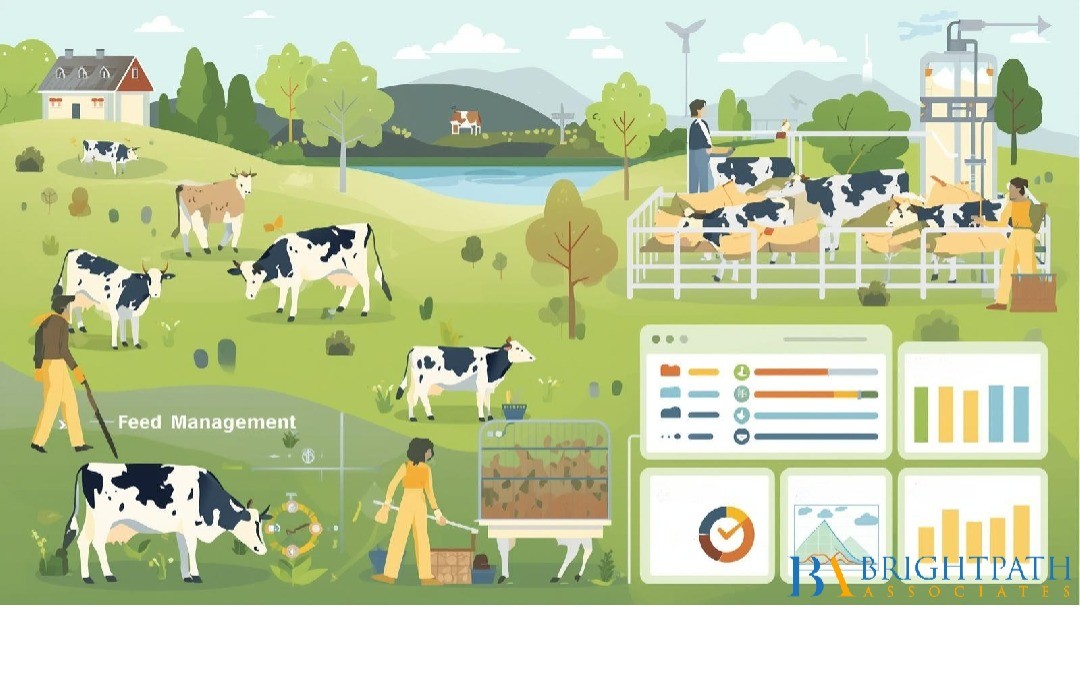
Understanding the Profitability Challenges in Dairy Farming
#DairyFarming has long been a cornerstone of the agricultural economy, providing essential products such as milk, cheese, and yogurt to global markets. However, small to mid-sized dairy companies are facing mounting pressure to maintain profitability amid rising input costs, fluctuating market demand, and evolving consumer preferences. Between 2020 and 2024, global milk prices experienced an average annual volatility of 8%, highlighting the vulnerability of dairy farm margins to external economic factors. This volatility underscores the importance of strategic planning and operational efficiency for dairy executives seeking to sustain growth.
The challenges in dairy profitability are multifaceted. Feed costs alone account for nearly 50–60% of total production expenses, while labor shortages and inefficiencies further erode margins. Dairy farm operators must balance these cost pressures with the need to maintain high-quality milk production and comply with increasingly stringent food safety and environmental regulations. Consequently, profitability is no longer determined solely by production volume; it requires an integrated approach that encompasses technology adoption, supply chain optimization, and leadership excellence.
Leveraging Technology to Optimize Dairy Operations
One of the most effective strategies for enhancing dairy farm profitability is the adoption of automation and digital technologies. Dairy automation technologies, including robotic milking systems, automated feeding solutions, and smart herd management platforms, have demonstrated measurable impacts on operational efficiency. Farms that implement these technologies report a 15–20% reduction in labor costs and a 10–12% increase in milk yield per cow.
Beyond productivity gains, automation enables data-driven decision-making. Real-time monitoring of animal health, feed consumption, and milk production allows managers to identify inefficiencies, anticipate problems, and implement corrective measures proactively. This digital transformation not only reduces operational risks but also supports sustainability initiatives by optimizing resource utilization, reducing waste, and lowering greenhouse gas emissions associated with dairy production.
Strategic Supply Chain Management for Profitability
Efficient #SupplyChainManagement is critical for maximizing margins in the dairy industry. Dairy supply chains are inherently complex, encompassing production, storage, processing, distribution, and retail. Any disruption in these stages, whether due to transportation delays, equipment failures, or quality issues, can result in significant financial losses.
To mitigate these risks, dairy executives are increasingly investing in supply chain visibility solutions. By integrating inventory management systems, predictive analytics, and logistics tracking, companies can streamline operations and reduce spoilage, particularly for perishable products like milk. Additionally, strategic partnerships with reliable suppliers and distributors ensure continuity and flexibility, allowing farms to respond effectively to market fluctuations. This approach not only safeguards profitability but also strengthens the company’s competitive positioning in an increasingly demanding market.
Addressing Talent Gaps in Dairy Leadership
While operational and technological strategies are vital, human capital remains a cornerstone of dairy farm success. The industry is currently experiencing a shortage of experienced leadership capable of managing complex production systems, regulatory compliance, and supply chain challenges. Approximately 42% of mid-sized dairy companies report difficulty in filling executive roles with candidates who possess both operational expertise and strategic vision.
This leadership gap has direct implications for profitability. Companies without skilled management risk inefficiencies, compliance failures, and missed growth opportunities. To address this challenge, forward-thinking dairy companies are turning to executive search recruitment. This strategic approach allows firms to identify and attract top-tier leaders who are equipped to drive operational excellence, implement digital transformation, and execute growth strategies effectively. Executive search recruitment thus serves as a critical tool for mitigating leadership risks while enabling sustainable profitability.
Financial and Operational Strategies for Margin Optimization
Maximizing margins in dairy farming also requires rigorous financial and operational management. Cost-control measures, such as optimizing feed procurement, reducing energy consumption, and implementing preventive maintenance programs, can significantly reduce overheads. Additionally, adopting advanced dairy production techniques, such as high-efficiency milking processes and herd nutrition optimization, directly contributes to increased output per unit of input.
Diversification of revenue streams is another critical strategy. Expanding into value-added products like cheese, yogurt, and dairy-based beverages can enhance margins by capturing higher retail value. Similarly, exploring direct-to-consumer channels through dairy e-commerce platforms enables farms to bypass intermediaries, retain higher revenue per unit sold, and foster customer loyalty. By combining operational efficiency with strategic revenue diversification, dairy companies can achieve a more resilient and profitable business model.
Sustainability as a Driver of Profitability
Sustainable dairy farming practices are increasingly linked to both operational efficiency and financial performance. Regulatory pressure and consumer demand for environmentally responsible products have made sustainability a critical consideration for profitability. Implementing practices such as precision feeding, manure management, and renewable energy integration not only reduces environmental impact but also decreases operating costs over time.
Sustainability initiatives can also enhance #MarketPositioning and brand reputation. Consumers and investors are more likely to engage with dairy companies that demonstrate commitment to environmental stewardship. Moreover, sustainable practices often improve herd health and productivity, creating a positive feedback loop that supports long-term profitability. For executives, sustainability is therefore not merely a compliance obligation—it is a strategic lever for maximizing margins and ensuring business continuity.
Leveraging Market Insights and Industry Trends
Remaining competitive in the dairy industry requires ongoing awareness of market dynamics and emerging trends. Dairy industry growth strategies increasingly emphasize innovation, digital transformation, and consumer-focused product development. For example, plant-based alternatives and fortified dairy products are gaining market share, prompting traditional dairy companies to innovate in order to maintain relevance.
Data-driven insights into consumer preferences, pricing trends, and supply chain performance are essential for informed decision-making. Companies that invest in analytics and market intelligence can anticipate shifts in demand, optimize production planning, and refine pricing strategies. By integrating these insights with operational efficiency measures, dairy executives can make strategic decisions that protect margins while positioning their companies for sustainable growth.
The Role of Executive Search in Driving Profitability
Integrating #ExecutiveSearchRecruitment into a dairy company’s strategic planning provides a crucial competitive advantage. Leaders sourced through specialized executive search possess the skills and vision necessary to manage complex operations, navigate regulatory requirements, and drive innovation. They are capable of implementing technological solutions, optimizing supply chains, and fostering a culture of continuous improvement—all of which contribute directly to margin enhancement.
Furthermore, these leaders can spearhead digital transformation initiatives, integrate sustainability practices into core operations, and develop diversified revenue streams that strengthen the company’s financial resilience. Executive search recruitment thus becomes an essential component of profitability strategy, ensuring that the right leadership is in place to execute growth initiatives effectively.
Conclusion
Maximizing margins in dairy farming is a multifaceted challenge that requires a combination of technological innovation, operational efficiency, strategic supply chain management, and exceptional leadership. Small to mid-sized dairy companies must navigate cost pressures, market volatility, and regulatory complexities while maintaining high standards of product quality and sustainability.
Adopting dairy automation technologies, optimizing supply chains, and implementing sustainable practices are all critical to reducing operational risks and enhancing profitability. Equally important is addressing leadership gaps through executive search recruitment, which ensures that capable leaders are in place to drive strategic initiatives and maintain competitive advantage.
By integrating these operational, financial, and #HumanCapitalStrategies, dairy executives can transform challenges into opportunities, securing sustainable profitability and long-term growth. Forward-thinking companies that embrace these practices will not only maximize margins but also strengthen their position in an increasingly competitive and evolving dairy market.
Find your next leadership role in Dairy Industry today!