
Introduction
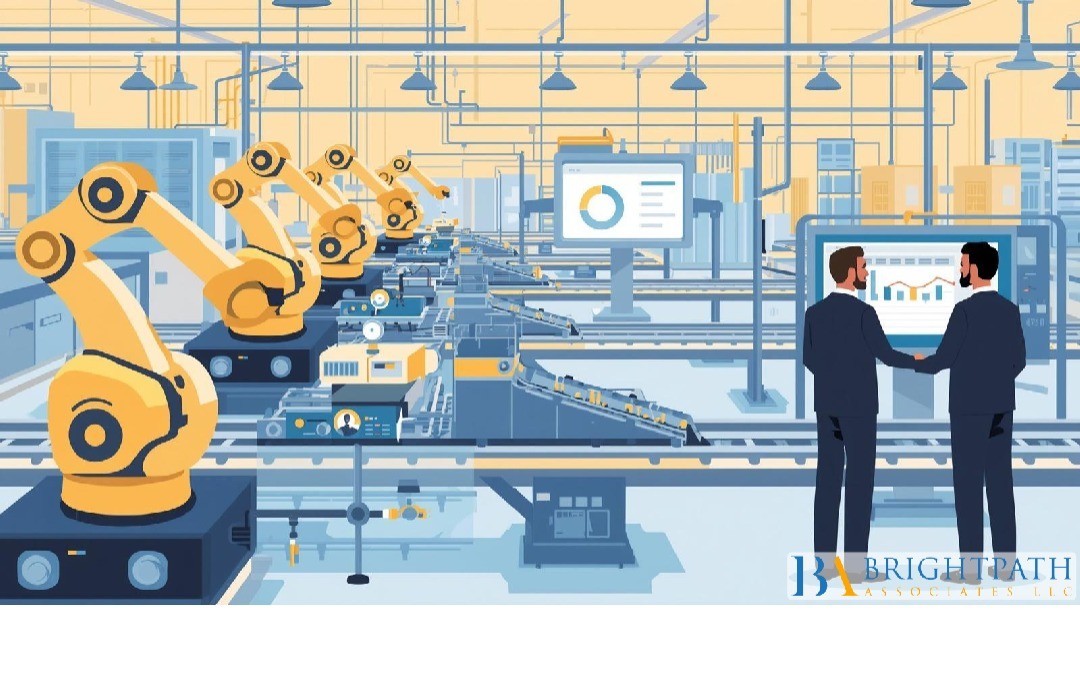
Manufacturing process automation has progressed from early mechanization to a sophisticated convergence of #DigitalTechnologies that interconnect machines, data, and people. It now spans programmable control, sensing, analytics, and orchestration layers that work in concert to elevate throughput, quality, safety, and agility. Modern plants increasingly rely on end-to-end automation solutions that tie together PLC programming service, Robotics integration, SCADA systems, Industrial machine vision, and advanced Control systems to deliver consistent and responsive operations. As complexity grows, the ecosystem around talent and leadership has also become critical, with Industrial automation executive search and Executive Search Recruitment playing a pivotal role in securing the skills and leaders needed to drive transformation. This essay provides an informative, insightful, and industrial perspective on how to architect and execute automation to achieve optimal performance.
The Strategic Rationale: Performance, Resilience, and Competitive Advantage
The traditional case for automation centers on reducing cycle times, minimizing scrap, improving first-pass yield, and ensuring repeatability. Today, manufacturers look beyond incremental efficiency to strategic benefits such as capacity expansion without proportional labor increases, mass customization, and real-time decision-making based on unified data. Manufacturing automation integration enables seamless synchronization across cells and lines, shortening lead times and stabilizing output despite demand volatility. With rising expectations around compliance, sustainability, and traceability, companies increasingly adopt integrated Control systems and data platforms to provide transparency and auditability. The ability to recruit and retain specialized talent through Executive search industrial automation is now a competitive differentiator, ensuring that plants have the engineers, integrators, and data specialists required to sustain long-term gains.
Foundational Technologies: The Fabric of Modern Automation
At the heart of contemporary factories are PLCs coordinating deterministic machine behavior. A mature #PLCProgramming service ensures robust logic, modular code libraries, and safe-state handling for edge cases. SCADA systems consolidate telemetry from diverse assets, enabling operators to visualize conditions, acknowledge alarms, and intervene when necessary. Robotics integration extends beyond high-speed arms to include collaborative cobots that share space with operators, enabling flexible automation of small-batch tasks. Industrial machine vision delivers precise, high-throughput inspection that feeds closed-loop adjustments back to controllers, preventing defects from propagating. These enabling technologies are bound together through interoperable interfaces and secure data pipelines, ensuring that each layer of the stack communicates reliably for decision support and optimization.
Architectures and Interoperability: Building for Scale and Flexibility
Effective automation architectures are layered and modular, avoiding fragile one-off integrations. At the device and cell level, standardized interfaces and reusable function blocks simplify commissioning and changeovers. At the supervisory level, SCADA systems orchestrate visualization and control, while manufacturing execution applications manage genealogy, routing, and electronic records. Enterprise systems integrate production data with planning, finance, and quality management, enabling holistic optimization. Manufacturing automation integration depends on reliable data models and time synchronization so that events, alarms, sensor readings, and quality results can be correlated. When plants design with openness in mind, they reduce vendor lock-in and future-proof investments against evolving technologies. This modularity allows lines to scale as products proliferate or as Automation jobs expand to cover new processes and materials.
Use Cases Across the Value Stream: From Material Flow to Quality Control
Automated assembly cells leverage vision-guided picking, torque-controlled screwdriving, and recipe-based dispensing to deliver repeatable outcomes. Robotics integration in machine tending clears bottlenecks at #CNCStations and presses, while reconfigurable end-effectors support rapid product changeovers. In material handling, autonomous mobile robots align replenishment with takt time, minimizing idle buffers and line-side congestion. Inline quality relies on Industrial machine vision for defect detection and dimensional verification, while thermal and acoustic sensing reduce false positives in non-destructive testing. SCADA systems and advanced Control systems maintain stable process conditions in batch and continuous operations, ensuring consistency across shifts and lots. Together, these applications create a resilient flow where problems are detected early, root causes are easier to isolate, and corrective actions can be applied without disruptive downtime.
Human-Centric Automation: Empowering the Workforce
Automation does not remove the need for human expertise; it elevates it. Operators become problem solvers who interpret data and manage exceptions, while technicians and engineers focus on optimization and reliability. Clear interfaces, intuitive diagnostics, and augmented instructions reduce the learning curve. Plants that invest in reskilling find that Automation jobs shift from repetitive tasks to roles that require cross-disciplinary thinking in mechatronics, data literacy, and systems engineering. This evolution of work underscores the importance of Industrial automation executive search and Executive Search Recruitment to secure leaders who can translate business goals into technical roadmaps and who can steward cultural change. Organizations that align incentives and career pathways with the new operating model accelerate adoption and sustain continuous improvement.
Quality and Compliance: Digitizing Assurance and Traceability
In sectors with stringent regulatory demands, automation embeds compliance into daily operations. Recipe control enforces parameters, while electronic signatures and audit trails document every step of production. Machine vision systems verify critical-to-quality features, and closed-loop Control systems adjust setpoints to maintain #StatisticalControl. SCADA systems provide time-stamped event histories, enabling fast and accurate investigations. Manufacturing automation integration extends genealogy across suppliers, in-process operations, and distribution, ensuring that traceability is complete and verifiable. When quality is designed into the automation fabric, deviations decrease, release cycles shorten, and customer confidence rises.
Reliability and Maintenance: From Reactive to Predictive
Unplanned downtime erodes capacity and raises cost. Plants overcome this by integrating sensing at the edge, collecting vibration, temperature, and current signatures that expose early signs of wear or misalignment. Analytics identify anomalies, while maintenance plans shift from calendar-based to condition-based actions. PLC programming service capabilities include diagnostics, watchdogs, and state awareness that enable graceful degradation or failover when anomalies occur. SCADA systems provide visibility into mean time between failures and mean time to repair, guiding spare parts strategies and technician training. Over time, organizations bake reliability into design choices, selecting components for maintainability, designing panels for access, and structuring software for observability so that problems can be isolated quickly.
Energy and Sustainability: Optimizing Resource Intensity
Energy, water, and materials are core inputs whose footprint can be materially reduced with automation. Variable frequency drives, intelligent compressed air management, and heat recovery lessen consumption at the equipment level. Sequencing and scheduling within SCADA systems level loads to avoid demand peaks. Industrial machine vision and precise dispensing reduce scrap and rework, limiting waste and associated emissions. The integration of environmental metrics into production dashboards enables ongoing calibration of setpoints to balance throughput and sustainability objectives. Executive search #IndustrialAutomation increasingly prioritizes leaders with a sustainability mindset, recognizing that resource efficiency is both a financial and environmental imperative.
Implementation Roadmap: From Vision to Stabilized Operations
Successful programs begin with a clear strategy tied to measurable outcomes such as throughput, first-pass yield, changeover time, and cost per unit. A focused pilot that addresses a known bottleneck demonstrates feasibility and builds momentum. Architecture and vendor selection then prioritize open, secure, and supportable platforms, ensuring that Robotics integration, SCADA systems, and Control systems can evolve together. Process reengineering precedes hardware installation so that automation simplifies rather than preserves inefficiency. Factory acceptance testing and site acceptance testing verify function and robustness, while commissioning plans include fallback procedures and performance baselines. Training and change management follow, ensuring that teams understand both the reasons behind the change and the practical skills to operate and maintain the system. Stabilization and scale come next, where lessons learned are documented, improvements are institutionalized, and Manufacturing automation integration patterns are replicated across similar cells and lines.
Governance, Cybersecurity, and Data Stewardship: Protecting the Digital Factory
As operations become more connected, cybersecurity becomes a foundational requirement. Network segmentation, least-privilege access, and rigorous patching protect against disruptions and data breaches. Data governance policies clarify ownership, access rights, and quality standards, enabling trustworthy analysis. SCADA systems and historian databases require consistent time synchronization and schema management so that analytics derive accurate conclusions. Change control and versioning in PLC programming service and supervisory applications ensure traceability and rollback options. The organizations most capable of sustaining performance treat governance and cybersecurity not as add-ons but as intrinsic elements of the #AutomationLifecycle.
Talent, Leadership, and the Market for Skills: Aligning People with Technology
The expanding technical scope of automation has intensified the need for specialized skills. Companies invest in upskilling programs while also leveraging Industrial automation executive search to identify leaders who can orchestrate cross-functional implementation and who understand plant realities as well as enterprise priorities. The broader ecosystem of #ExecutiveSearchRecruitment connects manufacturers with experts in Robotics integration, SCADA systems architecture, Industrial machine vision engineering, and advanced Control systems design. A healthy market for Automation jobs, spanning technicians to data scientists, reflects the ongoing shift toward intelligent, software-defined manufacturing. Aligning compensation, career progression, and recognition with these evolving roles helps firms attract and retain the talent required to maintain a continuous improvement cadence.
Measuring Success: Translating Data into Operating Excellence
#PerformanceManagement hinges on selecting metrics that capture availability, speed, and quality. Overall Equipment Effectiveness consolidates these dimensions, while first-pass yield, scrap rate, and changeover time reveal where variability still exists. Reliability indicators such as mean time between failures and mean time to repair identify bottlenecks in maintenance practices and parts strategies. Energy per unit and waste rates quantify sustainability progress, enabling trade-offs to be calibrated without sacrificing throughput. SCADA systems provide the operational lens for these metrics, and Manufacturing automation integration ensures that insights travel from the line to decision-makers who can act. By institutionalizing daily management routines that review trends, assign actions, and verify outcomes, plants convert raw data into stable and improving performance.
The Road Ahead: Adaptive, Connected, and Self-Optimizing
The trajectory of manufacturing points toward adaptive and increasingly autonomous operations. Edge analytics and model-based control reduce latency and enable fine-grained optimization at the machine level. Digital twins accelerate design, commissioning, and changeovers by testing scenarios virtually before implementing them physically. Robotics integration will expand into more dexterous tasks as sensing and actuation improve, while Industrial machine vision fused with learning algorithms will elevate quality inspection to predictive levels. As these capabilities mature, the roles supported by Automation jobs will continue to evolve, emphasizing systems thinking, human-machine collaboration, and data-driven decision-making. In parallel, Executive search industrial automation will remain vital in sourcing leaders who can integrate technology strategy with business outcomes and who can sustain the cultural foundation necessary for continuous improvement.
Conclusion
Manufacturing process automation has become a strategic capability that unites rigorous engineering, intelligent software, and empowered people. Plants that design for interoperability, resilience, and cybersecurity achieve not only higher throughput and better quality but also faster response to market shifts and improved sustainability. The synergy of PLC programming service, SCADA systems, Robotics integration, Industrial machine vision, and robust Control systems forms the operational backbone, while #ManufacturingAutomation integration provides the connective tissue that transforms local gains into enterprise-wide performance. The human dimension remains critical, with Industrial automation executive search and Executive Search Recruitment ensuring that the right leaders and specialists are in place to guide transformation. By treating automation as an ongoing discipline—measured, refined, and scaled through data—manufacturers build durable advantage in a world where precision, flexibility, and reliability define success.
Find your next leadership role in Industrial Automation Industry today!
Stay informed with the latest insights on Industrial Automation Industry!