
Introduction: A Sector at an Inflection Point
#ForestryWorkforce is simultaneously a climate imperative, a rural economic engine, and a strategic pillar of the bioeconomy. Yet the sector faces a labor challenge that threatens productivity, safety, and growth. An aging workforce, skills gaps amid mechanization, intensified wildfire and climate risks, shifting market dynamics, and persistent misconceptions about modern forestry all converge to constrain capacity. Solving these issues requires a comprehensive response that rethinks work design, elevates training, aligns incentives, and modernizes employment models. This essay provides an informative and industrially grounded blueprint to strengthen the modern forestry workforce while supporting forest product innovation, safer and more efficient timber harvesting, and sustainable materials markets that include the Paper industry and wood product manufacturing.
The Workforce Reality: Demographics, Perceptions, and Skills Gaps
The labor shortfall is driven by demographics and a perception lag. Many of the most experienced field operators, mechanics, and foresters are approaching retirement, with too few early-career entrants to replace them. Simultaneously, the image of forestry has not kept pace with reality. Today’s operations incorporate advanced paper and pulp technology, precision mechanized harvesters, GNSS-enabled planning, and digital twins of stands and mills, but prospective workers often picture only chainsaws and difficult terrain. This mismatch isolates forestry from talent pools that are otherwise enthusiastic about sustainability and industry 4.0. The result is a widening skills gap across equipment operation, data-driven planning, mill maintenance, and fuels-reduction practices—exactly where demand is strongest.
Demand Drivers: Climate, Markets, and Regulations
The intensification of wildfire seasons has expanded year-round work in fuels treatment, prescribed burning, and post-fire restoration. These activities require trained crews and mechanized equipment to handle steep slopes and heavy biomass efficiently, while complying with evolving forestry regulations that govern environmental protection, worker safety, and carbon reporting. On the market side, demand for sustainable materials, mass timber, engineered wood products, and recycled fiber streams underscores the importance of reliable supply chains from stump to mill. Lumber industry trends now intersect with green building standards, circular economy mandates, and the electrification of #ConstructionEquipment fleets. This convergence elevates the need for a skilled, mobile, and safety-focused workforce capable of delivering climate resilience and industrial productivity.
Mechanization and Digitalization: Raising Productivity and Safety
The modernization of timber harvesting through purpose-built harvesters, forwarders, and tethered systems has significantly reduced exposure to many of the most hazardous manual tasks. Mechanization improves control over felling, bunching, and processing, reduces time on the ground, and stabilizes outputs despite variable terrain and weather. Digitalization compounds these gains: operators trained on simulators can transition more smoothly into real equipment, while telematics, geofencing, and slope alerts help managers optimize cycle times and maintain safety envelopes. In mills, predictive maintenance, automated sorting, and process analytics are reshaping paper and pulp technology and wood product manufacturing. Integrating these tools requires a workforce fluent in both mechanical fundamentals and data interpretation, which is why training ecosystems must evolve in parallel with equipment investments.
Training Ecosystems: From Micro-Credentials to Apprenticeships
A competency-based approach is essential to accelerate learning and close experience gaps. Entry-level pathways should offer paid pre-apprenticeships and micro-credentials covering basic machine operation, steep-slope safety, maintenance diagnostics, GIS/GNSS skills, and prescribed fire fundamentals. These stackable credentials can ladder into registered apprenticeships for equipment operators, industrial mechanics, millwrights, and fuels technicians. Simulation-based training provides a low-risk environment to build proficiency before transitioning into cabs and mills. Dual-training models, co-designed by OEMs, contractors, mills, and community colleges, ensure curricula reflect real equipment, current process control systems, and emerging standards. Over time, such models enhance consistency across regions, enabling more predictable labor pipelines and faster ramp-ups after seasonal or market disruptions.
Job Quality and Retention: Stability for the Long Haul
#ImprovingRetention is as critical as recruiting. Travel stipends, rotational schedules, and mobile or subsidized housing reduce the friction of remote deployments. A safety-first culture—daily briefings, open near-miss reporting, fair incident review, and fatigue and heat protocols—builds trust and lowers turnover. Ergonomic cabs, climate control, and task rotation help prevent repetitive strain and extend careers, especially as mechanized roles become more common. Transparent wage ladders tied to verifiable skills ensure that pay progression rewards upskilling. These investments pay for themselves through greater productivity, fewer injuries, and lower hiring churn, stabilizing workforces in both field operations and mill environments, including critical roles in Paper industry process control and maintenance.
Technology With a Human Focus: Aligning Tools and Talent
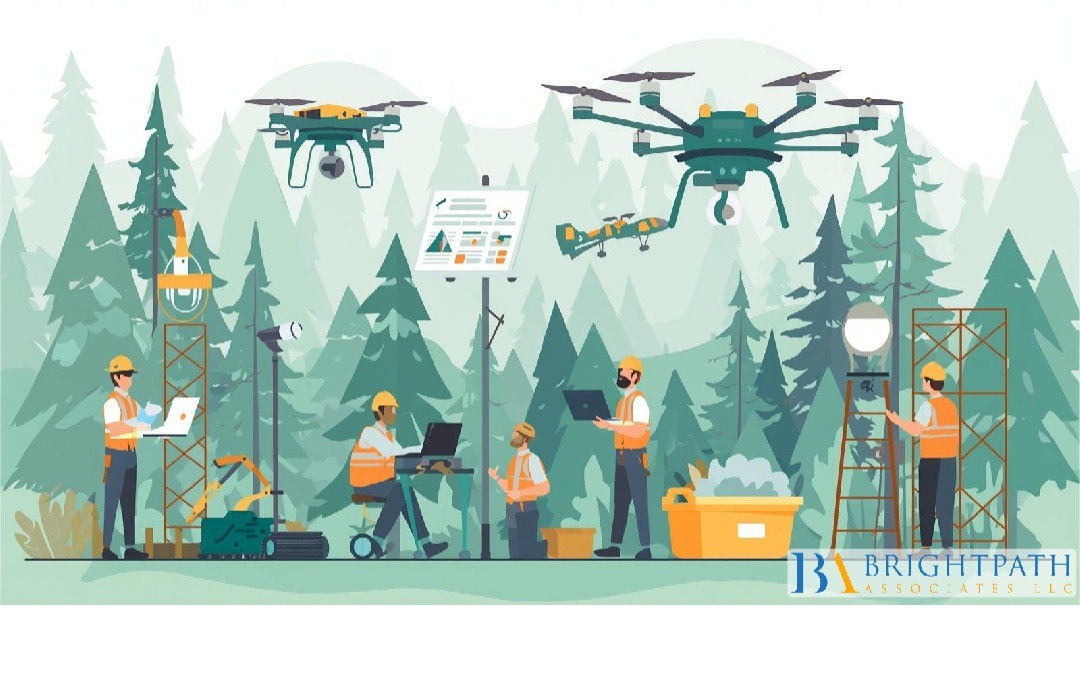
To fully capture value from mechanization and analytics, organizations must design roles around human performance. Operators should be trained not only to run machines but to read data, diagnose anomalies, and collaborate in cross-functional teams that include planners, mechanics, and environmental specialists. Mill technicians should be conversant in both traditional systems and the newest paper and pulp technology, from advanced sensors to AI-assisted quality control. Drone pilots and spatial analysts can support stand inventory, storm damage assessments, and fireline reconnaissance, translating geospatial data into actionable plans. This integrated approach bridges technical silos, ensuring that technology complements human expertise rather than overwhelming it.
Paper and Fiber: Circularity, Recycling, and Mill Skills
The #PaperIndustry faces its own labor transitions as mills adopt automation, digital quality systems, and fiber diversification strategies. Paper recycling solutions are central to circularity targets, requiring technicians who understand contamination control, deinking chemistry, screening and cleaning optimization, and fiber yield management. As recovered fiber mixes evolve, mills need operators and process engineers adept at tuning systems to maintain strength, brightness, and runnability. These competencies intersect with Paper industry economics, where energy costs, input quality variability, and product portfolio shifts all place a premium on process stability and predictive maintenance. Workforce programs should integrate recycling fundamentals and circular economy principles alongside core paper and pulp technology, ensuring that mill teams can manage both virgin and recycled fiber streams efficiently and sustainably.
Wood Product Manufacturing: Precision, Quality, and Market Growth
Engineered wood and mass timber continue to reshape construction markets, creating demand for technicians skilled in CNC machinery, adhesives, press operations, and non-destructive testing. Wood product manufacturing benefits from quality-by-design methods, where statistical process control and machine vision reduce defects and rework. Forest product innovation, including bio-based resins, thermally modified products, and hybrid wood composites, expands the skill requirements for R&D technicians, line operators, and quality engineers. As products pivot toward low-carbon building systems, the labor force must adapt to more precise tolerances and documentation standards demanded by building codes and certification programs. Coordinated training that spans sawmills, panel plants, and engineered wood facilities establishes a common language of metrics, safety, and quality, accelerating ramp-up times and workforce mobility.
Policy, Procurement, and Forestry Regulations: Incentives that Shape Behavior
Regulatory frameworks and procurement standards can anchor workforce investments. #ForestryRegulations that mandate safety training, environmental protections, and transparent reporting create baseline expectations across contractors and mills. Outcome-based procurement—public or private—can prioritize bidders who demonstrate accredited safety programs, active apprenticeships, and modern equipment with lower emissions and better operator protections. These preferences drive sector-wide modernization without prescribing specific technologies, allowing regions to tailor approaches to their terrain and markets. On the finance side, cost-sharing for mechanized equipment, simulator acquisition, and training capacity lowers barriers for small and mid-sized contractors, while multi-year or indexed contracts reduce revenue volatility and encourage long-term investments in people.
Economics and Market Signals: Building Durable Career Paths
Labor strategy must be rooted in industrial realities. Paper industry economics, lumber price cycles, transportation costs, and capital intensity all influence hiring decisions. Employers are more likely to build sustainable pipelines when they can forecast demand, secure multi-season projects, and spread training costs across a steady backlog. Regional workforce intermediaries can play a stabilizing role by employing workers directly and dispatching them across multiple contractors, smoothing seasonal gaps, and offering portable benefits. This model improves risk-sharing, professionalizes safety and training functions, and supports consistent quality across diverse projects. As lumber industry trends align more closely with green construction and resilience spending, longer planning horizons should gradually reduce workforce whiplash and justify deeper investments in upskilling.
Executive Search Recruitment: Elevating Leadership and Specialized Talent
Beyond entry-level pipelines, the sector needs leaders who can integrate operations, safety, technology, and sustainability into a single performance system. #ExecutiveSearchRecruitment can help place #PlantManagers versed in lean manufacturing and advanced process control, operations directors who can scale mechanized fleets while improving safety metrics, and human capital leaders who can knit together apprenticeship programs, portable benefits, and regional partnerships. Specialist roles—automation engineers, data scientists, environmental compliance directors, and advanced maintenance leaders—are also critical for accelerating forest product innovation and ensuring that upgrades in mills and field operations deliver measurable returns. High-caliber leadership shortens the learning curve for new technologies and embeds a culture of continuous improvement across the value chain.
Implementation Without Friction: A Practical Operating Model
A practical pathway begins with regional recruit-train-hire cohorts centered on fuels reduction and mechanized operator fundamentals, supported by simulators and mentored field time. Employers establish clear skill matrices tied to wage progression, making advancement visible and predictable. Travel stipends and rotational schedules address the realities of remote work, while standardized daily safety briefings, near-miss reporting, and ergonomic improvements reduce incident rates. In parallel, mills modernize training for process control, predictive maintenance, and Paper recycling solutions to manage variable fiber inputs. Over one to three years, multi-employer intermediaries can consolidate portable benefits and dispatch labor to stabilize employment. Procurement preferences and forestry regulations then reinforce the system, aligning market incentives with job quality and training participation. Continuous improvement cycles that monitor productivity, cost-per-unit treated or produced, safety incidents, and retention provide feedback to sustain momentum.
The Strategic Payoff: Safety, Productivity, and Sustainability
The solutions outlined here align safety with productivity and climate goals. Mechanization reduces exposure to high-hazard tasks and improves throughput, while competency-based training ensures operators can fully leverage modern equipment. Job quality improvements mitigate turnover and widen participation. Investments in Paper and #PulpTechnology, engineered products, and Paper recycling solutions reduce environmental footprints and open advanced technical roles. As sustainable materials gain market share, a robust forestry workforce becomes an enabler of low-carbon construction and circular fiber economies. In this integrated model, every improvement—whether in equipment, process, or policy—links back to human capability, ensuring that innovation scales safely and profitably.
Conclusion: A Modern Workforce for a Modern Forest Economy
Forestry’s labor challenge is not a constraint but a catalyst for transformation. By embracing mechanization, digitalization, and rigorous training, the sector can create high-quality jobs that appeal to a broader talent base and deliver measurable gains in safety and productivity. Coordinated policy, finance, and procurement frameworks can stabilize employment and encourage long-term investments in people and equipment. Strategic leadership, supported by Executive Search Recruitment, can integrate operations and culture to sustain continuous improvement. As forest product innovation advances and markets demand sustainable materials, the modern forestry workforce will stand at the center of climate resilience, rural prosperity, and industrial excellence—capable, confident, and ready to meet the moment across timber harvesting, wood product manufacturing, and the evolving Paper industry.
Find your next leadership role in Paper & Forest Products Industry today!
Stay informed with the latest insights on Paper & Forest Products Industry!