
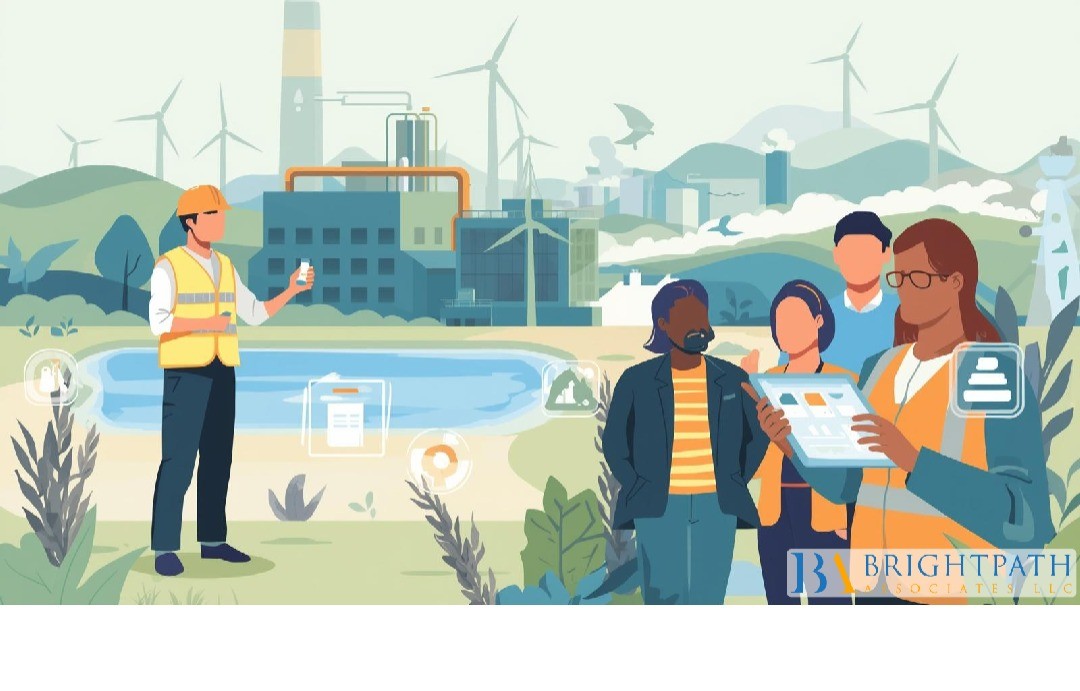
The Expanding Demands on Environmental Services
#EnvironmentalServicesCompanies operate at the intersection of regulatory oversight, public accountability, and technological innovation. As global awareness of environmental sustainability intensifies, the demand for comprehensive waste management solutions, advanced water treatment systems, and effective air pollution control continues to grow. Governments, corporations, and communities increasingly rely on environmental consulting and compliance expertise to navigate complex environmental standards and sustainability targets.
For small to mid-sized environmental services organizations, this expanding mandate presents both opportunity and strain. The breadth of services now required—from hazardous waste remediation to green technology integration—demands a highly skilled and adaptable workforce. At the same time, regulatory frameworks governing environmental compliance have become more stringent, requiring meticulous documentation, monitoring, and operational transparency.
This convergence of growth and complexity places unprecedented pressure on workforce capability and leadership effectiveness.
Workforce Shortages and Operational Risk
The environmental sector is experiencing a significant labor challenge. Technical roles in environmental consulting, engineering, water treatment operations, and clean technology implementation require specialized training and certifications. However, the pipeline of qualified professionals has not kept pace with industry expansion.
Aging workforces in environmental engineering and compliance oversight are approaching retirement, while younger professionals often gravitate toward emerging sectors such as renewable energy or digital technology. This talent imbalance leaves many environmental services firms competing for a limited pool of experienced professionals.
The shortage is particularly acute at the leadership level. Operations directors, sustainability officers, compliance executives, and business development leaders must possess deep technical knowledge combined with strategic vision. When these roles remain vacant or are filled with underqualified candidates, organizations face increased compliance risk, project delays, and weakened client relationships.
For C-suite executives and founders, the labor challenge is not confined to field technicians or plant operators—it extends to the executive suite, where leadership capability directly shapes organizational resilience.
The Shift Toward Environmental Innovation and Technology Integration
#EnvironmentalInnovation has become a central differentiator in the sector. Companies are deploying advanced monitoring systems, AI-driven environmental risk assessments, and automated waste management solutions to enhance efficiency and compliance accuracy. Clean technology and green technology investments are reshaping service delivery models, allowing firms to reduce emissions, optimize resource usage, and deliver measurable sustainability outcomes.
Water treatment facilities increasingly rely on digital sensors and predictive analytics to maintain quality standards and reduce downtime. Air pollution control systems integrate data platforms that track emissions in real time, enabling rapid corrective action. These advancements improve performance but also require leadership capable of integrating technology with operational workflows.
Executives in environmental services must now understand digital transformation alongside regulatory frameworks. They must evaluate technology investments not only for compliance alignment but also for return on investment and scalability. The modern environmental workforce therefore depends on leaders who combine environmental science expertise with digital literacy and financial acumen.
Evolving Executive Role Expectations
The expectations placed upon executives in environmental services have expanded dramatically. Beyond overseeing compliance and service delivery, leaders must engage stakeholders, manage investor scrutiny, and articulate sustainability strategies that align with broader environmental sustainability goals.
Clients increasingly demand transparent reporting on environmental impact metrics. Regulators require detailed documentation of environmental compliance efforts. Communities expect proactive communication regarding air pollution control and water treatment initiatives. These dynamics require executives who can bridge technical operations with strategic communication and governance oversight.
Simultaneously, economic pressures influence operational decisions. Environmental services companies must manage rising equipment costs, workforce expenses, and competitive bidding processes. Executives must balance cost discipline with innovation investment, ensuring that sustainable growth does not compromise financial stability.
The breadth of these responsibilities underscores why leadership shortages present such a significant risk.
The Strategic Evolution of Executive Hiring
Traditional recruitment approaches often struggle to meet the nuanced demands of modern environmental services. Posting job descriptions and relying on passive applicant pools rarely yields candidates with the interdisciplinary expertise required for senior leadership roles.
#ExecutiveSearchRecruitment has emerged as a strategic response to this challenge. Rather than reacting to vacancies, proactive organizations engage specialized search partners to identify high-impact leaders with proven experience in environmental consulting, waste management solutions, environmental compliance, and clean technology integration.
This approach emphasizes competency-based evaluation, assessing candidates for strategic thinking, regulatory literacy, technological fluency, and cultural alignment. By mapping the talent market comprehensively, executive search recruitment firms access passive candidates who may not be actively seeking new roles but possess transformative capabilities.
For small to mid-sized environmental services companies, this methodology levels the competitive playing field. It provides access to executive talent that might otherwise gravitate toward larger multinational firms.
Aligning Leadership Strategy with Workforce Solutions
Addressing the labor challenge requires more than increasing headcount. It demands a cohesive workforce strategy anchored in strong executive leadership. Leaders must design training programs, cultivate talent pipelines, and implement retention strategies that sustain organizational knowledge.
They must also champion environmental innovation, ensuring that investments in green technology and clean technology enhance workforce productivity rather than overwhelm teams with complexity. Strategic leaders integrate technology adoption with workforce development, fostering cultures of continuous improvement.
Executive search recruitment plays a critical role in securing leaders capable of orchestrating this integration. By identifying executives with demonstrated success in scaling environmental services operations and strengthening compliance frameworks, organizations position themselves for sustainable growth.
Executive Search Recruitment as a Competitive Advantage
In a sector defined by regulatory scrutiny and environmental responsibility, leadership quality directly influences reputation and revenue. Companies that fail to address executive talent shortages risk operational inefficiencies, compliance failures, and diminished client trust.
Brightpath Associates provides a specialized executive search recruitment approach tailored to complex industrial and #EnvironmentalSectors. Through targeted talent mapping and rigorous candidate evaluation, it supports environmental services companies in identifying leaders equipped to navigate compliance demands, integrate environmental innovation, and drive strategic expansion.
By treating executive hiring as a strategic investment rather than an administrative task, organizations strengthen their ability to respond to workforce challenges and regulatory pressures simultaneously.
Conclusion: Leadership as the Foundation of Workforce Resilience
The labor challenge confronting the modern environmental workforce is multifaceted, encompassing technical skill shortages, leadership gaps, and rising regulatory complexity. For C-suite executives and founders of small to mid-sized environmental services companies, the solution lies not solely in recruitment volume but in strategic executive alignment.
Strong leadership anchors workforce stability, drives environmental sustainability initiatives, and ensures consistent environmental compliance. As clean technology adoption accelerates and stakeholder expectations intensify, executive capability becomes the decisive factor in long-term competitiveness.
Organizations that proactively invest in executive search recruitment secure leaders who can transform labor challenges into strategic opportunities. In doing so, they build resilient, innovative, and future-ready environmental services enterprises capable of meeting the evolving demands of a sustainability-driven world.
Find your next leadership role in Environmental Services Industry today!
Stay informed with the latest insights on Environmental Services Industry!