
Introduction: Momentum in an Industrial Mainstay
The United States is witnessing a decisive reinvention of its rail industry, propelled by clean propulsion, digitalization, advanced materials, and a reshoring push that favors domestic production. This convergence is redefining the #RailroadManufacturingIndustry outlook and reshaping expectations for reliability, safety, and sustainability. The combination of private capital, public grants, updated emissions policy signals, and stronger domestic content rules is unlocking a new era for Locomotive manufacturing, passenger fleets, and freight rolling stock. From the shop floor to the main line, the story of Rail industry innovations is now one of disciplined systems integration, lifecycle cost reduction, and manufacturing excellence embedded in design.
Propulsion Breakthroughs: Efficiency Now, Zero Emissions Next
The propulsion pathway for the Rail industry is coherently bifurcated. On one side, advanced diesel systems augmented by robust energy management software deliver immediate emission and fuel savings across large fleets. On the other, battery-electric and hydrogen locomotives are moving from proofs of concept to productized platforms and targeted deployments. This is not a false choice; it is a sequenced strategy. Energy management systems, often described as a “smart cruise control for trains,” consistently deliver notable fuel reductions by optimizing throttle, braking, and distributed power. These savings translate directly into lower greenhouse gas emissions and operating expenses and have become standard across Class I railroads. In parallel, full battery-electric locomotives have proven that, when integrated into mixed consists, they can cut fuel consumption significantly through regenerative braking and intelligent charge–discharge strategies. Switchers, yard movements, and short-haul corridors with frequent braking cycles appear especially promising for early scaling. Hydrogen fuel cell prototypes are building momentum in switcher applications, showing potential where long runtimes and quick refueling are critical, albeit with an infrastructure curve that demands careful co-planning with utilities and safety regulators. Collectively, these Rail technology advancements point to a pragmatic decarbonization pathway: systematic diesel optimization now, combined with targeted battery and hydrogen pilots that compress learning cycles and de-risk future capital commitments.
Passenger Rolling Stock Modernization: Domestic Production, Modern Capabilities
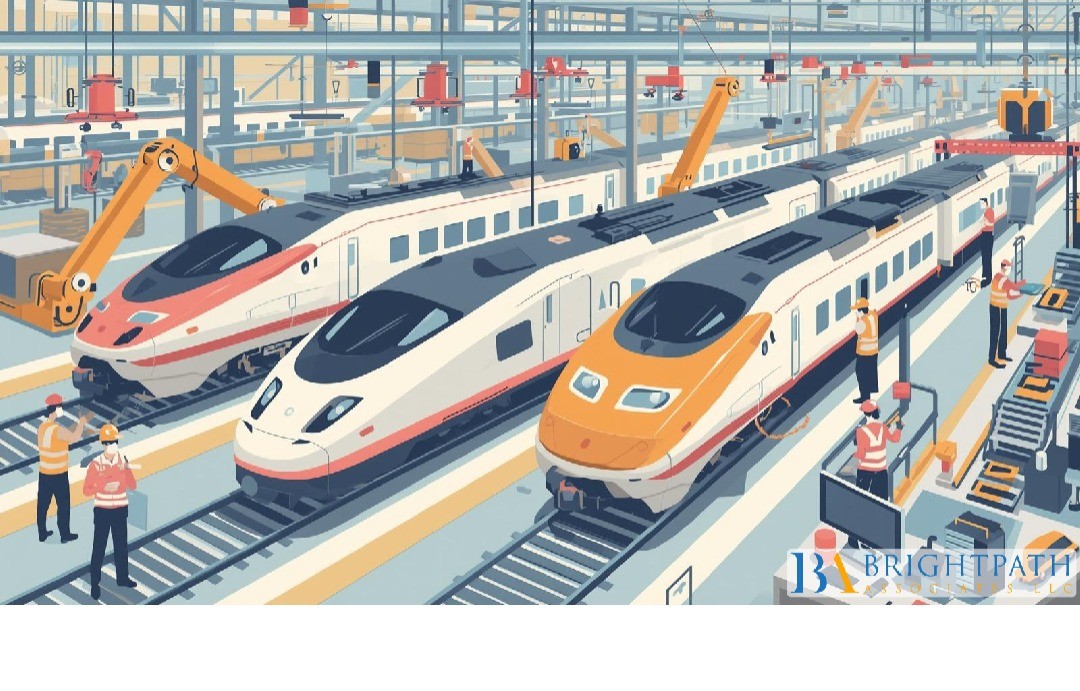
The modernization of US passenger equipment marks a pivotal industrial shift. New corridor trainsets built domestically are arriving with dual-power and hybrid-battery options, enabling seamless transitions between electrified and non-electrified territories and sharply reducing idling and station-area emissions. The result is faster trip times, higher reliability, and quieter, cleaner service for riders and communities. Importantly, these programs are expanding the US manufacturing industry footprint through assembly and integration in American facilities, reinforcing supply chain depth for traction, carbody structures, bogies, and onboard systems. The long-run benefit is not simply new trains, but a reinvigorated domestic industrial ecosystem that can support iterative upgrades, higher volumes, and export competitiveness. As federal “Buy America” requirements strengthen, OEMs and tier suppliers that can reliably meet domestic content thresholds will anchor a robust pipeline of work through the next decade. The convergence of passenger investments and policy certainty is already improving the Railroad manufacturing industry outlook by attracting capital to plants, tooling, and #WorkforceDevelopment.
Advanced Manufacturing and Materials: Lighter, Stronger, Faster to Market
Advanced manufacturing is reshaping how Railroad equipment manufacturers design and build critical systems. Additive manufacturing has moved well beyond prototypes into certified production parts for braking, HVAC, and interior modules. The design freedom of 3D printing enables consolidation of multiple pneumatic interfaces into single components, reducing leak paths, cutting mass, and simplifying maintenance. When applied to brake control architectures that increasingly rely on software-defined functions, additive methods can deliver lighter, more maintainable systems without compromising safety integrity levels. On the freight side, material science is delivering step changes in durability and lifecycle cost. High-strength weathering steels in boxcar door systems, for example, are demonstrating double the yield strength of traditional designs and notable reductions in lifetime repair costs by minimizing damage from forklift strikes and yard operations. Meanwhile, composites are entering demanding reefer applications with primary load floors that promise weight reduction, corrosion resistance, and higher payload volume. The early evidence suggests that composite structures, once proven in heavy-duty refrigerated trailers, can transfer into rail rolling stock where dynamic loads, fatigue, and moisture ingress have historically favored steel. Together, these Advanced manufacturing capabilities shorten development cycles, allow on-demand spare production closer to the point of use, and mitigate supply chain risks—a decisive differentiator for Top railroad manufacturing companies US competing on total lifecycle value.
Inspection Automation and Digitalization: From Reactive to Predictive
Automation in inspection is one of the clearest Rail technology advancements, already reshaping maintenance regimes. Digital train inspection portals that capture ultra-high-resolution, 360-degree imagery of passing trains at mainline speeds are augmenting (not replacing) human inspectors. By flagging visible defects within minutes and directing personnel to precise car locations and components, these systems improve detection rates and reduce dwell from broad, manual searches. Moreover, machine vision and AI are maturing through continuous retraining on real-world datasets, steadily expanding the classes of defects that can be reliably detected in motion. On the infrastructure side, autonomous track geometry measurement systems are expanding the frequency and coverage of inspections, revealing latent defects before they approach safety thresholds. The architecture—sensors mounted on locomotives or revenue cars, streaming to central analytics—shifts the Rail industry toward condition-based maintenance. Early regulatory waivers and rulemakings are codifying how automated and visual inspections blend, ensuring safety while enabling railroads to harvest the reliability benefits of continuous data. As digital twins proliferate—virtual representations of locomotives, bogies, or track segments kept in sync with sensor data—maintenance windows can be scheduled proactively, failure modes simulated in advance, and spares staged just in time. Manufacturers that deliver digital twin-ready equipment out of the factory line, with secure data interfaces and validated models, will better support operators in maximizing availability and minimizing lifecycle cost.
Policy, Standards, and Cybersecurity: The New Design Envelope
The #RegulatoryEnvironment is exerting productive pressure on industrial choices. Locomotive Tier 4 standards remain the federal benchmark for new-build and remanufactured emissions performance, while certain states push ahead with in-use rules that prioritize zero-emission conversions over long horizons. Even as policy debates continue, the direction of travel is clear: cleaner fleets, cleaner yards, and quantifiable emissions reductions in rail-adjacent communities. Parallel to environmental policy, domestic content rules born from recent infrastructure legislation are tightening the application of “Buy America” to manufactured products, steadily raising the bar for sourcing and final assembly in the US. For OEMs and suppliers, this catalyzes capital investments in American plants, stamping and casting capabilities, and logistics that can satisfy multi-year fleet programs. Cybersecurity has become an equally nonnegotiable design constraint. Performance-based directives for freight and passenger railroads now require network segmentation, robust access controls, continuous monitoring, and tested incident response across information technology and operational technology domains. As rolling stock and wayside assets become more connected and software-driven, secure-by-design architectures and verifiable update pathways are mandatory. Manufacturers that engineer cybersecurity into control systems, gateways, and maintenance tooling—and can document compliance—will hold a durable competitive advantage as railroads align procurement with operational risk management.
Supply Chains and Workforce: Capacity Building for a Long Cycle
Innovation is only as strong as the supply chain and workforce that sustain it. The US manufacturing industry is scaling in strategic nodes—traction converters, power electronics, brake modules, couplers, doors, and interiors—to meet rising domestic content thresholds and delivery schedules. Tier suppliers are investing in equipment, certifications, and traceability systems that can handle the documentation rigor of federally supported procurements. Simultaneously, workforce development is accelerating, with regional rail academies and technical colleges standing up programs in mechatronics, high-voltage systems, data analytics, and quality assurance. The best programs blend theory with hands-on lab work using real rolling stock components, preparing technicians for hybrid roles that span mechanical, electrical, and software disciplines. #ExecutiveSearchRecruitment firms specializing in industrial technology are playing a growing role in sourcing leadership and specialized engineering talent, particularly where rail manufacturers must compete with aerospace, automotive, and energy sectors for controls engineers, battery systems experts, and cybersecurity architects. Talent pipelines, from apprenticeship to executive leadership, are thus emerging as a critical pillar under the Railroad manufacturing industry outlook, ensuring the capacity to deliver on ambitious fleet and infrastructure programs.
Competitive Positioning: What Will Distinguish Leaders
The next decade will reward companies that master integration. Platform-based product strategies that treat locomotives and railcars as upgradeable systems—with standardized, documented interfaces for batteries, fuel cells, inverters, brake control, and telematics—will allow seamless technology refreshes throughout long service lives. Data and model governance will be equally decisive. Turning inspection imagery, track geometry records, and onboard sensor streams into actionable maintenance decisions requires disciplined data engineering, validated algorithms, and human-in-the-loop workflows that respect railroad operating realities. Materials and process leadership will continue to separate performance and cost curves, whether through additive consolidation of parts, composite structures in harsh service, or high-strength steels that resist damage while controlling tare weight. Finally, secure, supportable #DigitalEcosystems—spanning configuration management, over-the-air updates, and cyber event recovery—will move from differentiators to minimum requirements, and those who adopt them early will shape best practices and standards.
Freight Rolling Stock: Lifecycle Economics Reimagined
In freight, the Industrial lens is trained firmly on lifecycle value. For boxcars, gondolas, hoppers, and reefers, the business case for innovation rests on uptime, reduced unplanned repairs, and higher net payloads. High-strength steel door systems that eliminate common failure modes pay back through avoided shop time and fewer load failures. Composite load floors built for high-impact, high-fatigue environments unlock weight savings and corrosion resistance, allowing operators to carry more and spend less on structural repairs. Condition-based maintenance informed by machine vision and wayside detectors shifts wheel, bearing, and brake attention from schedule to need, reducing both risk and cost. The cumulative effect is a compelling case for modernization, even when new car prices rise, because the long-run operating economics tilt in favor of advanced materials and digital oversight.
Passenger Experience and Corridor Performance: Reliability by Design
On passenger corridors, modernization translates directly into reliability, speed, and a quieter passenger experience. Dual-power trainsets eliminate the historic penalty of locomotive swaps at electrification boundaries, while battery-hybrid capabilities bridge short gaps and reduce emissions in terminals and tunnels. Interior redesigns emphasize accessibility, power availability, lighting, and wayfinding, converging on a standard of comfort that meets #GlobalBenchmarks. From a manufacturing perspective, modular interiors and standardized door and HVAC modules lower maintenance dwell and speed parts replacement. Over time, these design choices cohere into higher average speeds, better on-time performance, and improved asset turns—vital metrics for corridor economics and public trust.
Outlook: A Stronger, Cleaner, and More Competitive Rail Industrial Base
The Railroad manufacturing industry outlook is bright, not because of any single breakthrough, but because of systemic alignment. Rail industry innovations are arriving simultaneously across propulsion, inspection, materials, and software, while policy and funding mechanisms reward domestic production and verifiable performance gains. Top railroad manufacturing companies US are already positioning around platform architectures, digital service offerings, and secure-by-design controls that can scale across freight and passenger markets. The broader Rail industry stands to benefit from increased resilience as domestic suppliers gain volume and capability, creating a virtuous cycle of investment, employment, and export potential. Locomotive manufacturing will continue to diversify across high-efficiency diesel, battery-electric, and hydrogen variants, each allocated to duty cycles where they create the most value. Advanced manufacturing will compress lead times, fortify spare parts availability, and support iterative upgrades that keep fleets modern without wholesale replacement. Railroad equipment manufacturers that combine engineering rigor with customer-centric lifecycle support will define the next chapter.
Conclusion: Industrial Discipline Meets Ambition
The United States has entered a decisive period in Railroad manufacturing, where ambition is finally matched by industrial discipline. #RailTechnology advancements are no longer siloed pilots; they are becoming production realities supported by policy, funding, and a deepening talent base. The future belongs to manufacturers and operators who integrate clean propulsion, automated inspection, digital twins, and advanced materials into coherent, supportable offerings that deliver measurable safety, reliability, and sustainability gains. In that future, the Rail industry emerges not merely as the most energy-efficient mode, but as a modern, digitally native, and resilient backbone of American commerce and mobility.
Find your next leadership role in Railroad Industry today!
Stay informed with the latest insights on Railroad Industry!