
Introduction
Production lines across the #ConstructionMaterialsSector are becoming increasingly automated, connected, and dependent on reliable equipment. Manufacturers producing concrete, lumber, engineered materials, insulation products, panels, aggregates, and other Building supplies face growing pressure to maintain consistent output while controlling operating costs. Equipment downtime can interrupt production schedules, delay customer deliveries, increase labor expenses, and create significant maintenance costs.
For many manufacturers, traditional maintenance strategies are no longer sufficient. Reactive maintenance waits for equipment to fail before repairs are made, while preventive maintenance relies on predetermined schedules. Predictive maintenance takes a different approach by using operational data to identify potential equipment problems before they result in unexpected failures.
This approach is becoming increasingly relevant as Building technology evolves. Modern production facilities contain sensors, automated controls, connected equipment, and digital monitoring systems capable of generating large amounts of operational information. When this information is analyzed effectively, manufacturers can make maintenance decisions based on actual equipment condition rather than assumptions.
For companies operating in Construction materials manufacturing, predictive maintenance can become more than a reliability initiative. It can support productivity, sustainability, safety, cost management, and long-term competitiveness.
Understanding Predictive Maintenance in Modern Manufacturing
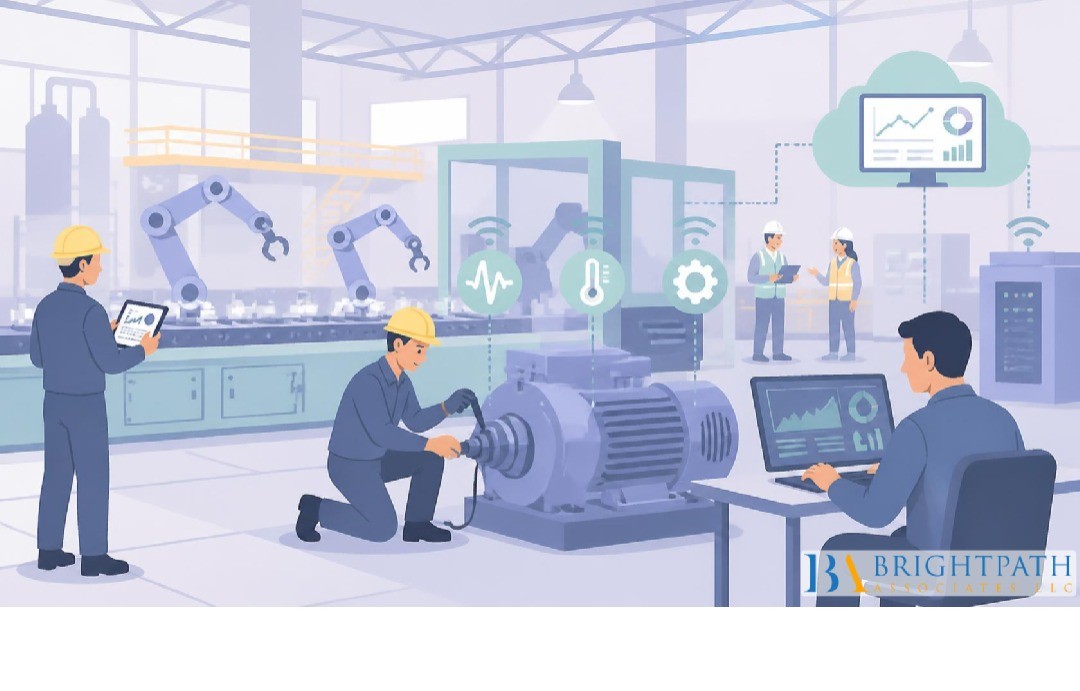
#PredictiveMaintenance uses equipment data to determine when maintenance is likely to be required. Sensors and monitoring systems can track variables such as temperature, vibration, pressure, energy consumption, speed, lubrication conditions, and operating cycles.
When these measurements change from normal operating patterns, they can indicate developing problems. An abnormal vibration in a motor, for example, may suggest bearing wear or alignment issues. A change in energy consumption may indicate increasing mechanical resistance or equipment inefficiency.
The objective is not to predict every failure with perfect accuracy. Instead, manufacturers aim to identify meaningful warning signals early enough to schedule intervention.
This can reduce unexpected downtime while avoiding unnecessary maintenance.
For production lines operating continuously or under demanding conditions, the financial value of this approach can be substantial.
The production of Construction materials often involves heavy machinery operating under demanding conditions. Crushers, mixers, conveyors, kilns, saws, dryers, grinders, presses, and material-handling equipment may operate for long periods under high loads.
A failure in one critical machine can affect an entire production process.
In Concrete production, equipment reliability is particularly important because interruptions can affect batching, mixing, transportation, and delivery schedules. Delays can create downstream problems for construction projects that depend on precise material timing.
Similarly, the Lumber industry relies on saws, conveyors, dryers, debarkers, sorting equipment, and material-handling systems. A failure in one stage can create bottlenecks throughout the facility.
Predictive maintenance can help manufacturers identify developing equipment problems before they disrupt the broader production system.
Building the Data Foundation
The first step in implementing predictive maintenance is determining whether the production line generates sufficient and reliable data.
Many modern machines already contain sensors and controllers that monitor operating conditions. Older equipment may require additional sensors to capture vibration, temperature, current, pressure, or other measurements.
Manufacturers should focus on the equipment that has the greatest impact on production.
Not every machine requires the same level of monitoring. Critical assets that can create major production losses should generally receive greater attention.
#DataQuality is also important. Predictive systems depend on consistent measurements. Poorly calibrated sensors, missing information, inconsistent data collection, or unreliable network connections can reduce the effectiveness of predictive models.
Predictive maintenance becomes more powerful when equipment data can be connected to broader manufacturing systems.
A production line may contain programmable controllers, machine sensors, supervisory systems, maintenance software, and enterprise platforms. Connecting these systems can provide a more comprehensive view of equipment performance.
Manufacturers can then compare machine conditions with production rates, operating schedules, maintenance history, and product quality.
This creates opportunities to identify relationships that may not be visible when equipment data is isolated.
For example, a manufacturer might discover that a particular machine experiences abnormal vibration only during certain production conditions. That information can help maintenance teams identify the underlying cause more accurately.
Predictive Analytics and Maintenance Decisions
Collecting data is only the beginning. Manufacturers need analytical capabilities to turn measurements into useful maintenance decisions.
Predictive analytics can identify patterns in equipment behavior and compare current operating conditions with historical performance.
Simple threshold-based systems can provide alerts when measurements exceed predefined limits. More advanced systems can identify subtle changes that may indicate emerging problems.
The appropriate analytical approach depends on the complexity and maturity of the facility.
Manufacturers should avoid adopting highly sophisticated analytics before establishing basic data quality and maintenance processes. A reliable foundation is often more valuable than an unnecessarily complicated system.
#ConcreteProduction involves equipment that must operate consistently to maintain product quality and delivery schedules. Mixers, batching systems, conveyors, pumps, aggregate handling equipment, and control systems can all benefit from condition monitoring.
Predictive maintenance can help identify equipment degradation before it causes production interruptions.
For example, monitoring motor vibration and temperature can provide early indications of mechanical problems. Monitoring electrical consumption may reveal changes in equipment efficiency.
This can improve Concrete production reliability while helping maintenance teams plan interventions around production schedules.
Predictive maintenance can also support quality management. Equipment operating outside normal conditions may influence consistency, mixing performance, or material handling.
Predictive Maintenance in the Lumber Industry
The Lumber industry presents its own maintenance challenges. Cutting equipment, conveyors, drying systems, sorting machinery, and finishing equipment operate in environments that can involve dust, vibration, heat, and continuous mechanical stress.
Predictive maintenance can help identify wear in bearings, motors, blades, belts, and other components.
In sawmill environments, unexpected equipment failures can rapidly create production bottlenecks.
Condition monitoring can provide maintenance teams with earlier warnings and allow them to schedule repairs during planned downtime.
This approach can also improve worker safety by identifying equipment conditions that could create hazardous failures.
Predictive maintenance can contribute indirectly to Sustainable construction by improving the efficiency of manufacturing processes.
Poorly maintained equipment may consume more energy, produce more waste, and operate less efficiently.
A machine with worn components may require additional power to perform the same task. Equipment operating outside optimal conditions can also contribute to quality problems and material waste.
By maintaining machines closer to optimal operating conditions, manufacturers can reduce unnecessary resource consumption.
This supports sustainability objectives while also improving operational economics.
Material Recycling and Predictive Maintenance
The connection between maintenance and Material recycling may not be immediately obvious, but equipment reliability can influence recycling efficiency.
Recycling facilities process materials using shredders, crushers, sorting equipment, conveyors, and other machinery. Failures can interrupt processing and reduce the volume of material recovered.
Predictive maintenance can help recycling operators maintain consistent throughput.
It can also improve equipment efficiency and reduce unnecessary disposal of materials that might otherwise be recovered.
As sustainability requirements increase, reliable recycling infrastructure will become increasingly important to the broader construction ecosystem.
#BuildingRegulations primarily address construction and product standards, but manufacturing organizations must also consider how regulatory requirements affect production reliability, safety, environmental performance, and documentation.
Equipment failures can sometimes create quality-control problems that ultimately affect compliance.
Predictive maintenance can support stronger documentation by creating records of equipment conditions, maintenance interventions, and operational performance.
Digital records can make audits and internal reviews more efficient.
Manufacturers should therefore consider predictive maintenance as part of broader operational governance rather than viewing it solely as an engineering function.
Calculating the Business Case
Predictive maintenance requires investment in sensors, software, connectivity, analytics, training, and implementation. Executives therefore need to understand the potential return.
The business case should consider the cost of unplanned downtime, emergency repairs, replacement components, overtime labor, production losses, missed deliveries, and quality failures.
Manufacturers should also consider the cost of planned maintenance.
If predictive monitoring allows a company to extend component life or avoid unnecessary replacement, those savings can contribute to the return on investment.
The strongest business cases are usually built around specific critical assets rather than broad assumptions about the entire facility.
Manufacturers do not necessarily need to transform an entire facility at once.
A pilot program can focus on a small number of high-value machines with known failure risks.
The organization can establish baseline performance, install appropriate sensors, collect data, and evaluate whether the system successfully identifies maintenance issues.
This approach allows management to learn before committing to larger investments.
The pilot should have clearly defined success measures, such as reduced downtime, lower maintenance costs, improved equipment availability, or fewer unexpected failures.
Workforce and Skills Requirements
Predictive maintenance changes the role of maintenance teams. Technicians increasingly need to understand sensors, data interpretation, digital systems, automation, and traditional mechanical or electrical maintenance.
The objective is not to replace skilled technicians with software. Instead, technology should provide technicians with better information.
An experienced technician who understands both equipment behavior and data patterns can often make more effective maintenance decisions than either capability alone.
Training should therefore accompany technology deployment.
Manufacturers may also need specialists in industrial data, automation, controls, and reliability engineering.
The evolution of #BuildingTechnology is changing the skills required across Construction jobs. Modern construction-material manufacturers increasingly need employees who can operate automated systems, maintain advanced equipment, interpret production data, and manage digital workflows.
This creates an opportunity for manufacturers to develop existing employees while also recruiting specialized talent.
The future workforce will increasingly combine traditional manufacturing expertise with digital capabilities.
Companies that invest in training and career development may be better positioned to retain employees as technology becomes more central to production.
Predictive maintenance programs require leadership support because they often cross departmental boundaries.
Maintenance teams, production managers, engineers, IT specialists, finance teams, and senior executives may all be involved.
#ExecutiveSearchRecruitment can help manufacturers identify leaders who understand operational technology, industrial maintenance, manufacturing economics, automation, and organizational change.
The right leader can establish a maintenance culture based on reliability and continuous improvement rather than emergency response.
Leadership is also essential for securing investment and ensuring that predictive maintenance remains connected to broader business objectives.
Conclusion
Implementing predictive maintenance on production lines represents a major opportunity for manufacturers of Construction materials and Building supplies. As production systems become more automated and connected, organizations have access to more information about equipment performance than ever before.
The challenge is converting that information into timely action.
Predictive maintenance can help Concrete production facilities improve equipment reliability, while Lumber industry operations can use condition monitoring to reduce disruptions across demanding production environments. Similar benefits can extend to material-processing and recycling facilities.
The approach can also contribute to Sustainable construction by reducing equipment inefficiency, unnecessary material waste, energy consumption, and premature component replacement. As Building technology continues to evolve, predictive maintenance will increasingly become part of the digital infrastructure supporting modern manufacturing.
Successful implementation requires more than sensors and software. Companies need reliable data, appropriate analytics, skilled technicians, integrated systems, clear financial objectives, and executive support.
The most effective strategy is often to begin with critical equipment, demonstrate measurable results, and then expand the program across the facility.
Ultimately, predictive maintenance is not simply about knowing when a machine might fail. It is about changing how manufacturers manage production assets. By moving from reactive repairs toward data-driven reliability, companies can improve productivity, reduce operational risk, strengthen sustainability, and create more resilient manufacturing operations.
As Construction economics become increasingly sensitive to material costs, delivery schedules, energy consumption, and production efficiency, equipment reliability will remain a strategic differentiator. Organizations that combine modern maintenance technology with strong workforce capabilities and Executive Search Recruitment for specialized leadership will be better prepared to build production systems that are more reliable, efficient, sustainable, and competitive for the future.
Find your next leadership role in Building Materials Industry today!
Stay informed with the latest insights on Building Materials Industry!