
Introduction
The modern workplace is undergoing a fundamental transformation as organizations move beyond traditional office models and adopt hybrid #WorkingEnvironments. The office is no longer simply a place where employees sit at assigned desks from morning to evening. It is increasingly becoming a strategic environment designed to support collaboration, innovation, communication, focused work, employee engagement, and organizational culture.
This transformation is particularly significant for organizations operating in the environmental sector, where teams may include engineers, scientists, project managers, regulatory specialists, consultants, field professionals, and technology experts. These employees often require different working environments depending on the nature of their responsibilities. Redesigning offices around these varied requirements can create stronger collaboration while improving the efficient use of physical resources.
The evolution of hybrid work also creates an opportunity to incorporate sustainability into workplace design. Organizations can combine flexible spaces with energy-efficient infrastructure, Clean technology, Green technology, and smarter resource-management systems. The result can be an office that supports both employee productivity and broader environmental objectives.
From Traditional Offices to Collaborative Ecosystems
Traditional office layouts were largely designed around fixed workstations, private offices, conference rooms, and centralized administrative spaces. Hybrid work challenges this structure because employees may not need an assigned desk every day.
Instead, modern offices are increasingly being designed around activities. Employees may require spaces for team collaboration, individual concentration, informal conversations, virtual meetings, workshops, client presentations, or project-based work.
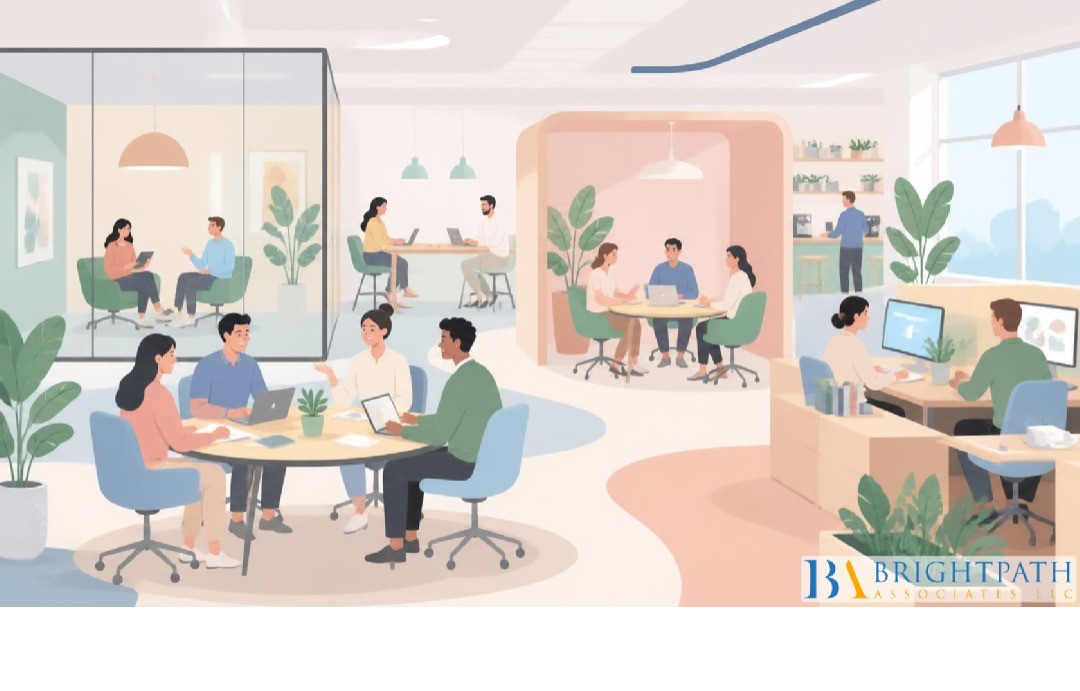
This shift means that office design must become more flexible. Movable furniture, adaptable meeting rooms, shared workspaces, technology-enabled collaboration areas, and quiet zones can help organizations accommodate different working styles.
The goal is not simply to reduce the number of desks. It is to create an environment where employees have access to the right space for the task they are performing.
Designing for Collaborative Synergy
The central objective of hybrid workplace design is to create meaningful opportunities for collaboration. Employees working remotely can complete many individual tasks effectively, but complex problem-solving and relationship building can benefit from in-person interaction.
#CollaborativeSpaces should therefore encourage spontaneous communication as well as structured meetings. Informal lounges, project rooms, shared worktables, and open collaboration areas can create opportunities for employees from different departments to exchange ideas.
For environmental organizations, this can be particularly valuable because complex projects often require multiple areas of expertise. Engineers, environmental scientists, compliance specialists, and project managers may need to work together to address operational challenges.
An office designed for collaborative synergy can reduce departmental isolation and encourage cross-functional problem-solving.
Integrating Environmental Sustainability into Office Design
Environmental sustainability should be a central consideration when organizations redesign their workplaces. A hybrid office may require fewer permanent workstations, potentially reducing the physical footprint of the workplace. However, organizations should also consider energy use, water consumption, materials, waste, lighting, ventilation, and technology infrastructure.
Energy-efficient lighting, smart climate controls, occupancy sensors, efficient appliances, and sustainable construction materials can reduce resource consumption.
Furniture and interior materials can also be selected with lifecycle considerations in mind. Durable, repairable, recyclable, and responsibly sourced materials can reduce environmental impact while supporting long-term workplace flexibility.
Sustainable design should not be viewed as a decorative feature. It can become part of the organization’s operational strategy.
Environmental Innovation and the Workplace
The workplace itself can become a demonstration of #EnvironmentalInnovation. Organizations can use their offices as controlled environments for testing technologies and practices that may later be applied to larger facilities or client projects.
Smart building systems can monitor energy consumption, indoor air quality, lighting, occupancy, and water use. Data collected from these systems can help facility managers identify inefficiencies and optimize building performance.
For companies operating in the Environmental industry, a technology-enabled workplace can also reinforce organizational credibility. Employees and clients can see practical examples of how environmental technologies operate in real-world settings.
The Role of Clean Technology
Clean technology is increasingly influencing commercial building design. Energy-efficient heating and cooling systems, renewable-energy integration, intelligent lighting, advanced insulation, and smart building controls can reduce operating costs and environmental impact.
Hybrid work creates an additional opportunity because building systems can respond to changing occupancy patterns. If only part of the workforce is present on a particular day, intelligent systems can adjust lighting, ventilation, and temperature accordingly.
This can prevent organizations from using the same amount of energy regardless of occupancy.
The combination of flexible working arrangements and intelligent building technology can therefore create a more efficient workplace.
Green Technology and Resource Management
The adoption of #GreenTechnology can extend beyond energy management. Modern workplaces can incorporate technologies designed to reduce water consumption, improve waste management, monitor environmental conditions, and optimize resource use.
Digital systems can track electricity and water consumption in real time, allowing facilities teams to identify unusual patterns and potential inefficiencies.
Water-saving fixtures, rainwater management systems, efficient irrigation, and smart water monitoring can also contribute to more responsible resource use.
These measures demonstrate that workplace sustainability involves the entire building ecosystem rather than only energy consumption.
Air Quality and Air Pollution Control
Indoor environmental quality has become an important consideration in modern workplace design. Employees spend significant amounts of time indoors, making ventilation, filtration, and air-quality monitoring important components of workplace planning.
Technologies associated with air pollution control can be adapted to commercial environments to improve filtration and reduce airborne contaminants. Advanced ventilation systems can monitor indoor conditions and adjust airflow according to occupancy and air-quality requirements.
Sensors can provide facilities teams with real-time information about particulate matter, carbon dioxide levels, humidity, and other environmental indicators.
This creates a healthier and more responsive workplace while demonstrating how environmental technologies can support everyday business operations.
Water Treatment and Sustainable Workplace Infrastructure
Water management is another important element of sustainable office design. Organizations with large facilities may consume substantial amounts of water through sanitation, kitchens, landscaping, cooling systems, and other activities.
Modern #WaterTreatment technologies can help organizations manage wastewater, improve water quality, and support water reuse where appropriate.
Smart water systems can also identify leaks and abnormal consumption patterns before they become significant problems.
Integrating water management into workplace design supports broader sustainability objectives while potentially reducing operating costs.
Environmental Compliance in Modern Offices
Hybrid workplace redesign must also account for Environmental compliance. Building modifications, waste handling, water systems, energy infrastructure, chemical storage, and equipment installations may be subject to environmental requirements depending on the facility and jurisdiction.
Organizations should consider compliance requirements during the planning stage rather than treating them as an afterthought.
Environmental teams can collaborate with architects, facility managers, procurement professionals, and contractors to ensure that workplace changes meet relevant standards.
This approach reduces the risk of costly redesigns and helps organizations maintain responsible operating practices.
Physical office redesign must be supported by digital collaboration technology. Employees working remotely need to participate effectively in meetings, workshops, presentations, and decision-making processes.
High-quality video conferencing systems, interactive displays, wireless presentation tools, shared digital workspaces, and room-booking platforms can make hybrid meetings more effective.
Meeting rooms should be designed so remote participants can clearly see and hear everyone in the room. Poor technology can create a two-tier meeting experience in which remote employees struggle to participate.
Technology should therefore be integrated into the physical environment rather than added after construction is complete.
Flexible Spaces and Changing Employee Needs
One of the defining characteristics of hybrid work is variability. Employee attendance may change from day to day, while project teams may expand or contract depending on business requirements.
Flexible spaces allow organizations to respond to these changes without repeatedly renovating the office.
Modular partitions, movable furniture, multipurpose rooms, and adaptable technology infrastructure can make spaces easier to reconfigure.
This flexibility also supports organizational growth. Companies can modify their workplace environment as teams change without making major structural investments.
Innovation often depends on interaction between people with different perspectives. Office environments can facilitate these interactions by creating spaces where employees can exchange ideas outside formal meetings.
Project rooms can support intensive collaboration, while informal spaces can encourage spontaneous discussions. Quiet areas can support individual analysis and focused work.
For #EnvironmentalCompanies, these spaces can facilitate collaboration between technical and commercial teams. Engineers may work with business-development professionals to turn technical capabilities into market opportunities, while regulatory specialists can help ensure that new solutions meet compliance expectations.
A thoughtfully designed workplace can therefore become an innovation platform.
Leadership and the Future Environmental Workforce
Workplace transformation also depends on organizational leadership. Companies need executives who understand changing employee expectations, sustainability, technology, and business performance.
Environmental executive search can help organizations identify leaders capable of managing complex environmental programs while connecting sustainability with broader corporate strategy.
As the Environmental industry becomes increasingly technology-driven, leadership roles may require expertise across environmental science, digital transformation, regulatory compliance, operations, and business development.
Similarly, #ExecutiveSearchRecruitment can help organizations identify senior professionals who understand how to lead hybrid teams, manage workplace transformation, and build organizational cultures that support collaboration.
The right leadership is essential because workplace redesign is not simply a facilities project. It is an organizational transformation.
Measuring Workplace Performance
A redesigned office should be evaluated using measurable outcomes. Organizations can monitor space utilization, employee engagement, collaboration patterns, energy consumption, meeting-room usage, operating costs, and sustainability performance.
Technology can help provide this information through occupancy sensors, building-management platforms, workplace applications, and employee feedback systems.
The objective is continuous improvement. If certain spaces remain underused, organizations can redesign them. If energy consumption remains high despite lower occupancy, building controls can be adjusted.
Data allows workplace strategy to evolve alongside employee needs.
Conclusion
Hybrid work is changing the purpose of the modern office. Organizations are moving away from fixed desk-based environments toward flexible workplaces designed around collaboration, innovation, technology, and employee experience.
For businesses in the Environmental industry, this transformation presents an opportunity to integrate workplace strategy with Environmental sustainability. Energy-efficient infrastructure, Clean technology, Green technology, intelligent air-quality systems, air pollution control, and Water treatment solutions can create workplaces that are both productive and environmentally responsible.
Successful redesign requires more than attractive interiors. Organizations must combine flexible spaces, digital collaboration systems, sustainable infrastructure, environmental compliance, and strong leadership.
As hybrid work continues to evolve, the most effective workplaces will be those capable of adapting to changing employee needs while supporting organizational goals. With thoughtful design and strategic Executive Search Recruitment, companies can build leadership teams capable of turning workplace transformation into a long-term competitive advantage.
Find your next leadership role in Business Supplies & Equipment Industry today!
Stay informed with the latest insights on Business Supplies & Equipment Industry!