
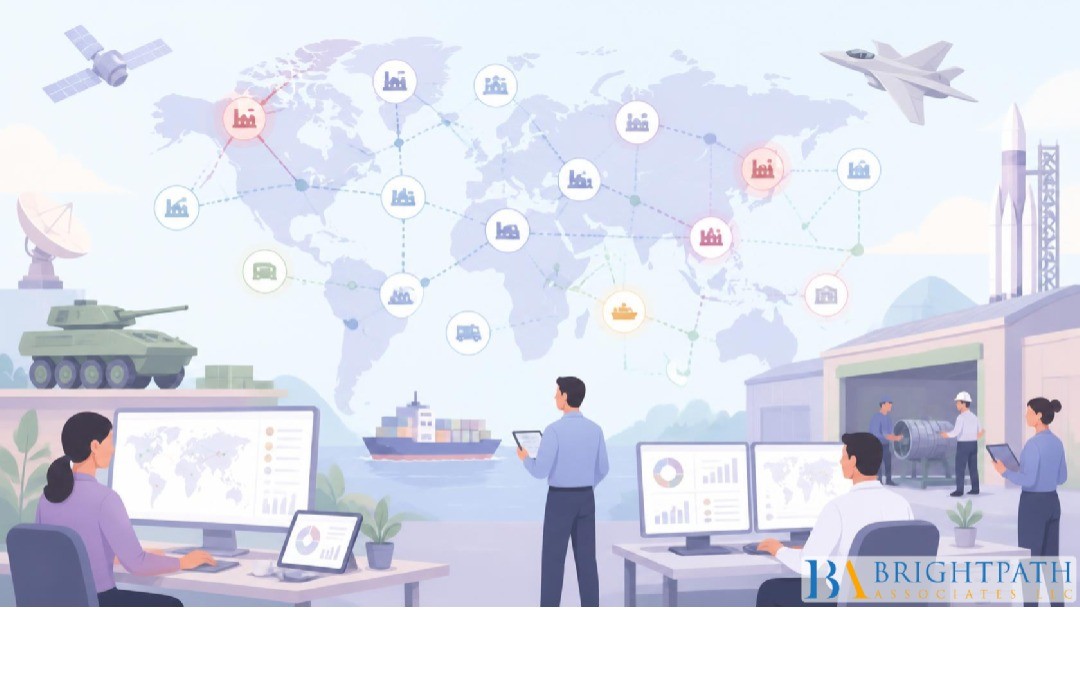
Modern supply chains are no longer simple linear systems. They are #InterconnectedNetworks involving manufacturers, suppliers, subcontractors, distributors, technology providers, logistics companies, and specialized component producers. A disruption at one point can quickly affect multiple organizations and create consequences far beyond the original supplier relationship. For companies operating in aerospace, defense, and space-related manufacturing, the stakes can be even higher because supply networks often depend on highly specialized materials, components, technologies, certifications, and regulatory requirements.
Supply chain mapping provides organizations with a practical way to understand these connections and identify vulnerabilities before they become operational crises. Instead of viewing suppliers as isolated vendors, businesses can create a broader picture of how materials, components, information, technology, and services move throughout their network. This visibility can help executives make faster decisions, strengthen resilience, and prepare for disruptions.
For organizations influenced by Defense Space Policy and the growing complexity of global aerospace markets, supply chain visibility is increasingly becoming a strategic capability rather than simply a procurement function.
Why Supply Chain Mapping Matters
A conventional supplier list usually tells a company who it buys from. It does not necessarily explain where those suppliers obtain their materials, which facilities manufacture critical components, which logistics routes are involved, or what alternative sources might be available.
Supply chain mapping goes much further.
It attempts to identify the relationships between different organizations and understand how a disruption at one node could affect the broader network. This is particularly important when a business relies on a single supplier for a specialized component or when several suppliers ultimately depend on the same upstream manufacturer.
For companies supporting Defense Space Systems, a small disruption involving a semiconductor, sensor, communication component, propulsion-related material, or specialized electronic system could potentially affect production schedules and program commitments. Mapping helps leadership teams identify these dependencies before they become emergencies.
Effective supply chain mapping does not necessarily require documenting every item a company purchases. A more practical approach is to begin with products and components that have the greatest operational or strategic importance.
Executives can examine which materials are essential to production, which components have long replacement lead times, and which parts require specialized certifications or limited manufacturing capabilities. Components that would stop production if unavailable should receive particular attention.
This prioritization allows organizations to focus their initial mapping efforts where risk visibility can provide the greatest value.
For aerospace and defense manufacturers, critical components may include advanced electronics, sensors, communication systems, specialized alloys, precision-machined parts, and other highly engineered products.
Build Visibility Beyond Tier-One Suppliers
One of the biggest weaknesses in traditional #SupplyChainManagement is limited visibility beyond direct suppliers.
A company may know exactly which vendor provides a component but have little information about the companies supplying that vendor. If the tier-two or tier-three supplier experiences a disruption, the impact may eventually reach the final manufacturer.
This is where deeper network mapping becomes valuable.
Businesses should gradually identify important upstream relationships and determine where critical materials originate. The objective is not necessarily to control every supplier but to understand where dependencies exist.
This approach is especially important for Defense Space Systems because highly specialized technologies can involve complex global networks with relatively few qualified manufacturers.
Technology Creates Better Supply Chain Visibility
Modern supply chain mapping increasingly depends on digital technologies. Enterprise resource planning systems, supplier-management platforms, inventory systems, logistics software, analytics tools, and digital dashboards can provide information about purchasing, delivery schedules, inventory levels, supplier performance, and production requirements.
Artificial intelligence and advanced analytics can further help organizations identify unusual patterns. Changes in supplier lead times, delivery reliability, pricing, inventory availability, or production capacity may provide early indicators of potential problems.
However, technology should support rather than replace management judgment.
Executives need to determine which signals represent meaningful risks and which are simply normal fluctuations. The value of technology comes from helping decision-makers see important changes earlier and respond more effectively.
Supply chain mapping cannot focus exclusively on physical materials. Digital connections are increasingly important as well.
Manufacturers and aerospace organizations often depend on software platforms, cloud systems, connected equipment, engineering applications, communication networks, and digital data exchanges. A cyber incident affecting a supplier could therefore create operational consequences even when physical materials remain available.
Space Cybersecurity is becoming particularly significant as satellites, ground systems, communications networks, and mission infrastructure become increasingly connected.
Organizations should therefore consider cybersecurity exposure when mapping their supplier networks. A critical technology provider may represent both a supply dependency and a digital vulnerability.
This requires collaboration between procurement, operations, information technology, cybersecurity, and executive leadership.
Defense Cybersecurity Requires a Network Perspective
#CybersecurityRisks do not stop at the boundaries of an organization. A company may maintain strong internal security while remaining exposed through a less-protected supplier or technology partner.
This is why Defense Cybersecurity increasingly requires organizations to think about the entire ecosystem.
Supply chain mapping can help identify which external partners have access to sensitive systems, information, designs, manufacturing data, or operational platforms. It can also help executives prioritize cybersecurity assessments according to the strategic importance of each supplier.
Not every supplier presents the same level of risk. A company providing office supplies is fundamentally different from a technology partner supporting mission-critical defense equipment.
Risk-based mapping helps organizations allocate resources accordingly.
Space Electronics Create Specialized Dependencies
The growing importance of Space Electronics illustrates why supply chain visibility matters. Satellites and other space systems rely on highly specialized electronic components that must often satisfy demanding requirements for reliability, performance, environmental resistance, and mission longevity.
The manufacturing ecosystem behind these components can be highly specialized. If a particular supplier or material source becomes unavailable, finding an immediate replacement may not be straightforward.
Supply chain mapping can help companies identify these dependencies early. Executives can determine which components have limited sourcing options and explore whether qualified alternatives exist.
This can support more informed procurement and inventory strategies.
Space Robotics is another area where supply chain complexity can become significant. Robotic systems used for exploration, servicing, inspection, assembly, or other applications can combine mechanical components, electronics, sensors, software, control systems, and specialized materials.
Because these technologies integrate multiple disciplines, a disruption in one component category can affect the performance of the entire system.
Mapping helps organizations understand these relationships. Instead of looking at each component independently, leadership can evaluate how different suppliers contribute to the final system and which dependencies could create bottlenecks.
Aerospace Industry Trends Can Change Supply Chain Risk
Supply chains should not be treated as static. #AerospaceIndustry trends can change which suppliers are strategically important.
Demand for new aircraft, satellite systems, defense technologies, autonomous platforms, advanced propulsion, and space infrastructure can increase demand for specific materials and components. At the same time, technological changes may reduce demand for older products.
This means supply chain maps need to evolve alongside the industry.
Executives should periodically review their maps to identify new dependencies, emerging technologies, changing supplier capabilities, and shifts in geographic exposure.
A map that accurately represented the organization three years ago may not accurately reflect today’s risk environment.
Regulatory Requirements Must Be Included
Regulation can influence supply chains as significantly as technology or market demand. Companies operating across aerospace and defense markets may need to comply with requirements involving export controls, cybersecurity, sourcing, manufacturing standards, environmental rules, and national security considerations.
Understanding Space Regulatory developments is particularly important for organizations involved in space-related technologies. Regulatory changes can influence which suppliers are eligible, where components can be manufactured, and how certain technologies can be transferred or used.
Supply chain mapping can help executives identify where regulatory dependencies exist and determine whether a supplier network could be affected by future policy changes.
Mapping becomes even more useful when combined with scenario analysis. Organizations can use Defense Simulation concepts and other modeling approaches to examine how their supply network might respond to disruptions.
A company might consider what happens if a critical supplier becomes unavailable for three months, if a transportation route is interrupted, if cyber access to a supplier is compromised, or if a regulatory change prevents the use of a particular component.
The objective is not to predict exactly what will happen.
Instead, scenario planning helps organizations understand where their network is fragile and which alternatives could improve resilience.
Space Venture Capital Can Influence Emerging Supply Networks
Investment activity is also changing the aerospace and space ecosystem.#SpaceVentureCapital is supporting companies developing technologies involving satellites, launch systems, robotics, communications, Earth observation, advanced manufacturing, and other emerging capabilities.
As new companies enter the market, established manufacturers may gain access to innovative suppliers and technologies. However, newer suppliers can also introduce additional risks related to financial stability, production capacity, manufacturing maturity, and scalability.
Supply chain mapping should therefore include an assessment of supplier maturity alongside traditional performance measures.
A technologically promising supplier may still require careful evaluation before becoming a critical source.
Mapping Should Lead to Action
A supply chain map is useful only if leadership uses it to make better decisions.
Once critical dependencies have been identified, companies can evaluate alternative suppliers, develop contingency plans, adjust inventory strategies, strengthen supplier relationships, improve cybersecurity controls, and invest in additional production capabilities.
The objective is not to eliminate every risk. That would be unrealistic.
The objective is to understand which risks matter most and ensure the organization is prepared to respond.
Supply chain mapping involves multiple departments, including procurement, engineering, manufacturing, finance, logistics, technology, cybersecurity, and compliance. Without executive coordination, each department may see only one portion of the network.
Leadership provides the broader perspective.
Executives need to determine which risks are strategically significant, where investment is justified, and how much resilience the organization requires. They also need to ensure that supply chain information reaches decision-makers before disruptions occur.
As supply networks become more technologically complex, organizations may require leaders who understand both traditional manufacturing and emerging technologies.
This makes #ExecutiveSearchRecruitment increasingly relevant to aerospace, defense, and space-related organizations. Finding executives with experience across supply chain management, technology, cybersecurity, operations, engineering, and strategic risk can strengthen an organization’s ability to turn supply chain visibility into competitive resilience.
From Visibility to Competitive Advantage
Supply chain mapping should not be viewed as a one-time project. It should become an ongoing management discipline.
Supplier relationships change. Technologies evolve. Regulations shift. Geopolitical conditions develop. New competitors enter markets. Customers change requirements. Each of these developments can alter the risk profile of a supply network.
Organizations that continuously update their supply chain visibility are better positioned to recognize emerging vulnerabilities and opportunities.
For aerospace and #DefenseCompanies, this capability can be particularly valuable because reliability, security, and delivery performance are often closely connected to customer confidence.
Building a More Resilient Supply Network
The modern supply chain is too interconnected to manage effectively through spreadsheets and supplier lists alone. Companies need a deeper understanding of how materials, technology, information, and services move through their networks.
By identifying critical products, mapping upstream dependencies, evaluating digital and cybersecurity exposure, monitoring regulatory changes, analyzing emerging technologies, and testing disruption scenarios, organizations can develop a much clearer view of potential risk.
For leaders in aerospace, defense, and space markets, the objective should be straightforward: know where the network is vulnerable before a disruption forces you to discover it.
The most resilient organizations will not necessarily be those with the largest number of suppliers. They will be those that understand their networks well enough to know which relationships are critical, which alternatives are realistic, and which risks require immediate attention.
As aerospace and defense technologies become increasingly interconnected, supply chain visibility will become an essential component of strategic decision-making.
That distinction could determine how effectively an organization responds to its next major supply chain challenge.
Find your next leadership role in Defense and Space Industry today!
Stay informed with the latest insights on Defense and Space Industry!