
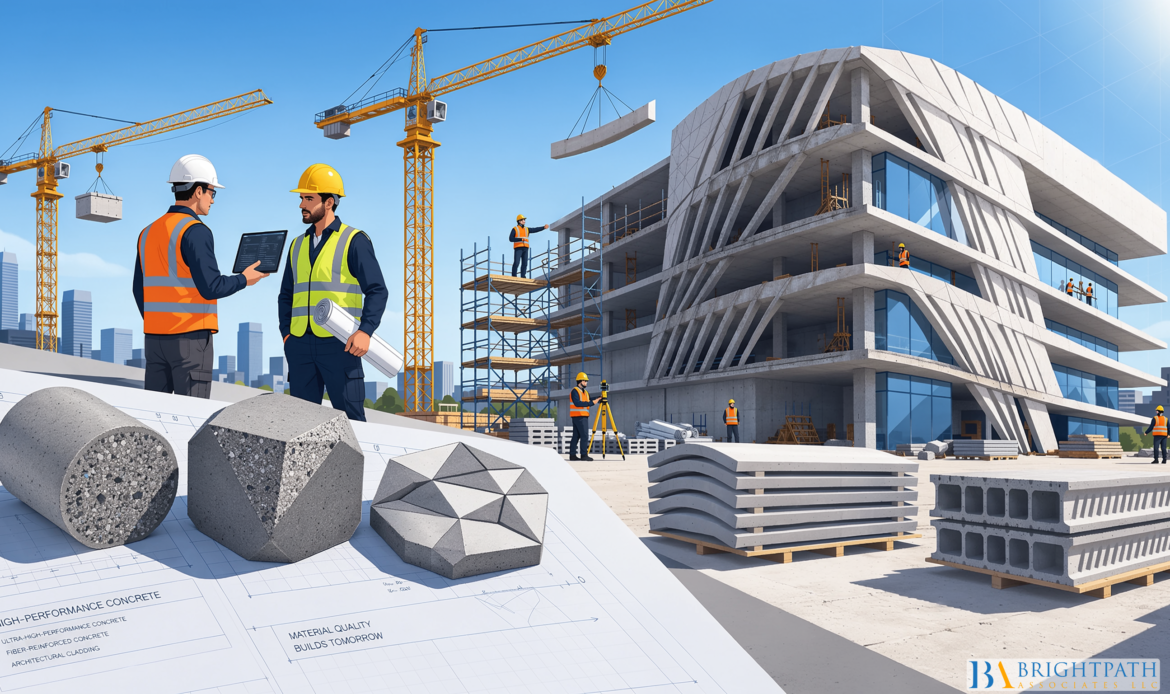
[Bethany, Connecticut – 16 November 2026] – BrightPath Associates highlights the growing role of high-performance concrete in transforming modern architecture and the construction materials sector. As architects, developers, and construction companies increasingly demand stronger, lighter, and visually appealing materials, Ultra-High-Performance Concrete (UHPC) is creating new opportunities for building material manufacturers. The latest industry analysis explores how advanced concrete technology, customized finishes, and innovative manufacturing processes are helping companies meet changing architectural expectations while improving durability and supporting sustainable construction.
For C-suite executives in the Building Material Industry, the shift represents more than a change in construction preferences. It signals an opportunity to expand product portfolios, strengthen manufacturing capabilities, and develop new business relationships with architects and infrastructure developers. High-performance concrete is moving beyond traditional structural applications and becoming an important material for modern building facades, decorative panels, architectural screens, and customized exterior designs.
High-Performance Concrete Redefines Modern Building Design
Traditional concrete has long been valued for its strength, affordability, and availability. However, modern architectural projects require materials that combine structural performance with greater design flexibility. High-performance concrete, particularly UHPC, addresses these requirements through advanced particle composition, low water-to-cement ratios, and specialized fiber reinforcement. These properties provide improved strength, durability, and resistance to environmental exposure.
According to the BrightPath analysis, conventional precast concrete typically achieves compressive strengths of approximately 30 to 50 MPa, while architectural UHPC formulations can reach 120 to 150 MPa or higher, depending on fiber composition and testing requirements. This performance allows manufacturers to produce thinner architectural panels without sacrificing essential structural properties. As a result, architects can explore more creative building designs while managing material weight and structural requirements.
The detailed analysis of High-Performance Concrete and Emerging Visual Architectural Trends in Modern Construction explains how these material innovations are influencing architectural design, manufacturing capabilities, and future construction opportunities.
Visual Architectural Trends Increase Demand for Customized Materials
Modern commercial and institutional buildings increasingly feature distinctive exterior finishes, geometric patterns, decorative textures, and perforated architectural screens. These designs require construction materials that can reproduce intricate details while maintaining consistent quality across large production batches. High-performance concrete provides manufacturers with greater flexibility through advanced molds, surface treatments, and specialized finishing techniques.
Manufacturers can create smooth surfaces, exposed aggregate finishes, polished textures, and linear patterns using different production and finishing methods. CNC-machined molds and specialized form liners also allow concrete producers to reproduce detailed architectural designs with greater precision. Integral pigments provide additional opportunities for customized colors, although manufacturers must carefully manage aggregate selection, moisture levels, mixing conditions, and curing temperatures to maintain consistency.
Perforated UHPC panels are another emerging architectural application. These panels can function as exterior screens that provide privacy, control sunlight, and support natural daylighting. By combining visual appeal with practical building performance, manufacturers can position advanced concrete products as valuable solutions for architects and developers seeking innovative building supplies.
Sustainable Construction and Manufacturing Opportunities
Sustainable construction is becoming an important consideration for building material manufacturers and construction companies. Developers increasingly evaluate material durability, maintenance requirements, resource consumption, and environmental performance when selecting construction products. High-performance concrete can contribute to longer-lasting building components by offering low permeability and improved resistance to environmental damage.
The integration of recycled materials and supplementary cementitious materials can also support more sustainable concrete production when properly designed and tested. Materials such as fly ash and slag can help reduce reliance on conventional cement while supporting performance requirements. Additionally, durable architectural panels may reduce the frequency of replacement and maintenance throughout a building’s service life.
These developments are creating new opportunities across the wider Building Materials Industry, including concrete production, building supplies, material recycling, and advanced construction technology. Companies that invest in sustainable manufacturing practices and product innovation may strengthen their competitive position as construction regulations and customer expectations continue to evolve.
Manufacturing Quality and Building Regulations Remain Critical
Although high-performance concrete offers significant design flexibility, manufacturers must address several technical challenges before bringing customized products to market. Thin architectural panels require careful engineering to manage lifting, transportation, installation, and wind-related stresses. Attachment systems, support brackets, and connection points must be designed to protect panels from cracking and structural damage.
Quality control is equally important when producing large architectural installations. Variations in aggregate sourcing, pigment distribution, moisture content, and curing conditions can create visible differences between panels. Manufacturers therefore need reliable batching systems, controlled curing environments, and consistent inspection procedures. Compliance with applicable building regulations and project-specific structural requirements must also remain a priority.
For C-suite executives, these requirements highlight the importance of connecting research and development with manufacturing operations, engineering, and technical sales. Companies must evaluate production investments based on product quality, operational efficiency, customer requirements, and long-term construction economics.
About BrightPath Associates
BrightPath Associates is an executive recruitment and talent solutions firm serving organizations across multiple industries in the United States. The company helps businesses identify and recruit experienced executives and specialized professionals who support organizational growth, operational efficiency, and long-term business success. Its mission is to connect companies with the leadership talent needed to navigate industry changes, encourage innovation, and achieve strategic business objectives.
Media Contact:
Name: Corporate Communications Team
Company: BrightPath Associates
Email: media@brightpathassociates.com
Website: https://brightpathassociates.com