
Introduction: Livestock Health as a Strategic Business Priority
This opening section sets the context by framing livestock health not just as an operational concern, but as a core driver of profitability, food security, and long-term business resilience. It should highlight how livestock contributes significantly to global #FoodProduction and rural economies, while noting the increasing pressures from climate change, regulatory scrutiny, and shifting consumer expectations. The introduction should establish that leadership capability now plays a decisive role in how effectively farming companies adopt innovation and manage herd health at scale.
Market Forces Reshaping Modern Livestock Management
This section explores how agricultural technology and food production market analysis from 2023 to 2025 reveal accelerating change in livestock operations. It should cover rising feed costs, labor shortages, disease risk, and sustainability mandates. Emphasize that volatility has exposed weaknesses in traditional farm leadership models, particularly in small to mid-sized farming enterprises that lack succession depth and specialized management expertise.
Agricultural Innovation Driving Healthier Herds
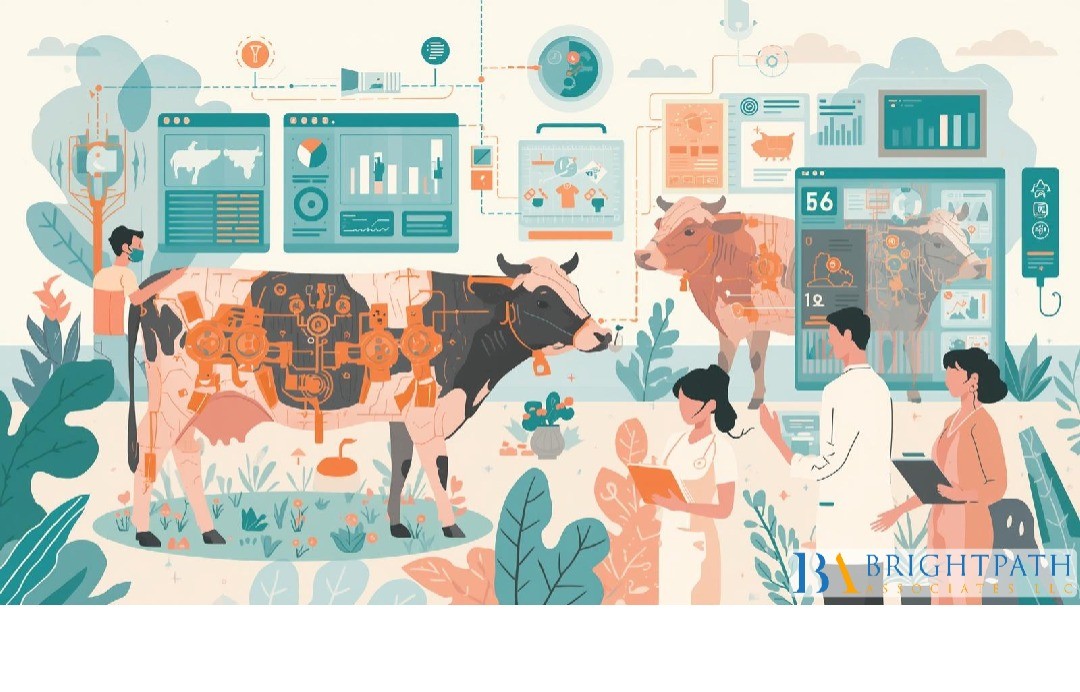
Here, the narrative moves into innovation, focusing on precision agriculture, digital farming, and #AgriculturalInnovation as transformational forces. Discuss advancements such as sensor-based health monitoring, wearable livestock technology, and data-driven disease detection. This section should connect innovation adoption directly to leadership decision-making, noting that technology delivers results only when executives understand both farming realities and digital systems.
Digital Agriculture Technology and Farm Management Software
This section explains how digital agriculture technology and farm management software are redefining herd management efficiency. It should outline benefits such as predictive health analytics, automated feeding systems, and traceability. The narrative should emphasize that these tools demand executives who can interpret data, manage cross-functional teams, and align technology investments with long-term farming strategy.
Sustainability, Animal Welfare, and Regulatory Pressure
This part focuses on #SustainableFarming, organic farming trends, and agricultural sustainability requirements. Discuss how healthier herds contribute to reduced environmental impact, improved feed conversion, and stronger compliance outcomes. Highlight that regulatory frameworks and consumer scrutiny now require leadership that understands sustainability as a commercial and reputational asset, not just a compliance obligation.
Leadership Talent Shortages in the Farming Sector
This section introduces the leadership challenge directly, using industry statistics to show aging farm leadership, limited succession planning, and difficulty attracting executives with both agricultural and technological expertise. Emphasize that leadership shortages have become a structural risk between 2023 and 2025, particularly for growing farming businesses attempting to modernize operations.
Evolving Executive Role Expectations in Livestock Enterprises
Here, outline how executive roles in farming companies have expanded. Leaders are now responsible for digital transformation, workforce development, sustainability integration, and #RiskManagement alongside traditional farm operations. This section should make clear that yesterday’s experience alone is insufficient for today’s livestock management complexity.
The Cost of Leadership Gaps on Herd Health and Profitability
This section connects leadership misalignment directly to financial and operational consequences. Discuss how poor leadership decisions can lead to disease outbreaks, inefficient resource use, higher mortality rates, and reduced output. Reinforce that leadership gaps undermine the effectiveness of even the most advanced agricultural technology investments.
Strategic Evolution of Recruitment in Agriculture
This part transitions into #RecruitmentStrategy, explaining why traditional hiring approaches no longer work for executive roles in farming. Highlight how the complexity of digital farming and sustainable livestock management has driven a shift toward more strategic, targeted recruitment methods.
Executive Search Recruitment as a Solution for Farming Leaders
This section positions #ExecutiveSearchRecruitment as a vital solution. Explain how executive search identifies leaders with proven experience in agricultural technology, sustainability, and large-scale livestock management. Reference Brightpath Associates as a specialist partner that understands farming industry dynamics and aligns leadership talent with long-term operational and growth objectives.
Building Future-Ready Leadership for Healthy Herds
This section looks forward, emphasizing the need for proactive leadership planning. It should outline how farming companies that invest early in executive capability are better positioned to manage innovation, regulatory change, and market volatility while maintaining herd health and productivity.
Conclusion: Leadership as the Foundation of Livestock Innovation
The conclusion reinforces the central message: healthy herds are the outcome of strong leadership, not just advanced tools. It should summarize how innovation, sustainability, and productivity in livestock management depend on executives who can integrate technology, people, and strategy. End by underscoring executive search recruitment as a strategic lever for securing the leadership needed to sustain growth and resilience in #ModernFarming enterprises.
Find your next leadership role in Farming Industry today!