
Introduction
#HazardousMaterialsShipping presents a unique challenge for small carriers operating in an increasingly complex transportation environment. Companies involved in Freight shipping must manage safety requirements, documentation, employee training, packaging standards, labeling obligations, transportation procedures, and regulatory responsibilities while also maintaining commercially competitive delivery operations.
For large logistics organizations, dedicated compliance departments and specialized technology systems can help manage these requirements. Small carriers often operate with fewer employees and tighter financial resources, making regulatory complexity more difficult to absorb. Nevertheless, hazardous materials compliance cannot be treated as an administrative formality. Errors can create safety risks, shipment delays, financial penalties, damaged customer relationships, and significant reputational consequences.
The solution for small carriers is not necessarily to build large compliance departments. Instead, businesses can simplify their processes through standardized procedures, appropriate technology, employee training, specialized logistics consulting services, and carefully selected partnerships. By combining these resources, smaller transportation companies can create practical compliance systems without unnecessarily increasing operational complexity.
Understanding the Compliance Challenge
Hazardous materials transportation involves products that may present risks to people, property, or the environment when they are improperly handled or transported. Depending on the material and transportation mode, carriers may need to follow specific requirements concerning classification, packaging, marking, labeling, documentation, vehicle operations, employee training, and emergency procedures.
The challenge becomes more significant when a carrier handles different types of shipments. Each category may involve different requirements, creating opportunities for human error.
Small carriers should therefore begin by identifying exactly which hazardous materials they transport and which regulatory requirements apply to their operations. A clear understanding of the company’s shipment profile allows management to develop procedures that are specific rather than unnecessarily complicated.
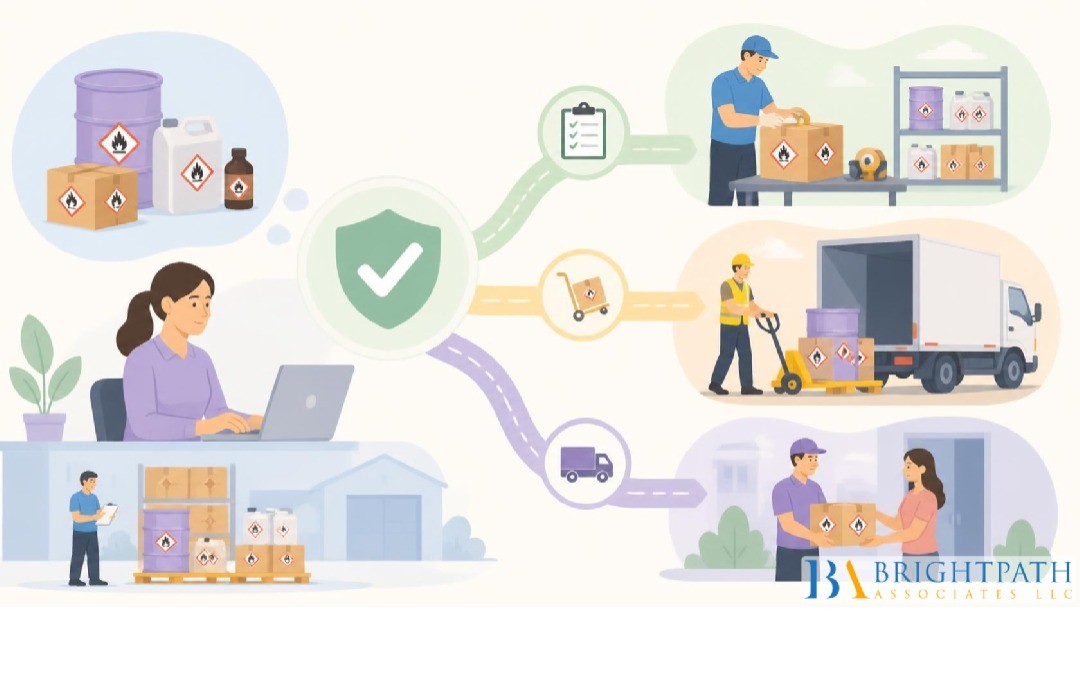
The most effective compliance systems are often built around consistency. Small carriers can simplify operations by establishing standardized processes for accepting, reviewing, documenting, loading, transporting, and delivering hazardous shipments.
Instead of allowing each employee to develop an individual approach, management can create clearly defined workflows. These procedures should identify the information that must be verified before a shipment enters the transportation network.
Standardization also helps with employee training. When everyone follows the same process, managers can identify gaps more easily and update procedures when regulatory or operational requirements change.
A simplified framework does not mean reducing safety requirements. It means organizing those requirements so that employees can follow them reliably.
The Role of Logistics Consulting Services
Many small carriers lack the internal resources to monitor every development affecting hazardous materials transportation. Logistics consulting services can provide specialized expertise without requiring a permanent expansion of the internal workforce.
Consultants can help businesses review existing processes, identify compliance gaps, improve documentation, assess transportation risks, and establish training procedures. They can also help management understand how regulatory requirements interact with day-to-day operations.
The greatest value of consulting often comes from creating practical systems. Rather than adding layers of paperwork, an experienced advisor can help integrate compliance into existing workflows.
For small carriers, this can make regulatory management more manageable while allowing internal employees to remain focused on customers and operations.
Documentation is a critical part of hazardous materials transportation. Shipment information must be accurate, complete, and appropriately maintained according to applicable requirements.
#ManualPaperwork can create challenges when employees work under time pressure. Incorrect information can lead to shipment delays or compliance problems.
Digital documentation systems can reduce repetitive data entry and create standardized records. Employees can use structured workflows that prompt them for required information before a shipment is accepted.
Documentation should also be accessible to authorized personnel throughout the shipment lifecycle. When information is stored in disconnected systems or on individual employees’ computers, it can become difficult to locate during an inspection, incident, or customer inquiry.
Delivery Technology and Compliance
Delivery technology is changing how carriers manage shipments, including those that require additional handling controls. Mobile applications, electronic documentation, shipment tracking, barcode scanning, and centralized transportation management systems can improve visibility.
For small carriers, technology can reduce administrative work while providing better control over shipment information. Drivers and dispatchers can access relevant data without relying entirely on paper records or phone calls.
Technology can also support exception management. If a shipment encounters an unexpected delay, route change, or delivery problem, dispatch teams can receive information quickly and determine the appropriate response.
However, technology should support established compliance procedures rather than replace professional judgment. Systems need to be configured correctly, employees must be trained, and information should be regularly reviewed for accuracy.
Small carriers often work with Freight brokerage services to access additional shipment opportunities. These relationships can provide commercial advantages, but they also require careful coordination when hazardous materials are involved.
Carriers should understand what information is being provided about a shipment before accepting it. They should also ensure that the shipment falls within their operational capabilities and applicable authorizations.
Clear communication between brokers, shippers, and carriers can reduce misunderstandings. Responsibilities should be established for shipment information, documentation, packaging verification, communication, and incident response.
A carrier should not assume that a third party’s information eliminates its own responsibilities. Every participant in the transportation process needs to understand its role and maintain appropriate controls.
Hazardous Materials and Parcel Delivery
#ParcelDelivery networks face particular challenges when hazardous materials are introduced into highly consolidated transportation systems. Shipments may pass through multiple facilities and handling points before reaching the final recipient.
This makes accurate classification, packaging, labeling, and documentation especially important. A mistake at the origin can become more difficult to correct as the shipment moves through the network.
Small carriers involved in parcel delivery should establish clear acceptance procedures. Employees need to recognize shipments that require additional review and understand when a package should not enter the normal transportation flow.
Customer communication is also important. Shippers need clear guidance about what information and preparation may be required before a carrier accepts a hazardous shipment.
Freight Shipping and Risk-Based Planning
Freight shipping involves a wide variety of commodities, routes, vehicles, and customers. Small carriers should therefore use risk-based planning rather than treating every shipment identically.
Certain materials, routes, vehicles, or operating conditions may create higher risks and require additional controls. Management should identify these situations and ensure that employees know when enhanced review is necessary.
Route planning can also contribute to safety and efficiency. Transportation teams should consider operational constraints, delivery requirements, weather conditions, infrastructure, and applicable restrictions when planning shipments.
The objective is to create a transportation process that is both compliant and operationally practical.
Shipping optimization can help small carriers improve profitability while maintaining appropriate compliance controls. Better route planning, load consolidation, delivery scheduling, and fleet utilization can reduce unnecessary mileage and operational costs.
However, optimization algorithms should account for shipment characteristics and applicable transportation restrictions. A route that is optimal for ordinary freight may not be appropriate for a shipment requiring specialized handling.
Technology can help incorporate these considerations into planning systems. When operational efficiency and compliance requirements are evaluated together, carriers can avoid the false choice between safety and profitability.
E-Commerce Logistics and Changing Shipment Profiles
The growth of E-commerce logistics is creating new challenges for transportation providers. Businesses increasingly ship products directly to consumers, creating higher shipment volumes and more complex delivery networks.
Some consumer products may contain materials that require special transportation considerations. This means small carriers serving e-commerce customers need processes that can handle changing product categories without creating unnecessary delays.
#AutomatedShipment screening can help identify potentially sensitive products before they enter the delivery network. Customer-facing systems can also provide instructions about packaging, documentation, and acceptable shipment types.
As e-commerce continues to expand, carriers that can combine compliance with efficient customer service may gain a competitive advantage.
Transportation industry trends are increasingly shaped by digitalization, automation, artificial intelligence, real-time tracking, sustainability initiatives, and changing customer expectations.
These developments are influencing compliance management as well. Digital records can improve traceability, while analytics can identify recurring operational problems. Connected vehicles and telematics can provide greater visibility into transportation activity.
For small carriers, the challenge is determining which technologies provide genuine value. Organizations do not need to adopt every emerging system. Instead, they should prioritize technologies that solve specific operational or compliance problems.
A focused technology strategy can provide many of the benefits of larger transportation systems without creating unnecessary complexity.
Building a Strong Safety Culture
Compliance ultimately depends on people. Even the most advanced software cannot prevent problems if employees do not understand their responsibilities.
Small carriers should create a culture in which safety and compliance are treated as integral parts of transportation operations. Employees should feel comfortable asking questions, reporting concerns, and stopping a shipment when information appears incomplete or inconsistent.
Training should be practical and relevant to employees’ actual responsibilities. Drivers, warehouse workers, dispatchers, customer-service teams, and managers may require different forms of instruction based on their roles.
Regular refresher training can reinforce important procedures and help employees remain aware of changing operational requirements.
The increasing use of digital systems is changing the skills required across the transportation sector. Companies need professionals who understand logistics operations while also being comfortable with data, software, automation, cybersecurity, and digital workflows.
This demand is contributing to the growing importance of Delivery sector tech talent. Small carriers may find it difficult to compete with large logistics organizations for specialized technology professionals.
Companies can address this challenge through targeted hiring, professional development, technology partnerships, and external expertise. Building internal capabilities gradually can allow smaller organizations to benefit from digital transformation without overextending their resources.
Leadership and Executive Search Recruitment
Effective compliance and technology transformation require strong leadership. Executives must understand how regulatory obligations, operational efficiency, technology investment, customer expectations, and workforce development interact.
#ExecutiveSearchRecruitment can help transportation organizations identify leaders with experience across logistics, compliance, technology, supply-chain management, and operational transformation.
For small carriers, leadership selection can have an outsized impact because senior managers often influence multiple areas of the business simultaneously. A capable leader can establish disciplined processes, select appropriate technologies, strengthen supplier relationships, and build a culture of accountability.
Preparing for the Future of the Delivery Industry
The Delivery industry is moving toward greater automation, visibility, personalization, and digital integration. Small carriers that embrace these developments can improve their competitiveness while creating stronger compliance systems.
The key is to avoid treating technology and compliance as separate initiatives. Digital shipment management, automated documentation, route planning, employee training, and customer communication can all be designed around consistent compliance principles.
Organizations should also review their systems regularly. As products, customers, technologies, and transportation models change, existing procedures may need to evolve.
Continuous improvement is more effective than waiting for a regulatory problem or operational incident to reveal a weakness.
Hazardous materials transportation does not have to become an overwhelming administrative burden for small carriers. By establishing standardized procedures, strengthening employee training, using appropriate technology, and seeking specialized support where necessary, businesses can build practical compliance systems that support both safety and efficiency.
Logistics consulting services can provide specialized guidance, while Freight brokerage services can expand commercial opportunities when third-party responsibilities are clearly managed. Delivery technology can improve documentation and visibility, while Shipping optimization can help carriers control costs without compromising appropriate safeguards.
The growth of E-commerce logistics, evolving Transportation industry trends, and increasing reliance on technology are changing expectations across the Delivery industry. Small carriers that develop the right combination of processes, technology, and Delivery sector tech talent can respond more effectively to these changes.
Ultimately, hazardous materials compliance should not be viewed solely as a regulatory obligation. It can become a competitive capability. Carriers that demonstrate reliability, transparency, operational discipline, and safety can build stronger relationships with shippers and logistics partners. With appropriate leadership and Executive Search Recruitment, small transportation companies can create compliance frameworks that are practical, scalable, and capable of supporting sustainable growth.
Find your next leadership role in Packaging and Freight Industry today!
Stay informed with the latest insights on Packaging and Freight Industry!