
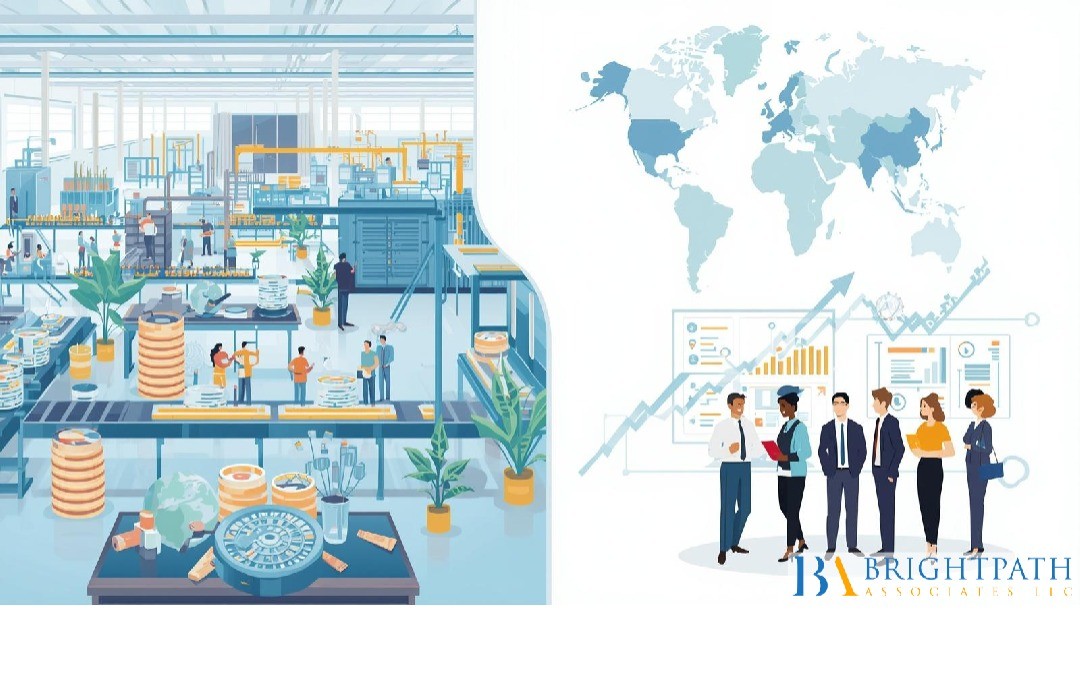
The Evolving Global Plastics Landscape
The #PlasticsIndustry occupies a foundational position in the global economy, supplying essential materials to automotive, healthcare, packaging, construction, electronics, and consumer goods sectors. As global demand diversifies and accelerates, small to mid-sized plastics companies face both extraordinary opportunity and intensifying competitive pressure. Achieving global dominance is no longer solely about scale; it is about agility, innovation, operational excellence, and strategic leadership.
Plastics manufacturing growth strategies must account for expanding end-use applications, sustainability mandates, and evolving regulatory frameworks. Industry data consistently reflects robust demand across emerging markets and advanced economies alike, driven by lightweight material applications, medical device production, and advanced packaging requirements. However, alongside growth, companies confront margin compression, raw material price volatility, and heightened scrutiny over environmental impact.
In this dynamic environment, competitiveness depends on more than production capacity. It hinges on strategic foresight at the executive level.
Competitive Pressures and Market Expansion Strategies
Plastics industry competitive analysis reveals a landscape marked by globalization and rapid technological diffusion. Regional producers increasingly compete with multinational corporations capable of leveraging global supply networks and diversified product portfolios. Small and mid-sized plastics firms must therefore differentiate through niche specialization, advanced product development, or superior customer integration.
Plastics market expansion strategies often include entering adjacent industries, forming cross-border strategic partnerships, and investing in higher-margin specialty polymers. However, these strategies demand capital discipline and risk management expertise. Market miscalculations can lead to overcapacity, underutilized facilities, or weakened cash flow positions.
To compete globally, companies must balance scale with adaptability. This requires leaders who understand international trade dynamics, supply chain economics, and customer demand forecasting. Plastics industry global leadership is increasingly defined by executives capable of navigating complex commercial ecosystems while driving operational performance.
Supply Chain Management and Risk Mitigation
Plastics industry supply chain management remains one of the most significant determinants of profitability. Resin sourcing, petrochemical feedstock pricing, transportation logistics, and inventory management all influence cost structures. Volatility in raw material markets can rapidly erode margins, particularly for smaller manufacturers with limited purchasing leverage.
Plastics industry #RiskManagement strategies now emphasize diversification of suppliers, nearshoring production where feasible, and leveraging digital tools for demand forecasting. Integrated supply chain platforms provide visibility into procurement cycles, shipment tracking, and production planning. Companies that adopt data-driven supply chain systems report improved resilience and reduced downtime.
However, technological tools are only as effective as the leadership guiding their implementation. Executives must align supply chain investments with long-term strategic objectives. Without experienced oversight, digital integration efforts may fragment operations rather than streamline them.
Technology Investment and the Innovation Ecosystem
The future of plastics manufacturing is increasingly defined by advanced materials, automation, and sustainability-driven innovation. Plastics manufacturing technology investment spans robotics in injection molding, AI-enhanced quality inspection systems, and advanced recycling technologies that support circular economy models.
Sustainability considerations are reshaping product development pipelines. Customers demand recyclable materials, bio-based polymers, and reduced carbon footprints across manufacturing processes. Companies investing in closed-loop recycling systems and eco-friendly product lines position themselves favorably within evolving regulatory landscapes.
The plastics industry innovation ecosystem also depends on strategic partnerships with research institutions, technology providers, and downstream customers. Collaborative development accelerates time-to-market and enhances product differentiation. Yet fostering these partnerships requires executives capable of strategic negotiation, cross-functional coordination, and long-term vision.
Modern plastics leaders must evaluate technology investments not only for operational efficiency but for alignment with global sustainability trends and brand positioning. The intersection of innovation and strategy underscores the expanded expectations placed upon executive teams.
Leadership Talent Shortages and Changing Role Expectations
As the industry evolves, leadership demands have intensified. Many experienced executives within plastics manufacturing are approaching retirement, creating succession gaps that challenge organizational continuity. Smaller companies often lack formal leadership development programs to cultivate next-generation executives internally.
At the same time, the scope of executive responsibilities has broadened. Today’s leaders must oversee plastics industry supply chain management, #SustainabilityCompliance, digital transformation, financial strategy, and global expansion initiatives simultaneously. Few candidates possess expertise across all these domains.
Competition for high-caliber executives is fierce. Larger multinational corporations frequently attract seasoned leaders with global portfolios and substantial compensation structures. Small to mid-sized plastics firms may struggle to compete for such talent without adopting more sophisticated hiring strategies.
The consequences of leadership misalignment are significant. Ineffective oversight can stall plastics manufacturing growth strategies, undermine technology investment returns, and weaken competitive positioning. As global competition intensifies, executive capability becomes the decisive differentiator.
The Strategic Evolution of Executive Hiring
Traditional recruitment methods often fail to address the complex leadership requirements of the modern plastics industry. Posting vacancies and relying on passive candidate applications may yield technically competent individuals but not necessarily transformative leaders capable of driving global expansion.
#ExecutiveSearchRecruitment has emerged as a strategic response to this challenge. By proactively mapping talent markets and identifying passive candidates, specialized search partners enable plastics companies to access executives with demonstrated experience in plastics industry innovation ecosystems, risk management, and international growth strategies.
This approach emphasizes competency-based assessment, evaluating candidates for strategic thinking, operational expertise, cultural alignment, and adaptability. Executive search recruitment ensures that leadership appointments align with long-term corporate objectives rather than short-term operational needs.
For small to mid-sized plastics companies, adopting Executive Search Recruitment levels the competitive field. It provides access to high-impact leaders who might otherwise gravitate toward larger enterprises.
Executive Search Recruitment as a Growth Catalyst
Strategic executive hiring directly influences competitiveness and global positioning. A visionary operations leader can streamline plastics industry supply chain management and enhance efficiency. A forward-thinking chief executive can drive plastics market expansion strategies and cultivate strategic partnerships that unlock new revenue streams.
Brightpath Associates exemplifies a focused executive search recruitment approach tailored to #IndustrialSectors. By combining deep industry insight with rigorous evaluation methodologies, it supports plastics companies in identifying leaders capable of navigating technological disruption, sustainability mandates, and competitive pressures.
Through disciplined executive search recruitment, organizations secure executives who align innovation initiatives with financial performance and operational discipline. In a market characterized by rapid change and global competition, leadership strength becomes a foundational asset.
Conclusion: Leadership as the Cornerstone of Global Dominance
The plastics industry stands at a pivotal moment, shaped by technological advancement, sustainability imperatives, and global market expansion. For C-suite executives and founders of small to mid-sized plastics companies, achieving global dominance requires more than operational efficiency or product innovation. It demands strategic leadership capable of integrating supply chain resilience, technology investment, and competitive analysis into a cohesive growth strategy.
Proactive executive search recruitment represents a decisive investment in that future. Companies that prioritize leadership excellence position themselves to navigate volatility, capitalize on plastics manufacturing growth strategies, and secure long-term competitive advantage. In the evolving global plastics landscape, the path to dominance begins with visionary leadership.
Find your next leadership role in Plastics Industry today!
Stay informed with the latest insights on Plastics Industry!