
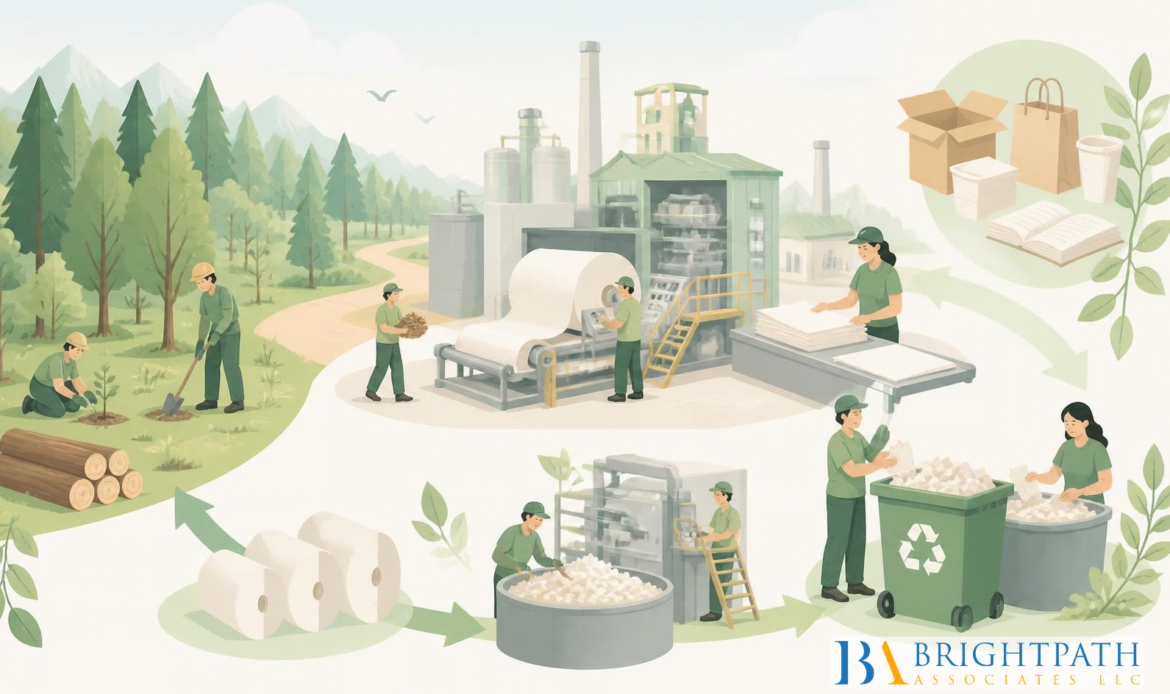
[Bethany, Connecticut – 22 September 2026] — BrightPath Associates has highlighted the growing importance of harmonized design guidelines for improving paper recyclability across international markets. The latest industry insight examines how packaging and product designers, manufacturers, recyclers, and business leaders can work toward more consistent design practices that support efficient recycling, reduce material waste, and strengthen the circular economy. The initiative is particularly relevant to C-Suite executives navigating changing sustainability expectations, evolving forestry regulations, and continued investment in Forest product innovation.
Harmonizing Design for Better Paper Recycling
Paper products can be designed for recyclability, but differences in materials, coatings, adhesives, inks, packaging formats, and recycling infrastructure can create challenges across markets. A design approach that works efficiently within one recycling system may produce different results in another. Establishing clearer and more consistent design principles can therefore help businesses improve the compatibility of paper-based products with recycling processes.
BrightPath Associates’ analysis, “Harmonizing Design Guidelines for Global Paper Recyclability,” explores the need for greater alignment between product design and recycling requirements. The article emphasizes that “designing for recyclability is no longer a niche consideration,” reflecting the increasing importance of sustainability in product development and corporate strategy.
For C-Suite leaders, the issue extends beyond environmental commitments. Consistent design practices can influence material costs, supply chain efficiency, regulatory compliance, brand reputation, and access to markets. Companies investing in Paper recycling solutions can also gain better visibility into how product specifications affect recovery and material quality after use.
Technology and Innovation Reshape the Paper Sector
Advances in Paper and pulp technology are creating new opportunities to improve resource efficiency throughout production and recycling. Automation, digital monitoring, process optimization, and improved sorting technologies can help companies identify material losses and improve operational performance. Automation in Paper industry operations can also provide manufacturers with more consistent production data, allowing executives to make informed decisions about equipment, workforce, and process investments.
These developments are part of a broader movement toward Forest product innovation. Producers are increasingly exploring ways to use resources more efficiently while developing products that meet changing customer and sustainability expectations. Better integration between design, manufacturing, recycling, and supply chain processes can help create a more connected system in which material decisions made at the beginning of a product’s lifecycle support recovery at the end.
The impact also reaches upstream activities. Timber harvesting, forestry management, and raw-material sourcing influence the availability and characteristics of fiber used throughout paper and wood-product manufacturing. Meanwhile, changing Lumber industry trends and Forestry regulations are encouraging businesses to pay closer attention to responsible sourcing and long-term resource management.
Leadership Needed for a More Circular Industry
Implementing new design and recycling practices requires more than technology. Companies need leaders who can connect sustainability objectives with manufacturing, procurement, supply chain, regulatory, and commercial priorities. Executive search recruitment can support organizations seeking executives and specialized professionals with the cross-functional experience needed to manage these increasingly complex challenges.
As global markets continue to evolve, companies across the Paper & Forest Industry are likely to face continued pressure to demonstrate efficient resource use, responsible sourcing, and measurable sustainability progress. Building stronger connections between product design and recycling infrastructure can help organizations respond to these expectations while supporting long-term operational resilience.
Executives seeking a deeper understanding of the issue can explore BrightPath Associates’ analysis of Design Guidelines for Global Paper Recyclability. The company’s broader resources for the Paper & Forest Products Industry provide additional perspectives on technology, talent, sustainability, and industry transformation.
About BrightPath Associates
BrightPath Associates is an executive recruitment and talent solutions firm that helps organizations identify leadership and specialized professionals to support sustainable business growth. The company works with organizations across industries, providing executive search recruitment, talent acquisition, workforce planning, and related talent solutions. Its mission is to connect businesses with capable professionals while helping them build strong teams for long-term success.
Media Contact:
Name: Corporate Communications Team
Company: BrightPath Associates
Email: media@brightpathassociates.com
Website: https://brightpathassociates.com