
Introduction
The oil and #GasSector stands at a defining crossroads. Gas production, in particular, has emerged as a strategic focal point as global demand patterns evolve and energy portfolios diversify. For C-suite executives and founders of small to mid-sized oil and gas companies, understanding the dynamics of gas production is no longer limited to operational efficiency; it now encompasses digital transformation, capital discipline, sustainability alignment, and leadership capability.
Energy industry trends indicate that natural gas continues to play a central role in balancing energy security with lower carbon intensity compared to other fossil fuels. At the same time, the sector faces mounting pressure from investors, regulators, and customers to demonstrate resilience, innovation, and long-term value creation. In this environment, executive leadership quality has become as critical as geological assets or drilling technology.
Evolving Landscape of Gas Production
Gas production has transformed significantly due to advancements in oil drilling technology, seismic imaging, and reservoir modeling. Modern petroleum engineering services increasingly rely on artificial intelligence, predictive analytics, and automation to enhance extraction efficiency and reduce operational risk. Data-driven drilling strategies allow companies to optimize well placement, improve recovery rates, and minimize non-productive time.
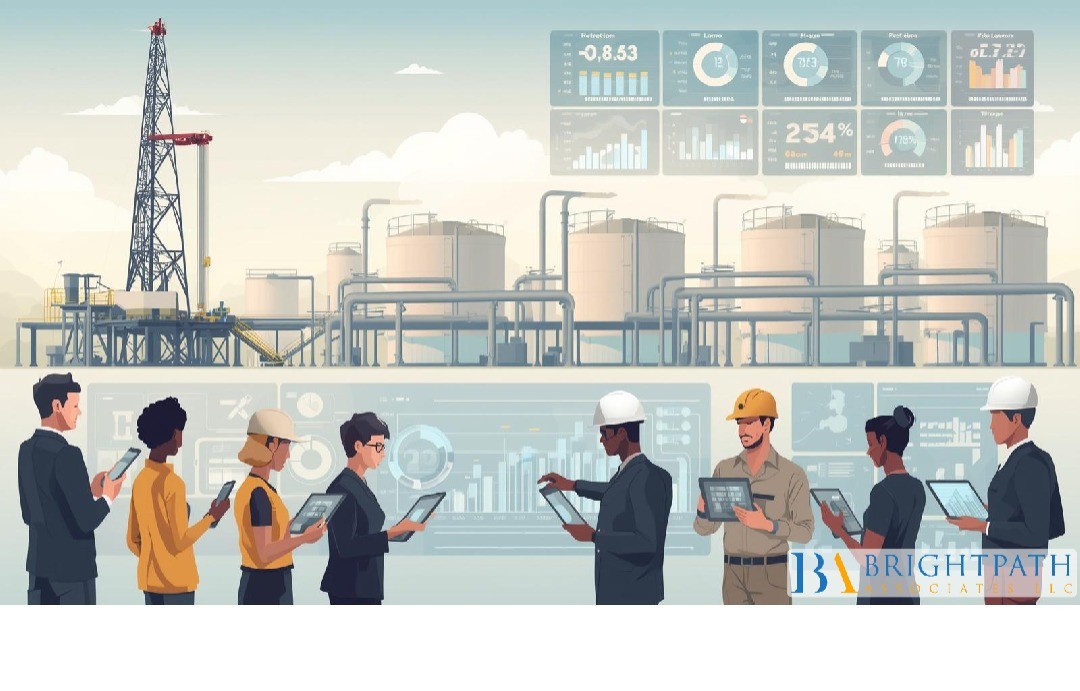
Oilfield services companies are integrating advanced sensors and real-time monitoring tools across upstream operations. These innovations provide granular visibility into pressure fluctuations, equipment performance, and environmental indicators. Companies leveraging digital oilfield systems report measurable gains in production uptime and cost management.
At the same time, refinery operations management has become more complex as gas processing facilities must adapt to variable feedstock quality and shifting demand patterns. Midstream and downstream integration strategies are evolving to ensure supply chain reliability while maintaining cost efficiency. Executives who can align upstream production with downstream market realities are increasingly sought after in oil and gas jobs USA.
Investment Trends and Capital Allocation
#EnergySectorInvestment patterns reveal a growing emphasis on disciplined capital deployment. Investors now scrutinize return on capital employed, free cash flow generation, and risk-adjusted growth strategies more rigorously than ever. While gas remains a cornerstone of the global energy mix, capital markets reward companies that demonstrate operational excellence alongside strategic foresight.
Sustainable energy solutions are influencing portfolio diversification strategies. Many oil and gas firms are exploring carbon capture, hydrogen integration, and emissions-reduction technologies to align with evolving regulatory frameworks. Although gas production remains core, executives must now balance traditional petroleum expansion with forward-looking sustainability initiatives.
For small to mid-sized firms, these investment dynamics create both opportunity and pressure. Agile organizations can capture niche markets and innovate quickly, but they must also compete for capital and talent against larger, diversified players. This competition extends beyond project financing into the realm of executive hiring.
Leadership Talent Shortages in Oil and Gas
The oil and gas industry faces a pronounced leadership talent shortage. A significant portion of experienced professionals in petroleum and refinery operations management are approaching retirement, while younger professionals often pursue careers in technology-driven or renewable sectors. This demographic shift has created a widening gap in institutional knowledge and technical expertise.
Oil and gas jobs USA reflect strong demand for executives who can lead digital transformation, manage regulatory complexity, and implement advanced oil drilling technology. However, the supply of leaders who combine deep petroleum engineering experience with digital fluency remains limited.
C-suite executives must recognize that leadership in gas production today requires hybrid competencies. A modern operations leader must understand predictive maintenance systems, data analytics dashboards, and automation platforms while maintaining mastery over traditional field operations. Similarly, commercial executives must integrate geopolitical awareness, energy market analytics, and sustainability considerations into strategic planning.
Shifting Executive Role Expectations
The responsibilities of senior leaders in oil and gas have expanded considerably. A Chief Operations Officer is no longer solely accountable for production targets; they are expected to drive efficiency through advanced petroleum engineering services, reduce emissions intensity, and enhance workforce safety through digital monitoring systems.
Chief Financial Officers must evaluate energy sector investment decisions not only for profitability but also for long-term resilience and environmental alignment. Human resources leaders must address workforce transitions, succession planning, and evolving skill requirements in an increasingly technology-centric environment.
This shift in expectations has fundamentally changed #ExecutiveHiring criteria. Companies no longer seek leaders based solely on tenure or field experience. They prioritize adaptability, innovation capability, and cross-functional collaboration. These evolving requirements intensify the challenge of identifying the right leadership talent.
Strategic Evolution of Recruitment Practices
Traditional recruitment approaches often fall short in addressing the complex demands of modern gas production enterprises. Posting vacancies and relying on passive candidate pools may yield technically competent applicants, but it rarely uncovers transformational leaders capable of steering organizations through volatility.
Executive Search Recruitment has emerged as a strategic solution to this challenge. By conducting targeted market research, confidential outreach, and rigorous competency assessments, specialized search partners help oilfield services companies and independent petroleum producers secure high-impact executives.
The cost of a misaligned executive hire in oil and gas can be substantial. Delayed projects, inefficient refinery operations management, and suboptimal capital allocation decisions can erode shareholder value. Data from corporate performance studies consistently demonstrates that leadership effectiveness directly correlates with operational performance and financial returns.
For small to mid-sized firms operating within tight margins, minimizing hiring risk is essential. Strategic executive search recruitment reduces uncertainty by aligning leadership capabilities with corporate growth objectives and technological ambitions.
Innovation, Sustainability, and Workforce Transformation
Gas production innovation is increasingly intertwined with sustainability commitments. Advanced leak detection systems, methane reduction technologies, and digital compliance tracking are becoming standard components of responsible petroleum operations. Companies integrating sustainable energy solutions into their long-term strategies are better positioned to secure investment and maintain stakeholder trust.
However, innovation requires leaders who can bridge engineering expertise with strategic vision. Implementing new oil drilling technology or upgrading digital infrastructure demands change management skills, cross-departmental coordination, and clear communication. Without capable leadership, even the most promising technological initiatives may fail to deliver expected returns.
The #WorkforceTransformation underway in oil and gas also demands forward-thinking executives. Automation and AI-driven analytics are reshaping job roles, necessitating reskilling programs and cultural adaptation. Leaders must cultivate an environment that embraces technological change while preserving safety and operational excellence.
Brightpath Associates: Enabling Strategic Leadership Alignment
In this complex and evolving landscape, Brightpath Associates provides specialized Executive Search Recruitment services tailored to the oil and gas sector. Through a deep understanding of energy industry trends, petroleum engineering services, and oilfield services companies, the firm identifies leaders equipped to manage both operational rigor and strategic innovation.
By evaluating candidates against industry-specific competencies, digital transformation readiness, and sustainability alignment, Brightpath Associates supports oil and gas companies in building resilient executive teams. Their approach recognizes that leadership in gas production must integrate technical mastery, financial acumen, and adaptability to shifting global dynamics.
For C-suite decision-makers navigating refinery operations management upgrades or exploring new energy sector investment opportunities, partnering with a dedicated executive search firm offers a competitive advantage. The right leader can accelerate innovation, optimize production performance, and strengthen organizational stability.
Conclusion: Leadership as the Engine of Gas Production Excellence
The dynamics of gas production reflect broader transformations across oil and gas. Technological innovation, sustainability pressures, capital discipline, and workforce shifts are redefining industry expectations. While advancements in oil drilling technology and digital monitoring systems drive operational improvements, it is leadership that ultimately determines strategic success.
Small to mid-sized oil and gas companies must view executive hiring not as an administrative function but as a core business strategy. Addressing leadership talent shortages and adapting to evolving role expectations requires a proactive, data-driven approach.
#ExecutiveSearchRecruitment offers a structured pathway to securing leaders capable of navigating complexity and driving growth. In an industry where precision, resilience, and innovation define competitive positioning, investing in the right executive talent is not optional—it is fundamental to sustaining long-term success in gas production and the broader petroleum sector.