
Introduction
For #SmallManufacturers, digital transformation can often sound like an expensive initiative reserved for large enterprises with dedicated IT teams, complex production networks, and substantial technology budgets. In reality, some of the most meaningful operational improvements can come from relatively simple investments. A low-cost Enterprise Resource Planning (ERP) system can connect production, inventory, purchasing, quality, sales, and financial information without requiring a complete overhaul of the manufacturing operation.
The modern shop floor generates enormous amounts of information every day. Machine utilization, material consumption, work orders, production quantities, quality inspections, maintenance activities, labor hours, and shipment schedules all influence profitability. When this information remains trapped in spreadsheets, paper records, disconnected software, or employees’ individual knowledge, management loses visibility into what is actually happening.
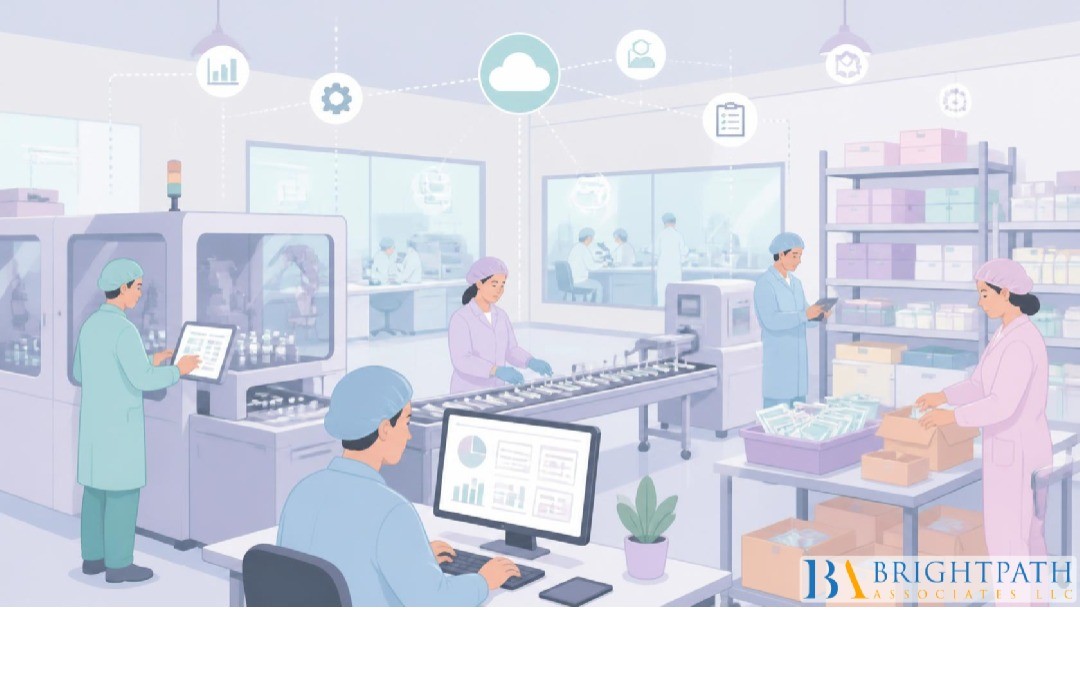
Digitizing the shop floor through an appropriately scaled ERP platform can create a single operational view while helping small manufacturers control costs. The objective is not necessarily to implement every available ERP feature. Instead, manufacturers can prioritize the processes that generate the greatest operational return and gradually expand their digital capabilities.
This approach is particularly valuable for specialized manufacturers, including companies supporting industries such as medical devices, where production accuracy, traceability, quality control, and regulatory compliance are increasingly important.
Understanding the Real Cost of a Manual Shop Floor
Manual manufacturing processes create costs that are often difficult to see on financial statements. An employee may spend hours transferring production information from paper forms into spreadsheets. Supervisors may call purchasing teams to determine whether materials are available. Production managers may rely on outdated inventory reports when scheduling work orders.
These inefficiencies accumulate.
A delayed production order can affect customer commitments. An inventory discrepancy can lead to unnecessary purchasing. Incorrect production data can make profitability calculations unreliable. When managers cannot identify the source of delays quickly, corrective action becomes reactive rather than strategic.
Low-cost ERP systems address this problem by connecting operational information. Instead of asking several employees for separate updates, managers can access a centralized view of production status, inventory levels, purchasing requirements, and order progress.
The value is therefore not simply automation. The larger benefit is improved decision-making.
What Low-Cost ERP Can Actually Deliver
Small manufacturers do not necessarily need the same ERP architecture used by multinational industrial corporations. A practical system can begin with a few core capabilities.
#ProductionPlanning, inventory management, purchasing, work-order tracking, bill-of-materials management, quality documentation, and basic financial integration can provide substantial value. Cloud-based ERP platforms can further reduce the need for expensive infrastructure because manufacturers can access systems through standard devices without maintaining extensive internal servers.
The key is selecting software according to operational complexity rather than buying features based on marketing promises.
A manufacturer producing a limited range of products may need straightforward work-order management and inventory visibility. Another manufacturer producing highly customized components may require more sophisticated scheduling, traceability, and quality workflows.
The most effective ERP implementation starts by identifying where information delays are creating operational costs.
Creating a Digital Thread Across Production
One of the greatest advantages of ERP implementation is the creation of a digital thread connecting different stages of manufacturing.
A customer order can trigger production requirements. Production requirements can generate material needs. Material requirements can inform purchasing. Purchased materials can be associated with inventory records. Inventory can then be allocated to work orders, while production progress can be connected to quality inspections and eventual shipment.
This connected information structure reduces the number of manual handoffs between departments.
For small manufacturers, that connectivity can be transformative because a relatively small workforce often performs multiple functions. Employees may simultaneously handle purchasing, production coordination, inventory control, and customer communication. Automating information flow allows those employees to spend more time on activities requiring judgment and less time maintaining administrative records.
ERP and Medical Device Innovation
The importance of #DigitalManufacturing becomes even more apparent in industries where product quality and regulatory requirements are critical. Medical Device Innovation increasingly depends on the ability to connect engineering, production, quality, regulatory, and commercial functions.
Manufacturers involved in medical devices must often demonstrate that products are manufactured consistently and that critical information can be traced throughout the production process. A properly configured ERP environment can support this requirement by connecting materials, suppliers, work orders, quality checks, and finished products.
ERP is not a replacement for specialized quality or regulatory systems, but it can provide an important operational foundation.
As organizations pursue Medical Device AI applications, advanced analytics, and automated manufacturing technologies, reliable operational data becomes increasingly important. Artificial intelligence cannot produce valuable insights from inconsistent or incomplete production information. Digitizing basic manufacturing processes therefore becomes a prerequisite for more sophisticated technological initiatives.
Supporting Medical Device Regulatory Requirements
Medical Device Regulatory requirements can make traceability and documentation particularly important. Small manufacturers may struggle when critical information is distributed across spreadsheets, emails, paper records, and separate databases.
An ERP system can centralize important operational records and establish consistent workflows. Material lots can be associated with production orders, suppliers can be connected to purchasing records, and quality information can be linked with specific manufacturing activities.
This creates greater visibility when organizations need to investigate deviations, review production history, or demonstrate process consistency.
However, manufacturers should recognize that ERP implementation alone does not guarantee regulatory compliance. Systems must be appropriately configured, validated where required, and integrated into established quality processes.
Improving Medical Device Risk Management
#ManufacturingData can also strengthen Medical Device Risk Management. Risk management depends on understanding where failures can occur and identifying patterns before they become larger problems.
Suppose a manufacturer notices that defects are repeatedly associated with a particular material lot, supplier, machine, shift, or production process. If those relationships are recorded digitally, management can investigate them more efficiently.
Historical production data can reveal recurring problems that might otherwise remain hidden. Over time, this information can contribute to better process controls, supplier evaluation, corrective actions, and preventive strategies.
The important shift is from reacting to individual quality incidents toward understanding systemic manufacturing risks.
Preparing for Medical Device Commercialization
Manufacturing readiness can become a major constraint when a medical product moves from development into commercial production. Medical Device Commercialization requires organizations to transition from controlled development environments to repeatable, scalable operations.
An ERP system can support this transition by establishing standardized bills of materials, production workflows, inventory controls, purchasing processes, and cost structures.
During early production, companies may tolerate manual processes because production volumes are low. As demand increases, those processes can quickly become bottlenecks. Digitization before significant volume growth can help manufacturers establish scalable operational infrastructure without waiting until administrative complexity becomes unmanageable.
Building a Foundation for International Expansion
Medical Device International Expansion introduces additional operational complexity. Manufacturers may need to manage multiple suppliers, currencies, warehouses, production locations, regulatory requirements, and distribution channels.
A scalable #ERPSystem can provide a foundation for managing these complexities.
Even when a small manufacturer initially operates from one facility, designing processes around standardized digital records can make future expansion easier. Consistent product information, inventory structures, supplier records, and production data can be adapted as the company enters additional markets.
The objective is not to build a multinational ERP architecture on day one. It is to avoid creating processes that make future growth unnecessarily difficult.
Medical Device Cybersecurity Cannot Be an Afterthought
As manufacturing operations become increasingly connected, Medical Device Cybersecurity becomes an important consideration. Shop-floor systems may interact with production equipment, quality platforms, supplier systems, cloud applications, and business networks.
A low-cost ERP strategy should therefore not mean a low-security strategy.
Manufacturers should consider user permissions, authentication, data backups, system updates, access controls, vendor security practices, and integration risks when selecting an ERP platform. Sensitive production and product information should be protected according to the organization’s risk profile.
Cybersecurity should be treated as part of digital transformation rather than as an additional project that comes later.
Integrating Medical Device Robotics With ERP
Automation on the shop floor is increasingly accessible to smaller manufacturers. Medical Device Robotics, automated inspection, machine vision, and collaborative robotics can improve consistency and productivity.
However, robotics becomes more valuable when production data can flow between automated equipment and business systems.
An #ERPSystem can provide information about what needs to be produced, while manufacturing technologies can generate information about what was actually produced. Connecting these data streams creates better visibility into production performance.
The result is a more intelligent manufacturing environment where automation is connected to planning rather than operating as an isolated technology investment.
Turning Medical Device Clinical Data Into Operational Insight
Clinical information and manufacturing information serve different purposes, but organizations developing medical products increasingly need stronger connections between product development, clinical evidence, quality, and commercial decision-making.
Medical Device Clinical Data can influence product improvements, manufacturing priorities, and post-market strategies. While ERP systems are not designed to replace clinical data platforms, they can form part of a broader digital architecture in which operational information is connected with other enterprise systems.
This broader perspective helps manufacturers understand that digital transformation is not simply about replacing paper with software. It is about creating reliable information flows across the organization.
Medical Device Strategic Partnerships are becoming increasingly important as manufacturers collaborate with specialized suppliers, contract manufacturers, technology companies, distributors, and research organizations.
Digital systems can make these relationships easier to manage by providing clearer information about purchasing, inventory, production requirements, delivery schedules, and supplier performance.
For smaller organizations, this visibility can be especially valuable because they may depend heavily on a relatively small number of external partners.
A connected ERP environment can help management identify supply risks earlier and make partnership decisions using operational evidence rather than assumptions.
Measuring the Return on ERP Investment
The success of a low-cost ERP implementation should not be measured simply by whether the software was installed successfully. Manufacturers should evaluate whether the system is reducing operational friction.
Important measures can include #InventoryAccuracy, production lead time, order fulfillment performance, purchasing efficiency, schedule adherence, data-entry requirements, production downtime, and quality-related costs.
The financial return may also come from avoided costs. Better inventory visibility can reduce excess stock. Improved production planning can reduce overtime. Faster access to information can reduce administrative labor. Better traceability can shorten the time required to investigate quality issues.
These gains can collectively make a modest ERP investment highly valuable.
Implementing ERP Without Disrupting Production
Small manufacturers should avoid attempting to digitize every process simultaneously. A phased implementation can reduce disruption and improve adoption.
The first stage should focus on the processes where information gaps have the greatest operational impact. Inventory, purchasing, production orders, and basic reporting are often practical starting points.
Once employees become comfortable with the system, manufacturers can expand into quality management, maintenance, advanced planning, analytics, supplier collaboration, and machine connectivity.
Employee adoption is critical. A technically sophisticated ERP system will not generate value if workers find it difficult to use or if management continues relying on parallel spreadsheets.
Training should therefore focus on how the system improves everyday work rather than simply teaching employees where to click.
Technology alone does not digitize a shop floor. Leadership determines whether digital systems become part of the organization’s operating model.
Executives must establish clear objectives, assign accountability, monitor adoption, and communicate why the transformation matters. They must also ensure that technology investments align with business priorities.
As manufacturing becomes more technology-intensive, leadership capabilities are becoming increasingly important. Companies pursuing Medical Device Innovation, Medical Device AI, Medical Device Robotics, and international growth may require executives who understand both industrial operations and digital transformation.
This is where #ExecutiveSearchRecruitment can become strategically relevant. Recruiting leaders with experience across manufacturing, technology, regulatory environments, and operational transformation can help smaller organizations build the capabilities required for sustainable growth.
The Strategic Future of the Digitized Small Manufacturer
Low-cost ERP is not about turning a small factory into a technology laboratory. It is about giving management better information and employees better tools.
A digitally connected shop floor can improve visibility, reduce administrative waste, strengthen traceability, and create a foundation for future automation. For manufacturers operating in highly regulated sectors, it can also support stronger quality and risk-management processes.
The long-term opportunity is even broader. Once reliable operational data exists, manufacturers can gradually adopt analytics, artificial intelligence, robotics, predictive maintenance, connected equipment, and advanced planning tools.
Small manufacturers do not need to digitize everything at once. They need to digitize intelligently.
Conclusion: Start Small, Build for Scale
The most successful digital transformations often begin with practical operational problems rather than ambitious technology projects. A manufacturer does not need a massive ERP deployment to start gaining value from digitalization.
By connecting production, inventory, purchasing, quality, and order information, small manufacturers can establish a reliable operational foundation. From there, they can expand toward AI, robotics, advanced analytics, cybersecurity, and increasingly sophisticated manufacturing systems.
For organizations operating in the medical device sector, this foundation can become particularly valuable as Medical Device Regulatory expectations, Medical Device Risk Management, Medical Device Commercialization, Medical Device International Expansion, and Medical Device Cybersecurity requirements become more interconnected.
The competitive advantage will not necessarily belong to the manufacturer with the most expensive technology. It will increasingly belong to the manufacturer that can turn operational data into faster, smarter, and more reliable decisions.
For small manufacturers, digitizing the shop floor is therefore less about buying software and more about building an organization capable of scaling intelligently.
Find your next leadership role in Medical Device Industry today!
Stay informed with the latest insights on Medical Device Industry!