
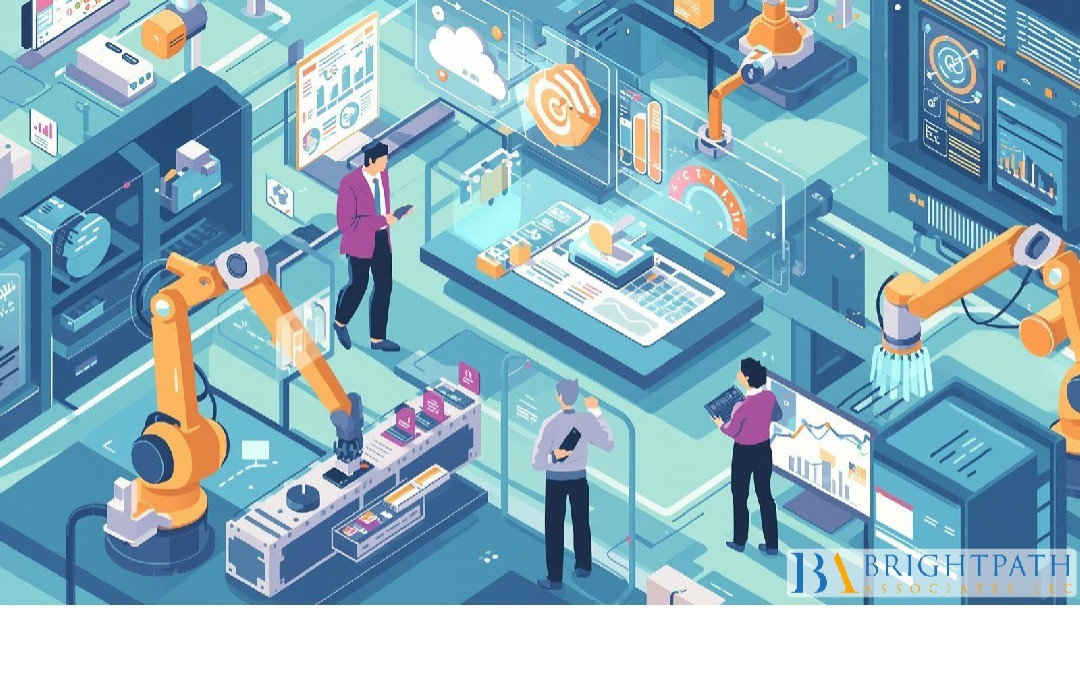
Introduction: From Automation to Intelligence
#DigitalTransformation has shifted manufacturing from isolated equipment and manual oversight to connected, intelligent operations grounded in data-driven decisions. The core promise is straightforward yet profound: orchestrate machines, processes, and people through integrated technologies to achieve speed, quality, flexibility, and cost leadership. This transformation builds on the established base of Industrial automation while extending it with software, analytics, and adaptive architectures that turn factories into responsive, learning systems. The competitive frontier now lies in how effectively organizations combine automation solutions, Manufacturing automation integration, and intelligent decision-making to unlock continuous performance gains.
The Strategic Imperative for Connected Operations
In markets defined by shorter product lifecycles, volatile demand, and rising quality expectations, manufacturers can no longer rely on static, hardwired systems. They need agility without sacrificing efficiency. Digital transformation reframes value creation by aligning production capabilities with real-time business priorities. This alignment is enabled by end-to-end connectivity, consistent data models, and automated feedback loops that make performance transparent and controllable at machine, line, plant, and enterprise levels. When companies approach this challenge holistically—combining technology modernization with process redesign and capability building—they convert automation spend into durable competitive advantage.
Foundations: IT/OT Convergence and Data Architecture
Real transformation begins where operational technology meets enterprise information systems. Historically, Control systems such as PLCs, drives, and safety relays functioned independently from planning, quality, and finance platforms. Integrating these domains allows data to flow securely and contextually from sensors to strategy. Standardized interfaces and #RobustDataModels create a common language for machines, MES, ERP, QMS, and analytics layers. This is not a simple wiring exercise; it requires governance around tag standards, asset hierarchies, and event semantics, as well as edge architectures that preprocess signals close to equipment for low-latency control while streaming cleansed data to cloud or data centers for deeper analysis.
Edge-to-Cloud Intelligence and IIoT Enablement
Industrial IoT unifies the factory’s disparate signals into a coherent, actionable fabric. Edge gateways orchestrate high-frequency data, synchronize time-series streams, and host local applications that support deterministic responses. Cloud platforms supply elastic compute for model training, cross-site benchmarking, and historical trend analysis. Together, they deliver a layered analytics capability: immediate anomaly detection at the edge; operational performance intelligence at the plant; and strategic optimization across the network. With this architecture, automation solutions become self-improving systems, guided by evidence and capable of adjusting to variability with minimal human intervention.
AI, Analytics, and the Rise of machine vision
#ArtificialIntelligence broadens what automation can see, decide, and correct. Predictive maintenance models analyze vibration, current, temperature, and acoustic signatures to preempt failures, preserving uptime and throughput. Process optimization uses multivariate analytics to maintain stability under changing inputs, finding optimal setpoints that balance quality and rate. The maturity of machine vision is particularly transformative: deep-learning cameras and edge inference detect defects earlier and more reliably than manual inspection, elevating first-pass yield and reducing scrap. As these models are embedded into SCADA systems and MES workflows, they trigger automated containment and corrective actions, reducing deviation costs while accelerating learning cycles.
Digital Twins and Virtual Commissioning
Digital twins provide a software mirror of equipment, lines, and entire factories, blending physics, controls logic, and live telemetry. With twins, engineers simulate recipe changes, test new sequences, and validate safety logic before touching the real asset. Virtual commissioning compresses ramp-up time by de-risking start-up, while operational twins forecast performance under constraints, inform maintenance prioritization, and enable rapid root-cause analysis. When synchronized with product twins in PLM, changes in design flow seamlessly to production, strengthening manufacturability and reducing the time from concept to customer.
Robotics Integration and Flexible Automation
#RoboticsIntegration expands the automation envelope beyond repetitive, high-volume tasks to more variable, human-adjacent workflows. Collaborative robots, vision-guided manipulators, and autonomous mobile robots increase flexibility, ergonomics, and consistency across assembly, material movement, and packaging. Software-defined workcells, quick-change end-effectors, and advanced path planning allow manufacturers to profitably run smaller batch sizes and faster changeovers. The key is to connect robots to scheduling, quality, and traceability systems so cells reconfigure themselves in response to demand signals, ensuring that agility scales without introducing instability.
Control Systems, PLC Programming, and SCADA Modernization
At the core of reliable automation are the Control systems that execute real-time logic and motion. High-quality PLC programming service defines robust state management, diagnostics, and fail-safe behavior, ensuring predictable performance and maintainability. Structured code, standardized libraries, and simulation-ready function blocks enhance portability and speed up commissioning. Modern SCADA systems extend visibility and situational awareness across assets, providing operators with contextual alarms, process replay, and role-based dashboards. When PLC logic, HMI design, and SCADA analytics are architected together, the result is a coherent control environment that is both resilient and scalable.
Cybersecurity as a Prerequisite for Trust
Connectivity expands the potential attack surface, making cybersecurity a foundational design criterion rather than an afterthought. Defense-in-depth strategies segment networks, enforce least-privilege access, and validate device identities to limit lateral movement. Secure #RemoteAccess workflows protect maintenance operations without sacrificing responsiveness. Continuous monitoring, patch governance, and incident response plans tailored to operational constraints safeguard uptime and safety. Trusted automation grows only in environments where integrity and availability are protected end to end.
Workforce Enablement and the Talent Equation
No transformation succeeds without an enabled workforce. Digital work instructions, augmented reality guidance, and remote expert support compress training time and improve right-first-time execution. Low-code tools empower engineers and technicians to build targeted apps and workflows that eliminate friction, turning frontline insight into systemic improvement. Talent pipelines also matter. The demand for expertise in data engineering, PLC programming service, Robotics integration, and SCADA systems continues to rise, broadening the landscape of Automation jobs. Organizations that partner with specialized firms for Executive search industrial automation and leverage Executive Search Recruitment services gain access to scarce skills and leadership capable of driving change. By aligning incentives, clarifying the transformation narrative, and investing in continuous learning, manufacturers turn technology potential into operational reality.
A Pragmatic Roadmap for SMEs and Large Enterprises
Whether an SME or a global OEM, the path forward begins with a value-first roadmap. Start by establishing data hygiene—consistent tags, clean master data, and a unified asset model. Target bottlenecks with contained pilots that show clear financial impact, such as predictive maintenance on a constraint machine, machine vision for chronic defect reduction, or changeover optimization with guided digital procedures. Use templated architectures and governance to scale wins across sites. Maintain vendor flexibility by prioritizing open standards and modular designs to avoid lock-in. Crucially, treat #ManufacturingAutomation integration as an organizational capability—spanning design, controls, IT, and operations—rather than a one-off project.
Turning Metrics into Management and Money
Measurement converts digital promise into tangible results. Tie leading indicators like uptime, cycle time, OEE, first-pass yield, and schedule adherence to financial outcomes such as cost of goods sold, inventory turns, and cash-to-cash cycle. Use attribution analytics to identify which interventions deliver value and which do not, preventing pilot proliferation without payback. As maturity grows, create tiered performance rooms—from machine to enterprise—so that decisions cascade coherently and quickly. Companies that institutionalize this discipline move beyond sporadic improvements to a flywheel of compounding value.
Sustainability, Energy, and Responsible Operations
Energy and sustainability have entered the core of #IndustrialStrategy. Digital metering at machine and utility levels reveals leaks, peaks, and latent inefficiencies. AI-driven control of ovens, compressed air, and HVAC trims energy intensity without compromising quality. By connecting production data with carbon accounting, organizations plan and price with transparency into Scope 1 and 2 emissions while collaborating with suppliers on Scope 3 improvements. Circular initiatives—remanufacturing, repair, and additive production of spares—become feasible and economical when supported by traceability and on-demand capabilities. These actions strengthen margins and market position while aligning with regulatory and customer expectations.
Emerging Technologies Extending the Frontier
The technology stack continues to evolve in ways that favor adaptive manufacturers. Private 5G enhances deterministic wireless for mobile assets and large campuses, while time-sensitive networking extends real-time performance across Ethernet. Generative AI accelerates engineering tasks like code scaffolding, documentation, and root-cause hypothesis generation, shortening the loop from idea to implementation. Additive manufacturing redefines tooling and spare parts logistics, cutting lead times. Standardized data spaces and secure collaboration frameworks improve multi-tier supply chain visibility without exposing intellectual property. Organizations that continually pilot, validate, and operationalize such advances extend the lead conferred by their existing automation solutions.
Governance, Architecture, and the Operating Model of the Future
Sustainable advantage requires clear governance, from cybersecurity and data stewardship to model lifecycle management. Reference architectures that separate concerns—edge control, plant orchestration, #EnterpriseAnalytics—make systems maintainable and evolvable. A platform mindset treats capabilities like event streaming, identity, historian services, and monitoring as shared utilities rather than project-specific buildouts. The operating model adapts too, with cross-functional squads spanning OT, IT, quality, and supply chain orchestrating change. In this model, continuous improvement becomes a software-driven cadence, with rapid iterations informed by evidence rather than intuition alone.
Transforming the Talent Market and Organizational Design
As the ecosystem matures, the talent market responds. New specializations emerge at the intersections of disciplines—controls engineers versed in data science, reliability experts fluent in analytics, and operators empowered by digital tools. The growth of Automation jobs reflects this blend of competencies. Internal academies and strategic hiring supported by Executive Search Recruitment build the bench strength necessary to scale. Partnerships with universities, vendors, and integrators spread best practices and expand access to innovation. The companies that treat talent strategy with the same rigor as technology strategy find themselves better equipped to sustain momentum and absorb new paradigms.
Conclusion: Building an Enduring Edge
Digital transformation in manufacturing is more than adopting new tools; it is a fundamental redesign of how factories sense, decide, and act. By uniting Industrial automation with data platforms, AI, and integrated workflows, manufacturers elevate performance across quality, cost, speed, and sustainability. The essentials are consistent: robust Control systems and SCADA systems, disciplined PLC programming service, scalable Robotics integration, secure architectures, and a culture that prizes learning and operational excellence. With thoughtful governance and a pragmatic roadmap, Manufacturing automation integration becomes a core capability rather than a project, and automation solutions evolve into continuous sources of competitive advantage. In a landscape defined by volatility and rising expectations, those who align technology, process, and talent—supported by targeted #ExecutiveSearchRecruitment automation and strengthened by a vibrant market for Automation jobs—will set the pace and shape the future of industrial performance.
Find your next leadership role in Industrial Automation Industry today!
Stay informed with the latest insights on Industrial Automation Industry!