
Introduction
The #ConstructionIndustry has long been a cornerstone of economic development, providing the infrastructure and facilities necessary for commerce, housing, and public services. In recent years, however, it has entered a period of rapid transformation driven by technological innovation. Small to mid-sized building materials companies face an evolving landscape where the adoption of digital tools, automation, and sustainable construction practices is no longer optional but essential for maintaining competitiveness.
The rise of building technology, digital project management systems, and advanced material production has fundamentally altered how construction projects are conceived, executed, and monitored. These innovations not only improve operational efficiency but also enhance safety, reduce costs, and enable more sustainable building practices. For decision-makers in the construction sector, understanding the interplay between technology adoption and leadership capabilities is critical for long-term growth.
Historical Context: Evolution of Technology in Construction
Construction has traditionally relied on manual labor, conventional tools, and standardized processes. Over the decades, mechanization and computer-aided design brought incremental improvements in efficiency and accuracy. The introduction of CAD software, project management platforms, and prefabrication methods laid the groundwork for today’s digital construction ecosystem.
Despite these advancements, many small to mid-sized companies still operate with fragmented systems, relying on outdated workflows and labor-intensive processes. The modern shift toward fully integrated digital construction represents a paradigm change, requiring a combination of technological investment and strategic leadership to implement successfully.
Key Technological Innovations in Construction
Digital Project Management and Building Information Modeling
One of the most transformative technologies is #BuildingInformationModeling (BIM), which enables construction teams to create detailed digital representations of buildings, including structural, mechanical, and electrical systems. BIM allows stakeholders to visualize potential conflicts, optimize material usage, and simulate construction sequences before physical work begins.
Digital project management tools complement BIM by providing real-time monitoring of timelines, budgets, and resources. This integration improves accountability, reduces project delays, and enhances decision-making across all levels of the organization. For executives, leveraging these tools requires both technical insight and the ability to guide teams through digital adoption.
Automation and Robotics
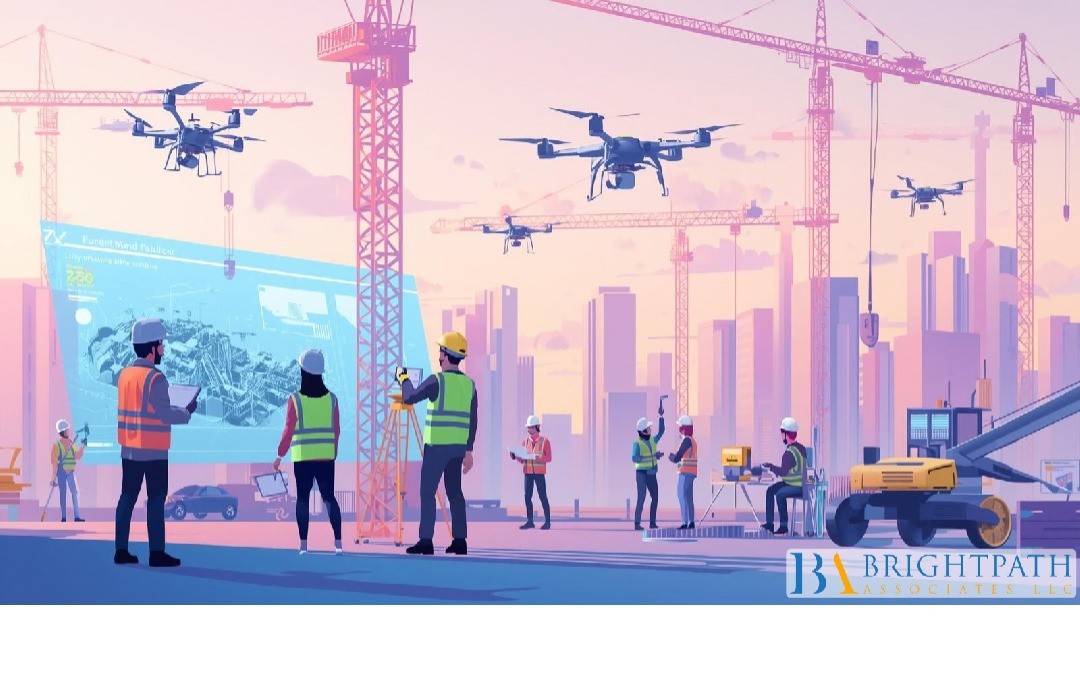
Automation technologies, including robotic bricklaying, concrete printing, and drone-based site monitoring, are revolutionizing on-site operations. Robotics reduce manual labor requirements, enhance precision, and improve safety outcomes by handling repetitive or hazardous tasks. Drones provide real-time aerial data, enabling site managers to assess progress, detect potential issues, and optimize logistics.
These technological advances necessitate a workforce equipped with specialized skills in robotics management, digital systems, and data interpretation. As companies integrate these innovations, leaders must ensure employees are trained and processes are adapted to fully realize productivity gains.
Smart Materials and Sustainable Practices
The demand for #SustainableConstruction has led to innovations in material science. Recycled concrete, energy-efficient insulation, bioplastics, and advanced composite materials are being deployed to reduce environmental impact. Integrating these materials requires careful supply chain management and collaboration with suppliers.
Digital tools support the monitoring and management of sustainable practices, tracking material sourcing, waste reduction, and carbon footprints. Executive leaders must align operational goals with sustainability objectives, ensuring regulatory compliance while enhancing corporate responsibility.
Data Analytics and IoT Integration
The Internet of Things (IoT) and data analytics are enabling unprecedented insight into construction operations. Sensors embedded in machinery and structures can monitor equipment performance, material usage, and structural integrity in real time. Advanced analytics translate this data into actionable intelligence, optimizing resource allocation, predicting maintenance needs, and improving overall project efficiency.
For executives, leveraging these insights requires both technical understanding and strategic foresight. Leadership must prioritize data-driven decision-making while fostering a culture that embraces innovation.
Challenges in Technology Adoption
Despite the benefits, small and mid-sized construction companies face several barriers to adopting digital technologies. High upfront costs for software, equipment, and training can strain budgets, particularly for companies operating on narrow margins. Resistance to change among staff accustomed to traditional methods can slow implementation and reduce return on investment.
Cybersecurity concerns also emerge as companies increasingly rely on interconnected #DigitalSystems. Protecting sensitive project data, intellectual property, and operational systems requires executive oversight and specialized talent, further complicating leadership recruitment and development.
Impact on Workforce and Skill Requirements
Technological innovation is reshaping workforce needs across the construction sector. Roles that once prioritized manual labor now demand digital literacy, technical expertise, and analytical skills. Executives must identify gaps in competencies and implement upskilling programs to prepare staff for evolving responsibilities.
In addition, technology adoption shifts traditional hierarchies and role expectations. Project managers, engineers, and site supervisors must collaborate closely with IT specialists, data analysts, and sustainability experts. Companies that fail to develop these integrated skill sets risk lagging behind in efficiency, safety, and market responsiveness.
Executive Leadership and Talent Recruitment
As technology transforms operational landscapes, leadership talent shortages have become increasingly pronounced. Executives capable of navigating complex projects, overseeing technological integration, and implementing sustainable practices are in high demand but short supply.
#ExecutiveSearchRecruitment has emerged as a strategic solution for addressing these talent gaps. By identifying candidates with deep industry experience, technical knowledge, and leadership capabilities, companies can secure the expertise needed to drive digital transformation. For small to mid-sized organizations, partnering with specialized recruitment services allows them to compete effectively with larger corporations for top-tier talent.
Strategic Planning for Digital Transformation
Successful technology adoption requires a comprehensive strategic plan. Leaders must assess operational workflows, identify areas where digital solutions can create value, and align technology investments with long-term business objectives. Integrating BIM, automation, and IoT systems demands careful change management, ensuring staff adoption and minimizing operational disruptions.
Moreover, executives must balance technological advancement with financial prudence. Investments in digital tools should be prioritized based on return on investment, potential efficiency gains, and contribution to sustainability goals.
Economic and Regulatory Considerations
Construction companies operate in a highly regulated environment. Building codes, safety standards, and environmental regulations shape both the materials used and the methods applied on-site. Technology supports compliance by providing accurate data, monitoring environmental impact, and ensuring adherence to regulatory standards.
#EconomicTrends, such as fluctuations in building materials costs, labor availability, and infrastructure demand, further influence strategic decisions. Digital tools enable companies to model financial outcomes, optimize procurement, and improve forecasting accuracy. For executives, integrating economic insights with technological planning ensures both operational efficiency and business sustainability.
Future Outlook: The Digital Construction Landscape
Looking forward, the construction industry is poised for continued digital transformation. Advances in artificial intelligence, augmented reality, and predictive analytics will further enhance project planning, monitoring, and execution. Smart buildings and automated supply chains will redefine how materials are sourced, transported, and utilized.
Sustainability will remain a central driver of innovation, with companies increasingly expected to demonstrate environmental stewardship and circular economy practices. Leadership will play a critical role in aligning technological adoption with corporate responsibility, operational efficiency, and market competitiveness.
By embracing executive search recruitment, small and mid-sized building materials companies can secure leaders capable of guiding their organizations through this period of profound change. Strategic leadership ensures that technology adoption translates into measurable business outcomes, improved productivity, and enhanced sustainability.
Conclusion: Embracing Technology for Growth and Sustainability
The transformation of the construction industry through technology is reshaping operational practices, workforce requirements, and market dynamics. Digital tools, automation, smart materials, and data analytics are no longer optional—they are essential for maintaining competitiveness and meeting sustainability expectations.
For small and mid-sized building materials companies, success in this evolving landscape requires both technological investment and strong leadership. Executive search recruitment offers a strategic pathway to acquire the talent necessary to implement digital initiatives, navigate regulatory complexities, and drive operational excellence.
By integrating technology, sustainability, and #StrategicLeadership, companies can maximize productivity, reduce costs, and create long-term value for stakeholders. The future of construction is digital, and organizations that embrace this transformation will secure both operational resilience and competitive advantage.
Find your next leadership role in Building Materials Industry today!
Stay informed with the latest insights on Building Materials Industry!