
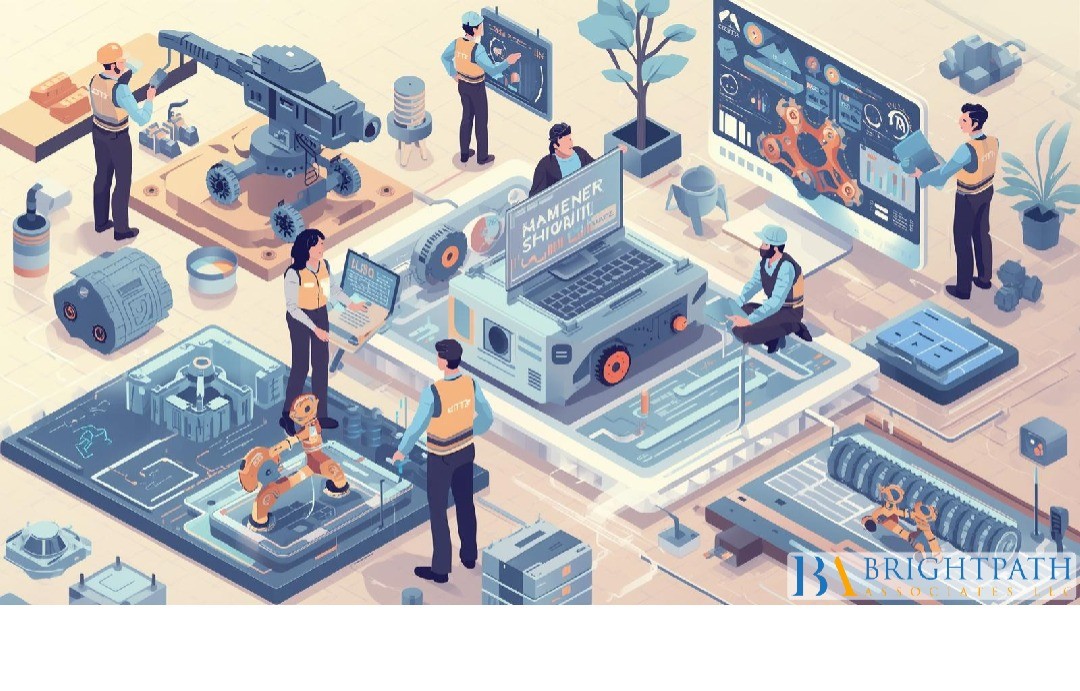
Introduction: Integrating Excellence Across the Industrial Landscape
Delivering cutting-edge #EngineeringSolutions in the 21st century requires an industrial mindset that integrates systems thinking, digital maturity, and operational discipline. Today’s market pressures—rapid urbanization, climate urgency, globalized competition, and compressed innovation cycles—demand that organizations align strategy, technology, and execution. Success depends on uniting Industrial manufacturing capabilities with robust product development practices, resilient operations, and a forward-looking approach to talent. This essay offers an informative, insightful, and industrial perspective on how to conceive, build, and scale next-generation offerings, with a particular emphasis on the Electronics industry supply chain, Electrical engineering and Electronic engineering practices, Manufacturing innovation, and the expanding role of Digital transformation manufacturing in enabling speed, quality, and sustainability.
The New Baseline: Complexity, Velocity, and Accountability
The fundamental constraints of modern engineering have shifted. Products and systems now blend mechanical structures, power electronics, embedded software, and cloud connectivity, elevating complexity and intensifying integration risk. Market velocity accelerates expectations for frequent updates, modular upgrades, and customization at scale. Meanwhile, accountability has broadened to encompass lifecycle carbon, resource efficiency, safety, security, and responsible end-of-life recovery. Organizations that excel recognize that traceability is no longer optional. Every requirement, design decision, test result, and operational data point must be captured and connected. This data-centric discipline anchors the delivery of Engineering solutions that can be audited, optimized, and evolved in real time, and it sets the stage for sustained Manufacturing innovation within competitive markets.
Digital-First Engineering: From Documents to Executable Models and Data
The transition from document-driven practices to model-based and data-centric engineering is foundational. Model-Based Systems Engineering formalizes requirements, architectures, interfaces, and verification logic in executable formats that integrate with downstream tools. When these models are connected to Product Lifecycle Management and Application #LifecycleManagementSystems, organizations establish a single source of truth that spans concept, Electronic design, mechanical design, software, testing, and production. This is where Digital transformation manufacturing becomes tangible. Digital twins merge physics-based models with sensor telemetry to provide continuous insight into performance and reliability. Operational feedback loops back into design, enabling predictive maintenance, rapid root-cause analysis, and ongoing optimization. In the context of Electronics manufacturing services, digital twins of lines and processes help simulate throughput, identify bottlenecks, and trial parameter adjustments virtually before applying them to the factory floor. As a result, companies not only design better but also manufacture more intelligently, shortening time to market while improving quality and yield.
Manufacturing at Scale: Advanced Processes, Automation, and Quality
Translating innovation into production requires manufacturing systems that are as sophisticated as the products themselves. Additive manufacturing enables rapid tooling and complex geometries that reduce part counts and enable novel thermal or structural properties. Hybrid approaches that combine additive for shape complexity with precision machining for critical surfaces strike practical trade-offs for cost and performance. In parallel, automation has transitioned from isolated robotic cells to reconfigurable, interconnected ecosystems. Collaborative robots, machine vision, and edge analytics enable real-time quality checks and adaptive control. When integrated with Manufacturing Execution Systems, factories achieve end-to-end traceability that is essential for regulated sectors and for continuous improvement. The interplay between advanced processes and data-driven control defines the frontier of Manufacturing innovation, allowing enterprises to scale efficiently without sacrificing flexibility. For Electrical manufacturing companies, automated test equipment linked to analytics platforms accelerates fault detection, raises first-pass yield, and reduces rework, all of which translate into improved margins and customer satisfaction.
Multidomain Integration: Materials, Power, and Software Convergence
Modern offerings rarely reside within a single discipline. Material science advances enable lighter, stronger, and more durable structures; power electronics and wide bandgap semiconductors improve efficiency and expand the feasibility of electrification; and embedded software increasingly defines product functionality and differentiation. Electrical engineering and #ElectronicEngineering teams must collaborate closely with mechanical and software counterparts to orchestrate interfaces and control strategies. This collaboration is best supported by rigorous interface specifications, synchronized simulation environments, and iterative integration practices. Hardware-in-the-loop and software-in-the-loop testing expose issues earlier in the lifecycle, shortening integration cycles and reducing costly late-stage surprises. In industries reliant on Electronics manufacturing services, cross-domain verification and standardized interface contracts simplify supplier collaboration and accelerate qualification, creating an operational advantage in the Electronics industry supply chain where speed and reliability are paramount.
Sustainability by Design: Engineering for Circularity and Low Carbon
Sustainability is a core performance variable that shapes brand value, regulatory compliance, and long-term competitiveness. Engineers influence outcomes through material selection, energy efficiency, reparability, and recyclability built into product architectures. Designing for disassembly, standardizing fasteners and materials, and planning for component recovery directly impact lifecycle emissions and waste. In production, energy-efficient processes, closed-loop resource systems, and waste valorization strategies reinforce sustainability at scale. Digital twins and operational analytics extend these gains into the use phase by helping optimize energy consumption and maintenance cycles. For Industrial manufacturing, aligning sustainability metrics with design and verification creates a consistent framework where environmental targets are enforced alongside schedule and cost. In practice, this turns sustainability into a controllable engineering parameter rather than an afterthought, strengthening the proposition of Engineering solutions that are not only high-performing but also responsible and future-ready.
Interoperability and Interface Management: Winning the Integration Battle
Integration risk often outweighs component-level performance risk. Architectures that standardize communication protocols, employ schema-based data interchange, and maintain versioned application interfaces reduce brittleness across complex systems. In brownfield environments, edge gateways allow legacy assets to participate in modern data ecosystems without disruptive wholesale replacements. Equally important is governance that matches technical rigor: change control boards aligned to engineering cadences, automated contract testing, and continuous integration pipelines that validate cross-subsystem compatibility. Visual tools that map dependencies and hazard pathways clarify risk concentration and inform prioritization. By codifying how systems fit together, organizations avoid late-stage integration crises and build a platform for rapid iteration. This integration discipline is especially critical for Electrical manufacturing companies coordinating with #ElectronicsManufacturingServices providers, where synchronized release cycles, validated test fixtures, and version-controlled firmware ensure smooth transitions from prototype to volume production.
Trustworthy Systems: Safety, Security, and Reliability by Design
As connectivity and autonomy proliferate, safety and security must be designed into products from the outset. Threat modeling informs secure architectures that employ principles like least-privilege access, encrypted channels, secure boot, and robust key management. Secure development practices, including code analysis and vulnerability scanning, move cybersecurity from reactive compliance to proactive assurance. For safety-critical sectors, adherence to relevant standards, thorough requirements coverage, rigorous failure analyses, and carefully designed redundancies create the evidentiary backbone of trustworthy systems. Reliability is reinforced through physics-of-failure modeling and accelerated life testing, ensuring performance in harsh environments. Operational resilience completes the picture, with incident response and remote remediation preventing isolated failures from cascading into system-wide disruptions. These practices elevate the credibility of Engineering solutions and underpin customer confidence in sectors where failure is unacceptable.
Execution Models That Deliver: Agile Hardware, Concurrent Engineering, and Industrialization
Speed and reliability in delivery require execution frameworks adapted to hardware-software convergence. Agile principles—timeboxed increments, prioritized backlogs, and continuous integration—can be tailored for physical development via concurrent engineering and synchronized, cross-functional planning. Demonstrations should integrate simulations, test data, and physical prototypes to ensure that progress is measured in working capability, not just documentation. Early supplier involvement injects manufacturability, testability, and supply risk data into design trades when changes are still inexpensive. Industrialization is the bridge from prototype to business. Establishing process capability targets, validating golden samples, and introducing mistake-proofing mechanisms stabilize quality at scale. Ramp plans that phase capacity increases while instrumenting lines for statistical process control enable predictable, efficient scale-up. In the #ElectronicsIndustry supply chain, designing to multiple qualified components, pre-approving alternates, and coordinating with Electronics manufacturing services on panelization, test strategies, and yield optimization help safeguard schedules and margins against volatility.
Data Strategy and Analytics: Turning Information into Advantage
Engineering organizations generate vast amounts of information—requirements, CAD, simulation outputs, test data, production records, and field telemetry. Without a cohesive data strategy, much of this value remains trapped in silos. A governed architecture with clear ownership and access controls provides the foundation. Contextualization layers connect technical data to business outcomes, linking design choices to yield, warranty cost, uptime, and energy consumption. Advanced analytics and machine learning uncover patterns, predict failures, and guide design optimizations, while human-in-the-loop oversight ensures interpretability and practical application. Embedding analytics into daily decisions—such as tolerance stack-ups, control loop tuning, spare parts planning, and maintenance scheduling—compounds value over time. In Digital transformation manufacturing programs, combining real-time machine data with supply and quality signals allows proactive adjustments that reduce scrap, improve cycle time, and stabilize throughput, enabling Engineering solutions that are measurably superior and economically defensible.
Supply Chain Resilience: Designing for Volatility and Continuity
Resilience in the Electronics industry supply chain and broader Industrial manufacturing networks is a strategic imperative. Volatility in commodities, geopolitical shifts, and logistics friction can derail even the best technical plans. Designing with interchangeable parts, qualifying alternates in advance, and regionalizing critical components where feasible mitigate single points of failure. Real-time visibility into inventory, capacity, and transit improves decision-making and collaboration with partners. By incorporating supply constraints into early design reviews, teams avoid late redesigns that introduce cost and delay. For #ElectricalManufacturingCompanies, proactive coordination with Electronics manufacturing services on component lifecycle status, obsolescence risk, and parametric equivalents guards against shortages. The result is a resilient operational posture in which products are architected not only for performance but also for continuity, ensuring that Engineering solutions are deliverable when customers need them most.
Talent, Culture, and Leadership: Building the Human Engine of Innovation
Technology reaches its potential only in organizations that cultivate the right talent and culture. The modern engineering profile is T-shaped: deep expertise in a specialty paired with the ability to collaborate across disciplines. Upskilling in systems thinking, data literacy, sustainability, and manufacturability equips teams to make holistic decisions. A culture of constructive challenge, rapid learning, and evidence-based decision-making reduces rework and accelerates innovation. Leadership plays a crucial role in aligning incentives, clarifying decision rights, and maintaining focus on outcomes. The talent supply itself benefits from strategic partnerships and thoughtful hiring. #ExecutiveSearchRecruitment focused on Industrial manufacturing, Electrical engineering, and Electronic engineering can accelerate capability building by attracting leaders who bridge design, operations, and digital. Such leaders catalyze Digital transformation manufacturing initiatives, embed best practices in Electronic design and production, and foster enduring relationships across the Electronics industry supply chain. By integrating technical excellence with organizational effectiveness, companies create an enduring advantage that competitors find difficult to replicate.
A Practical Roadmap to Maturity: From Backbone to Breakthrough
Organizations aspiring to deliver consistently cutting-edge outcomes can follow a pragmatic progression that begins with establishing a robust digital backbone. Integrating lifecycle management across disciplines and adopting model-based practices provides traceability and coherence. Building simulation and test excellence shortens cycles and reduces integration risk, while modernizing manufacturing with automation and analytics strengthens yields and throughput. Embedding sustainability targets into design choices aligns environmental and economic performance. Systematically engineering safety, security, and reliability transforms trust into a competitive asset. Orchestrating supply chain resilience protects schedules and margins, and methodical industrialization translates prototypes into stable, scalable production. Finally, investing in talent—through development programs, partnerships, and targeted Executive Search Recruitment—ensures that capabilities deepen over time. Each step compounds the others, turning discrete improvements into a durable system of performance.
Conclusion: Converting Complexity into Competitive Advantage
Delivering cutting-edge engineering solutions for the 21st century is fundamentally an exercise in integration. It is the art and discipline of bringing together models and data, people and processes, Electrical engineering and Electronic engineering, Electronic design and production, and the dynamic realities of the Electronics industry supply chain into a coherent whole. Organizations that commit to #DigitalTransformationManufacturing, embrace Manufacturing innovation, and cultivate the leadership to sustain change will ship better products, faster, with greater reliability and lower lifecycle impact. In doing so, they convert complexity into competitive advantage and set the standard for Industrial manufacturing in an era defined by speed, accountability, and continuous reinvention.
nd your next leadership role in Electrical and Electronics Industry today!
Stay informed with the latest insights on Electrical and Electronics Industry!