
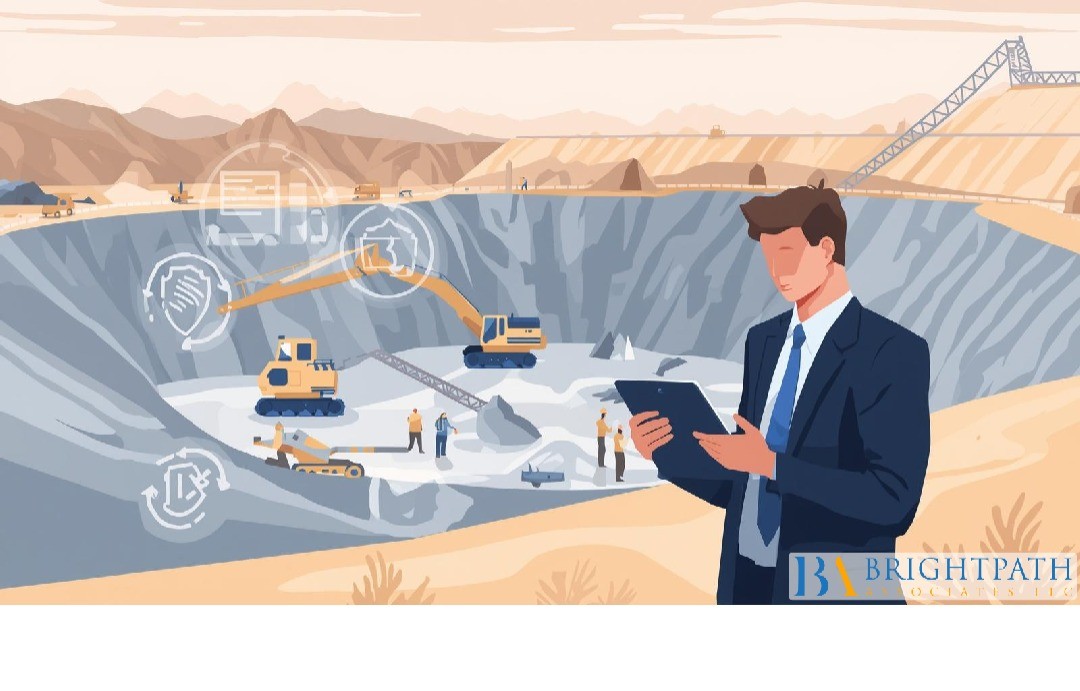
The Expanding Regulatory Landscape in Metal and Mining
The global metal and #MiningSector operates within one of the most intricate regulatory frameworks in industrial enterprise. For C-suite executives and founders of small to mid-sized metal and mining companies, regulatory compliance has evolved into a central strategic concern that directly influences operational continuity, investor confidence, and long-term growth. Mining policy now encompasses environmental safeguards, worker safety standards, community impact obligations, reporting transparency, and sustainability metrics that shape how ore extraction and metal processing activities are conducted.
Environmental mandates increasingly govern tailings management, water usage, emissions control, and land rehabilitation. Compliance expectations extend beyond local jurisdictions, as investors and multinational buyers demand adherence to global environmental, social, and governance benchmarks. For smaller operators, the cost of meeting these standards can be substantial, yet failure to comply may result in license suspensions, operational shutdowns, and reputational damage. In this context, regulatory strategy is inseparable from corporate strategy.
Sustainable Mining and the Technology Imperative
Sustainable mining has become a defining pillar of modern regulatory frameworks. Policymakers and stakeholders expect measurable reductions in environmental impact while maintaining production efficiency. This expectation has accelerated the adoption of mining innovation technology, including autonomous haulage systems, AI-powered mineral exploration tools, and advanced environmental monitoring platforms.
Mining technology enhances both compliance and productivity. Real-time emissions tracking supports adherence to environmental thresholds, while predictive analytics improve equipment maintenance and worker safety. Automation reduces exposure to hazardous environments and increases precision in ore extraction. However, the integration of these technologies requires leadership with cross-functional expertise in metallurgy, engineering, digital systems, and environmental governance.
Executives who lack familiarity with sustainable mining principles or digital transformation initiatives may struggle to align technological investments with compliance goals. For small to mid-sized enterprises, the margin for strategic miscalculation is narrow. Effective leadership determines whether innovation becomes a competitive advantage or a financial burden.
Metals Industry Trends and Economic Pressures
#MetalsIndustry trends reveal intensifying demand for critical minerals used in renewable energy systems, electric mobility, and advanced manufacturing. This demand amplifies scrutiny over sourcing practices and environmental stewardship. Investors increasingly evaluate mining companies on governance transparency and sustainability performance alongside production metrics.
At the same time, commodity price volatility complicates capital planning. Fluctuating revenue streams require disciplined financial oversight and agile operational adjustments. Executives must balance regulatory compliance costs with investment in exploration, processing capacity, and workforce development.
Construction of new processing facilities, expansion of mining sites, and upgrades to metal processing infrastructure must all align with evolving mining policy standards. Strategic decisions regarding capital allocation require leaders capable of integrating regulatory analysis with market forecasting. The complexity of these responsibilities underscores the importance of experienced executive oversight.
Leadership Talent Shortages in the Mining Sector
The metal and mining industry faces a growing leadership talent shortage. A substantial portion of senior executives with deep expertise in metallurgy and mine operations are approaching retirement, while the pipeline of successors remains limited. Smaller companies, in particular, may lack structured leadership development programs to cultivate future executives internally.
Modern mining leadership roles demand far more than operational oversight. Today’s executives must interpret evolving mining policy, oversee sustainable mining initiatives, manage community relations, integrate mining technology, and ensure compliance with environmental mandates. The convergence of these responsibilities requires a rare blend of technical proficiency and strategic acumen.
Competition for qualified candidates has intensified. Larger multinational corporations frequently attract experienced leaders with global exposure and expansive resources. Small to mid-sized companies often struggle to access executives with proven track records in regulatory navigation and operational transformation.
The Strategic Evolution of Executive Hiring
In response to shifting expectations, recruitment practices within the mining and metals sector have evolved significantly. Traditional hiring methods—such as relying on job postings or limited professional networks—often fail to identify candidates with the multifaceted capabilities required in today’s environment.
#ExecutiveSearchRecruitment has emerged as a strategic solution to leadership gaps. Specialized mining and metals recruiters proactively map talent markets, identify passive candidates, and conduct comprehensive competency assessments. This approach ensures that leadership hires possess expertise in sustainable mining, mining technology integration, governance compliance, and financial stewardship.
Structured executive search processes evaluate not only technical credentials but also cultural alignment and adaptability. Given the regulatory complexity of modern mining operations, leaders must demonstrate resilience, stakeholder engagement skills, and a forward-looking mindset.
By adopting Executive Search Recruitment methodologies, companies gain access to high-caliber talent capable of navigating regulatory intricacies while driving operational efficiency. This proactive approach mitigates the risk of misaligned hires and strengthens organizational stability.
Aligning Executive Capability with Regulatory Strategy
Leadership capability directly influences a mining company’s regulatory posture. Executives who understand the interplay between ore extraction practices, metal processing techniques, and environmental compliance frameworks can position their organizations as responsible and innovative operators.
An effective executive team fosters cross-functional collaboration among compliance officers, operations managers, sustainability specialists, and financial leaders. This integration ensures that regulatory requirements are embedded into operational design rather than treated as afterthoughts.
Furthermore, experienced leaders strengthen relationships with regulators, investors, and community stakeholders. Transparent governance and proactive compliance initiatives enhance corporate credibility and facilitate smoother project approvals. In highly regulated environments, trust becomes a strategic asset.
Executive Search Recruitment as a Competitive Lever
For small to mid-sized metal and mining enterprises, strategic executive hiring is a decisive growth lever. Leadership misalignment can expose companies to compliance failures, operational inefficiencies, and reputational risk. Conversely, visionary executives can transform regulatory complexity into a catalyst for innovation and differentiation.
Brightpath Associates exemplifies a specialized approach to executive search recruitment tailored to complex industrial sectors. By leveraging deep industry insight and targeted #TalentMapping, it supports mining organizations in identifying leaders with expertise in metallurgy, sustainable mining practices, mining innovation technology, and regulatory governance.
Through disciplined executive search recruitment, companies can secure transformative talent capable of aligning regulatory compliance with operational excellence. In an era defined by evolving mining policy and heightened stakeholder expectations, leadership strength determines competitive trajectory.
Conclusion: Leadership as the Cornerstone of Regulatory Success
Decoding mining regulations requires more than legal interpretation; it demands strategic leadership that integrates compliance, innovation, and operational resilience. As regulatory frameworks expand and metals industry trends reshape demand patterns, executive capability becomes the defining variable in long-term success.
For C-suite leaders and founders of small to mid-sized mining companies, investing in executive search recruitment is not simply a staffing decision—it is a strategic commitment to sustainable growth and regulatory excellence. Organizations that align leadership strategy with compliance imperatives will navigate complexity with confidence and secure enduring value in the evolving metal and mining landscape.