
Introduction
The mining and #MetalsSector has historically focused on physical risks such as equipment failure, geological uncertainty, worker safety, extreme weather, and commodity-price volatility. Today, another risk is becoming equally important: cyber disruption.
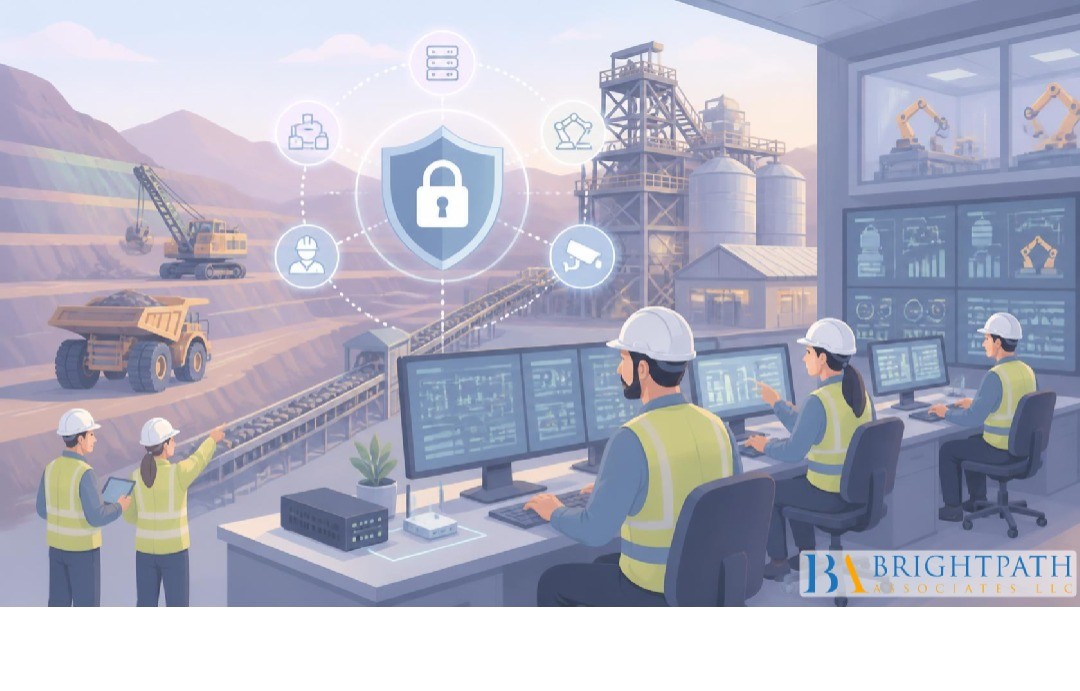
Modern mines are increasingly dependent on connected operational technology, automated equipment, industrial control systems, remote monitoring, digital communications, and data-driven decision-making. These technologies improve productivity and safety, but they also create additional pathways through which cyber threats can reach operational environments.
Ransomware presents a particularly serious challenge because an attack against an operational technology environment can affect more than corporate files. It can potentially interrupt processing, slow ore extraction, disrupt transportation, affect remote operations, and create significant safety and financial consequences.
For organizations operating in the mining and metals sector, cyber-resilience must therefore become part of broader operational strategy. The objective is not simply to prevent ransomware. It is to ensure that critical operations can continue safely and recover quickly if an attack occurs.
This challenge is becoming more important as Metals industry trends increasingly point toward automation, digitalization, connected machinery, artificial intelligence, and integrated production systems.
Understanding the OT Cybersecurity Challenge
Operational technology differs from conventional information technology because OT systems directly interact with physical processes.
Mining operations may use industrial controllers, sensors, programmable systems, automated machinery, communication networks, monitoring platforms, and control environments to manage activities ranging from ore extraction to metal processing.
An IT disruption might prevent employees from accessing files or applications. An OT disruption can potentially interfere with physical equipment and production processes.
This distinction changes how cybersecurity must be approached.
Mining organizations cannot always apply conventional IT security practices directly to OT environments. Certain systems may require continuous availability, legacy equipment may have limited security capabilities, and software updates may need to be carefully scheduled to avoid disrupting production.
Cybersecurity must therefore be aligned with operational realities.
The increasing adoption of Mining technology has created substantial operational advantages.
Automation can improve productivity. Sensors can provide real-time information. Remote operations can reduce exposure to hazardous environments. Analytics can help predict equipment problems. Connected systems can improve coordination across complex sites.
However, every connected device can potentially increase the organization’s cyber exposure.
The challenge becomes greater when mining sites connect operational environments with corporate networks, cloud platforms, supplier systems, remote-access tools, or external service providers.
A ransomware attack does not necessarily need to begin inside a mine’s control environment. Compromised credentials, infected laptops, remote-access systems, or third-party connections can potentially provide attackers with pathways toward critical infrastructure.
Cyber-resilience therefore requires visibility across the entire digital ecosystem.
Protecting Ore Extraction Operations
#OreExtraction depends on a complex combination of machinery, control systems, communications, geological data, maintenance systems, and human decision-making.
Disruption to any critical component can affect production.
For example, a mining organization may depend on connected equipment to monitor excavation, hauling, crushing, ventilation, or material movement.
If ransomware disrupts the systems supporting these operations, the organization may need to shift to manual procedures or temporarily stop affected processes.
Business continuity planning is therefore essential.
Mining companies should understand which operational systems are most critical, which processes can operate manually, and how long operations can safely continue if digital systems become unavailable.
This knowledge allows organizations to prioritize recovery.
Protecting Metal Processing Infrastructure
Cyber-resilience is equally important after material leaves the mine.
Metal processing operations can involve sophisticated equipment, automated control systems, sensors, production monitoring, and quality-management platforms.
Processing facilities may also have complex dependencies between different stages of production.
A cyber incident affecting one system can therefore create consequences elsewhere in the production chain.
Segmentation can help limit these effects.
Instead of allowing every device and system to communicate freely, organizations can separate networks according to operational requirements.
Critical control environments can be isolated from less-sensitive systems while carefully managed communication channels allow necessary information to move between them.
This approach can limit the potential spread of malicious software.
Metallurgy increasingly depends on digital information.
Process models, material specifications, testing data, quality records, production parameters, and analytical models can represent valuable intellectual property.
Protecting this information is important for both operational continuity and competitive advantage.
Mining companies should identify which data is essential to production and which information is commercially sensitive.
Backups should be protected against unauthorized modification because ransomware frequently attempts to compromise recovery capabilities as well as primary systems.
Secure and tested backups can dramatically improve an organization’s ability to recover.
However, backup systems should not simply exist. Organizations need to periodically verify that data can actually be restored.
A recovery plan that has never been tested may not perform as expected during a real incident.
Sustainable Mining and Cyber Resilience
#SustainableMining increasingly depends on digital technologies.
Environmental monitoring systems can track water use, emissions, energy consumption, waste, land impacts, and other sustainability indicators.
Automation can improve resource efficiency and reduce unnecessary consumption.
A cyber incident affecting these systems could interfere with environmental monitoring and reporting.
Cybersecurity therefore has a sustainability dimension.
Protecting digital infrastructure helps ensure that environmental management systems continue operating accurately.
This is particularly important as mining companies face greater expectations regarding transparency and environmental performance.
Mining Innovation and Emerging Cyber Risk
Mining innovation is accelerating through artificial intelligence, autonomous equipment, advanced analytics, digital twins, robotics, remote operations, and connected sensors.
These technologies can transform mining operations, but innovation also introduces new security considerations.
A highly automated mine may depend on communication between machines, control systems, software platforms, and cloud services.
If these connections are not carefully designed, a cyber incident could potentially affect multiple operational areas.
Innovation should therefore incorporate cybersecurity from the beginning.
Security cannot be treated as an additional feature added after a technology has already been deployed.
Network segmentation is one of the important principles of OT cyber-resilience.
A mining operation may contain corporate IT networks, engineering environments, production control systems, equipment networks, monitoring platforms, and external connections.
Keeping these environments appropriately separated can reduce the ability of an attacker to move laterally.
The objective is not necessarily complete isolation.
Mining organizations still need controlled communication between systems.
The objective is to ensure that communication occurs through defined pathways with appropriate authentication, monitoring, and authorization.
This allows businesses to maintain operational connectivity while reducing unnecessary exposure.
Remote Operations Require Stronger Controls
#RemoteOperations have become increasingly valuable in mining.
They can allow specialists to monitor equipment, support field personnel, manage machinery, and analyze production data without being physically present at a site.
However, remote access can also become a major cybersecurity concern.
Organizations should carefully control who can connect to operational environments, from where they can connect, what systems they can access, and for how long.
Privileged access should be tightly managed.
Former employees, contractors, and vendors should not retain unnecessary access to operational systems.
Strong authentication and continuous monitoring can provide additional protection.
Third-Party Risk Across the Mining Supply Chain
Mining operations depend on equipment manufacturers, engineering companies, technology vendors, maintenance providers, software suppliers, contractors, and other partners.
These relationships can create cybersecurity dependencies.
A supplier may require remote access to diagnose equipment or update software.
While this access may be operationally necessary, it should be governed carefully.
Mining companies should evaluate the cybersecurity practices of critical suppliers and establish clear expectations regarding access, incident reporting, software updates, and data protection.
The objective is not to eliminate third-party relationships.
It is to ensure that suppliers do not unintentionally become weak points in the organization’s cyber-resilience strategy.
Mining policy is increasingly influenced by concerns surrounding infrastructure resilience, environmental responsibility, data protection, and national security.
As mining and metals operations become more digital, cybersecurity expectations are likely to become increasingly integrated into broader operational governance.
Companies should therefore monitor regulatory developments and customer requirements.
Organizations supplying strategically important materials may face particularly strong expectations regarding resilience and continuity.
Preparing ahead of regulatory requirements can reduce the pressure associated with sudden compliance changes.
It can also improve competitiveness when customers evaluate suppliers based on operational resilience.
Creating a Ransomware Response Strategy
Preparation is one of the strongest defenses against ransomware.
#MiningOrganizations should establish clear procedures for identifying, containing, responding to, and recovering from cyber incidents.
The response plan should include both IT and OT personnel.
This is important because shutting down an operational system without understanding its physical consequences could create additional safety or production risks.
Incident-response teams should understand which systems can be isolated, which processes require controlled shutdowns, and which operations must remain active.
Regular exercises can help organizations identify weaknesses before an actual incident occurs.
Simulated scenarios can also help executives understand the potential financial and operational consequences of cyber disruption.
The Human Factor in OT Cybersecurity
Technology is only one part of cyber-resilience.
Employees, contractors, engineers, operators, and managers interact with digital systems every day.
A compromised credential can potentially undermine sophisticated technical controls.
Organizations should therefore develop cybersecurity awareness programs that reflect the realities of industrial environments.
Employees should understand how phishing, credential theft, unauthorized software, removable devices, and suspicious remote-access requests can create risks.
Training should be practical and role-specific.
An operator working with production systems may face different risks from an executive, engineer, or procurement employee.
Cyber-resilience is also creating new workforce requirements.
Mining companies increasingly need professionals who understand both industrial operations and digital technologies.
Cybersecurity specialists need to understand OT environments, while operational leaders need enough cybersecurity knowledge to make informed decisions.
This convergence is creating demand for multidisciplinary professionals with expertise across automation, engineering, cybersecurity, data, and operations.
Organizations that cannot find these skills internally may need to recruit externally or develop existing employees.
Mining Executive Search for Cyber-Resilient Leadership
Mining executive search can help organizations identify leaders capable of managing this increasingly complex environment.
A modern mining executive may need to understand production, technology, risk management, sustainability, cybersecurity, and workforce strategy simultaneously.
The most effective leaders are not necessarily cybersecurity specialists themselves. They are leaders who know how to integrate cybersecurity into operational decision-making.
They can ensure that technology investments support both productivity and resilience.
They can also establish accountability across departments and ensure that cybersecurity receives appropriate executive attention.
The growing complexity of mining technology is increasing demand for specialized recruitment.
Mining and #MetalsRecruiters can help organizations identify professionals with expertise in automation, industrial cybersecurity, digital transformation, engineering, processing, maintenance, and operational leadership.
The challenge is that many of these skills are highly specialized.
A candidate may have strong cybersecurity knowledge but limited understanding of industrial processes. Another may have extensive mining experience but limited exposure to modern OT security.
Recruitment strategies must therefore evaluate both technical expertise and the ability to operate within complex industrial environments.
Executive Search Recruitment and Long-Term Resilience
#ExecutiveSearchRecruitment can support mining organizations seeking leaders capable of guiding long-term digital transformation.
Cyber-resilience should not be treated as a one-time technology project.
It requires continuous investment, workforce development, supplier management, risk assessment, technology modernization, and executive oversight.
Strong leadership can ensure that cybersecurity remains connected to business objectives.
This is particularly important for SMBs and specialized mining suppliers that may have fewer resources than major mining corporations.
The right leadership team can prioritize the most critical risks and allocate resources where they can deliver the greatest resilience.
Conclusion: From Cybersecurity to Operational Resilience
Ransomware represents a growing challenge for digitally connected mining and metals organizations.
As Mining technology becomes more sophisticated, the distinction between physical operations and digital infrastructure continues to narrow.
Ore extraction, Metal processing, Metallurgy, environmental monitoring, equipment maintenance, logistics, and production planning increasingly depend on connected technologies.
This creates enormous opportunities for efficiency and innovation but also increases the consequences of cyber disruption.
A resilient organization must therefore understand its critical OT systems, segment networks appropriately, control remote access, protect backups, manage third-party relationships, monitor operational environments, and prepare employees for cyber threats.
Sustainable mining and Mining innovation should progress alongside cybersecurity rather than separately from it.
At the leadership level, organizations need executives who can balance production requirements with technology, risk, regulatory expectations, and workforce development.
Mining executive search and Mining and metals recruiters can help organizations identify these increasingly specialized leaders, while Executive Search Recruitment can support broader efforts to build resilient leadership teams.
The most important shift is cultural.
Cybersecurity should no longer be viewed simply as an IT responsibility. In modern extraction and processing operations, it is an operational resilience responsibility.
Companies that recognize this early will be better prepared not only to defend against ransomware but also to maintain safe, reliable, and competitive operations in an increasingly connected mining industry.
Find your next leadership role in Mining & Metals Industry today!
Stay informed with the latest insights on Mining & Metals Industry!