
Introduction
Modern businesses are under increasing pressure to expand operational capacity without proportionally increasing administrative costs. As organizations grow, managing #OfficeSupplies, equipment, furniture, maintenance, procurement, inventory, and workplace technology can become increasingly complex. Traditionally, these responsibilities have depended on manual processes, spreadsheets, emails, paper records, and multiple disconnected systems.
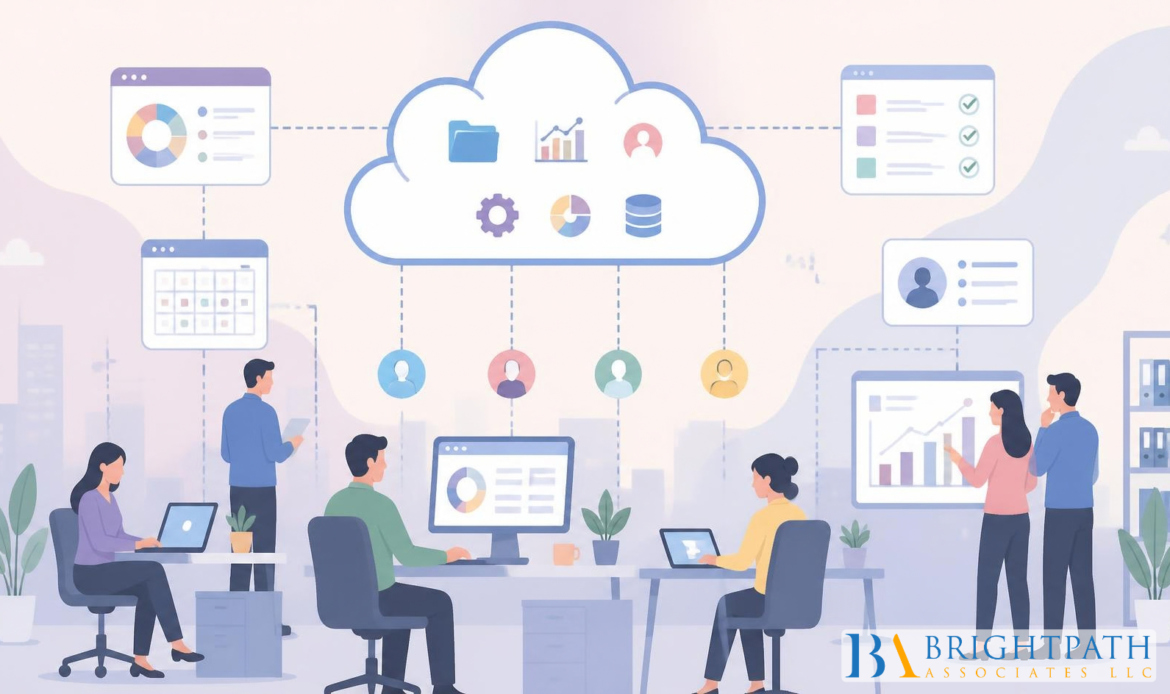
Cloud-integrated office management offers an alternative. By connecting procurement, inventory, equipment maintenance, vendor relationships, workplace assets, and administrative workflows through cloud-based platforms, businesses can improve visibility and automate repetitive tasks. The objective is not simply to digitize existing processes but to create an operating environment where a larger organization can be managed without requiring an equivalent increase in administrative headcount.
For businesses across the Office supplies industry, this transformation is creating opportunities to improve productivity, strengthen supply-chain visibility, and develop more responsive service models. Companies that successfully combine technology with effective workforce planning can scale more efficiently while maintaining operational control.
The Office supplies industry has evolved considerably as businesses have moved toward hybrid workplaces, digital procurement, cloud collaboration, and technology-enabled facilities. Traditional demand for paper, stationery, printers, and basic office products now exists alongside demand for technology equipment, ergonomic furniture, connectivity solutions, and workplace services.
Customers increasingly expect suppliers to provide more than individual products. They may want inventory management, automated replenishment, equipment servicing, centralized purchasing, and integrated reporting.
Cloud platforms can help suppliers and businesses respond to these expectations. Instead of relying on manual purchase requests, employees can use centralized systems to request products, track approvals, and monitor deliveries.
This creates a more transparent procurement environment while reducing administrative work.
Managing Business Equipment Through the Cloud
Modern workplaces depend on a wide range of Business equipment, including computers, printers, scanners, meeting-room systems, networking hardware, communication devices, and specialized office machinery.
As the number of assets grows, maintaining accurate records becomes increasingly important. A cloud-based asset-management platform can provide information about equipment ownership, location, warranty status, service history, and replacement schedules.
This information can help organizations make more informed purchasing decisions. Instead of replacing equipment based on arbitrary schedules, management can examine usage patterns, maintenance history, and total ownership costs.
Cloud integration also makes information accessible across locations. This is particularly useful for organizations operating multiple offices where centralized administrative teams need visibility into assets distributed across different facilities.
Effective Office supply management requires organizations to balance availability with cost control. Overstocking consumes capital and storage space, while understocking can disrupt employee productivity.
Cloud-based inventory systems can monitor consumption patterns and provide automated alerts when stock levels fall below defined thresholds. Over time, analytics can identify frequently used products and seasonal demand patterns.
This can help organizations transition from reactive purchasing to more predictable replenishment.
For larger businesses, centralized procurement can also create opportunities to consolidate orders and negotiate more consistent pricing. Employees can access approved product catalogs rather than purchasing independently from multiple sources.
The result is greater control over spending and improved visibility into organizational consumption.
Building Stronger Relationships With Office Supply Vendors
Relationships with #OfficeSupplyVendors are increasingly becoming technology-enabled. Instead of managing suppliers through emails and disconnected spreadsheets, organizations can use centralized systems to track orders, delivery performance, pricing, contracts, and service requirements.
Supplier performance data can help procurement teams understand which vendors consistently meet delivery expectations and which may require closer management.
Cloud-based vendor portals can also improve communication by allowing suppliers to receive purchase orders, update delivery information, and provide invoices digitally.
This reduces manual administration and creates a more structured relationship between buyers and suppliers.
The demand for Commercial office furniture is changing as businesses reconsider how physical workspaces are used. Hybrid working models have encouraged companies to create more flexible environments that support collaboration, individual work, meetings, and employee well-being.
Furniture procurement can therefore become more complex than simply ordering desks and chairs. Organizations need to understand workspace utilization, employee requirements, office layouts, and future expansion plans.
Cloud-based workplace management systems can connect furniture inventories with facility information. This can help organizations understand which assets are available, where they are located, and when they may require replacement.
For companies managing multiple offices, this visibility can reduce unnecessary purchases by identifying existing assets that can be relocated or reused.
Responding to Office Technology Trends
Current Office technology trends include cloud computing, artificial intelligence, connected workplace systems, automation, digital collaboration platforms, and intelligent meeting environments.
These technologies can improve productivity, but they also increase the number of systems that businesses need to manage. IT equipment, software subscriptions, connected devices, and workplace applications can create complex asset environments.
Cloud-integrated management platforms can help organizations maintain centralized records of technology assets and associated services.
Automation can also reduce repetitive administrative work. For example, systems can generate maintenance reminders, initiate procurement workflows, track approvals, and notify responsible teams about equipment nearing the end of its useful life.
This allows employees to focus more on strategic work instead of routine administrative tasks.
Digital transformation in office operations involves more than replacing paper forms with electronic versions. The larger objective is to redesign processes so that information moves automatically between systems.
For example, an employee request for a new laptop could trigger an approval workflow, update an asset-management record, notify procurement, create a supplier order, and automatically record the equipment once it is delivered.
Without integration, each stage may require separate manual actions. With cloud connectivity, much of this process can occur automatically.
This creates scalability. As the organization grows, transaction volumes can increase without requiring administrative staff to perform every individual step manually.
Office Equipment Maintenance and Predictive Management
#OfficEquipmentMaintenance is another area where cloud integration can create operational efficiencies. Businesses often manage maintenance through calendars, spreadsheets, service contracts, or employee reports.
A cloud-based maintenance platform can centralize service records and generate automated notifications for scheduled maintenance.
More advanced systems can incorporate usage information and equipment performance data. This can support predictive approaches in which maintenance is planned based on actual equipment conditions rather than relying exclusively on fixed schedules.
Reducing unexpected equipment failures can improve workplace continuity and prevent employees from losing productive time because of unavailable technology.
The Office supply chain connects manufacturers, distributors, vendors, logistics providers, and business customers. Disruptions at any stage can affect availability and delivery times.
Cloud-based supply-chain systems can provide greater visibility into purchase orders, inventory levels, shipment status, and supplier performance.
For businesses operating across multiple locations, centralized information can help management determine where supplies are available and where shortages may be developing.
This can support more efficient allocation of resources. Instead of placing new orders automatically, organizations may be able to transfer existing inventory between locations.
Better visibility can therefore reduce unnecessary purchasing while improving supply availability.
Scaling Without Proportionally Increasing Headcount
The primary advantage of cloud-integrated office management is operational scalability. When workflows are automated, organizations can handle larger volumes of transactions without adding employees at the same rate.
Consider a company expanding from several hundred employees to several thousand. Without automation, procurement requests, equipment records, maintenance schedules, vendor communications, and inventory transactions may grow dramatically.
Cloud-based systems can absorb much of this additional activity through automated workflows.
However, automation does not eliminate the need for people. Instead, it changes the type of work employees perform. Administrative teams can spend less time entering data and more time managing vendors, analyzing costs, improving processes, and supporting strategic initiatives.
Cloud platforms create another advantage by generating centralized operational data. Management can analyze purchasing patterns, equipment utilization, vendor performance, maintenance costs, and inventory consumption.
This information can reveal opportunities for cost reduction.
For example, organizations may discover that different departments purchase similar products from different suppliers at inconsistent prices. Centralizing procurement data can make these patterns visible.
Similarly, equipment data can reveal which products have higher maintenance costs or shorter useful lifespans.
Data-driven procurement can therefore shift office management from routine administration toward strategic cost management.
Managing Security and Access
Cloud integration also introduces responsibilities around data security. #OfficeManagement platforms may contain information about employees, suppliers, purchasing activity, equipment inventories, and financial transactions.
Organizations should establish appropriate access controls so employees can access only the information required for their responsibilities.
Authentication, data protection, vendor security reviews, and backup procedures should form part of the implementation strategy.
The objective is to ensure that increased connectivity does not create unnecessary operational risk.
Talent Acquisition Strategies for Digital Office Operations
Technology transformation changes the skills organizations require. Talent acquisition strategies should increasingly consider candidates who understand digital procurement, cloud platforms, data analytics, automation, vendor management, and workplace technology.
Organizations do not necessarily need large technology teams. They need people who can connect technology with operational objectives.
Existing employees can also be trained to use new systems effectively. Change management is important because even sophisticated platforms will provide limited value if employees continue using manual processes outside the system.
Successful transformation therefore requires a combination of technology, training, communication, and process redesign.
As office operations become increasingly technology-driven, leadership capabilities also need to evolve. #ExecutiveSearchRecruitment can help organizations identify senior professionals with experience in digital transformation, procurement, workplace technology, supply-chain management, operations, and organizational scaling.
Leadership is particularly important when businesses are implementing cloud-based systems across multiple locations. Executives must ensure that technology investments support business objectives rather than creating disconnected software environments.
Strong leaders can also help organizations establish performance metrics that measure both efficiency and employee experience.
A scalable office-management model should connect procurement, inventory, equipment, maintenance, vendors, workplace facilities, and technology within a coordinated framework.
The cloud can serve as the central infrastructure connecting these processes. Automated workflows can handle repetitive transactions, while analytics can provide management with visibility into costs and performance.
The organization can then scale operations without relying solely on additional administrative personnel.
This model is particularly relevant for companies expanding into multiple locations, adopting hybrid work, or managing rapidly changing technology environments.
Conclusion
Cloud-integrated office management is changing how businesses approach operational scalability. Instead of expanding administrative headcount every time transaction volumes increase, organizations can use automation, centralized data, and connected workflows to handle growing complexity more efficiently.
The Office supplies industry is increasingly moving beyond traditional product distribution toward integrated services involving technology, inventory management, procurement, and workplace solutions. Business equipment, Commercial office furniture, and other workplace assets can now be tracked and managed through connected digital systems.
At the same time, Office technology trends and Digital transformation in office operations are creating new opportunities for automated procurement, predictive Office equipment maintenance, and greater visibility across the Office supply chain.
Technology alone, however, is not sufficient. Organizations need effective Office supply management, reliable Office supply vendors, appropriate security controls, employee training, and strong leadership. Strategic Talent acquisition strategies can help build the capabilities required to operate increasingly digital workplaces, while Executive Search Recruitment can identify leaders capable of connecting technology investments with broader business objectives.
The result is an office operating model designed for scale. By automating repetitive activities and centralizing information, businesses can increase operational capacity without automatically increasing administrative headcount at the same pace. This creates an opportunity to make office management more efficient, data-driven, responsive, and strategically aligned with long-term organizational growth.
Find your next leadership role in Business Supplies & Equipment Industry today!
Stay informed with the latest insights on Business Supplies & Equipment Industry!