
Introduction
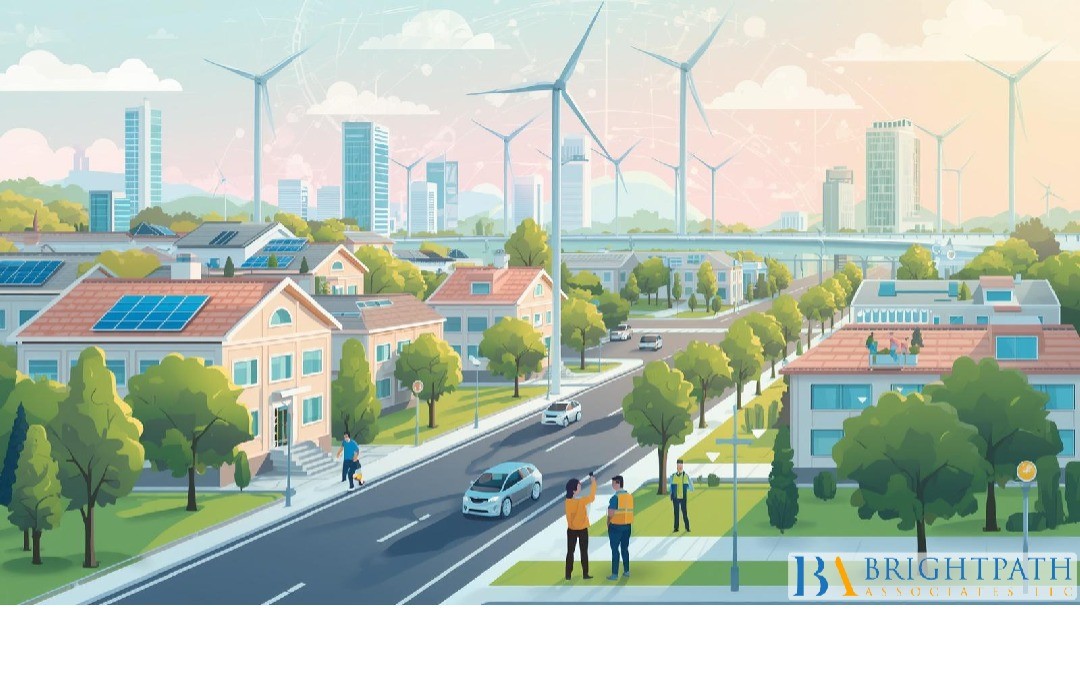
The clean tech revolution has decisively shifted from aspiration to execution. Across power systems, mobility, buildings, and industry, companies are delivering scaled solutions that cut costs, reduce emissions, and create durable competitive advantages. This transformation is reshaping the Environmental industry, where #EnvironmentalServices, Environmental innovation, and Green technology converge to solve complex challenges in energy, infrastructure, and resource management. The new era is defined by integration rather than silos: generation paired with storage, flexible demand aligned with variable renewables, and digital controls wrapped around hardware. Success depends on aligning policy stability, capital allocation, and workforce capacity with technologies that have already proven their mettle in the marketplace.
Power Systems: Volume, Velocity, and Value
Renewable power is expanding faster than any other generation source, led by Clean technology in solar photovoltaics and wind. Solar has become the backbone of capacity growth because modular manufacturing achieves economies of scale quickly while installation ranges from rooftops to multi-gigawatt plants. Wind complements solar with higher evening and winter output in many regions, providing an effective portfolio for grid integration. As hardware costs continue to fall and project delivery improves, developers and utilities are prioritizing grid-readiness, interconnection speed, and bankable offtake structures. The primary challenges are no longer technological but logistical: siting and permitting, access to land and transmission, and timeliness of Environmental compliance. The companies that standardize designs, accelerate approvals, and coordinate early with grid operators will capture the best sites and the lowest cost of capital.
Electrified Transport: Scale, Affordability, and Ecosystem Build-Out
#ElectrifiedTransport has evolved from a niche to a mass-market proposition. Consumer adoption is rising as vehicle prices fall, model variety increases, and charging networks expand along highways and within cities. Fleet operators are electrifying delivery vans, buses, and light trucks to cut fuel costs and meet Environmental sustainability targets, while heavy-duty segments pilot zero-emission drayage and regional haul solutions. The center of gravity for value creation extends beyond the vehicle to charging, software, and grid services. Smart charging, depot energy management, and vehicle-to-grid functionality turn parked batteries into valuable grid assets. Insurers, lenders, and residual value managers are building new data models for underwriting and asset finance. Effective Waste management solutions for end-of-life batteries and components, together with second-life applications in stationary storage, are strengthening the circular economy and reducing material intensity across the mobility chain.
Storage and Flexibility: The System Integrators
Energy storage has moved from “nice-to-have” to “must-have” as variable renewables gain market share. Short-duration lithium-ion storage is now routinely paired with solar to shift energy to evening peaks and to provide fast-response services that stabilize frequency and voltage. Longer-duration storage technologies, including advanced batteries, thermal storage, and pumped hydro, are progressing through procurement pipelines to manage multi-hour and multi-day imbalances. Demand-side flexibility—industrial load shifting, commercial building automation, and managed residential devices—offers hidden capacity that often costs less and can be deployed faster than new generation. Together, these assets form a portfolio of flexibility that reduces curtailment, defers grid upgrades, and improves project economics. Market design that recognizes these services with transparent pricing is pivotal to ensure bankability and sustained investment.
Buildings and Cities: Electrification with Intelligence
#DecarbonizingBuildings hinges on modernizing heating and cooling, improving envelopes, and digitizing controls. Heat pumps, when paired with rooftop PV and storage, deliver low-cost, low-carbon comfort while enabling demand flexibility for the grid. In dense urban areas, district energy systems and thermal networks offer synergies with Waste management solutions, such as waste heat recovery from data centers and industrial sites. Air pollution control benefits accrue as gas and oil combustion are displaced, lowering particulate matter and NOx in city air. Environmental compliance frameworks increasingly encourage smart metering and dynamic tariffs so that buildings can respond to grid conditions without sacrificing occupant comfort. Crucially, workforce capacity—installers, energy auditors, and controls engineers—must grow in tandem with demand. Training standards, safety protocols, and quality assurance will determine whether installations deliver promised performance at scale.
Industrial Decarbonization: Targeted Pathways and Pragmatic Timelines
In heavy industry, the arithmetic of heat, chemistry, and capital stock turnover dictates pragmatic sequencing. Direct electrification of low- to medium-temperature heat is economically compelling in many processes, particularly when paired with real-time controls and clean power purchase agreements. For high-temperature requirements and process emissions in sectors like steel and cement, hydrogen, biomass, and carbon management technologies provide targeted pathways. Early commercial projects are proceeding where power prices are competitive, renewable availability is high, and offtake is de-risked via long-term contracts. Industrial Water treatment is undergoing a parallel revolution as membrane technologies, advanced oxidation, and digital monitoring reduce energy use, recover materials, and ensure Environmental compliance. In all cases, integration and reliability matter as much as emissions intensity: downtime is costly, and replacement cycles are long, so pilots must lead to repeatable designs that are financeable and maintainable over decades.
Capital and Markets: From Boom to Maturity
Investment in #CleanTechnology has reached new highs, reflecting the maturation of business models in renewables, electrified transport, storage, grids, and Water treatment. Capital is increasingly discerning, favoring scaled platforms with strong execution track records and diversified revenue streams. For early-stage Environmental innovation such as long-duration storage, green hydrogen, and negative-emissions technologies, blended finance and risk-sharing structures are critical to bridge the commercialization gap. Financial markets are also rewarding companies that turn Environmental services into predictable annuities—through long-term operations and maintenance, performance guarantees, and software-enabled optimization. As macroeconomic conditions shift, the best-positioned firms will be those that manage working capital expertly, hedge commodity exposures, and maintain flexibility in procurement and contracting strategies.
Grids and Transmission: The Backbone of the Transition
Power grids are now the gating item for clean energy growth. Transmission expansion and distribution upgrades are required to connect new generation, integrate storage, and serve electrified loads. Modern grid architecture must combine traditional reinforcements with digital tools—wide-area monitoring, dynamic line rating, advanced relay protection—and market rules that activate flexibility at scale. The supply chain for transformers, switchgear, and high-voltage cables has become strategically important, with long lead times necessitating framework agreements and early procurement. Utilities and developers that adopt standardized substation designs, prequalified vendor lists, and co-optimized interconnection studies will move faster and reduce both capex and schedule risk. Strong Environmental compliance and stakeholder engagement, especially for rights-of-way, are essential to deliver projects on time and within budget while safeguarding biodiversity and community interests.
Circularity, Minerals, and Resilience
Critical minerals underpin batteries, motors, electronics, and power equipment. After a period of price volatility, the sector faces a dual imperative: diversify supply and build circularity. Recycling and recovery, design-for-disassembly, and material substitution reduce exposure to concentrated supply chains and geopolitical risk. Standardized reporting on Environmental sustainability and responsible sourcing enhances trust across the value chain, while permitting reform and community partnerships improve project certainty for new mines and refineries. #IndustrialWasteManagement solutions are increasingly data-driven, using digital twins and traceability to optimize sorting, capture value from byproducts, and minimize landfill. The Environmental industry’s leadership on transparency and lifecycle accounting will determine whether rapid scaling remains aligned with social license and long-term resource stewardship.
Policy and Market Design: De-Risking at Scale
Stable, transparent policy frameworks are the foundation for investment and innovation. Streamlined permitting, clear interconnection timelines, and technology-neutral incentives accelerate project delivery without compromising Environmental compliance. Contracts for difference, capacity markets, and standardized offtakes reduce revenue volatility for emerging technologies. Carbon pricing and product standards—such as clean steel and low-carbon cement—create demand signals that justify industrial retrofits and new-builds. Municipal procurement can drive early markets for low-emission construction materials, electric buses, and circular Waste management solutions. Data and interoperability standards are equally important, enabling device-level control in buildings and fleets while protecting privacy and cybersecurity. Effective policy turns fragmented pilots into programmatic deployment.
People, Skills, and Leadership: The Human Core of the Transition
Every megawatt and every retrofit depends on human capability. The speed and quality of the transition will be determined by the availability of skilled workers—electricians, lineworkers, installers, commissioning engineers, data analysts, and O&M technicians. Scalable training pipelines, safety-first cultures, and continuous upskilling are the bedrock of reliable execution. #ExecutiveSearchRecruitment has become strategically important as companies compete for leaders who can integrate engineering, finance, policy, and operations across complex portfolios. The most successful firms are building diverse teams that reflect the communities they serve, investing in apprenticeship programs, and partnering with technical colleges and universities to align curricula with real-world project demands. Talent mobility across sectors, from oil and gas to power and manufacturing, is unlocking a deep reservoir of applied skills that accelerates delivery while maintaining rigorous standards.
Environmental Services: From Compliance to Performance
Environmental services have evolved well beyond permitting and monitoring. Today’s leaders deliver performance outcomes—lower emissions, higher efficiency, and resilient operations—by integrating Environmental innovation with digital analytics and process engineering. Air pollution control systems are being redesigned with continuous emissions monitoring and predictive maintenance to reduce downtime and exceed regulatory requirements. In Water treatment, advanced sensing and AI-driven process control are cutting chemical use and energy consumption while improving effluent quality. Waste management solutions now emphasize material recovery and closed-loop processes that reduce costs and create new revenue streams. Environmental sustainability thus becomes a competitive differentiator, not a box-ticking exercise, as customers demand verifiable impact that aligns with corporate goals and investor expectations.
Risk Management and Reliability: Designing for the Real World
Clean energy systems must perform through supply shocks, weather extremes, and #CyberRisks. Resilient design includes redundancy in critical components, multi-sourcing strategies, and flexible operations that can respond to rapid changes in load and generation. Digital twins and condition-based maintenance improve asset reliability and extend lifetimes, while standardized spares and remote diagnostics reduce mean time to repair. Cybersecurity is no longer peripheral; it is foundational for distributed energy resources, grid-edge devices, and industrial control systems. Insurance markets are evolving quickly, pricing physical and digital risks in ways that reward robust governance and engineering. Organizations that embed risk thinking early—during siting, contracting, and design—will deliver projects that not only meet Environmental compliance but also withstand real-world variability.
The Strategic Playbook: Execute, Integrate, and Scale
The next phase of the clean tech revolution will reward firms and institutions that excel at disciplined execution, deep integration, and rapid, replicable scaling. Execute means delivering on time and on budget with repeatable designs and robust quality control. Integrate means co-optimizing generation, storage, flexible demand, Water treatment, and Air pollution control within coherent operational platforms. Scale means turning pilots into portfolios, leveraging supply chain partnerships, and industrializing delivery through standardization and modularization. Throughout, Green technology and Clean technology are not ends in themselves; they are tools for delivering reliable, affordable, and clean services that enhance Environmental sustainability and economic competitiveness.
Conclusion
The clean tech revolution is already shaping a sustainable future. #PowerSystems are cleaner and smarter, transport is electrifying, buildings are becoming efficient and flexible, and industry is charting credible pathways to deep decarbonization. The Environmental industry is shifting from compliance to performance, transforming Environmental services into engines of value creation. Continued progress depends on clearing bottlenecks—grids, permitting, minerals, and skills—while maintaining public trust through rigorous Environmental compliance and transparent outcomes. If companies, policymakers, and communities align around execution, integration, and resilience, the next decade will consolidate clean technology as the foundation of prosperity, proving that Environmental innovation can deliver growth, reliability, and Environmental sustainability at global scale.
Find your next leadership role in Environment Services Industry today!
Stay informed with the latest insights on Environment Services Industry!