
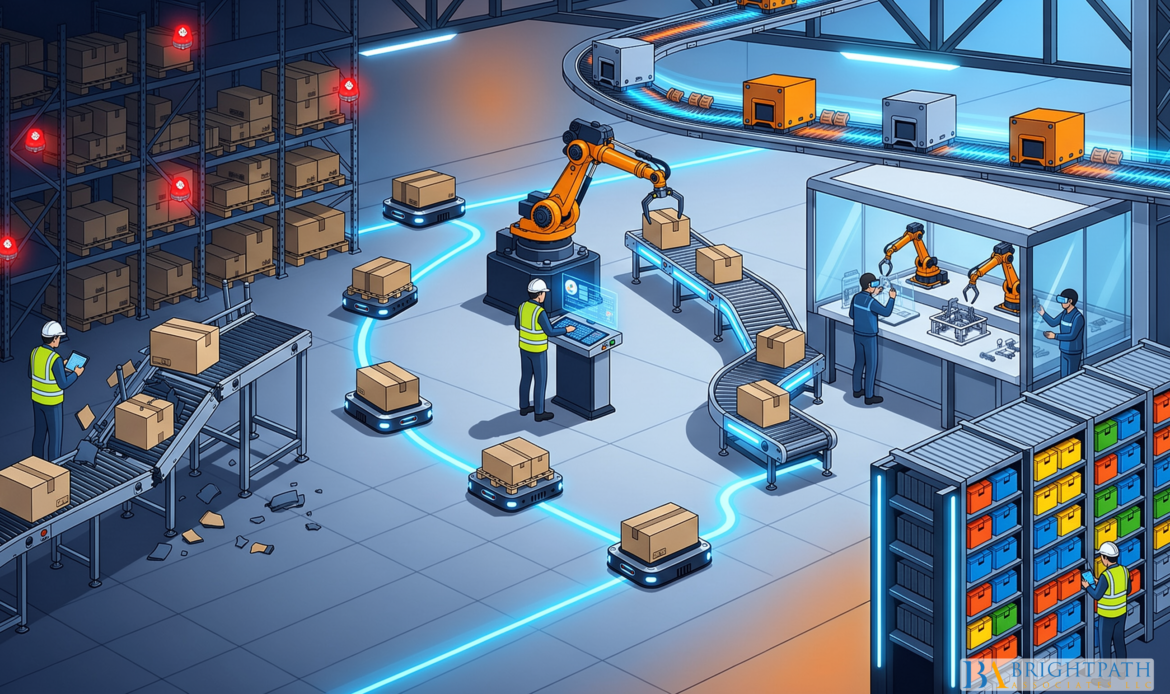
[Bethany, Connecticut – 13 November 2026] – BrightPath Associates has highlighted the growing need for industrial automation companies to rethink traditional supply chain strategies as global manufacturing markets face continuous volatility. In its latest industry analysis, the company examines how US manufacturers can strengthen operational resilience through flexible procurement, engineering interchangeability, cybersecurity planning, and strategic leadership. The analysis explains why traditional forecasting and fixed purchasing models are becoming less effective as semiconductor shortages, extended component lead times, geopolitical uncertainty, and changing technology requirements create challenges for industrial operations.
For C-suite executives, supply chain resilience has become an essential business priority. Industrial automation manufacturers depend on programmable logic controllers (PLCs), variable frequency drives, sensors, robotics components, and specialized control systems to maintain production schedules. When critical components become unavailable, manufacturing operations can experience delays, increased costs, and missed customer commitments.
The latest BrightPath analysis, titled “Death of Standard Supply Chain: Building for Constant Volatility,” explores practical strategies businesses can adopt to prepare for ongoing disruptions.
Traditional Supply Chain Models Are No Longer Enough
For decades, manufacturing companies relied on predictable supplier relationships, historical demand forecasts, and just-in-time inventory practices. However, current market conditions have exposed the weaknesses of these traditional approaches. Component lead times can increase unexpectedly, semiconductor availability can change rapidly, and transportation disruptions can affect production schedules. According to the BrightPath analysis, component lead times can increase from eight weeks to 52 weeks within a single quarter.
These disruptions can have significant financial consequences. A missing component worth only a few dollars can prevent the completion of an expensive automated production system. Industrial automation companies must therefore move beyond traditional purchasing strategies and develop flexible procurement models. Maintaining alternative suppliers, monitoring component availability, and establishing strategic inventory reserves can help businesses reduce their exposure to unexpected shortages.
The detailed report on Standard Supply Chain Building for Constant Volatility and Industrial Supply Chain Resilience explains why manufacturers need dynamic purchasing strategies rather than depending entirely on historical forecasts and fixed reorder points.
Engineering Flexibility and Automation Technology Support Resilience
Engineering interchangeability is becoming an important part of modern supply chain planning. Instead of depending on a single component or supplier, manufacturers can design equipment and electronic systems that support pre-approved alternative components. For example, printed circuit boards with flexible layouts and software abstraction layers can make it easier for engineering teams to replace unavailable microcontrollers without redesigning an entire system.
This approach is particularly important for companies providing Automation solutions manufacturing, Robotics integration, and industrial equipment. Businesses using PLC programming service, SCADA systems, and advanced Control systems must ensure that alternative hardware remains compatible with existing software and operational requirements. Similarly, Industrial machine vision systems and connected sensors require careful planning to prevent component shortages from affecting production quality and delivery schedules.
The broader Industrial Automation Industry is increasingly focused on developing adaptable manufacturing environments. Companies investing in Manufacturing automation must consider equipment compatibility, supplier diversification, and technical flexibility as part of their long-term business strategies.
Strategic Leadership and Talent Will Define Future Success
Building a resilient supply chain requires more than technology investments and additional inventory. Industrial automation companies need experienced leaders who understand procurement, engineering, production management, cybersecurity, and financial planning. Traditional purchasing leadership focused mainly on reducing supplier costs is no longer sufficient for an environment where operational flexibility and risk management are equally important.
This changing environment is increasing demand for specialized talent across Automation jobs, engineering management, supply chain operations, and technical leadership. Industrial automation executive search can help companies identify professionals with the cross-functional experience needed to manage complex manufacturing challenges. Organizations must prioritize candidates who understand automation technologies, supplier relationships, component engineering, and strategic business planning.
BrightPath Associates emphasizes that successful manufacturers must align engineering, procurement, and operations teams around shared business objectives. By combining flexible sourcing, engineering innovation, cybersecurity protection, and experienced leadership, companies can improve their ability to respond to disruptions and maintain long-term competitiveness.
About BrightPath Associates
BrightPath Associates is an executive recruitment and talent solutions firm serving businesses across multiple industries in the United States. The company helps organizations identify experienced executives, senior leaders, and specialized professionals who support business growth, operational improvements, and workforce development. Its mission is to connect companies with the right talent to build stronger teams and achieve sustainable business success.
Media Contact:
Name: Corporate Communications Team
Company: BrightPath Associates
Email: media@brightpathassociates.com
Website: https://brightpathassociates.com