
Introduction
The #FoodProductionIndustry operates at the intersection of operational precision, regulatory scrutiny, consumer expectations, and supply chain complexity. For small to mid-sized Food Production companies, sustained growth is increasingly tied to leadership capability. While production efficiency, quality assurance, and distribution networks remain critical, the true differentiator lies in whether organizations possess the executive talent required to navigate a rapidly transforming environment.
The global food production industry contributes trillions to economic output and supports millions of jobs across manufacturing, distribution, compliance, and supply chain management. Yet the sector faces mounting pressure from shifting consumer preferences, evolving safety standards, labor shortages, and technological disruption. These forces are reshaping Food production growth strategy and compelling organizations to rethink how they build and sustain a robust talent pipeline.
Leadership is no longer confined to operational oversight. Executives must now align Food production business strategy with digital transformation, sustainability initiatives, and risk mitigation frameworks. For founders and C-suite leaders, investing in strategic talent acquisition has become a business-critical priority rather than a human resources function.
The Changing Landscape of the Food Production Industry
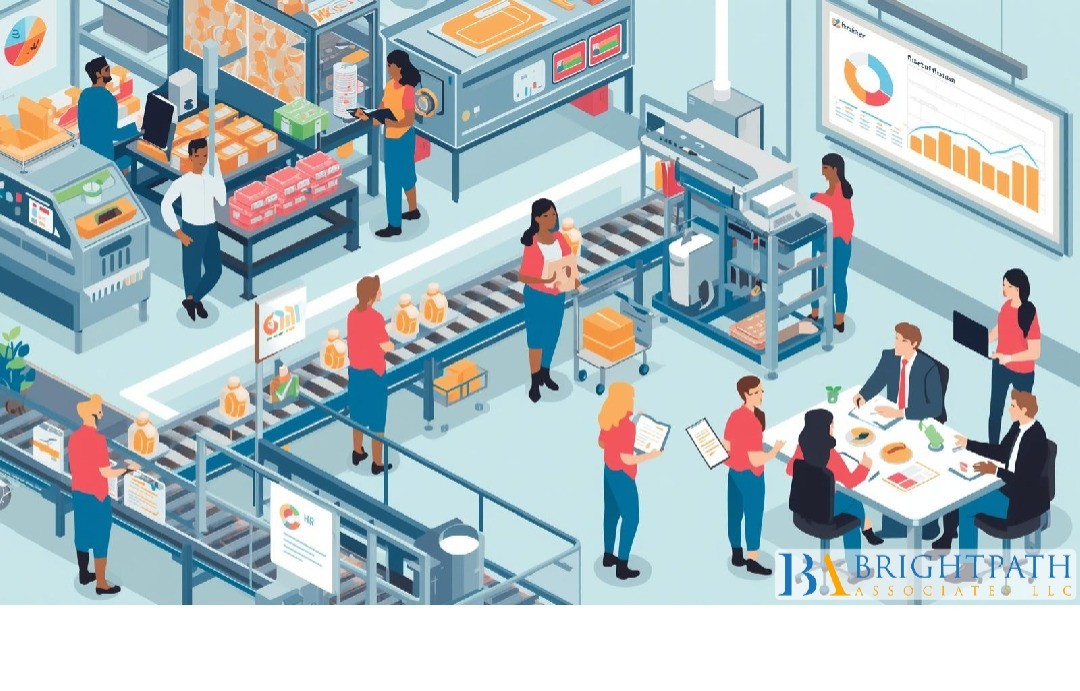
Industrial trends in food production reflect a sector undergoing profound transformation. Automation and advanced Food production processing equipment are redefining manufacturing workflows, while digital traceability systems are enhancing transparency across the Food production supply chain. Technology in food production, including AI-driven quality control and predictive maintenance, is improving efficiency but also demanding new competencies from leadership teams.
Simultaneously, consumer expectations for safety, sustainability, and transparency continue to rise. Food production safety certification standards have become more stringent, requiring organizations to maintain meticulous compliance systems. Any lapse in safety or traceability can result in significant financial and reputational damage.
Supply chain volatility further complicates the landscape. Raw material price fluctuations, transportation disruptions, and geopolitical instability have underscored the importance of resilient Food production supply chain strategies. Leaders must balance cost control with supplier diversification, inventory optimization, and regulatory compliance. These responsibilities require a blend of operational expertise and strategic foresight that is increasingly difficult to find in a single executive profile.
As companies expand into new markets or introduce innovative product lines, the complexity of Food production management intensifies. Growth initiatives demand cross-functional coordination among production, procurement, quality assurance, and marketing teams. Executives must foster collaboration while maintaining operational discipline.
Expanding Role Expectations in Food Production Leadership
The scope of leadership roles within the food production industry has expanded significantly. Chief operations officers, plant directors, and supply chain executives are expected to oversee not only production efficiency but also sustainability targets, digital transformation initiatives, and workforce development programs.
Food production consultants frequently emphasize the importance of aligning operational strategy with long-term market positioning. Leaders must anticipate consumer trends, manage regulatory compliance, and invest in advanced Food production processing equipment that enhances scalability and quality. These expectations have elevated the bar for executive competency.
Moreover, organizations are increasingly integrating environmental, social, and governance considerations into their Food production business strategy. Sustainable sourcing, waste reduction, and energy efficiency initiatives require leadership commitment and measurable performance metrics. Executives who lack experience in these areas may struggle to meet stakeholder expectations.
This convergence of operational, technological, and #StrategicResponsibilities has created a leadership capability gap. Many experienced executives possess deep operational knowledge but limited exposure to digital innovation or sustainability frameworks. Conversely, technology-oriented leaders may lack hands-on production experience. Identifying individuals who bridge these domains has become a pressing challenge.
Leadership Talent Shortages and Organizational Risk
The shortage of qualified executive talent in the food production industry presents a tangible risk to organizational performance. Industry reports consistently indicate that a significant percentage of manufacturers struggle to fill senior leadership roles, particularly in operations and supply chain management. Competition for experienced leaders extends beyond the food sector, as consumer goods, pharmaceuticals, and logistics companies actively recruit from the same talent pool.
Leadership gaps can delay capital investments, disrupt production schedules, and weaken compliance oversight. In an industry where Food production safety certification is non-negotiable, inadequate leadership can have serious consequences. Additionally, ineffective succession planning exposes companies to abrupt transitions that undermine stability.
For small to mid-sized firms, these risks are magnified. Unlike multinational corporations with extensive talent reserves, smaller organizations often rely heavily on a limited number of senior leaders. The departure of a single executive can significantly impact operational continuity and strategic direction.
Addressing these challenges requires a proactive approach to talent development and acquisition. Building a robust pipeline involves not only identifying external candidates but also nurturing internal talent and aligning leadership competencies with long-term Food production growth strategy.
The Strategic Evolution of Recruitment Practices
#RecruitmentPractices within the food production industry have evolved from reactive vacancy filling to strategic workforce planning. Companies are increasingly adopting data-driven methodologies to assess skill gaps, forecast leadership needs, and align hiring with business objectives.
EXECUTIVE SEARCH RECRUITMENT has emerged as a critical tool for sourcing senior leaders with specialized expertise. Unlike traditional recruitment methods, executive search involves targeted outreach, confidential candidate engagement, and comprehensive competency evaluation. This approach enables organizations to access passive candidates who may not actively seek new opportunities but possess the precise capabilities required.
Strategic recruitment also emphasizes cultural alignment and long-term fit. Food production management demands leaders who can integrate into existing teams while driving innovation. Behavioral assessments, leadership simulations, and scenario-based evaluations are increasingly utilized to ensure candidates possess both technical proficiency and strategic vision.
Succession planning has become another cornerstone of modern recruitment strategy. By mapping potential future leadership gaps and identifying high-potential internal candidates, companies can reduce risk and maintain continuity. This proactive approach strengthens resilience and supports sustainable growth.
Executive Search Recruitment as a Competitive Advantage
For C-suite executives and founders, viewing executive hiring as a strategic investment rather than a transactional process yields measurable benefits. Partnering with specialized providers of #ExecutiveSearchRecruitment enables companies to access industry-specific expertise, extensive talent networks, and rigorous assessment methodologies.
Brightpath Associates supports Food Production companies through a consultative approach to executive search recruitment. By aligning talent acquisition with Food production business strategy, supply chain objectives, and technology investment plans, the firm helps organizations secure leaders capable of driving transformation.
Their methodology integrates market research, targeted candidate engagement, and comprehensive evaluation to ensure alignment with both operational requirements and cultural values. For companies seeking to strengthen leadership pipelines and address capability gaps, exploring executive search recruitment services offers a strategic pathway to sustainable success.
A structured recruitment partnership mitigates risk, accelerates hiring timelines, and enhances leadership quality. In an industry characterized by regulatory scrutiny and operational complexity, these advantages translate directly into competitive differentiation.
Securing the Future Through Strategic Talent Investment
The future of the food production industry will be shaped by innovation, resilience, and strategic adaptability. Companies that successfully integrate technology in food production, strengthen supply chain systems, and maintain rigorous safety standards will outperform competitors. Yet these initiatives depend fundamentally on leadership strength.
Building a robust talent pipeline requires foresight, discipline, and strategic alignment. By investing in Executive Search Recruitment and proactive succession planning, organizations can close leadership gaps and secure the expertise necessary to execute their Food production growth strategy.
For decision-makers within small to mid-sized Food Production companies, the message is clear: sustainable success begins with visionary leadership. Strategic talent investment is not optional—it is the foundation upon which long-term growth, operational excellence, and industry leadership are built.
Find your next leadership role in Food Production Industry today!
Stay informed with the latest insights on Food Production Industry!