
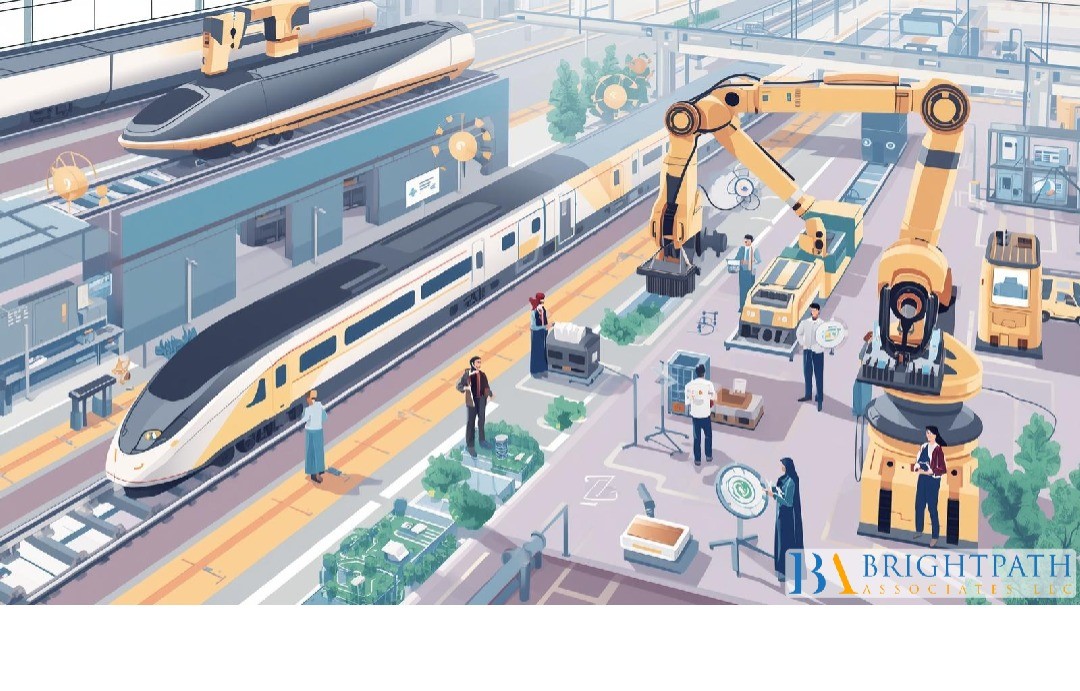
Transformation in Rail Manufacturing
The #RailroadManufacturingIndustry is undergoing a fundamental transformation driven by technological innovation, shifting transportation demands, and rising expectations for efficiency and sustainability. Once defined by mechanical engineering excellence and long production cycles, rail manufacturing today sits at the intersection of advanced manufacturing, digital systems, and infrastructure modernization. For small to mid-sized railroad manufacturing companies, this transformation presents a decisive moment—one that requires not only investment in technology but also leadership capable of navigating complexity and accelerating growth.
As rail systems continue to play a critical role in freight movement and passenger transportation, the pressure on railroad equipment manufacturers to innovate has intensified. Locomotive manufacturing, rolling stock design, and rail infrastructure components are increasingly influenced by automation, data analytics, and intelligent systems. These changes have elevated leadership from an operational function to a strategic imperative.
Market Forces Reshaping the Railroad Manufacturing Industry
The railroad manufacturing industry outlook reflects growing demand for safer, more efficient, and environmentally responsible transportation systems. Public and private sector investments in rail infrastructure have strengthened expectations for performance, reliability, and lifecycle cost management. As a result, manufacturers must balance innovation with stringent quality and safety standards.
Competition among top railroad manufacturing companies in the US has also intensified, particularly as global suppliers enter domestic markets. This competitive environment has forced manufacturers to rethink production strategies, adopt advanced manufacturing techniques, and strengthen supply chain resilience. Leadership teams are increasingly responsible for aligning these initiatives with long-term business strategy while managing cost pressures and operational risk.
Emerging Technologies Driving Rail Industry Innovations
#RailIndustryInnovations are rapidly redefining product design and manufacturing processes. Advanced materials, sensor-enabled components, and integrated monitoring systems are now common in modern rail equipment. These technologies enhance durability, improve safety, and enable predictive maintenance, reducing downtime and lifecycle costs.
Rail technology advancements also include automation in manufacturing lines, digital twins for design validation, and real-time performance analytics. While these tools offer significant advantages, their successful deployment depends on leadership that understands both engineering complexity and strategic execution. Executives must evaluate emerging technologies not only for technical feasibility but also for their impact on productivity, workforce capability, and customer value.
Advanced Manufacturing and Digital Integration
Advanced manufacturing has become a cornerstone of competitiveness in railroad manufacturing. Automation, robotics, and additive manufacturing are transforming how rail components are produced, assembled, and tested. These capabilities improve precision and consistency while reducing waste and rework.
Digital integration across manufacturing operations enables greater visibility into production performance and quality metrics. However, digital transformation is not solely a technology initiative; it is an organizational shift. Leaders must guide teams through process redesign, skills development, and cultural change to fully realize the benefits of digital manufacturing systems.
Supply Chain, Safety, and Sustainability Pressures
#RailroadManufacturingCompanies operate within highly complex supply chains that span multiple geographies and regulatory environments. Disruptions in material availability, logistics delays, or supplier performance can significantly impact production schedules and customer commitments. Executives are increasingly accountable for building resilient supply chain strategies that mitigate risk while maintaining cost efficiency.
Safety and sustainability have also become central considerations in rail manufacturing. Regulatory scrutiny, environmental responsibility, and stakeholder expectations require leaders to integrate sustainability into product design and manufacturing processes. This includes material selection, energy efficiency, and lifecycle management. Leadership alignment around these priorities is essential to maintaining compliance and competitive positioning.
Leadership Talent Shortages in Railroad Manufacturing
Despite growing technological sophistication, the railroad manufacturing sector faces persistent leadership talent shortages. Many organizations struggle to identify executives who combine deep manufacturing expertise with experience in digital transformation, supply chain management, and regulatory navigation.
This shortage is particularly challenging for small to mid-sized manufacturers that must compete with larger organizations for executive talent. Leadership gaps can slow innovation initiatives, strain operational teams, and limit an organization’s ability to respond to market opportunities. Addressing these gaps has become a strategic priority rather than a human resources concern.
Expanding Executive Role Expectations
Executive roles within railroad manufacturing companies have expanded significantly. Leaders are no longer focused solely on production efficiency or cost control. They are expected to drive innovation, manage cross-functional collaboration, and align manufacturing strategy with broader transportation and infrastructure trends.
Executives must also oversee #WorkforceTransformation as advanced manufacturing reshapes skill requirements. Leading teams through automation and digital adoption requires strong communication, change management, and talent development capabilities. These expanded expectations have narrowed the pool of leaders equipped to succeed in modern rail manufacturing environments.
Evolution of Recruitment Practices in the Rail Sector
Traditional recruitment approaches often fall short in identifying executives with the specialized experience required for today’s railroad manufacturing challenges. Standard hiring models tend to prioritize past titles or narrow functional expertise, overlooking the strategic and transformational capabilities now required of senior leaders.
As a result, recruitment practices within the rail sector are evolving toward more targeted and strategic methodologies. Organizations increasingly recognize the need for recruitment partners who understand the nuances of railroad manufacturing, advanced manufacturing technologies, and leadership dynamics.
Executive Search Recruitment as a Strategic Advantage
#ExecutiveSearchRecruitment has emerged as a critical solution for addressing leadership challenges in railroad manufacturing. By focusing on passive and highly specialized candidates, executive search enables organizations to access leaders who possess both technical credibility and strategic vision.
BrightPath Associates LLC supports railroad manufacturing companies by aligning executive search recruitment with long-term business objectives. With a deep understanding of manufacturing leadership and industry-specific challenges, the firm helps organizations secure executives capable of driving innovation, operational excellence, and sustainable growth.
Building a Future-Ready Rail Manufacturing Organization
The future of railroad manufacturing will be defined by adaptability, technological integration, and leadership effectiveness. Companies that proactively invest in leadership aligned with advanced manufacturing and rail industry innovations are better positioned to thrive amid industry change.
Strong leadership enables organizations to translate rail technology advancements into competitive advantage, ensuring that innovation efforts deliver measurable business outcomes. For small to mid-sized manufacturers, this leadership focus often becomes the deciding factor between stagnation and growth.
Conclusion: Leadership Beyond the Horizon
Emerging technologies are reshaping the railroad manufacturing industry at an unprecedented pace. While innovation and advanced manufacturing capabilities are essential, leadership remains the critical enabler of #SustainableSuccess. Addressing leadership talent shortages through strategic executive search recruitment allows organizations to navigate complexity with confidence and clarity.
For railroad manufacturing companies looking beyond the horizon, investing in the right executive talent is not simply a hiring decision—it is a strategic commitment to future growth, resilience, and industry leadership.
Call to Action:
How is your organization preparing its leadership team for the next wave of rail industry innovation? Share your insights or challenges in the comments. To explore how executive search recruitment can strengthen your leadership strategy, connect with BrightPath Associates LLC and begin building the leadership foundation required for the future of rail manufacturing.
Find your next leadership role in Railroad Industry today!
Stay informed with the latest insights on Railroad Industry!