
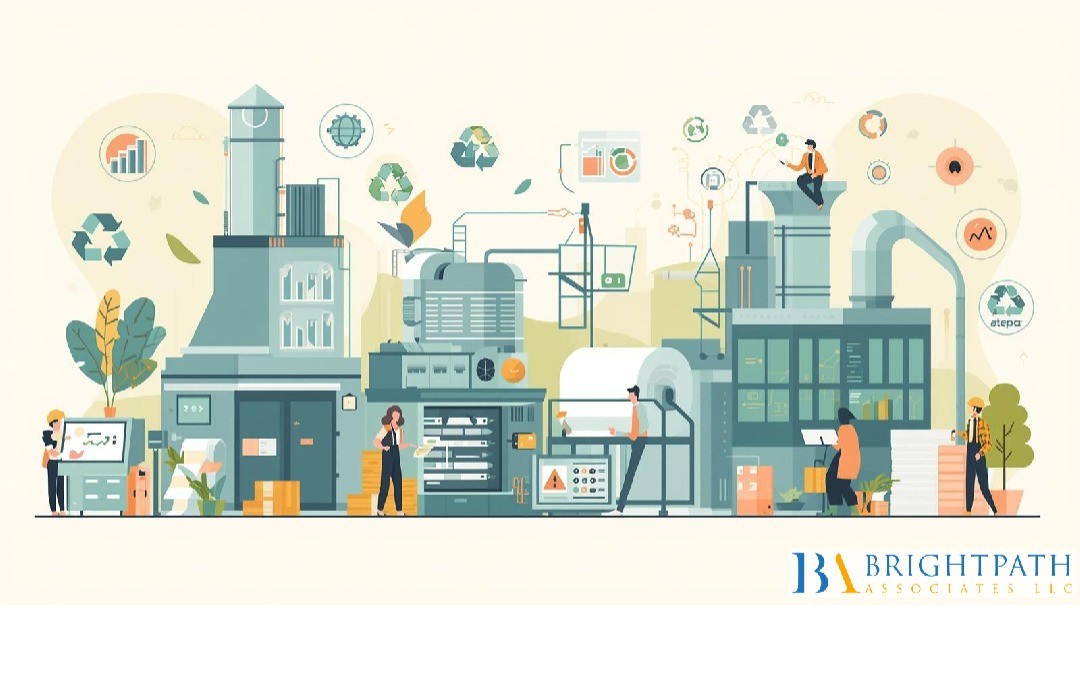
Introduction: Waste Reduction as a Strategic Imperative
The #PaperManufacturingIndustry in the United States is confronting unprecedented pressures. Rising environmental regulations, increasing consumer demand for sustainable products, and economic imperatives are compelling companies to rethink traditional operational approaches. Waste reduction is no longer merely a compliance requirement; it has become a strategic lever for enhancing efficiency, reducing costs, and strengthening brand reputation. For small to mid-sized paper manufacturers, the challenge is not just operational but deeply strategic, requiring leadership capable of integrating innovation, sustainability, and operational excellence. Executive oversight in these areas determines a company’s ability to remain competitive, profitable, and aligned with evolving market expectations.
Current Waste Challenges in Paper Production
Paper production is inherently resource-intensive, with significant volumes of water, pulp, and energy consumed in the process. Waste manifests in multiple forms, including trimming losses, defective sheets, residual pulp, and energy inefficiencies. Industry reports indicate that waste can account for up to 10–15 percent of raw material usage in conventional mills. For small and mid-sized manufacturers, even modest inefficiencies translate into substantial financial losses. Leadership must understand the operational nuances of waste generation, identifying critical areas where technology, process redesign, and strategic planning can minimize losses while maintaining product quality.
Technological Innovations in Paper and Pulp Manufacturing
Advancements in paper and #PulpTechnology are enabling manufacturers to reduce waste significantly. Automation in pulp processing, digital monitoring of moisture content, and precision trimming technologies allow for improved yield management. These innovations not only optimize material use but also enhance product consistency. Additionally, energy-efficient machinery reduces consumption and minimizes the environmental footprint. Leaders must carefully evaluate these technologies to ensure that implementation aligns with the company’s operational and financial goals. Executive decision-making in technology adoption directly influences the effectiveness of waste reduction initiatives and overall production efficiency.
Strategic Recycling and Resource Optimization
Beyond process optimization, recycling and resource management play a critical role in sustainable paper production. Incorporating recycled fibers and secondary materials reduces dependency on virgin pulp, lowers production costs, and contributes to environmental objectives. Closed-loop recycling systems allow companies to reuse residuals within the production process, minimizing waste and enhancing resource efficiency. Leadership must oversee these initiatives strategically, ensuring that sustainability measures are integrated into broader operational and business goals. Executives capable of marrying environmental responsibility with profitability are critical in driving long-term success.
Compliance and Beyond: Environmental Regulations as a Catalyst for Innovation
While regulatory compliance has historically been the primary driver of waste reduction, modern manufacturers are recognizing the competitive advantage of going beyond minimum requirements. Environmental regulations concerning emissions, effluent quality, and energy usage set the baseline, but forward-looking companies are adopting waste-to-energy systems, eco-friendly chemicals, and alternative raw materials to exceed standards. Leadership plays a pivotal role in fostering a culture where compliance is complemented by innovation. Executives who embed environmental performance into strategic decision-making create measurable operational efficiencies and enhance #MarketCredibility.
Supply Chain Considerations in Waste Reduction
Effective waste management extends beyond the production floor. Sourcing sustainable timber, managing transportation efficiencies, and optimizing inventory levels all influence a company’s overall waste profile. Leadership oversight is essential to coordinate suppliers, logistics, and procurement processes to align with sustainability and operational objectives. Executives must ensure that upstream decisions—such as selecting sustainable suppliers or optimizing material delivery—directly contribute to reducing waste, cost, and environmental impact. Strategic supply chain management ensures that waste reduction is systemic, rather than isolated to individual operations.
Digital Transformation and Process Optimization
#DigitalTools are increasingly integral to monitoring, analyzing, and reducing waste across paper production processes. Predictive analytics can identify inefficiencies before they manifest, enabling proactive interventions that minimize material loss and downtime. Sensors and real-time dashboards allow executives to track energy use, material throughput, and process deviations, providing data-driven insights for strategic decision-making. Leadership must balance the adoption of digital solutions with operational continuity, ensuring that new technologies enhance efficiency without introducing disruption. Companies that effectively leverage digital transformation position themselves to achieve both environmental and economic objectives.
Leadership Talent and Executive Search Needs
Despite technological and process advancements, leadership remains the most critical factor in achieving sustainable waste reduction. The paper manufacturing sector faces a shortage of executives with the right blend of operational expertise, sustainability knowledge, and strategic vision. Industry data highlights that small and mid-sized companies often struggle to recruit leaders capable of implementing advanced manufacturing processes while maintaining regulatory compliance and financial performance. Executive Search Recruitment emerges as a strategic solution in this context. Firms such as Brightpath Associates specialize in connecting paper manufacturers with experienced executives who can navigate the intersection of innovation, operational efficiency, and sustainability. By securing the right leadership talent, companies reduce operational risks and accelerate waste reduction initiatives.
Evolving Executive Expectations (2023–2025)
Executive roles in paper manufacturing are evolving to meet contemporary challenges. Beyond #OperationalManagement, leaders are now expected to oversee technology integration, sustainability initiatives, and cross-functional innovation programs. They must balance production efficiency with environmental stewardship and financial performance, requiring a rare combination of technical expertise, strategic vision, and leadership acumen. Small to mid-sized manufacturers that secure executives with these capabilities gain a decisive advantage in optimizing waste reduction while sustaining growth.
Financial and Operational Implications of Effective Leadership
Effective leadership in waste reduction translates directly into tangible financial and operational benefits. Minimizing raw material loss lowers production costs, while energy-efficient processes reduce operational expenditure. Companies that exceed regulatory expectations can enhance brand value and unlock new market opportunities. Conversely, inadequate leadership can result in wasted resources, compliance failures, and missed growth opportunities. Strategic executive placement is therefore critical not just for operational efficiency but also for securing competitive advantage and long-term profitability.
Preparing for Future Growth in Paper Manufacturing
Looking ahead, paper manufacturers must position themselves for sustainable growth by integrating leadership, technology, and process optimization into their strategic agenda. Emerging trends such as advanced recycling technologies, eco-friendly raw materials, and digital production monitoring will further transform operational landscapes. Succession planning and strategic #ExecutiveSearchRecruitment are central to ensuring that companies have the leadership capability to navigate these changes successfully. Organizations that invest in capable leaders will be well-positioned to capitalize on emerging market opportunities while maintaining operational excellence.
Conclusion: Leadership as the Cornerstone of Waste Reduction
Reducing waste in paper production is no longer just a regulatory requirement; it is a strategic imperative. Companies that adopt a holistic approach—combining technological innovation, recycling strategies, supply chain optimization, and executive leadership—are better positioned to achieve operational efficiency, sustainability, and profitability. Executive Search Recruitment plays a pivotal role in securing leaders capable of driving these initiatives. By prioritizing strategic leadership, small and mid-sized paper manufacturers can transform waste reduction from a compliance obligation into a competitive advantage, ensuring resilience and long-term success in an evolving industry.
Find your next leadership role in Paper & Forest Products Industry today!
Stay informed with the latest insights on Paper & Forest Products Industry!