
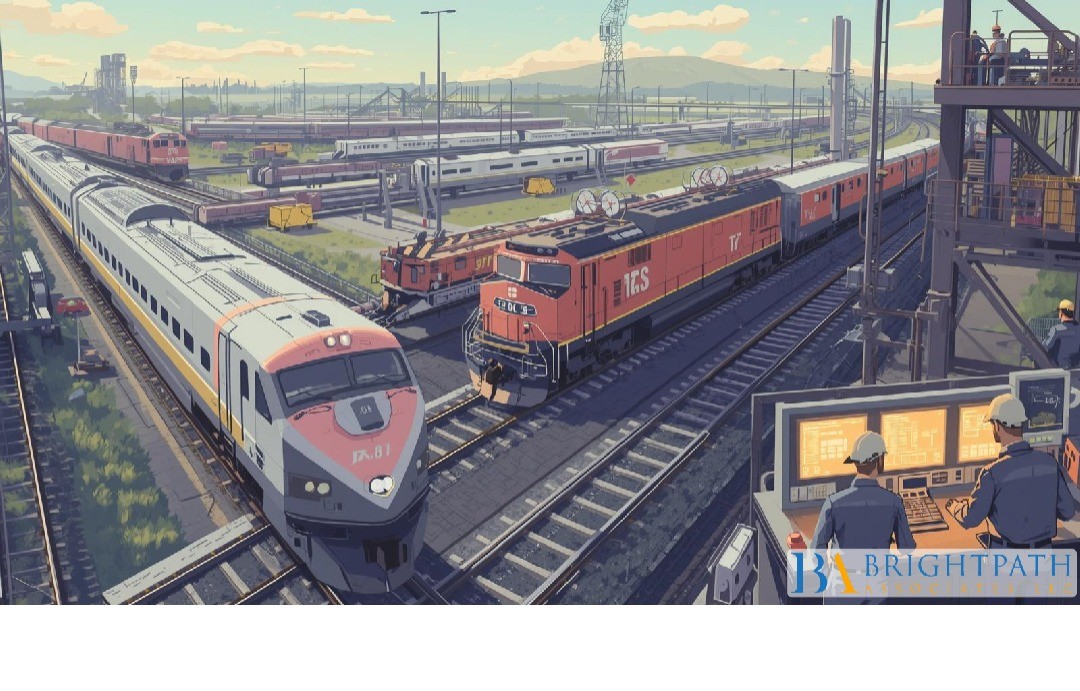
Introduction: An Industrial Core Powering a Continental Network
The United States rail system depends on a sophisticated domestic manufacturing base that designs, builds, services, and modernizes the assets that keep freight and passengers moving. From high-horsepower locomotives to specialized freight railcars, from precision bearings to automated maintenance-of-way machines, the ecosystem of railroad equipment manufacturers forms a strategic industrial backbone. As demand patterns, regulatory expectations, and technology cycles evolve, the #RailroadManufacturingIndustry outlook is shaped by a handful of market leaders whose scale, engineering depth, and service networks determine reliability, cost, and sustainability outcomes across the Rail industry.
Locomotive Manufacturing: Scale, Modernization, and the Energy Transition
Locomotive manufacturing in the US is anchored by two long-standing leaders. Wabtec, which combined with GE Transportation in 2019, and Progress Rail, a Caterpillar company that stewards the EMD brand, define the market’s center of gravity. Together, they deliver new-build mainline locomotives, large-scale modernization programs, and digital platforms that improve fuel economy, reliability, and train handling. Wabtec’s digital optimization tools and modernization lines work hand-in-hand with a vast installed base, while Progress Rail’s Tier 4 locomotives, repowers, and alternative-propulsion concepts (including battery and hybrid offerings) reflect Rail technology advancements aligned to emissions reduction and lifecycle cost control.
Complementing the two giants, National Railway Equipment (NRE) has built a reputation as the largest independent supplier of repowered and remanufactured locomotives, overhauls, parts, and leasing. With multiple US facilities and a track record of more than a thousand deliveries domestically and abroad, NRE fills a vital niche for railroads seeking lower capital outlays, improved adhesion and fuel performance, and standardized electronic controls across mixed fleets. This three-tiered locomotive market—new-builds, modernizations, and deep repower programs—continues to define the Top railroad manufacturing companies US railroads rely on to balance capital efficiency with operational readiness.
Freight Railcar Manufacturing: Product Breadth and Integrated Services
#FreightRailcar production is led by companies that combine manufacturing with leasing and lifecycle services. TrinityRail pairs one of North America’s largest lease fleets with a broad product line—tank cars, covered and open hoppers, flats and intermodal platforms, gondolas, and boxcars—alongside maintenance and modernization capabilities. Trinity’s integrated approach allows shippers to flex between ownership and leasing while accessing parts, repairs, asset health data, and digitally enabled logistics.
The Greenbrier Companies solidified its domestic footprint through acquisition, expanding railcar and component manufacturing across multiple US states while maintaining a diversified portfolio and robust aftermarket. A notable strength is Greenbrier’s alignment of design leadership with wheel, repair, and parts operations that reduce downtime and support customers throughout market cycles.
FreightCar America extends the competitive set with a focused product strategy spanning new car builds, rebody projects, and conversions that return idled assets to revenue service. Year-to-year order intake and delivery growth reflect disciplined operations, sharper product-market fit, and commercial momentum in core segments. Together, these manufacturers align production capacity and product mix with shifting commodity flows, all while driving quality gains, improved asset utilization, and tighter total cost of ownership for shippers.
Component Leaders: The Hidden Multipliers of Reliability and Cost
Rail industry innovations often begin at the component level, where engineering decisions amplify safety, uptime, energy efficiency, and maintenance intervals across an entire fleet.
Amsted Rail’s system-level portfolio—wheels, axles, bearings, draft systems, brakes, and complete bogies—underscores the value of vertical depth. By optimizing component interaction and compliance to key North American standards, Amsted reduces lifecycle costs and enhances performance. Its evolving digital offerings and advanced analysis further connect hardware to decision-grade data.
New York Air Brake, part of a global braking group, serves as a North American center of competence for heavy-haul braking and train control systems. From pneumatic control valves and electronically controlled braking to compressors and air dryers, NYAB’s product suite targets reliability and train handling while lowering operating costs—critical where long consists, grades, and weather challenge both safety and schedule integrity.
McConway & Torley continues a 19th-century legacy as a premier coupler foundry, producing AAR-certified freight couplers and the passenger Type H “Tight-Lock” coupler in the US. Domestic melting, casting, machining, and assembly support Buy America requirements and provide essential capacity for transit and freight projects alike.
Standard Steel manufactures forged railway wheels and axles with state-of-the-art ultrasonic inspections and stringent quality programs, underpinning safety-critical components that determine ride quality and risk profiles under heavy loads and high heat.
Timken’s bearing technologies and reconditioning programs exemplify Advanced manufacturing meeting circular-economy principles. AP and AP-2 bearings, low-torque seals, and specialized lubricants target reduced fuel use, extended wheel life, and higher speeds and loads. A large certified reconditioning network, approved under North American quality regimes, lengthens bearing service life across multiple reconditioning cycles, reducing waste and cost.
L.B. Foster complements the ecosystem with trackwork, insulated joints, friction management, and total track monitoring, along with distribution for stick and continuously welded rail. These offerings help railroads manage wear, mitigate defects, and improve geometry stability on mainline and transit infrastructure.
Maintenance of Way: Productivity, Quality, and the Data-Driven Right-Time Intervention
Track health is the foundation of speed, safety, and reliability. Here, US-based maintenance-of-way leaders combine high-throughput machinery with digital inspection and planning.
#LoramMaintenance of Way brings a comprehensive platform of rail grinding and milling, ballast maintenance (shoulder cleaning, ditching, and undercutting), material handling, and inspection technologies like ground-penetrating radar and LiDAR. The strategic shift from interval-based to condition-based maintenance—guided by decades of collected data and algorithms—raises asset life, reduces slow orders, and targets the right fix at the right time.
Harsco Rail, now part of a rebranded parent, provides tampers, stabilizers, rail grinders, track construction and renewal equipment, and specialty utility vehicles. Its equipment and contracted services model focuses on maximizing on-track productivity, reducing outages, and safely increasing crew effectiveness through mechanization and automation, including drone-enabled tamping innovations.
Plasser American’s portfolio spans tamping, dynamic track stabilization, ballast management, track renewal and laying, rail treatment, and digital systems for geometry and overhead catenary inspection. With diesel and hybrid machines and an extensive contracting fleet, Plasser addresses both heavy-haul and urban rail needs, emphasizing high and durable track quality that sustains speed and reduces lifecycle track costs.
Passenger and Transit Rolling Stock: Domestic Capacity and New Speed Frontiers
US passenger rolling stock capacity has grown substantially, supported by multiple OEMs that have invested in domestic manufacturing and supply chains to meet Buy America requirements and accelerate delivery timelines.
Siemens Mobility operates its long-standing Sacramento facility and is building a large North Carolina site for passenger coach manufacturing and overhauls. The company’s US footprint supports a full spectrum of rolling stock—light rail, coaches, locomotives, and trainsets—serving dozens of transit agencies while pursuing projects that push toward higher-speed operations and bi-coastal manufacturing resilience.
Alstom manufactures and overhauls transit and intercity trainsets at its New York and Pennsylvania facilities, producing metros, light rail, regional, and high-speed trainsets. With a deep domestic supplier network and a track record of large commuter and intercity programs, Alstom illustrates how global technology is being domesticated to renew North American fleets at scale.
Stadler US anchors North American operations in Salt Lake City with trainset and LRV production, expanding capabilities such as aluminum carbody welding to increase domestic content. Contract wins tied to modernization programs highlight the value of close OEM–agency collaboration on performance, accessibility, and lifecycle support.
These manufacturers reflect a broader trend in the US manufacturing industry: reshoring of critical capabilities, investment in skilled labor, and sustained compliance with domestic content rules—a formula that supports advanced transit mobility with localized supply chains and responsive after-sales support.
Rail Technology Advancements: Digitalization, Condition Monitoring, and Energy Efficiency
Across locomotives, freight cars, and infrastructure, Rail technology advancements center on three themes. First, digitalization is rapidly increasing asset visibility and predictive capabilities. Locomotive optimization software, telematics on freight cars, and machine-integrated geometry measurement systems feed data into cloud analytics that flag exceptions, prioritize interventions, and quantify fuel and maintenance savings. Second, condition monitoring and non-destructive testing, from ultrasonic wheel inspection to real-time bearing diagnostics and track-structure sensing, reduce risk and enable targeted maintenance. Third, energy efficiency—through better aerodynamics, lower-rolling-resistance bearings and seals, regenerative braking on transit fleets, and battery or hybrid propulsion pilots—improves sustainability metrics and operating margins.
These #RailIndustry innovations are not incremental; they compound across the value chain. A single bearing design that lowers torque can yield measurable fuel savings across thousands of axles, while a well-tuned grinding and milling program can extend rail life and curb defect growth, improving geometry and reducing derailment risk. Similarly, modernization programs that replace legacy controls, add AC traction, and optimize adhesion convert older platforms into more reliable, fuel-efficient motive power, aligning operational performance with capital discipline.
Talent, Leadership, and the Competitive Edge
As product and service portfolios become more integrated and digital, the sector’s competitiveness increasingly rests on leadership and specialized talent. #ExecutiveSearchRecruitment in the railroad manufacturing space is prioritizing hybrid skill sets: industrial leaders versed in manufacturing excellence and supply chain resilience; engineering executives who bridge mechanical systems, power electronics, and software; and commercial leaders who understand customers’ operating economics and regulatory frameworks. Winning organizations are cultivating plant-floor problem solving, safety culture, and continuous improvement mindsets, while building data science and systems integration capabilities. This dual investment in people and platforms lifts productivity, accelerates product development, and ensures that Advanced manufacturing outcomes translate into customer value.
Outlook: Resilience, Integration, and Sustainable Growth
The #RailroadManufacturingIndustry outlook is cautiously optimistic. Freight volumes ebb and flow with commodity cycles and macroeconomic conditions, but leading OEMs and suppliers have diversified across freight, transit, components, and services to buffer volatility. Infrastructure funding, corridor development, and rolling stock renewals on the passenger side add a multi-year tailwind. Meanwhile, Buy America compliance, domestic sourcing, and plant investments reinforce the US manufacturing industry base, supporting resilient supply chains and shortening overhaul and upgrade cycles.
In this context, the Top railroad manufacturing companies US railroads depend on are doubling down on integrated ecosystems: motive power tied to modernization and digital optimization; freight cars coupled with leasing, asset health, and repair networks; components engineered for lifecycle performance; and MOW fleets guided by condition monitoring. This convergence of mechanical excellence and data-driven decisioning sustains competitive advantage where it matters most—total cost of ownership, safety, velocity, and customer service.
Conclusion: The Industrial Backbone, Reinforced
The backbone of US rail is not a single product or plant—it is an industrial system. Locomotive manufacturing, freight-car production, component engineering, and maintenance-of-way machinery together set the ceiling for network performance. Today’s Railroad equipment manufacturers are reinforcing that backbone with Rail industry innovations that make assets smarter, more durable, and cleaner. As rail carriers, shippers, and transit agencies press for higher reliability and lower lifecycle costs, the sector’s leaders—supported by robust domestic capacity, integrated service platforms, and forward-looking talent—are poised to deliver. In doing so, they are advancing the Rail industry’s role as a low-carbon, high-efficiency pillar of national logistics and mobility, and demonstrating how Advanced manufacturing in the US can evolve to meet the demands of a faster, greener, and more data-driven future.
Find your next leadership role in Railroad Industry today!
Stay informed with the latest insights on Railroad Industry!