
Introduction
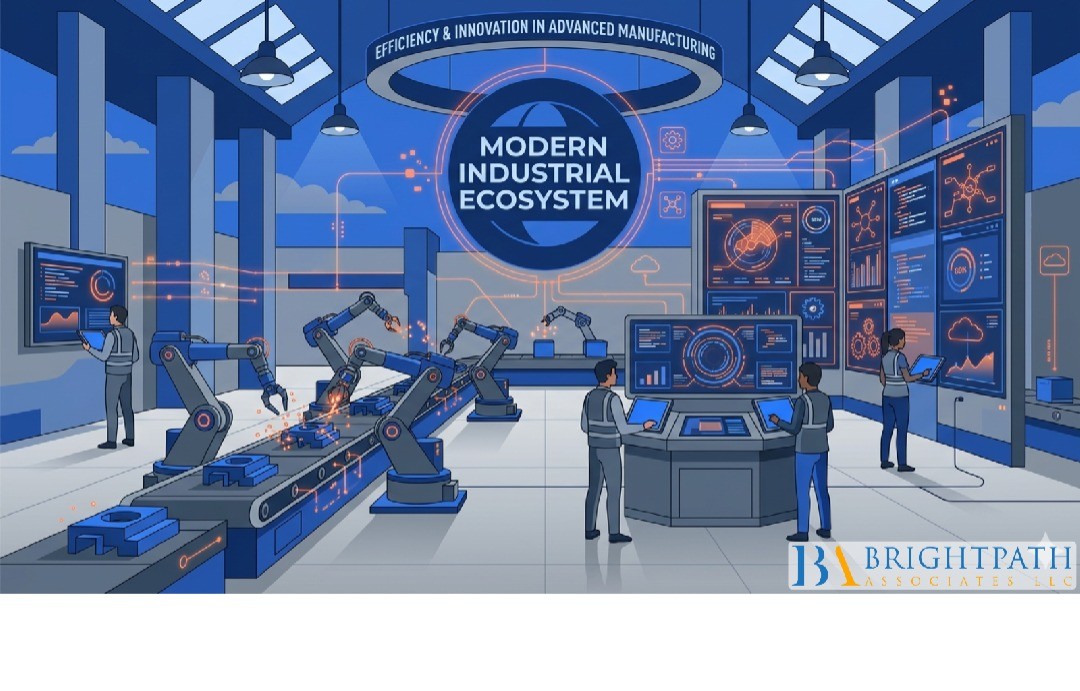
#IndustrialAutomation has become the decisive engine of efficiency, resilience, and innovation in contemporary manufacturing and operations. Far beyond the era of isolated, rigid machinery, modern automation solutions integrate hardware, software, data, and advanced analytics into cohesive ecosystems that span the plant floor, supply chains, and enterprise decision-making. This essay explores how control systems, Robotics integration, SCADA systems, machine vision, and data-driven intelligence are reshaping performance and competitiveness. It examines technological foundations, quantifiable benefits, implementation roadmaps, and the evolving workforce landscape, while addressing governance, safety, cybersecurity, and sustainability. Throughout, it highlights how Manufacturing automation integration supported by strong PLC programming service capabilities is enabling new business models and driving continuous improvement across industries.
The Modern Architecture of Industrial Automation
At the heart of modern Industrial automation lies a layered architecture designed to sense, control, optimize, and adapt. Sensors and actuators translate physical phenomena into actionable data and precise motion. Control systems coordinate that motion through deterministic logic, ensuring high availability and tight tolerances even under variable conditions. SCADA systems and human–machine interfaces provide supervisory visibility and command capabilities, turning raw signals into situational awareness for operators and engineers. Above the supervisory layer, execution and planning systems orchestrate workflows, manage recipes and batches, track inventory, and align production with demand.
What distinguishes today’s automation solutions is the integration of edge computing and cloud analytics into this stack. Edge nodes perform near-real-time inference for quality inspection or anomaly detection, while centralized analytics aggregate historical data for pattern recognition, capacity planning, and predictive maintenance. Machine vision extends the senses of equipment, distinguishing defects, measuring dimensions, and guiding robots with sub-millimeter precision. The resulting data fabric connects shop-floor realities with enterprise objectives, allowing Manufacturing automation integration to deliver synchronized performance from procurement to shipping.
From Throughput to Systemic Performance
Efficiency, historically equated with higher throughput and reduced labor, now encompasses system-wide performance across availability, quality, agility, and energy intensity. Real-time measurement of #OverallEquipmentEffectiveness enables plants to spotlight bottlenecks and prioritize interventions that yield the highest returns. PLC programming service teams fine-tune sequences, interlocks, and motion profiles to reduce idle time and cycle variability. Automated changeovers shorten transition windows for high-mix, low-volume production, enabling mass customization without sacrificing unit economics. Predictive maintenance, powered by vibration, temperature, and electrical signature analysis, schedules interventions during planned windows and lowers unplanned downtime. Energy optimization is embedded into setpoints and schedules, aligning consumption with actual production needs and improving sustainability metrics.
The compounding effect of these improvements is significant. As variability falls, forecasting and scheduling grow more accurate. As intralogistics stabilize through Robotics integration and autonomous mobile systems, buffer inventories can shrink without jeopardizing service levels. As data fidelity increases across SCADA systems and historians, analytics become more trustworthy and prescriptive, closing loops between planning and execution.
Innovation Through Autonomy and Intelligence
Industrial automation is not solely a cost-reduction lever; it is a platform for innovation. Robotics integration coupled with adaptive machine vision enables flexible cells that accommodate product variants without extensive retooling. Digital twins simulate lines and processes to test scenarios, validate parameters, and commission systems in virtual environments, compressing go-live timelines and reducing risk. Closed-loop quality systems feed inspection results directly into control logic, automatically adjusting speeds, temperatures, pressures, or torque limits to hold specifications despite upstream variability. Servitized business models emerge from connected assets, where uptime guarantees and performance-based contracts deepen customer relationships and create recurring revenue. These advances hinge on the same foundation: integrated data, rigorous control, and disciplined change management fused into holistic automation solutions.
Application Domains and Use Cases
The principles of Industrial automation play out across diverse sectors with domain-specific nuances. In discrete manufacturing, multi-axis robots equipped with force-torque sensing and sophisticated grippers execute precise assembly and handling, while collaborative robots work safely alongside people to shoulder repetitive or ergonomically challenging tasks. Machine vision systems guide part alignment, verify presence and orientation, and detect subtle defects that would evade manual inspection. In process industries such as chemicals and food and beverage, advanced control strategies stabilize complex dynamics, optimizing yields and minimizing waste while safeguarding traceability. In logistics operations and fulfillment centers, Robotics integration and orchestrated control systems compress order cycle times by dynamically balancing picking zones and routing autonomous vehicles through changing aisle configurations. Energy and utilities leverage #SCADASystems for remote asset management and condition monitoring, extending equipment life and enabling higher penetration of variable renewables. Healthcare and pharmaceuticals embed compliant electronic records, sterile material handling, and automated release testing to accelerate time to patient while maintaining stringent quality.
Interoperability, Standards, and Data Governance
Sustainable value from Manufacturing automation integration depends on interoperability, portability, and security. Open, model-driven interfaces allow equipment from multiple vendors and vintages to form coherent systems where data retains context as it travels from the edge to enterprise analytics. Semantic asset models align tags and signals with standardized meanings, ensuring that analytics and dashboards interpret variables correctly across lines and sites. Governance policies establish ownership, retention, lineage, and access controls for operational data. Cybersecurity practices harden control networks with segmentation, least-privilege access, and verified firmware, protecting safety, uptime, and intellectual property. These measures do not slow innovation; they enable it by reducing integration friction and preventing the accumulation of technical debt.
Human–Machine Collaboration and Workforce Evolution
As technology advances, so does the role of people. Rather than displacing human expertise, Industrial automation increasingly augments it. Operators transition from performing repetitive tasks to managing exceptions, optimizing parameters, and validating quality. Maintenance teams become diagnosticians and data-savvy troubleshooters, interpreting condition-monitoring patterns to prevent failures. #EngineersSpecialize in PLC programming service development, motion control tuning, Robotics integration, and SCADA systems configuration, while also collaborating with IT on cybersecurity and data architectures. The labor market reflects these shifts, with Automation jobs spanning mechatronics, controls, data analytics, and operational excellence. Organizations that invest in upskilling and clear career pathways attract and retain talent, building resilient teams prepared for the pace of change.
Talent Pipelines and Executive Search
As competition intensifies for specialized skills, Executive search industrial automation has become pivotal in building high-performing teams. The complexity of integrating control systems, robotics, analytics, and cybersecurity requires leaders who can bridge operational technology and information technology while steering cross-functional change. Executive Search Recruitment firms with domain fluency help manufacturers identify plant managers, heads of engineering, controls architects, and transformation leaders who can align technical roadmaps with business outcomes. At the same time, entry-level and mid-career Automation jobs must remain attractive through apprenticeship models, certification programs, and partnerships with technical institutes. A robust talent strategy, combining internal development with targeted hiring, accelerates time-to-value for automation investments.
Measuring Value and Scaling Beyond Pilots
A disciplined approach to value realization turns promising pilots into enterprise transformation. #BaselineMeasurements of throughput, scrap, changeover time, energy per unit, and first-pass yield provide a factual foundation for improvement. Early wins such as a measurable lift in OEE, fewer quality escapes, or reduced maintenance interventions validate the approach and galvanize stakeholders. Financial models should account for total cost of ownership, including licenses, integration, cybersecurity, spare parts, and obsolescence management, not just headline labor savings. Risk-adjusted returns should incorporate resilience benefits such as reduced supply disruptions and compliance incidents. As templates, code libraries, and commissioning playbooks mature, organizations can scale Manufacturing automation integration across additional lines and plants with increasing speed and reliability.
Implementation Roadmap and Governance
A pragmatic roadmap anchors ambition to outcomes. Strategy clarifies the business objectives of automation solutions, whether improving service levels, compressing lead times, reducing cost-to-serve, or enabling new product variants. Process mapping reveals constraints and opportunities, guiding investment toward the highest-impact nodes. Architecture decisions define boundaries between edge and cloud, cybersecurity postures, and data models to avoid future rework. Pilots are scoped to be representative but bounded, with crisp success criteria and a plan for post-pilot scale. Once base control has stabilized, advanced capabilities—such as machine vision upgrades, analytics, or closed-loop quality—can be layered on to compound gains. Robust change management ensures operators, technicians, and engineers receive hands-on training, clear standard operating procedures, and visibility into key performance indicators. A center of excellence institutionalizes lessons learned, enforces configuration management, and curates reusable components for future deployments.
Quality, Safety, and Compliance by Design
High-performing automation embeds quality and safety into the architecture rather than treating them as afterthoughts. Inline inspection with machine vision detects deviations at the earliest point of origin, minimizing rework and protecting downstream processes. Statistical process control monitors drift and triggers investigations before nonconformities spread. #FunctionalSafetyStrategies, including risk assessments and safety-rated hardware, protect people and equipment while enabling efficient human–robot collaboration. Cyber-physical security protects critical assets from intrusion that could compromise safety or reliability. In regulated sectors, electronic records and serialized traceability provide the auditable lineage required for confident root-cause analysis and compliance. These practices reduce the cost of poor quality and create a stable foundation for iterative improvement.
Sustainability and Resource Efficiency
Industrial automation is a powerful lever for sustainability. Real-time energy monitoring combined with automated setpoint adjustments reduces peak loads, idle consumption, and carbon intensity per unit produced. Precision dosing and optimized cutting reduce scrap and improve material utilization. Emissions monitoring and control ensure regulatory compliance while identifying abatement opportunities. Digital twins minimize physical trials and overdesign, saving materials and time. Lifecycle strategies favor modularity and standardized components that can be refurbished and redeployed, extending asset life. By embedding environmental metrics into dashboards and control objectives, organizations transform sustainability goals into operational behaviors, aligning ethics with economics.
Risks, Pitfalls, and Mitigations
Despite compelling benefits, automation initiatives can falter when risks go unaddressed. Over-automation of unstable processes cements waste; process stabilization and simplification should precede automation. Heterogeneous brownfield environments create data silos that hinder analytics; interoperable gateways and vendor-agnostic middleware mitigate fragmentation. #DataQualityIssues stemming from miscalibrated sensors or inconsistent tags undermine trust; disciplined governance and calibration regimes are essential. Talent gaps in controls, cybersecurity, and analytics slow progress; proactive hiring through Executive Search Recruitment and ongoing training are necessary countermeasures. Change fatigue can derail adoption; transparent communication, visible wins, and frontline involvement in cell design build momentum and buy-in. By anticipating these challenges, organizations protect credibility and compress time-to-value.
The Road Ahead: Hyperautomation and Autonomous Operations
Looking forward, the trajectory points from automated to increasingly autonomous operations. Hyperautomation orchestrates Robotics integration, process automation, and AI to connect and optimize end-to-end workflows, including exception handling. Edge AI, combined with reliable low-latency connectivity, enables high-speed vision and adaptive motion control at the machine level, while enterprise models balance throughput, quality, and energy across entire sites. Generative tools accelerate engineering by drafting logic, HMI screens, and test cases from specifications, subject to rigorous validation by controls engineers. Standardized data fabrics make analytics portable across plants, speeding rollouts and enabling continuous benchmarking. Throughout this evolution, humans remain firmly in the loop, setting objectives, defining constraints, and governing ethics. The destination is operational intelligence: systems that perceive, decide, and act with agility, reliability, and transparency.
Conclusion
Industrial automation has matured into a strategic capability that fuses precision control, data-driven insight, and flexible execution. Through integrated automation solutions encompassing PLC programming service expertise, SCADA systems, machine vision, and sophisticated control systems, organizations are compressing cycle times, elevating quality, conserving energy and materials, and unlocking new business models. Manufacturing automation integration succeeds when anchored in interoperable architectures, rigorous governance, and a human-centered approach that cultivates the skills demanded by modern Automation jobs. #ExecutiveSearchRecruitment industrial automation and broader Executive Search Recruitment provide the leadership and specialized talent to sustain transformation. Companies that invest thoughtfully, measure relentlessly, and scale systematically will not only produce more efficiently; they will learn faster, adapt quicker, and innovate at the pace required by volatile markets. In this landscape, the winners will be those who treat automation not as a project but as a core competency—engineered for performance today and designed for autonomy tomorrow.
Find your next leadership role in Industrial Automation Industry today!
Stay informed with the latest insights on Industrial Automation Industry!