
Introduction
The #RailroadManufacturingIndustry is entering a period of accelerated transformation driven by robotics, advanced manufacturing systems, and digital integration. For C-suite executives and founders of small to mid-sized railroad equipment manufacturers, the shift toward automation is no longer a strategic option but a competitive necessity. Global demand for rail infrastructure, urban transit systems, and freight locomotives continues to rise as governments and private operators invest heavily in sustainable transportation networks. At the same time, margin pressures, supply chain volatility, and skilled labor shortages are reshaping the operational landscape.
Rail technology advancements are redefining production standards. Robotics-enabled welding, automated assembly lines, AI-powered quality control, and predictive maintenance systems are improving throughput, reducing defects, and strengthening compliance with safety regulations. Yet as automation on rails accelerates, the most critical differentiator is not machinery alone—it is leadership capable of orchestrating this transformation effectively.
The Railroad Manufacturing Industry Outlook in an Automated Age
The railroad manufacturing industry outlook reflects steady long-term growth fueled by infrastructure modernization and decarbonization initiatives. Rail is widely recognized as one of the most energy-efficient freight transport modes, and public investment in rail corridors and high-speed networks continues to expand. In the US manufacturing industry, rail-related production represents a significant segment of heavy industrial output, supporting thousands of jobs and billions in economic activity.
However, global competition among top railroad manufacturing companies in the US and international players has intensified. Customers now expect faster production cycles, enhanced customization, and digitally integrated components. Locomotive manufacturing and rolling stock assembly are becoming more technologically sophisticated, requiring precise engineering and high-performance materials.
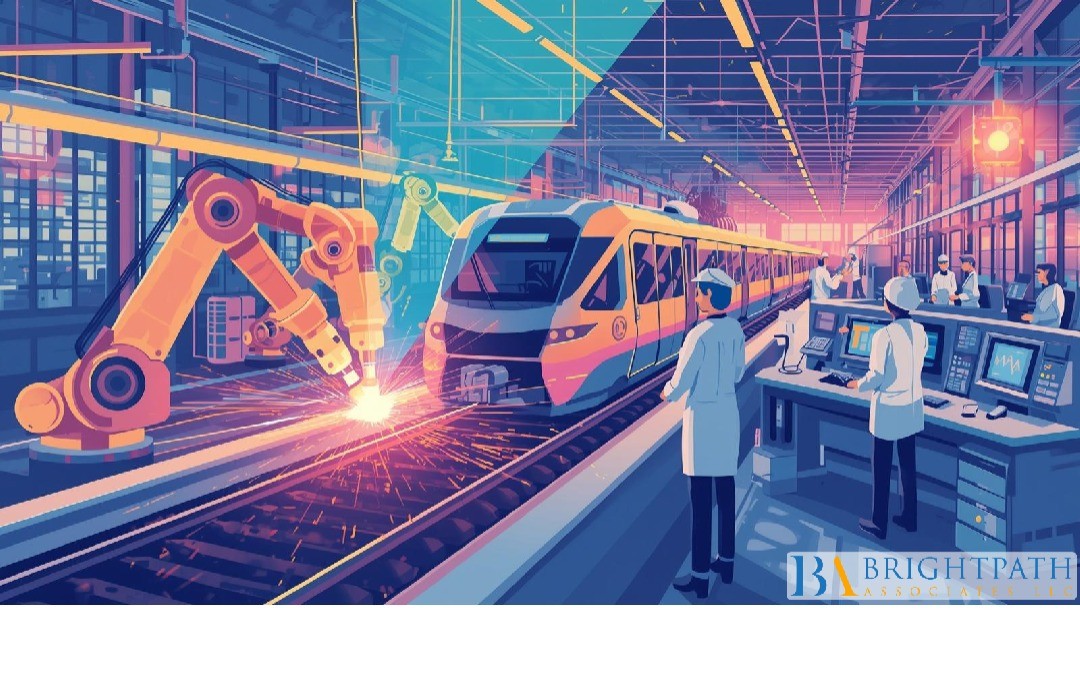
Robotics and advanced manufacturing technologies are central to meeting these expectations. Automated robotic arms perform complex welding tasks with consistent precision, reducing rework and improving safety. Computer vision systems inspect rail components in real time, identifying micro-defects that human inspectors might overlook. Autonomous guided vehicles streamline material handling within factories, optimizing floor space and minimizing downtime.
For small to mid-sized railroad equipment manufacturers, adopting these technologies presents both opportunity and risk. Capital investment requirements are substantial, and implementation demands cross-functional coordination. Companies that succeed in integrating automation enhance productivity and strengthen their competitive positioning. Those that hesitate risk falling behind in a rapidly evolving market.
Leadership Challenges in the Age of Advanced Manufacturing
As rail industry innovations reshape production, leadership requirements are evolving just as quickly. Traditional manufacturing executives often built their careers around mechanical engineering, operations management, and supply chain logistics. While these competencies remain vital, they are no longer sufficient.
Today’s leaders must understand robotics integration, #DataAnalytics, cybersecurity, and systems interoperability. Advanced manufacturing environments generate vast volumes of operational data. Executives are expected to translate that data into actionable insights that drive efficiency and profitability. They must also manage workforce transitions as automation redefines roles on the factory floor.
The leadership talent shortage within the rail industry is becoming increasingly evident. Experienced executives with expertise in both heavy industrial operations and digital transformation are in high demand. Competition extends beyond railroad manufacturing to aerospace, automotive, and defense sectors, all of which are investing heavily in robotics and automation.
This scarcity of hybrid talent creates strategic vulnerabilities. When leadership gaps persist, automation initiatives may stall, budgets can be misallocated, and cultural resistance may undermine progress. Conversely, companies led by digitally fluent executives often achieve smoother transitions and faster returns on technology investments.
Shifting Role Expectations for Railroad Manufacturing Executives
The role of a senior leader in locomotive manufacturing or rail component production has expanded significantly. Beyond overseeing production schedules and supplier relationships, executives must now champion innovation agendas and cultivate partnerships with technology vendors.
Rail technology advancements require leaders who can evaluate robotics platforms, negotiate with automation integrators, and oversee large-scale system deployments. They must also ensure compliance with stringent safety standards governing rail equipment manufacturing. Failure to align automation strategies with regulatory requirements can result in costly delays or reputational damage.
In addition, workforce strategy has become a central executive responsibility. Automation does not eliminate the need for human talent; rather, it shifts demand toward technicians, engineers, and data specialists capable of maintaining and optimizing advanced systems. Leaders must invest in reskilling programs, collaborate with technical institutions, and design talent pipelines that support long-term growth.
Within the broader US manufacturing industry, companies that align automation strategies with workforce development consistently outperform peers in productivity and retention. Railroad manufacturing is no exception. Executives who proactively manage this transition build stronger, more adaptable organizations.
The Strategic Evolution of Recruitment in Rail Manufacturing
Given the complexity of modern rail production, traditional hiring practices are proving insufficient for senior-level roles. Posting job descriptions and waiting for applicants rarely yields candidates with the specialized blend of industrial and digital expertise required today.
#ExecutiveSearchRecruitment has become a strategic tool for railroad equipment manufacturers seeking transformative leadership. Specialized search partners leverage deep industry networks to identify executives experienced in advanced manufacturing, robotics integration, and operational excellence. They conduct discreet outreach to passive candidates who may not be actively seeking new roles but possess the precise competencies needed for automation-driven growth.
For small to mid-sized companies competing with larger multinational rail firms, this targeted approach is particularly valuable. It expands access to talent pools beyond geographic constraints and ensures rigorous assessment of both technical acumen and cultural fit.
Moreover, executive search processes increasingly evaluate candidates on their ability to lead change management initiatives. Automation projects often encounter internal resistance, especially in legacy manufacturing environments. Leaders must communicate a clear vision, foster trust among employees, and align incentives with transformation goals. Recruitment strategies that prioritize these qualities significantly enhance the likelihood of successful automation outcomes.
Robotics Investment and Strategic Risk Management
Automation on rails introduces new risk dimensions. Cybersecurity threats targeting connected manufacturing systems are rising. Supply chain disruptions can delay robotics component deliveries. Capital-intensive investments must generate measurable returns to justify shareholder confidence.
Executives must therefore approach robotics adoption through a strategic risk management lens. This includes conducting comprehensive cost-benefit analyses, piloting technologies before full-scale deployment, and establishing contingency plans for system failures.
Railroad manufacturing companies that integrate robotics strategically often report improvements in throughput, defect reduction, and workplace safety metrics. These gains translate into stronger margins and enhanced competitiveness in bidding processes for large rail contracts. However, without capable leadership, even the most advanced robotics platforms may fail to deliver expected value.
Building a Future-Ready Leadership Pipeline
For C-suite leaders and founders, the imperative is clear: automation success depends on leadership readiness. Succession planning, leadership development programs, and targeted external recruitment must be embedded into corporate strategy.
Developing internal talent with exposure to robotics and advanced manufacturing systems ensures continuity and institutional knowledge retention. At the same time, engaging Executive Search Recruitment partners provides access to external perspectives and specialized expertise when new capabilities are required.
As the #RailroadManufacturingIndustry outlook continues to evolve, companies that align talent strategy with technological investment will outperform peers. Leadership agility enables organizations to respond to regulatory shifts, technological breakthroughs, and market volatility with confidence.
Conclusion: Leadership as the Engine of Automated Rail Production
Automation is transforming rail production at an unprecedented pace. Robotics, AI-driven analytics, and advanced manufacturing systems are redefining performance standards across locomotive manufacturing and rail component assembly. For small to mid-sized railroad equipment manufacturers, embracing these innovations is essential to maintaining relevance in an increasingly competitive marketplace.
Yet technology alone does not guarantee success. The decisive factor is leadership—executives capable of integrating robotics strategically, managing workforce transitions, and navigating complex industrial ecosystems. By prioritizing sophisticated Executive Search Recruitment and aligning talent acquisition with automation goals, railroad manufacturing companies can secure the expertise required to thrive in this new era.
In the race toward advanced manufacturing excellence, the companies that invest in both robotics and visionary leadership will set the standard for the future of the rail industry.
Find your next leadership role in Railroad Industry today!
Stay informed with the latest insights on Railroad Industry!