
Introduction: From Islands of Equipment to Intelligent, Connected Operations
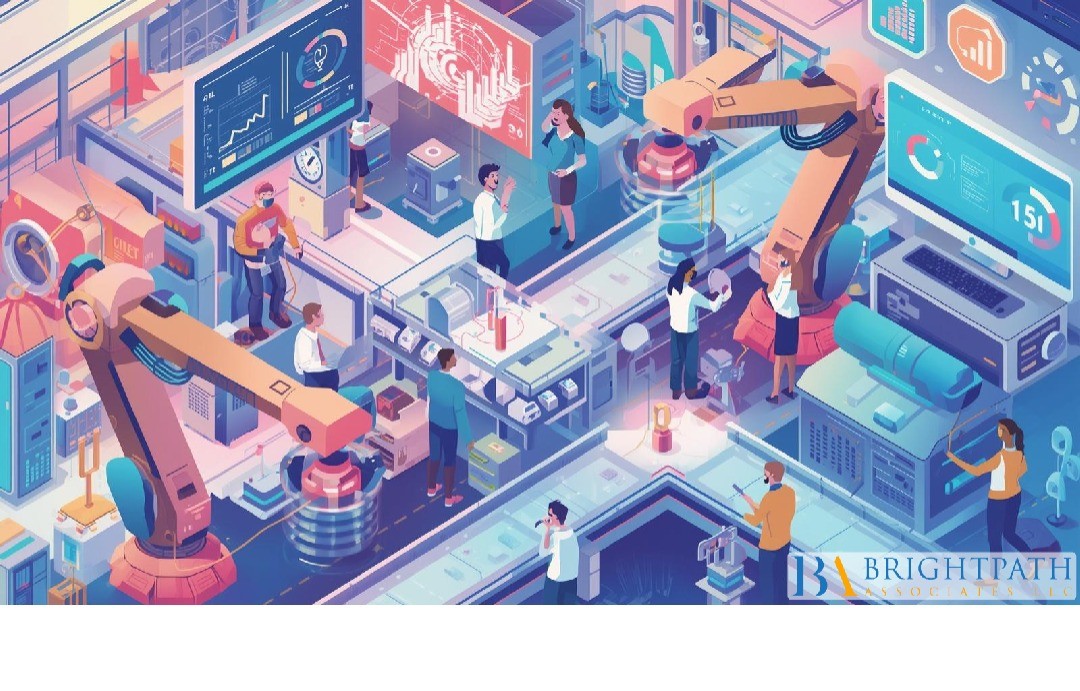
#IndustrialAutomation is shifting from isolated equipment and rigid lines to dynamic, software-defined, and data-driven factories. Organizations that standardize for interoperability, virtualize their Control systems, and industrialize analytics from edge to cloud are outpacing competitors on cost, quality, and agility. The new playbook blends open architectures, resilient networks, AI-enabled decisioning, and rigorous cybersecurity, while aligning people and processes through robust Manufacturing automation integration. At the same time, talent dynamics are reshaping the industry, with Executive search industrial automation and Automation jobs becoming central to execution capacity. This essay maps the most consequential trends and offers practical direction for manufacturers looking to lead.
Market Momentum and Strategic Imperatives
The demand for automation solutions is propelled by persistent labor constraints, rising product variability, and the operational need to cut time-to-value. Modern plants now prioritize production reconfigurability, rapid changeovers, and traceability by default. The strategic response is an architecture-first approach: standardize interfaces, unify data semantics, and separate the pace of software change from the slower cadence of mechanical and electrical assets. Through this lens, Industrial automation becomes a continuous capability rather than a one-off CapEx project. Enterprises that invest in platform foundations—covering SCADA systems, PLC programming service excellence, and enterprise-grade data orchestration—are better positioned to compound improvements over time.
Open, Interoperable Ecosystems Replace Proprietary Silos
For decades, proprietary stacks made upgrades costly and cross-vendor collaboration difficult. The industry’s answer is a decisive move toward open, interoperable ecosystems that allow components from different suppliers to work together seamlessly. In process industries, open models enable modular upgrades and flexible lifecycle management. In discrete and hybrid manufacturing, standard information models and converged networking support deterministic performance without supplier lock-in. These changes align with the operational realities of multi-plant and multi-vendor environments, where Manufacturing automation integration must harmonize legacy Control systems, modern edge compute, and cloud analytics. The result is faster commissioning, simpler maintenance, and reduced total cost of ownership—advantages that scale with every new line and site.
Software-Defined Manufacturing and Virtualized Control
A defining trend is the migration from hardware-bound logic to software-defined orchestration. Virtualized controllers and soft PLCs let teams provision control workloads on commercial compute, update them over-the-air, and test changes via digital twins before touching the line. This decoupling unlocks rapid product and recipe switches, enabling seasonality and mass customization without excessive downtime. Event-driven and distributed approaches complement traditional ladder logic, especially in modular cells and high-variability assemblies. None of this eliminates the need for deep PLC programming service expertise; instead, it magnifies its impact. Engineers shift from writing isolated programs for each device to engineering standardized libraries, simulation assets, and reusable deployment pipelines that scale across the enterprise.
Edge AI, Hyperautomation, and Digital Twins Become Everyday Tools
AI has moved from pilots to production in inspection, anomaly detection, and real-time optimization. Machine vision now delivers robust #DefectDetection, assembly verification, and robotic guidance, often outperforming rule-based systems in variable conditions. At the system level, digital twins simulate line behavior, energy use, and maintenance outcomes, enabling scenario testing that compresses commissioning and improves operational decisions. Hyperautomation extends beyond the shop floor by combining AI, workflow orchestration, and integration to automate end-to-end processes from planning to maintenance. The key is operationalization: streaming clean, contextualized data to edge and cloud models; integrating insights into SCADA systems, MES, and CMMS; and governing models to manage drift, versioning, and security. When done well, this closes the loop between detection, decision, and actuation, raising OEE and first-pass yield while reducing scrap and energy per unit.
Human-Centric Automation and Robotics Integration
The frontier of flexibility lies at the intersection of people and machines. Robotics integration now emphasizes collaborative use cases that augment skilled operators rather than replace them, especially in tasks that demand dexterity, short runs, or rapid redeployment. Cobots and mobile manipulators are increasingly paired with intuitive programming, force control, and safety-by-design features to accelerate changeovers and reduce engineering load. The strongest programs combine Robotics integration with standardized end-of-arm tooling, quick-change fixtures, and unified safety strategies across cells. Training matters: developing operator proficiency to adjust sequences, recover faults, and interpret machine vision outcomes is as critical as the technology itself. Over time, the best teams institutionalize reusable patterns—robot templates, vision recipes, and shared data schemas—so each new cell is faster to deploy and easier to support.
Industrial Connectivity: Private 5G and Converged Ethernet
Deterministic performance and pervasive mobility are now connectivity requirements, not luxuries. Converged Ethernet with time-aware scheduling supports real-time control traffic alongside supervisory and analytics data on the same physical network. In parallel, private 5G is gaining traction for AGVs and AMRs, high-resolution video inspection, asset tracking, and #RemoteOperations, offering coverage, reliability, and low latency across large campuses and dense facilities. A portfolio mindset works best. Fixed, hard-real-time motion stays on wired deterministic networks, while mobile and high-throughput applications run on private 5G, all observed through common security and monitoring. This approach simplifies topology, ensures predictable performance, and protects uptime as the density of connected devices accelerates.
Cybersecurity by Design in Operational Technology
As Industrial automation intensifies interconnectivity, the attack surface grows. Cybersecurity must be engineered into the lifecycle of components, systems, and operations. Defense-in-depth, secure segmentation, asset inventory, and vulnerability management now sit alongside safety and quality as core engineering concerns. Standards-focused programs align supplier development processes with secure coding, hardening, and coordinated patching. At the plant level, clear zoning and conduits, rigorous identity and access management, and continuous monitoring are essential. Governance links operations, engineering, and corporate security, ensuring incident response readiness and compliance with evolving regulations. The payoff is material: fewer unplanned downtime events, safer operations, and a stronger foundation for trusted data flows across SCADA systems, Control systems, and enterprise platforms.
Low-Code/No-Code and the New Factory App Stack
The breadth of use cases in automation outstrips what traditional development teams alone can deliver. Low-code/no-code platforms allow engineers and frontline teams to build work instructions, quality forms, dashboards, and small automations quickly, using approved connectors and templates. Citizen development succeeds only with governance. Organizations should establish design standards, data contracts, and security policies that keep apps consistent, supportable, and compliant. Combined with orchestration and AI services, low-code creates a new layer of agility over the installed base of PLCs, HMIs, and #SCADASystems. The result is faster problem resolution on the floor and a virtuous cycle of bottom-up improvement that complements top-down program initiatives.
Talent, Organization, and Executive Search Industrial Automation
Technology progress depends on people. The market for Automation jobs is dynamic, blending classical skills with modern competencies in data, software, and security. Strong teams combine PLC programming service depth, SCADA and MES integration, robotics and machine vision, DataOps and analytics, and OT cybersecurity. As competition for these profiles intensifies, #ExecutiveSearchRecruitment focused on Industrial automation plays a strategic role in building multi-disciplinary, site-ready teams. Leading organizations clarify technical career paths, invest in cross-training, and nurture communities of practice that turn individual expertise into enterprise capability. They also embed product management disciplines into automation portfolios, prioritizing use cases by business value and measuring outcomes, not activity.
Sustainability as an Operational KPI
Energy, waste, and emissions are now operational metrics, not side reports. Modern plants meter energy at granular points and tie consumption to product, line, and shift, enabling optimization of energy per good unit. Control strategies are tuned to manage peak loads, balance utilities, and exploit flexible tariffs. Machine vision and traceability reduce scrap by addressing root causes early. Digital twins simulate energy and material flows to guide changeovers and maintenance timing. The most durable gains emerge when sustainability targets are woven into scheduling, maintenance planning, and capex decisions, ensuring that every automation investment advances both cost and environmental performance.
A Practical Roadmap for Staying Ahead
Organizations do not need to adopt everything at once. The most successful programs follow a pragmatic, compounding sequence that aligns with business priorities. First, modernize data foundations so SCADA systems, historians, and PLC data are contextualized and queryable in near real time. Second, standardize interfaces and information models to de-risk cross-vendor Manufacturing automation integration. Third, pilot software-defined control where agility yields the highest return, and pair it with digital twins for safe experimentation. Fourth, operationalize AI at the edge for quality and reliability, integrating insights directly into #ControlSystems and workflows. Fifth, harden cybersecurity by design, ensuring zoning, identity, and monitoring scale with connectivity. Sixth, deploy private 5G where mobility and bandwidth are bottlenecks, while keeping time-critical motion on deterministic Ethernet. Seventh, scale improvement capacity through governed low-code to multiply the impact of scarce experts. Parallel to all of this, invest in Executive search industrial automation and structured talent development so Automation jobs are filled with professionals who can thrive in cross-functional teams.
Case Patterns That Deliver Repeatable Value
Certain patterns recur in high-performing plants. A line-level digital twin mirrors SCADA tags, PLC logic, and machine vision inspection criteria, enabling pre-production validation of recipes and sequences. A standardized Robotics integration template bundles robot programs, safety configurations, and vision pipelines for rapid replication across cells. A connectivity blueprint defines converged Ethernet domains, wireless zones for mobile assets, and a shared observability layer for latency and jitter. A cybersecurity runbook details patch windows, backup and recovery procedures, and tabletop exercises with OT and IT. A low-code app catalog provides versioned, approved building blocks—quality checklists, deviation workflows, downtime categorization—that teams can deploy in hours, not weeks. Each of these patterns reduces risk, shortens lead times, and builds organizational muscle.
Risk Management and Governance for Scale
Scaling automation magnifies governance needs. Clear ownership across engineering, operations, IT, and security prevents handoff gaps. Architectural review boards maintain consistency on protocols, data models, and safety/cyber controls. #ChangeManagement is adapted for Industrial automation realities, balancing rigorous review with the velocity required by software-defined plants. Vendor management includes security and lifecycle commitments, ensuring patch availability and component transparency. Performance management ties initiatives to business KPIs—throughput, first-pass yield, on-time delivery, and energy per unit—so investment decisions stay disciplined. This governance is not bureaucracy; it is the scaffolding that lets innovation scale safely and predictably.
Conclusion: Engineering Agility Into the Fabric of Operations
Industrial automation is no longer a project; it is a capability. The organizations that lead are those that design for change: open standards for interoperability, software-defined control for agility, resilient networks for performance, AI for insight, and cybersecurity for trust. They operationalize data from the PLC to the cloud, close loops between detection and actuation, and evolve their Control systems without pausing production. They invest in people through Executive Search Recruitment and continuous development, so scarce skills amplify across sites. Above all, they connect technology choices to tangible business outcomes—higher yield, lower energy intensity, faster ramp, safer plants—turning automation solutions into a durable competitive advantage. By following a pragmatic roadmap and institutionalizing repeatable patterns, manufacturers can stay decisively ahead in a landscape defined by speed, flexibility, and intelligence.
Find your next leadership role in Industrial Automation Industry today!
Stay informed with the latest insights on Industrial Automation Industry!