
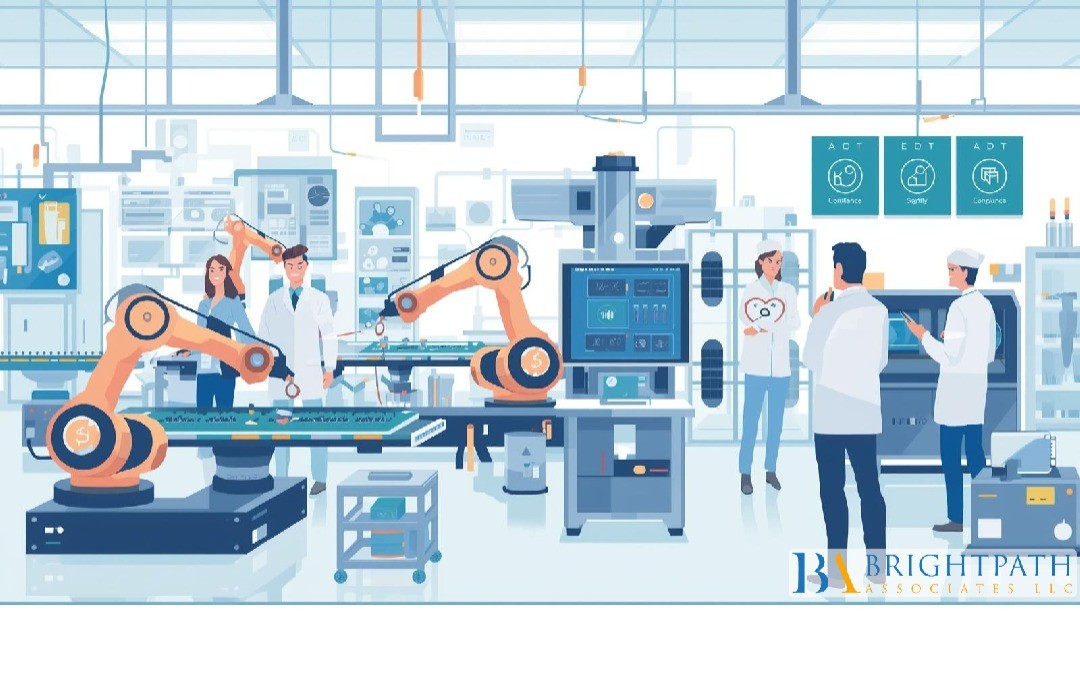
Automation as a Strategic Imperative in Medical Device Innovation
Automation has become a defining force in #MedicalDevice innovation, reshaping how products are designed, manufactured, validated, and commercialized. As medical device companies face mounting pressure to reduce costs, accelerate time to market, and comply with increasingly stringent regulatory standards, automation is no longer optional.
For small to mid-sized medical device organizations, automation represents a powerful lever for scalability and competitiveness. However, its successful implementation depends heavily on leadership capable of aligning technology adoption with regulatory compliance, risk management, and long-term growth strategy.
Operational Efficiency and the Rise of Intelligent Automation
Automating medical device processes has delivered measurable gains in efficiency across manufacturing, quality assurance, and clinical data management. Industry benchmarks indicate that automation-driven manufacturing environments can reduce production errors by more than 30 percent while improving throughput and consistency. Medical device robotics and AI-enabled inspection systems are increasingly used to enhance precision, reduce human error, and support compliance with global regulatory requirements.
Beyond manufacturing, automation is transforming clinical data collection, post-market surveillance, and medical device risk management. Automated data analytics platforms enable faster identification of safety signals and performance trends, strengthening regulatory readiness and product reliability. These advances, however, demand leadership that understands both the technological and compliance implications of automation.
Regulatory Complexity and Automation Readiness
Medical device regulatory requirements continue to evolve, placing increased responsibility on #ExecutiveLeadership. Automation must be implemented within tightly controlled frameworks that align with global regulatory standards, cybersecurity protocols, and data integrity requirements. Medical device cybersecurity, in particular, has become a critical area of focus as connected and software-driven devices expand across global markets.
From 2023 onward, regulatory bodies have intensified scrutiny around software validation, automated decision-making, and AI-driven clinical tools. As a result, executives overseeing automation initiatives must balance innovation with regulatory discipline. Leaders without experience in regulated automation environments often struggle to scale efficiently, exposing organizations to compliance risk and delayed approvals.
Automation and Medical Device Commercialization
Automation is also reshaping medical device commercialization strategies. Automated supply chains, predictive demand planning, and digitally integrated sales operations are enabling faster and more reliable market entry. For companies pursuing medical device international expansion, automation provides the infrastructure needed to support multi-market regulatory compliance and operational consistency.
However, commercialization success increasingly depends on leadership that can integrate automation across functions rather than treating it as a siloed operational upgrade. Executives must coordinate R&D, manufacturing, regulatory affairs, and strategic partnerships to ensure automation investments translate into commercial advantage.
Leadership Talent Shortages in an Automated Landscape
Despite rapid technological advancement, leadership talent shortages remain a significant constraint across the medical device industry. While demand for automation expertise has grown, the supply of executives who combine medical device innovation experience with operational and regulatory leadership remains limited.
Workforce data suggests that more than half of medical device companies report difficulty filling senior leadership roles related to #DigitalTransformation and automation. Small to mid-sized firms are disproportionately affected, as they compete with large multinational organizations for the same pool of experienced leaders. Without the right leadership, automation initiatives risk underperformance, cost overruns, or regulatory setbacks.
Evolving Executive Role Expectations
Executive roles in medical device companies have evolved significantly in response to automation. Traditional leadership profiles focused on product development or operations are no longer sufficient. Today’s executives must oversee complex automation ecosystems that include AI-driven decision tools, robotic manufacturing systems, cybersecurity frameworks, and global compliance models.
For example, leaders responsible for medical device AI must understand algorithm governance, data ethics, and regulatory validation. Executives overseeing medical device strategic partnerships must evaluate technology vendors and automation partners while protecting intellectual property and ensuring regulatory alignment. This expansion of responsibility has raised the bar for executive hiring and increased the consequences of misaligned leadership appointments.
Recruitment Challenges from 2023 to 2025
Between 2023 and 2025, recruitment practices in the medical device sector have struggled to keep pace with automation-driven change. Traditional hiring approaches often fail to identify leaders capable of managing cross-functional automation initiatives in regulated environments. As automation becomes central to competitive strategy, leadership vacancies have grown more disruptive.
Hiring cycles for senior roles have lengthened, and leadership attrition has increased as executives face growing performance pressure. Candidates are also more selective, seeking organizations with clear #AutomationRoadmaps, strong governance structures, and long-term growth potential. These dynamics have elevated executive hiring from an operational task to a board-level priority.
Executive Search Recruitment as a Strategic Enabler
#ExecutiveSearchRecruitment has emerged as a critical solution to leadership challenges in automated medical device environments. By focusing on targeted, industry-specific talent mapping, executive search recruitment enables organizations to access leaders with proven experience in medical device automation, regulatory compliance, and commercialization.
Unlike transactional recruitment models, executive search recruitment emphasizes strategic alignment, leadership adaptability, and long-term value creation. This approach is particularly valuable for medical device companies integrating AI, robotics, and advanced data systems into their core operations. Executive search partners bring market insight, confidentiality, and rigorous evaluation—essential elements when leadership decisions directly influence regulatory outcomes and investor confidence.
Leadership Alignment and Strategic Partnerships
Strong leadership is also essential for managing medical device strategic partnerships that support automation initiatives. As companies collaborate with technology providers, contract manufacturers, and digital health partners, executives must ensure alignment across operational goals, compliance standards, and commercial objectives.
Leadership gaps often lead to fragmented partnerships, integration failures, and missed growth opportunities. In contrast, well-aligned executives enable organizations to leverage automation as a platform for innovation, international expansion, and sustainable growth.
Conclusion: Automation Success Begins with Leadership
Automating medical device processes offers transformative potential for efficiency, quality, and scalability. However, technology alone is not sufficient. Between 2023 and 2025, the organizations that succeed will be those that pair automation investments with strong, forward-thinking leadership.
For C-suite executives and founders of small to mid-sized medical device companies, addressing leadership talent shortages is essential to realizing the full value of automation. Executive search recruitment provides a strategic pathway to securing leaders capable of navigating innovation, regulation, and commercialization in an increasingly #AutomatedIndustry. Ultimately, the future of medical device efficiency will be shaped not just by machines, but by the leaders guiding them.
Find your next leadership role in Medical Devices Industry today!
Stay informed with the latest insights on Medical Devices Industry!