
Introduction
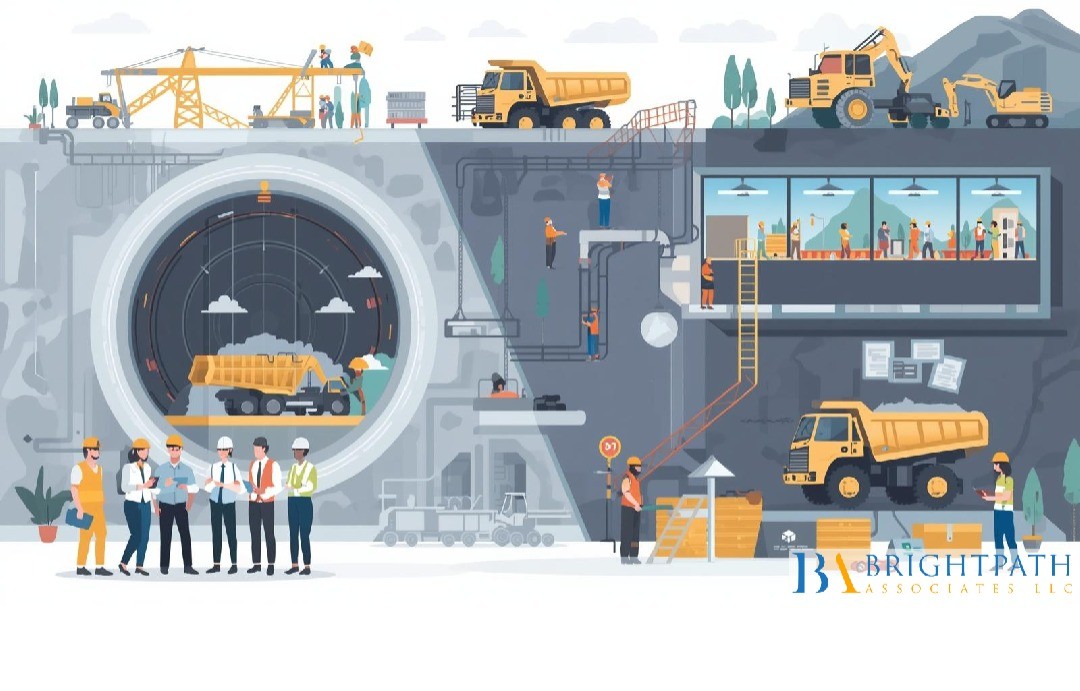
The mining and #MetalsSector stands at a pivotal crossroads. Global demand for critical minerals continues to rise, driven by infrastructure expansion, renewable energy systems, and advanced manufacturing. At the same time, the industry faces mounting workforce shortages that threaten productivity, safety, and long-term competitiveness. For small to mid-sized metal and mining companies, attracting skilled trades and securing experienced executive leadership has become a strategic imperative rather than an operational afterthought.
Metals industry trends indicate growing pressure on ore extraction, metallurgy, and metal processing operations to deliver higher output while adhering to increasingly stringent sustainability and safety standards. Skilled electricians, heavy equipment operators, maintenance technicians, metallurgists, and process engineers remain in short supply. Simultaneously, leadership talent capable of navigating regulatory complexity, digital transformation, and investor expectations is becoming increasingly scarce. The convergence of operational and executive talent gaps requires a cohesive and forward-looking recruitment strategy.
Structural Labor Gaps and Operational Risk
A significant portion of the mining workforce is approaching retirement age, creating a knowledge vacuum across critical technical roles. Experienced professionals in metallurgy and processing often possess decades of tacit expertise that cannot be quickly replaced. When seasoned supervisors and engineers exit the workforce without structured succession planning, companies face increased downtime, reduced productivity, and heightened safety risk.
Competition for skilled trades has intensified across industries. Construction, energy, manufacturing, and logistics sectors frequently target the same technical talent pools. For mining operations, this competition translates into higher recruitment costs and prolonged vacancy periods. Delays in filling positions can disrupt ore extraction schedules, impact metal processing throughput, and erode profit margins.
Beyond operational roles, the shortage extends to executive leadership. Chief operating officers, mine managers, and technical directors are expected to oversee increasingly complex operations while integrating sustainability mandates and digital transformation initiatives. The limited supply of such multifaceted leaders places additional strain on small and mid-sized firms competing against larger global mining corporations.
Mining Technology and the Changing Skill Landscape
Mining innovation technology is reshaping traditional workforce requirements. Automation, remote monitoring systems, predictive maintenance platforms, and AI-driven geological modeling tools are redefining operational efficiency. Autonomous haul trucks, drone-based site inspections, and advanced mineral recovery systems improve productivity while reducing safety risks.
However, these advancements demand new competencies. Technicians must be trained in digital diagnostics and data interpretation. Engineers must understand software integration alongside traditional metallurgy principles. Leaders must possess strategic insight into both mining technology implementation and #WorkforceUpskilling. The shift from manual processes to technology-enabled operations increases demand for digitally fluent managers capable of bridging engineering, IT, and operations.
For C-suite executives, technology adoption is not merely a capital expenditure decision; it is a workforce transformation initiative. Integrating automation into ore extraction and metal processing requires change management, training investment, and cultural alignment. Without leadership that understands the human implications of digital transformation, technology investments may fail to deliver projected returns.
Sustainable Mining and Regulatory Pressures
Sustainable mining has become central to stakeholder expectations. Environmental performance, community engagement, and responsible resource management now influence investor confidence and access to capital. Mining policy frameworks continue to evolve, requiring companies to demonstrate compliance with environmental standards, emissions controls, and land rehabilitation requirements.
These pressures elevate the role of executive leadership. Sustainability is no longer confined to compliance departments; it must be embedded within operational strategy. Leaders are expected to align ore extraction efficiency with environmental stewardship while maintaining profitability. The ability to balance economic performance with sustainable mining practices has become a defining characteristic of successful organizations.
In this context, executive hiring decisions carry long-term strategic implications. Boards and founders must evaluate candidates not only for operational expertise but also for their capacity to integrate sustainability into corporate governance. Leaders who understand regulatory complexity and stakeholder engagement strengthen an organization’s reputation and resilience.
Expanding Executive Role Expectations
The modern mining executive faces a multidimensional mandate. Operational oversight now intersects with technology adoption, ESG accountability, workforce development, and financial performance. Mine managers must ensure safety compliance while optimizing production targets. Technical directors must align metallurgy advancements with cost containment and sustainability objectives.
This expansion of responsibilities has intensified leadership shortages. Companies require executives who can interpret metals industry trends, assess geopolitical risks, and navigate volatile commodity markets. Attracting such talent is particularly challenging for smaller firms with limited brand visibility. Without #StrategicRecruitment efforts, they risk losing high-potential leaders to larger competitors offering global exposure and broader resources.
Furthermore, leadership instability can disrupt long-term projects and undermine workforce morale. Skilled trades professionals are more likely to remain with organizations that demonstrate clear direction and consistent management. Executive turnover erodes trust and complicates succession planning, amplifying operational vulnerabilities.
The Strategic Evolution of Recruitment Practices
Traditional hiring approaches are insufficient in addressing the complexity of modern mining talent challenges. Posting vacancies and relying solely on internal networks rarely yields the caliber of leadership required to navigate mining innovation technology, sustainable mining mandates, and regulatory oversight.
Mining and metals recruiters with specialized industry expertise play a critical role in identifying candidates who possess both technical depth and strategic perspective. Executive Search Recruitment has evolved into a consultative process that evaluates cultural alignment, adaptability, and long-term scalability. Rather than focusing exclusively on immediate vacancies, forward-looking companies are adopting proactive talent mapping strategies to anticipate future leadership needs.
Brightpath Associates supports metal and mining organizations in addressing these talent shortages through targeted Executive Search Recruitment services. By leveraging deep industry knowledge and extensive leadership networks, the firm helps companies secure executives capable of driving operational excellence, technology integration, and sustainability transformation. Strengthening leadership pipelines not only enhances day-to-day performance but also reinforces investor confidence and long-term competitiveness.
Building Resilient Talent Pipelines
Sustainable workforce strategies extend beyond executive appointments. Companies must invest in apprenticeship programs, technical training, and internal leadership development to cultivate the next generation of skilled trades professionals. Collaborations with technical institutes and community organizations can expand access to emerging talent pools.
However, building resilient pipelines requires executive sponsorship and strategic oversight. Leaders must champion workforce development initiatives and align them with long-term operational objectives. Succession planning, mentorship programs, and leadership branding initiatives enhance employer attractiveness in a competitive labor market.
#ExecutiveSearchRecruitment complements these efforts by ensuring that key leadership roles are filled with individuals capable of sustaining momentum. Organizations that treat recruitment as a strategic investment rather than a transactional necessity position themselves to navigate industry volatility with confidence.
Conclusion: Leadership as the Cornerstone of Mining’s Future
Attracting skilled trades in the mining industry demands more than competitive compensation packages. It requires cohesive leadership, forward-thinking workforce strategies, and deliberate investment in executive talent. As mining innovation technology transforms operations and sustainable mining expectations intensify, companies must align human capital strategies with evolving metals industry trends.
For small to mid-sized metal and mining enterprises, the path forward depends on securing leaders who can integrate ore extraction efficiency, metal processing optimization, regulatory compliance, and digital transformation under a unified strategic vision. By embracing specialized Executive Search Recruitment partnerships and strengthening long-term talent pipelines, organizations can mitigate leadership shortages and establish a durable competitive advantage in an increasingly complex and demanding industry landscape.
Introduction
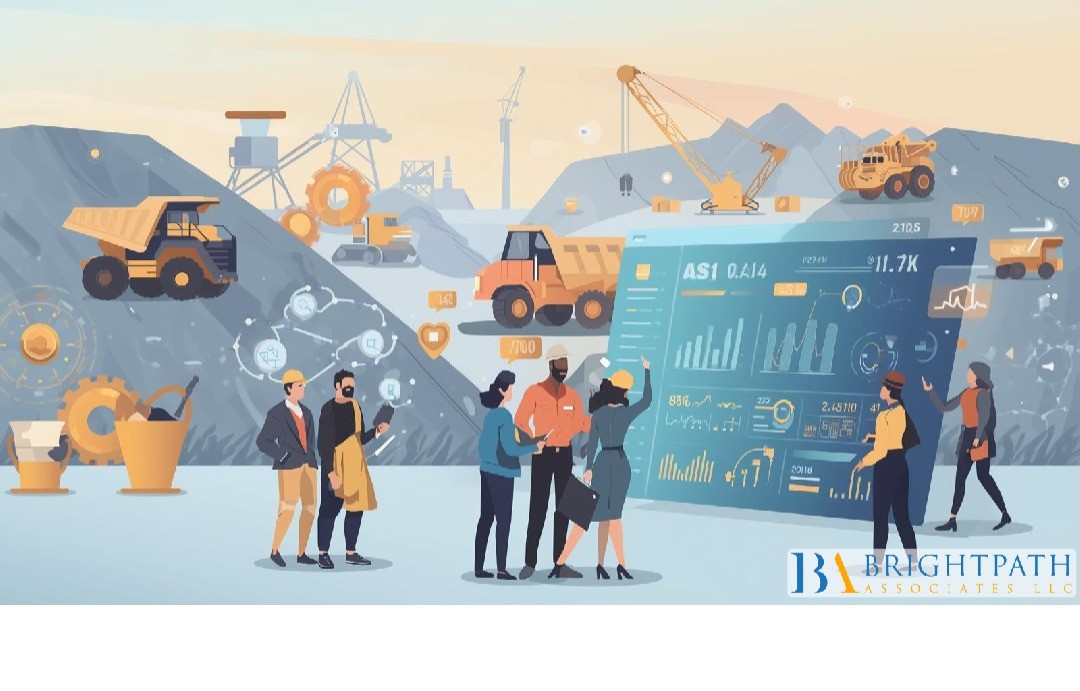
#ArtificialIntelligence has moved from experimentation to execution within the global mining ecosystem. For C-suite leaders and founders of small to mid-sized metal and mining companies, AI implementation is no longer a technology discussion—it is a strategic priority directly tied to productivity, cost efficiency, safety performance, and long-term competitiveness. Mining technology is evolving rapidly, and companies that fail to align leadership capability with digital transformation risk falling behind more agile competitors.
Operational data across the sector consistently demonstrates that AI-driven predictive maintenance can reduce equipment downtime by double-digit percentages. Automated drilling systems improve precision in ore extraction, reducing waste and improving yield. Advanced analytics platforms optimize metal processing by identifying micro-inefficiencies invisible to traditional monitoring systems. These measurable gains are reshaping metals industry trends and redefining what operational excellence means in modern mining environments.
However, while AI tools and platforms are increasingly accessible, the true differentiator lies in leadership readiness. Technology investment without executive capability leads to fragmented implementation and underutilized systems. This is where many small and mid-sized mining enterprises encounter their most significant barrier.
Leadership Capability as the Core Enabler of AI Success
AI implementation requires more than installing sensors, analytics dashboards, or automation equipment. It demands leaders who understand both traditional metallurgy principles and modern data-driven decision frameworks. Executives must interpret algorithm-generated insights, integrate them into production planning, and align them with financial objectives.
Many legacy leadership teams possess deep expertise in geology, metallurgy, and operational management but limited exposure to digital transformation strategy. The modern mining executive, however, must combine domain knowledge with technological literacy. They must oversee data governance, cybersecurity protocols, and AI vendor partnerships while maintaining operational continuity.
The challenge is compounded by a widening leadership talent shortage. Experienced digital transformation leaders are highly sought after not only within mining but also in renewable energy, advanced manufacturing, and industrial technology sectors. As competition intensifies, mining and metals recruiters report longer hiring cycles and increased compensation demands for executives capable of leading AI-driven change.
For smaller mining companies operating with leaner margins, a misaligned hire can delay innovation strategies and compromise capital efficiency. The stakes are therefore exceptionally high.
Sustainable Mining and AI-Driven Operational Excellence
#SustainableMining has evolved from a regulatory requirement to a strategic differentiator. Investors and policymakers increasingly prioritize environmental accountability, resource optimization, and transparent reporting. AI systems now enable real-time monitoring of emissions, energy consumption, water usage, and waste management.
Predictive geological modeling improves ore extraction accuracy, reducing unnecessary excavation and environmental disturbance. Smart ventilation systems in underground operations dynamically adjust airflow, significantly reducing energy usage. AI-enabled drone surveys enhance land rehabilitation planning and compliance tracking.
Yet implementing these systems requires executives capable of translating sustainability objectives into measurable operational frameworks. Leaders must understand mining policy, ESG reporting standards, and the integration of AI-driven data into compliance documentation. Without this cross-functional capability, technology investments remain siloed and fail to deliver strategic value.
The intersection of sustainable mining, mining technology, and governance has elevated leadership expectations across the board. The modern executive must think beyond production metrics and incorporate environmental and digital intelligence into every strategic decision.
Evolving Executive Roles in a Digitally Transformed Industry
Traditional executive structures within mining organizations are undergoing transformation. The Chief Operating Officer role now demands fluency in automation platforms and predictive analytics. Many firms are introducing Chief Digital Officers or Heads of Innovation to oversee mining innovation strategies. Sustainability Directors increasingly require data analytics expertise to manage ESG performance indicators.
Metal processing facilities provide a strong example of this evolution. AI-powered quality control systems analyze metallurgical consistency in real time, minimizing defects and maximizing output. Predictive maintenance reduces mechanical failures and extends asset lifespan. Executives overseeing these functions must understand how to interpret data outputs and convert them into actionable improvements.
Capital allocation decisions have also grown more complex. AI infrastructure investments require careful evaluation of return on investment, operational risk mitigation, and scalability. Boards expect executives to present data-backed business cases that justify digital expenditures. Leaders must balance short-term profitability pressures with long-term technological competitiveness.
This expanded skill requirement has intensified demand for specialized Executive Search Recruitment solutions that understand both mining fundamentals and digital transformation imperatives.
The Rising Importance of Specialized Mining and Metals Recruiters
Generic recruitment strategies are increasingly insufficient in addressing the complex talent needs of the mining sector. Identifying executives who combine metallurgy expertise with AI implementation experience requires deep industry knowledge and targeted search methodologies.
Mining and metals recruiters must evaluate more than traditional operational credentials. They assess digital literacy, innovation leadership, adaptability, and cross-functional collaboration skills. Executives must demonstrate the ability to lead cultural transformation as AI systems reshape workflows and workforce dynamics.
Resistance to automation remains a common challenge at operational levels. Effective leaders address these concerns through transparent communication and workforce upskilling initiatives. They position AI as an enhancement tool that improves safety and precision rather than as a workforce replacement mechanism.
#StrategicRecruitment partnerships have therefore become essential. Companies that invest in specialized executive search processes reduce the risk of costly misalignment and accelerate digital adoption timelines.
Building Competitive Advantage Through Strategic Talent Acquisition
Small to mid-sized mining enterprises often assume that AI leadership challenges primarily affect multinational corporations. In reality, smaller firms may feel the impact more acutely due to limited internal succession pipelines. However, these organizations also possess an advantage: agility. With the right leadership, they can pilot AI initiatives more quickly and scale successful programs without bureaucratic delays.
Securing such leadership requires a proactive approach. Rather than waiting for vacancies to arise, forward-thinking boards develop long-term talent strategies aligned with mining innovation strategies. They assess future skill requirements and engage #ExecutiveSearchRecruitment partners to identify high-impact leaders before gaps become critical.
Brightpath Associates supports mining and metals companies by aligning executive hiring strategies with industry transformation demands. By focusing specifically on leadership challenges within technical and industrial sectors, the firm helps organizations secure executives capable of integrating AI, sustainable mining principles, and operational excellence into cohesive growth strategies.
Strategic recruitment is no longer a reactive function. It is a competitive lever that determines whether AI investments translate into measurable performance improvements.
Governance, Risk, and the Future of AI in Mining
AI governance has become a board-level responsibility. Data security, algorithm transparency, and operational resilience must be carefully managed. Mining companies handle sensitive geological and operational data that require robust cybersecurity frameworks. Executives must establish governance models that protect intellectual property while ensuring regulatory compliance.
Failure to address these concerns exposes companies to reputational damage and financial penalties. Conversely, organizations that implement strong AI governance frameworks build investor confidence and operational resilience.
As global demand for critical minerals continues to rise, driven by infrastructure development and energy transition initiatives, the integration of AI into exploration, ore extraction, and metal processing will accelerate further. Competitive differentiation will increasingly depend on leadership vision and execution capability.
AI implementation in mining is not solely a technology initiative; it is a leadership strategy. For C-suite executives and founders of small to mid-sized metal and mining enterprises, the imperative is clear. Align digital investments with forward-thinking executive talent. Engage specialized mining and metals recruiters who understand the evolving landscape. Treat Executive Search Recruitment as a strategic investment rather than an administrative function.
The future of mining innovation strategies will not be determined by algorithms alone. It will be shaped by the leaders who envision transformation, guide cultural adaptation, manage risk, and translate digital capability into sustainable competitive advantage.
Find your next leadership role in Metal and Mining Industry today!
Stay informed with the latest insights on Metal and Mining Industry!