
Introduction
Agriculture today sits at the nexus of rising demand, climate volatility, and tightening resource constraints. In this context, #AgriculturalTechnology is reshaping the sector from end to end by embedding data, automation, and intelligence into every stage of Food production. The modern farm is no longer a purely mechanical operation; it is an integrated, digital enterprise in which sensors, software, genetics, and robotics function as a cohesive system. The goal is not just to grow more, but to grow smarter—stabilizing yields, managing risk, optimizing inputs, and advancing Agricultural sustainability while aligning with markets that demand transparency and lower environmental footprints.
The Industrial AgTech Stack: From Sensing to Decision Intelligence
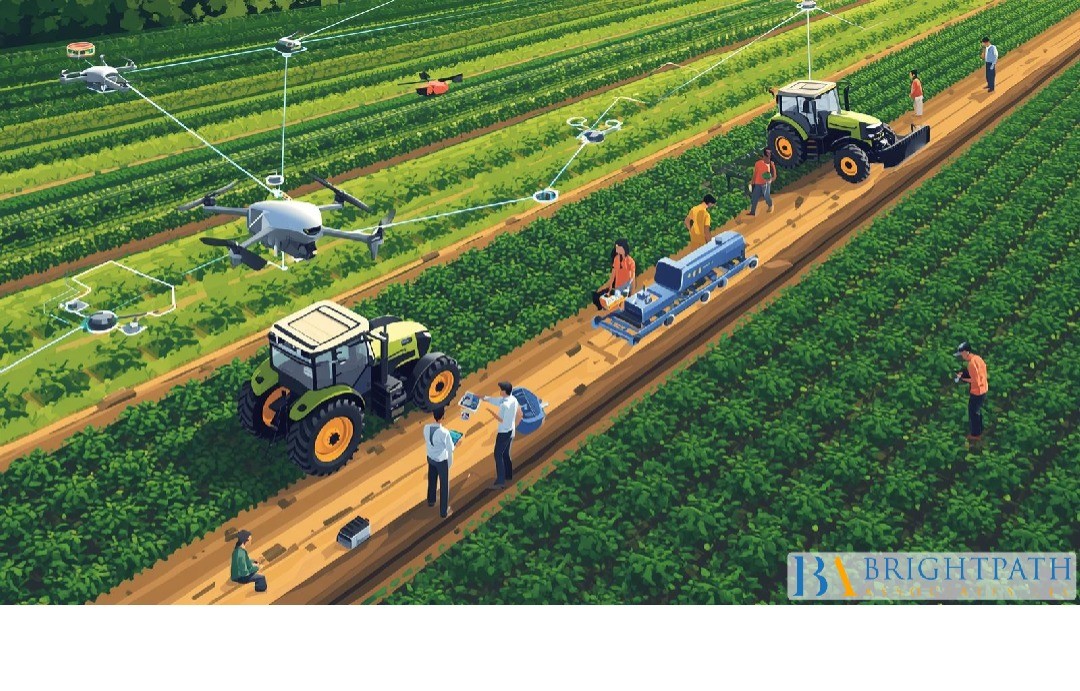
The industrial architecture of Agricultural technology begins with perception. Satellite and drone imagery, in-field IoT devices, machine vision on tractors and implements, and livestock wearables generate continuous streams of agronomic and operational data. Edge computing filters and fuses these observations in real time, while cloud platforms handle long-horizon modeling, benchmarking, and multi-season analytics. On top sits the decision layer, where AI, simulation, and prescriptive models convert data into timely recommendations. This is where Digital Farming delivers its value: actionable insights that guide when to plant, how to irrigate, where to spray, and when to harvest. The difference between scattered devices and an effective system is interoperability. When machines, sensors, and Farm management software exchange data seamlessly, the entire operation can pivot from reactive to proactive control.
Precision Agriculture: Managing Variability for Measurable Gains
#PrecisionAgriculture replaces uniform field treatment with site-specific management. Instead of applying seed, fertilizer, and crop protection evenly, operators tailor rates to the unique characteristics of each zone within a field. High-accuracy positioning ensures implements follow exact paths, remote sensing highlights nutrient stress and disease pressure, and yield maps reveal hidden patterns driven by soil texture, drainage, and topography. The economic logic is direct. Inputs are concentrated where they generate the highest return, and they are reduced in areas of weak response, lowering costs without sacrificing performance. Over time, the compilation of multi-year data clarifies which zones are structurally constrained and which simply fluctuate with weather, guiding more durable agronomic strategies. The core constraint is not hardware availability but organizational capability: the agronomy, data literacy, and operational discipline required to convert maps and models into decisions that consistently pay off.
Automation and Robotics: Precision at Operational Speed
Automation extends the benefits of Precision agriculture from planning to execution. Guidance systems and autonomous tractors deliver consistent operations through long work windows, reducing fatigue and labor bottlenecks. Machine vision enables intelligent sprayers that differentiate crop from weed, precise mechanical weeding systems that curtail herbicide dependence, and harvest-assist robots for specialty crops that demand delicacy. Unmanned aerial systems accelerate scouting and enable spot treatments that respect economic thresholds. The operational value is amplified by traceability: each pass is logged, each intervention is recorded, and each outcome is fed back into models that refine subsequent actions. Industrial deployment requires reliability in rugged environments, robust safety protocols, and streamlined service. Electrification promises torque control and lower maintenance, but charging logistics and duty cycles must match seasonal workflows to avoid downtime during critical windows.
Biological and Genetic Advances: Targeted Improvement at Scale
#AgriculturalInnovation increasingly pairs mechanization with biology. Genomic selection accelerates breeding by predicting performance from DNA markers, shortening the time to deliver hybrids and varieties with higher yield potential, better quality, and enhanced stress tolerance. Precision gene editing allows focused trait development, supporting crops that are more efficient with water and nutrients and more resilient to heat and disease. Biological inputs—such as inoculants, biopesticides, and biostimulants—augment plant defenses, root architecture, and nutrient availability. These tools deliver best results within integrated systems that align genetics, nutrition, and protection. Repeatable performance across geographies, transparent trial data, and clear stewardship practices are essential to mainstream adoption and to align with Sustainable farming objectives.
Controlled Environments and Smarter Water Use
Controlled environment agriculture compresses climatic uncertainty by managing light, temperature, humidity, CO2, and nutrients with precision. Hydroponic and aeroponic systems achieve high-density output with significantly lower water footprints, while computer vision and sensor networks automate monitoring and fertigation. The capital intensity can be offset by reliable year-round supply, quality uniformity, and proximity to urban markets. Profitability hinges on energy strategy, crop selection, and operations discipline. In open fields, precision irrigation advances the same philosophy. Drip and micro systems, guided by soil moisture sensing and evapotranspiration models, reduce waste and curtail nutrient leaching. Variable-rate irrigation adjusts water by zone to accommodate soil and topographic differences, improving resilience under heat and drought. These practices not only support Agricultural sustainability but also protect margins by reducing input volatility and stabilizing yields.
The Rise of Digital Farming Platforms and Farm Management Software
#DigitalFarming consolidates agronomic, operational, and business workflows into unified platforms. Farm management software integrates equipment telematics, input inventories, labor scheduling, compliance documentation, and financials. Weather-driven disease forecasting and pest models enable targeted protection rather than blanket spraying. Digital twins simulate alternative plans before committing resources, and harvest logistics modules coordinate trucks, storage, and processing to minimize bottlenecks. For livestock, vision analytics and wearables detect early health anomalies, improving welfare and productivity while lowering veterinary costs. Trust and usability are non-negotiable. Models must present recommendations with agronomic rationale and quantified uncertainty. Data governance—who owns, accesses, and benefits from data—must be explicit. Modular design allows producers to start with simple monitoring and scale into prescriptive autonomy as evidence accumulates and confidence grows.
Sustainability as a Performance Metric and an Investment Thesis
Sustainability is no longer a side program; it is a core operational and financial metric. Precision nitrogen management reduces emissions and runoff, conservation tillage and cover crops enhance soil structure and carbon storage, and optimized irrigation saves both water and energy. These practices improve resilience to heat and moisture stress while supporting market access for buyers with stringent sustainability criteria. This operational reality is increasingly mirrored by capital flows in sustainable agriculture investment. Investors prioritize technologies and operating models that deliver measurable environmental outcomes alongside stable returns. Measurement, reporting, and verification frameworks rely on sensors, spatial analytics, and statistically robust models anchored in field data. Farms that document resource efficiency and risk reduction strengthen their credit profiles and expand access to performance-linked finance, aligning on-farm economics with broader sustainability goals.
Organic Farming and Integrated Systems Thinking
#OrganicFarming occupies a vital segment of the market, with consumers rewarding transparency, ecosystem health, and reduced synthetic inputs. Within Organic systems, Agricultural technology can still play a decisive role. Soil mapping informs rotations and cover crop strategies, machine vision guides mechanical weed control, and decision support optimizes compost and organic nutrient applications. While constraints on inputs differ from conventional systems, the data discipline and operational rigor of Precision agriculture remain powerful levers for efficiency and consistency. The future lies in integrated systems thinking in which Organic and conventional operations both harness Digital Farming and Farm management software to refine practices, document outcomes, and communicate value to buyers.
Supply Chain Digitization: Traceability, Quality, and Market Reach
Food production does not end at the farm gate, and neither does Agricultural technology. Sensors in storage and transport maintain cold chains and reduce spoilage, while digital traceability systems capture provenance, input histories, and handling events that streamline compliance. For premium segments, verified traceability underpins differentiation and pricing power. Digital marketplaces reduce transaction friction for inputs and crop sales, improving price transparency and shortening cycle times. Financial technology complements these advances with invoice factoring, equipment leasing, input credit, and parametric weather insurance. When these instruments integrate with agronomic data, risk is modeled more accurately, improving access to capital for both large operations and smallholders.
Talent, Capability, and Executive Search Recruitment
As farms and agribusinesses evolve into data-driven enterprises, talent becomes a strategic differentiator. Operators require agronomists fluent in data analytics, technicians adept with sensors and robotics, and managers who can orchestrate cross-functional change. #ExecutiveSearchRecruitment plays a critical role in sourcing leaders who can bridge agronomy, operations, and technology commercialization. Organizations that align incentives, invest in continuous training, and build interdisciplinary teams will translate Agricultural innovation into consistent field-level performance. The right leadership accelerates adoption, ensures return on investment, and embeds a culture of evidence-based decision making across the production cycle.
Economics and Adoption: Turning Pilots into P&L
Producers evaluate technology through a pragmatic lens that includes reliability during peak windows, service responsiveness, integration complexity, and total cost of ownership. Business models that reduce upfront friction—such as equipment subscriptions, robotics-as-a-service, and seasonally aligned payment schedules—speed adoption. Bundled offerings that combine hardware, software, agronomic support, and maintenance reduce integration risk and clarify accountability. For small and mid-sized producers, last-mile enablement is decisive. Mobile-first tools, localized service networks, shared equipment models, and advisory services tuned to bandwidth and language constraints convert potential into realized value. The path from pilot to profit is paved with disciplined measurement, transparent ROI tracking, and iterative refinement based on operational feedback.
Standards, Interoperability, and Risk Management
Industrial efficiency scales when machines and software speak a common language. Open data standards reduce lock-in and integration costs, allowing mixed-brand fleets and multi-vendor stacks to function as a coherent system. Cybersecurity and #DataPrivacy frameworks protect sensitive operational information and preserve trust across partnerships. Alongside digital risk, farms must manage operational hazards such as sensor drift, model overconfidence, connectivity gaps, and supply chain disruptions. Designing for graceful degradation, instituting calibration routines, maintaining human-in-the-loop oversight for critical decisions, and building supplier redundancy are practical safeguards. These measures align with Sustainable farming principles by embedding resilience into daily operations and strategic planning.
Conclusion
The trajectory of Agricultural technology is toward deeply integrated systems in which genetics, equipment, sensors, and software operate in concert. More autonomy will move to the field edge, more AI will embed directly into implements, and more closed-loop control will link observations to immediate adjustments. Sustainability metrics will be treated as core key performance indicators validated by robust measurement systems, aligning operational decisions with market expectations and regulatory frameworks. Capital will increasingly reward demonstrable performance, further accelerating sustainable agriculture investment into solutions that deliver both productivity and resilience.
In this emerging landscape, the human element remains central. Technology’s purpose is to amplify expert judgment, reduce uncertainty, and document value. Farms and agri-food companies that cultivate capability, recruit multidisciplinary leaders through effective Executive Search Recruitment, and maintain rigorous operations will convert Agricultural innovation into durable competitive advantage. The true promise of this transformation is a Food production system that is more profitable, more predictable, and more compatible with the ecological limits of our world. By uniting Precision agriculture, Digital Farming, and robust Farm management software within a culture of continuous improvement, the sector can fulfill the mandate of Agricultural sustainability: to create more value with fewer resources and lower risk, today and for generations to come.
Find your next leadership role in Farming Industry today!