
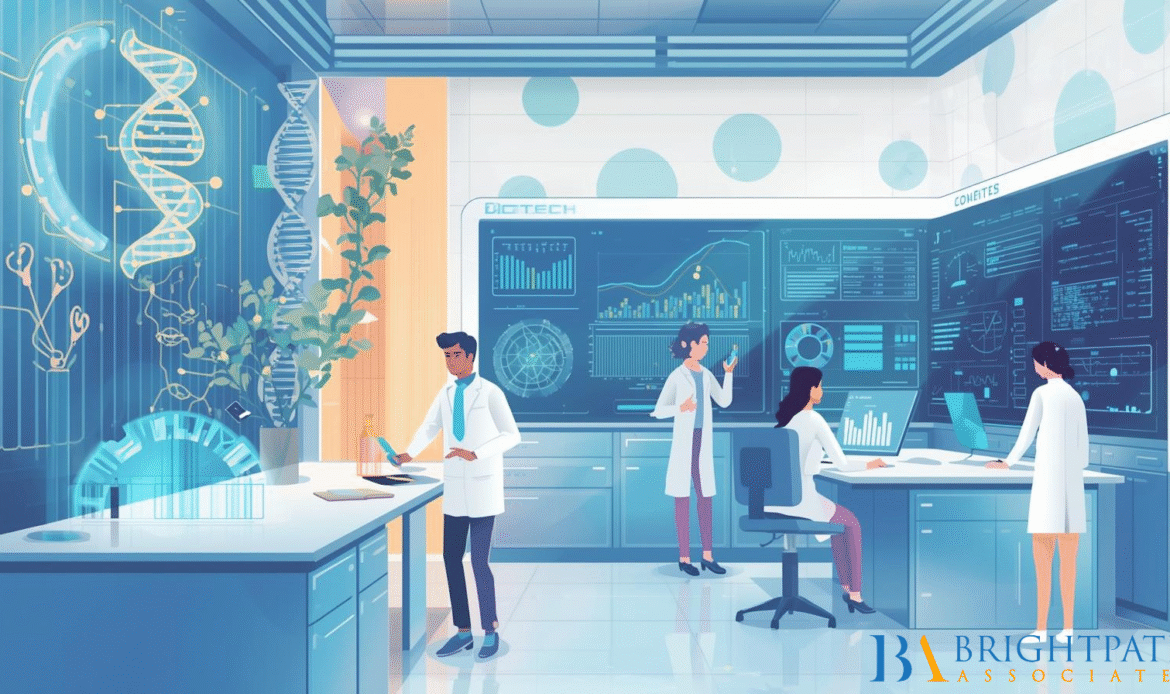
Introduction to Biotech Innovation
Biotechnology continues to transform the healthcare and life sciences landscape with groundbreaking research, innovative therapy models, and rapid advancements in genetic and #CellularTechnologies. Over the past decade, the biotech sector has emerged as a leader in global scientific progress, driving solutions for some of the world’s most complex medical challenges. From precision medicine and genomics to synthetic biology and therapeutic engineering, biotechnology is reshaping how societies prevent, diagnose, and treat disease. The growing importance of biotech innovation stems from its ability to fuse advanced science with digital technologies, delivering scalable and impactful results across multiple medical domains. Biotech R&D is no longer isolated to laboratory experimentation; it is an integrated ecosystem powered by interdisciplinary collaboration, modern analytics, artificial intelligence, and strategic leadership.
Innovation in biotechnology is also fundamental to industry progress, supporting the development of new therapeutics, enhancing clinical efficiency, and accelerating the drug discovery pipeline. As companies race to bring advanced treatments to market, the ability to innovate becomes a core competitive differentiator. Whether it involves refining established protocols or pioneering next-generation therapies, biotechnology remains at the center of global health innovation.
Leadership and Regulatory Trends in Biotech
One of the pressing challenges facing biotechnology today is the shortage of skilled leadership talent. As the industry expands and technologies become more sophisticated, the need for visionary executives with specialized scientific, operational, and strategic expertise is growing rapidly. Leadership talent shortages have a direct impact on biotech companies, slowing product development, weakening regulatory preparedness, and limiting growth potential. The demand for experienced professionals in regulatory affairs, clinical development, commercialization, and data science continues to rise, making strategic recruitment essential.
Role expectations for biotech leaders are evolving as well. Between 2023 and 2025, leadership requirements have shifted toward individuals capable of managing multidisciplinary teams, integrating advanced digital tools, and navigating global regulatory frameworks. Executives must now possess a deep understanding of scientific innovation, financial planning, operational scalability, and partnership development. This hybrid model of scientific and business acumen is redefining what it means to lead in the biotech sector.
Regulatory developments are also reshaping the industry. New policies around gene editing, AI-driven diagnostics, biosimilar approvals, and real-world data usage are influencing how companies conduct research and bring therapies to market. Regulatory bodies such as the FDA and EMA are modernizing pathways to accelerate approval while ensuring patient safety. However, these evolving standards increase the complexity of compliance, requiring biotechnology firms to remain agile, informed, and well-staffed with regulatory experts.
The Role of AI and Machine Learning
#ArtificialIntelligence and machine learning have become indispensable tools in biotech R&D. The integration of AI into research environments accelerates discovery, improves predictive capabilities, and enables scientists to analyze large, complex datasets with unprecedented accuracy. AI is particularly valuable in early-stage drug discovery, where algorithms can identify promising drug candidates, predict molecular interactions, and simulate biological responses. By reducing trial-and-error experimentation, AI significantly cuts development timelines and costs.
Machine learning enhances data analysis in biotech projects by uncovering patterns that would otherwise be impossible to detect manually. ML models support genomic sequencing, biomarker identification, patient stratification, and the interpretation of real-world clinical data. The use of ML-powered predictive analytics helps companies make more informed decisions and optimize their R&D strategies.
Several companies have successfully implemented AI in their biotech operations. From AI-driven platforms that predict therapeutic targets to machine learning systems that design personalized treatment plans, these case studies demonstrate the transformative power of digital innovation. Organizations adopting AI are achieving faster research outcomes, improved efficiency, and enhanced clinical success rates, positioning themselves as industry leaders.
Innovations in Gene and Cell Therapy
Gene therapy has experienced remarkable advancement in recent years, fueled by innovations such as CRISPR gene editing, viral vector optimization, and in vivo gene delivery. These breakthroughs provide new pathways to treat genetic disorders by correcting mutations at their source. Recent developments have expanded the potential of gene therapy beyond rare diseases, with promising applications in oncology, metabolic disorders, and infectious diseases. The ability to precisely manipulate DNA has brought the industry closer to long-term cures that were once thought impossible.
Cell therapy innovations have also reshaped modern healthcare. Techniques such as CAR-T cell therapy, stem cell engineering, and induced pluripotent stem cells (iPSCs) are giving rise to personalized medicine models that adapt treatment to individual patients. Advances in cell expansion technologies, manufacturing platforms, and clinical protocols have made these therapies more scalable and accessible.
However, gene and cell therapy development continues to face regulatory challenges. Market readiness requires strict adherence to safety protocols, batch consistency, and long-term monitoring. Approval pathways for these therapies are complex due to their biological variability and the need for extensive clinical validation. Despite these hurdles, increasing regulatory support and scientific progress are paving the way for broader adoption in the near future.
Data Analytics Driving Biotech Success
#DataAnalytics has become a cornerstone of modern biotechnology, driving improvements in efficiency, accuracy, and innovation. By harnessing large datasets from clinical studies, genomic sequencing, laboratory experiments, and patient records, biotech companies gain valuable insights that refine their research directions. Advanced analytics tools support hypothesis generation, experimental design, and predictive modeling, making R&D workflows more informed and effective.
Big data plays a transformative role in drug discovery and development, helping organizations analyze molecular structures, identify therapeutic targets, and predict potential drug interactions. The integration of cloud computing, real-world evidence, and advanced statistical models enhances the depth and reliability of scientific research.
Numerous successful biotech projects have relied on data-driven decision-making. Whether improving clinical trial design, identifying new therapeutic areas, or accelerating regulatory approval, data analytics has proven essential in driving high-impact outcomes. Companies that effectively leverage data are setting new standards in innovation, efficiency, and competitiveness.
Biotech Venture Capital and International Expansion
Venture capital funding remains a major driver of biotech innovation, fueling early-stage research and supporting the development of high-risk, high-reward technologies. Recent trends show increased investment in gene therapy, AI-powered drug discovery, precision medicine, and synthetic biology startups. Investors are prioritizing companies that combine scientific innovation with strong leadership teams and scalable business models.
International expansion has also become essential for biotech companies seeking global market presence. Strategies include forming cross-border partnerships, securing international regulatory approvals, and establishing research collaborations with global institutions. While expanding globally offers significant opportunities, it also introduces challenges such as navigating diverse regulatory landscapes, securing international talent, and managing cross-market commercialization.
Despite these obstacles, international biotech markets offer growth potential in emerging regions where healthcare demand and innovation ecosystems are rapidly evolving.
Executive Search Recruitment in Biotech
#ExecutiveSearchRecruitment is critical in addressing the leadership gaps that hinder biotech progress. As the demand for specialized leaders increases, organizations require recruitment firms that understand the scientific, operational, and cultural complexities of the biotech ecosystem. Strategic recruitment helps companies secure executives who can manage advanced technologies, lead multi-disciplinary teams, oversee global regulations, and drive commercialization.
From 2023 to 2025, the landscape of executive hiring has shifted toward candidates with hybrid expertise—combining scientific depth, digital fluency, and strategic business leadership. Recruiters are also adopting new tools such as AI-driven talent analytics and global sourcing strategies to identify top-tier candidates.
Brightpath Associates plays a pivotal role in helping biotech companies overcome leadership challenges. By offering tailored executive search services and deep industry insight, Brightpath supports organizations in building leadership teams capable of driving innovation, achieving regulatory success, and guiding long-term growth.
Conclusion
Biotech R&D is advancing at an extraordinary pace, driven by innovations in gene therapy, cell therapy, AI, #DataAnalytics, and global collaboration. As regulatory environments evolve and technology reshapes the research landscape, the industry is poised for even greater breakthroughs in the coming years. Leadership remains a core component of this growth, and executive search recruitment is essential for building strong teams that can navigate complex challenges. With the right combination of innovation, strategic leadership, and global vision, biotechnology will continue to redefine the future of healthcare and scientific discovery.
Find your next leadership role in Biotechnology Industry today!
Stay informed with the latest insights on Biotechnology Industry!