
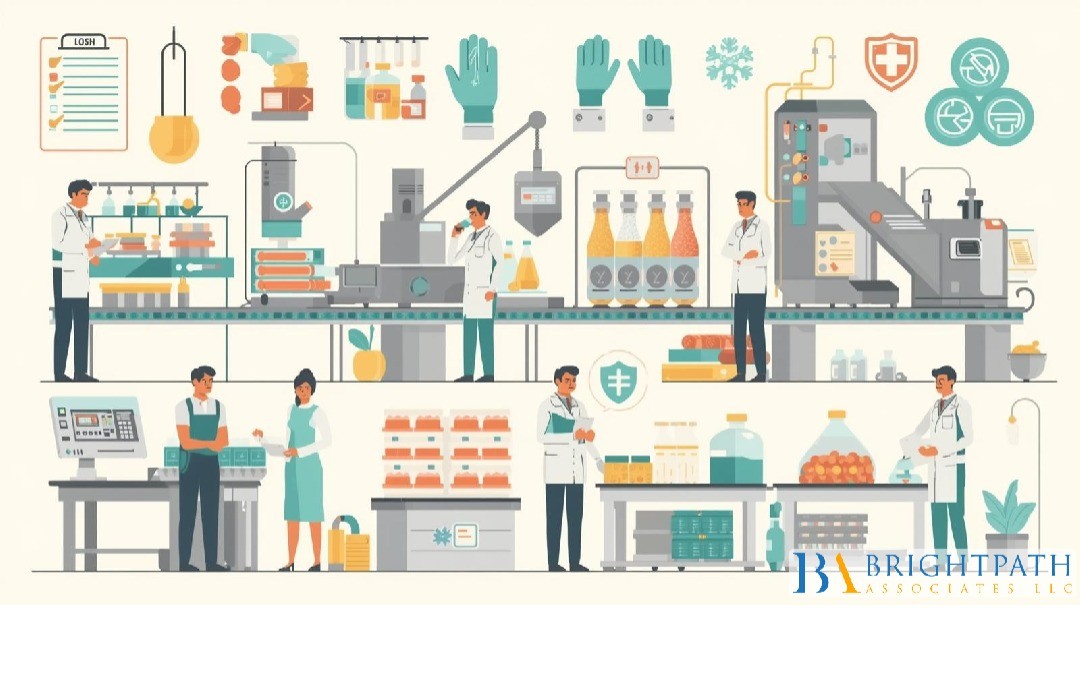
The Strategic Importance of Food Safety in a Rapidly Evolving Industry
#FoodSafety has moved far beyond regulatory compliance to become a core strategic priority for food production companies worldwide. Between 2023 and 2025, the global food production sector has experienced intensified scrutiny driven by stricter safety regulations, rising consumer awareness, digital traceability demands, and increased supply chain complexity. According to global food safety monitoring agencies, foodborne illness outbreaks continue to cost the industry billions annually through recalls, legal exposure, and brand erosion. For small to mid-sized food producers, the stakes are even higher, as operational missteps can threaten business continuity. Food safety excellence today is directly linked to growth strategy, investor confidence, and long-term competitiveness.
Industry Growth, Complexity, and Heightened Leadership Expectations
As food production growth accelerates—particularly in processed foods, ready-to-eat products, and private-label manufacturing—companies face mounting pressure to scale safely. Industry reports indicate that global food production volumes are expected to grow steadily through 2030, driven by population growth, urbanization, and changing consumption patterns. This growth introduces operational complexity across food production processing equipment, supplier networks, and compliance frameworks. Leadership teams are now expected to possess not only operational expertise but also deep understanding of food production safety certification, risk mitigation, and technology integration. The traditional plant manager or quality head role has evolved into a cross-functional leadership position requiring strategic foresight and crisis management capabilities.
Leadership Talent Shortages and the Food Safety Skills Gap
One of the most pressing challenges between 2023 and 2025 has been the shortage of experienced leadership talent in #FoodProductionManagement. Industry surveys consistently highlight a widening gap in senior professionals who can balance compliance, innovation, and operational efficiency. Many seasoned executives are retiring, while newer leaders often lack hands-on exposure to large-scale safety systems, regulatory audits, and multi-site operations. This leadership gap has resulted in delayed certifications, inconsistent safety cultures, and increased recall risks. For founders and boards, the inability to secure the right leadership talent is no longer a human resources issue—it is a strategic risk affecting brand trust and market expansion.
The Expanding Role of Technology in Food Production Safety
Technology has become a defining force in achieving food safety excellence. From AI-driven quality inspections to IoT-enabled monitoring of food production processing equipment, digital tools are transforming how safety risks are identified and controlled. Blockchain-enabled traceability systems now allow companies to track ingredients across the food production supply chain in real time, reducing response time during contamination events. However, technology adoption alone does not guarantee results. Leadership teams must understand how to align technology investments with food production business strategy, workforce training, and regulatory requirements. The most successful organizations are those led by executives who can translate innovation in food production into measurable safety and efficiency outcomes.
Regulatory Pressure and Certification as Competitive Differentiators
Food production safety certification has shifted from being a compliance requirement to a competitive differentiator. Certifications such as ISO 22000, FSSC 22000, and region-specific food safety standards increasingly influence retailer partnerships and export opportunities. Regulatory bodies worldwide have tightened enforcement, with higher penalties and more frequent audits. Executives are now accountable for #BuildingProactiveCompliance cultures rather than reactive inspection-driven systems. This shift has elevated demand for leaders with regulatory fluency and crisis readiness. Companies that fail to prioritize leadership in this area often struggle with delayed approvals, restricted market access, and reputational damage.
Supply Chain Vulnerability and the Need for Strategic Oversight
Recent years have exposed significant vulnerabilities in global food production supply chains. Disruptions caused by geopolitical tensions, climate volatility, and supplier consolidation have made supply chain resilience a board-level concern. Food safety risks increasingly originate upstream, requiring executives to maintain visibility beyond their own facilities. Leaders must now oversee supplier audits, risk assessments, and contingency planning as part of core food production management responsibilities. This expanded scope has reshaped executive role expectations, favoring candidates with end-to-end supply chain expertise and experience navigating uncertainty at scale.
Evolving Recruitment Practices in Food Production Leadership
Between 2023 and 2025, recruitment practices in the food production sector have undergone a strategic shift. Companies are moving away from transactional hiring toward long-term leadership acquisition aligned with growth and safety objectives. #ExecutiveSearchRecruitment has become essential as traditional hiring channels fail to surface candidates with niche expertise in food safety, operations, and digital transformation. Boards and founders increasingly recognize that leadership roles cannot be filled based solely on resumes or industry tenure. Instead, successful recruitment focuses on behavioral competence, crisis leadership, and the ability to embed safety excellence into organizational culture.
Executive Search as a Catalyst for Sustainable Safety Excellence
Executive search recruitment plays a critical role in addressing leadership shortages and ensuring food safety excellence. Specialized search partners bring deep market intelligence, access to passive leadership talent, and rigorous assessment methodologies tailored to food production environments. By aligning leadership capabilities with food production growth strategy and safety priorities, executive search enables organizations to build resilient management teams capable of navigating regulatory pressure, technological change, and operational risk. Firms such as Brightpath Associates operate at this intersection, supporting food production companies in securing executives who can drive safety-led growth while strengthening governance and accountability.
Aligning Leadership Strategy with Long-Term Business Outcomes
Achieving food safety excellence ultimately depends on leadership alignment with broader #BusinessStrategy. Executives must integrate safety objectives into innovation roadmaps, capital investments, and workforce development plans. Organizations that treat food safety as a leadership-driven value consistently outperform peers in operational stability and market trust. As industrial trends in food production continue to evolve, leadership quality will remain the defining factor separating reactive operators from future-ready enterprises.
The Road Ahead for Food Production Leaders
Looking forward, food production companies that invest in leadership excellence will be best positioned to adapt to regulatory evolution, technological disruption, and shifting consumer expectations. The period from 2023 to 2025 has made one reality clear: food safety is no longer a functional responsibility—it is a strategic leadership mandate. By prioritizing executive capability, embracing innovation, and strengthening recruitment practices through executive search expertise, food producers can achieve sustainable safety excellence while driving long-term growth and competitive advantage.
Find your next leadership role in Food Production Industry today!
Stay informed with the latest insights on Food Production Industry!