
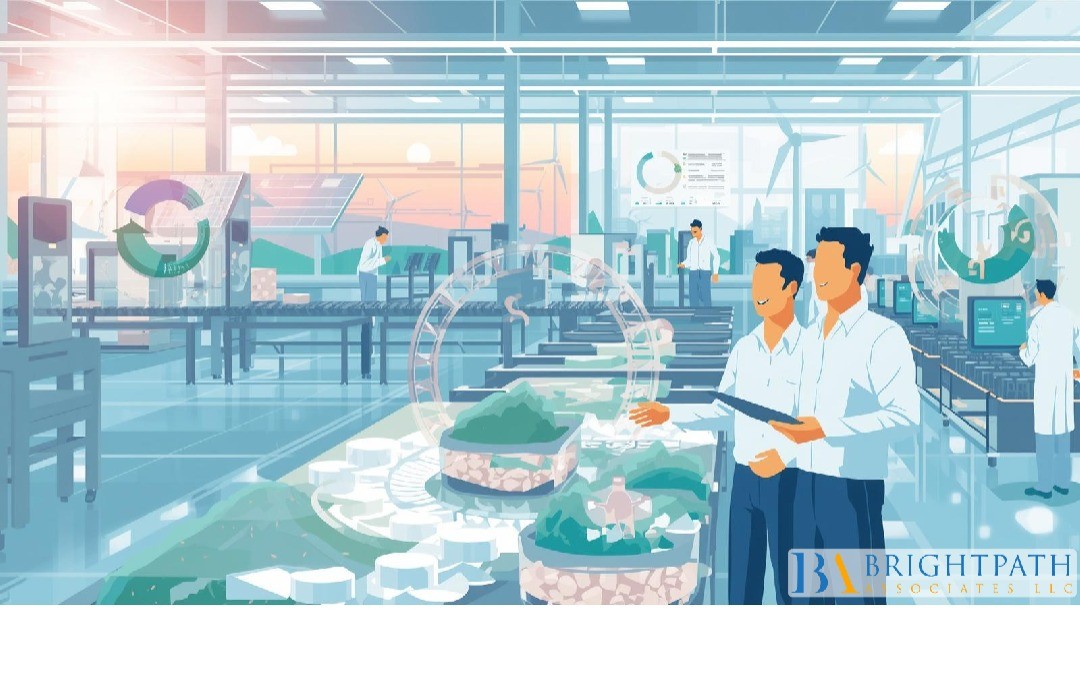
The Strategic Inflection Point in Plastics
The #PlasticsSector stands at a decisive moment in its evolution. As global demand patterns shift and regulatory scrutiny intensifies, small to mid-sized plastic companies must rethink how they position themselves for sustainable growth. The future of plastics manufacturing is no longer defined solely by production volume or cost efficiency; it is increasingly shaped by leadership capability, technological adaptation, supply chain resilience, and strategic foresight.
The global plastics market continues to represent hundreds of billions in economic value, supporting industries ranging from automotive and healthcare to consumer goods and electronics. However, growth is accompanied by heightened volatility. Raw material price fluctuations, environmental compliance requirements, and geopolitical uncertainties have made Plastics industry risk management a board-level priority. In this environment, executive leadership is not merely an operational necessity—it is a strategic asset that determines long-term competitiveness.
For C-suite executives and founders, the question is not whether transformation is necessary, but how to lead it effectively. Plastics manufacturing growth strategies now demand leaders who understand digitalization, sustainability frameworks, and complex Plastics industry supply chain management systems simultaneously. The convergence of these forces is redefining what effective executive leadership looks like in the sector.
The Evolving Competitive Landscape
The competitive dynamics of the plastics sector have grown more intense. Consolidation among larger players has created pressure on smaller and mid-sized firms to differentiate through innovation, niche specialization, and operational agility. Plastics industry competitive analysis reveals that companies investing in advanced manufacturing technologies and sustainability initiatives consistently outperform peers in profitability and market share growth.
Global demand remains robust in segments such as packaging, medical devices, and high-performance industrial components. At the same time, customer expectations have evolved. Buyers increasingly prioritize transparency, sustainable sourcing, and supply chain reliability. Plastics market expansion strategies must therefore account not only for geographic growth but also for evolving customer requirements and regulatory frameworks.
Companies that fail to anticipate these shifts risk stagnation. In contrast, those that align leadership vision with emerging market realities position themselves to capture new opportunities. Strategic partnerships within the Plastics industry innovation ecosystem—whether through joint ventures, R&D collaborations, or technology alliances—are becoming essential growth accelerators. These partnerships require executives capable of navigating complex stakeholder relationships and integrating external innovation into core operations.
Technology, Sustainability, and Operational Reinvention
Technology is reshaping every layer of #PlasticsManufacturing. Automation, data analytics, predictive maintenance, and advanced materials engineering are transforming production processes. Plastics manufacturing technology investment has become a decisive factor in determining cost efficiency, product quality, and responsiveness to market demands.
Industry research consistently shows that manufacturers leveraging smart factory technologies achieve higher productivity rates and reduced operational downtime. Digital twins, IoT-enabled equipment, and AI-driven quality control systems allow organizations to optimize performance while reducing waste. However, technology adoption without capable leadership often fails to deliver expected returns. Executives must bridge the gap between engineering teams, financial stakeholders, and strategic objectives.
Sustainability further amplifies the need for visionary leadership. Environmental regulations and consumer advocacy have accelerated the shift toward recyclable materials, bio-based polymers, and circular economy models. Companies are investing heavily in sustainable product development and waste reduction initiatives. Plastics industry global leadership increasingly depends on the ability to balance profitability with environmental responsibility.
This transformation extends to Plastics industry supply chain management. Companies must build resilient networks capable of withstanding disruptions while maintaining cost control. Leaders must evaluate supplier diversification, inventory strategies, and nearshoring opportunities to mitigate risk. The integration of sustainability metrics into supply chain decision-making adds another layer of complexity.
Leadership Talent Shortages and Expanding Role Expectations
As strategic demands increase, the availability of qualified executives has not kept pace. Many experienced leaders are approaching retirement, while the next generation often lacks the cross-functional exposure required to manage global operations, digital transformation, and ESG compliance simultaneously. The resulting leadership talent shortage is becoming one of the most significant constraints on Plastics manufacturing growth strategies.
Executive roles have expanded far beyond traditional operational oversight. Today’s leaders are expected to oversee digital initiatives, guide sustainability transitions, manage regulatory compliance, and cultivate innovation ecosystems. They must also drive Plastics industry risk management frameworks capable of anticipating market volatility and geopolitical shifts.
This expansion of responsibility has made executive hiring more complex. Boards and founders seek leaders who combine technical expertise with strategic vision and cultural adaptability. The cost of misalignment is high: delayed product launches, failed technology implementations, and weakened competitive positioning. In a sector where margins are often tight, ineffective leadership can erode profitability rapidly.
The Strategic Evolution of Recruitment Practices
Traditional recruitment approaches are increasingly inadequate for meeting these sophisticated leadership requirements. Posting vacancies and relying on active applicants rarely yields executives with the multidimensional capabilities needed for the future of plastics manufacturing. Instead, forward-thinking organizations are adopting proactive, research-driven Executive Search Recruitment strategies.
Strategic executive search goes beyond filling vacancies. It involves mapping the leadership landscape, identifying passive candidates with relevant expertise, and assessing them against long-term organizational objectives. Comprehensive evaluation processes measure not only technical proficiency but also strategic thinking, digital literacy, and cultural alignment.
Succession planning has also become central to recruitment strategy. Rather than reacting to unexpected departures, companies are building leadership pipelines aligned with Plastics market expansion strategies and innovation roadmaps. Data analytics now inform compensation benchmarking, talent forecasting, and capability gap analysis. This structured approach enhances decision-making and reduces the risk associated with senior-level appointments.
For small to mid-sized firms, specialized #ExecutiveSearchRecruitment provides access to networks and insights that internal HR teams may lack. It enables companies to compete effectively for high-impact leaders despite limited brand visibility. By positioning executive hiring as a strategic initiative, organizations strengthen their ability to execute long-term growth plans.
Brightpath Associates: A Strategic Partner in Leadership Transformation
In this evolving environment, Brightpath Associates plays a pivotal role in supporting plastic companies through tailored Executive Search Recruitment services. By combining industry insight with rigorous research methodologies, the firm helps organizations identify leaders capable of driving sustainable growth and operational excellence.
Brightpath Associates aligns its recruitment approach with Plastics industry strategic partnerships, supply chain optimization, and technology investment goals. Its consultative model ensures that leadership appointments are not merely reactive hires but strategic investments in the company’s future. Through comprehensive candidate evaluation and targeted outreach, the firm mitigates hiring risk while accelerating access to transformative talent.
Organizations seeking to strengthen their executive teams and align leadership capability with long-term objectives can explore these specialized services. By integrating recruitment expertise with industry knowledge, Brightpath Associates enables plastic companies to close leadership gaps and unlock new growth opportunities.
Leadership as the Foundation of Tomorrow’s Plastics Sector
The future of #PlasticsManufacturing will be defined by resilience, innovation, and strategic adaptability. Companies that embrace technology, sustainability, and global collaboration will shape the industry’s trajectory. Yet these initiatives depend fundamentally on leadership strength.
For C-suite executives and founders, investing in Executive Search Recruitment is not simply a response to talent shortages; it is a strategic imperative. Effective leaders drive Plastics industry competitive analysis, guide technology adoption, manage risk, and cultivate innovation ecosystems that sustain long-term growth.
In an era of accelerating change, leadership is the most critical differentiator. Organizations that proactively secure visionary executives position themselves to thrive amid complexity, capitalize on emerging opportunities, and shape a sustainable and profitable future for the plastics sector.
Find your next leadership role in Plastics Industry today!
Stay informed with the latest insights on Plastics Industry!