
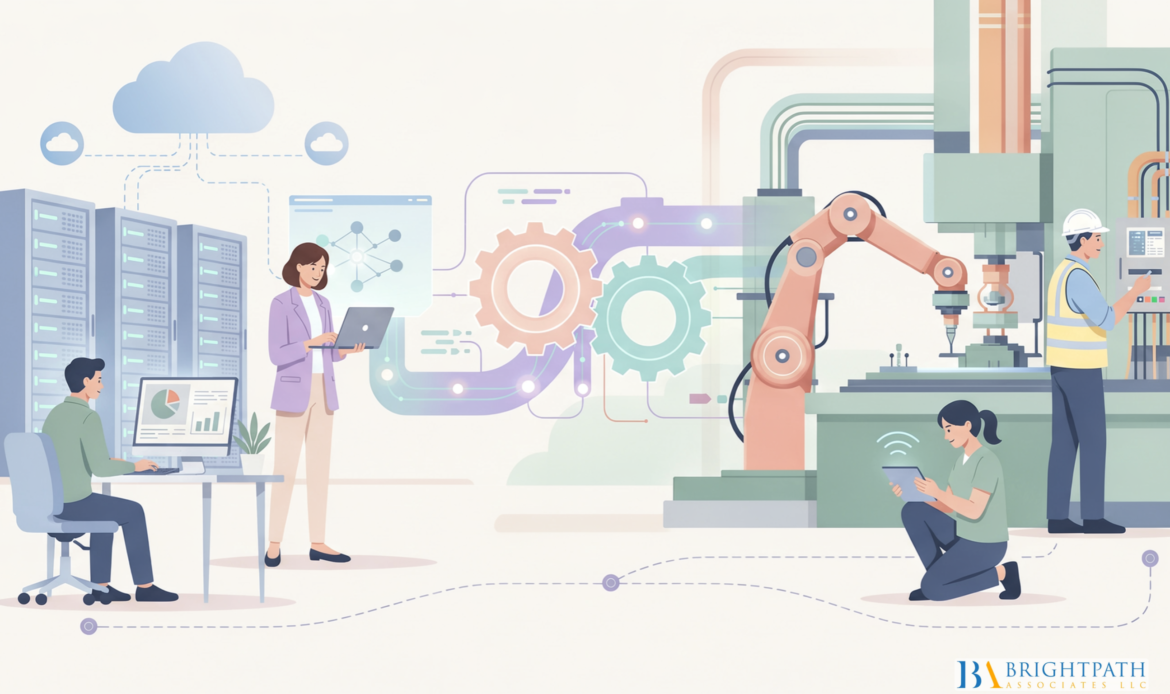
[Bethany, Connecticut – 23 November 2026] – BrightPath Associates has released new industry insights highlighting the growing importance of integrating Information Technology (IT) and Operational Technology (OT) across the US Machinery manufacturing sector. The analysis explores how connecting industrial equipment, production systems, enterprise applications, and digital platforms can improve operational visibility, strengthen cybersecurity, and support long-term manufacturing efficiency. As industrial machinery becomes increasingly connected, the company emphasizes that successful integration requires strategic planning, reliable technology infrastructure, and experienced leadership.
For C-suite executives, IT and OT integration is becoming an important business priority. Machinery manufacturers are investing in connected equipment, industrial automation solutions, cloud platforms, and advanced data systems to improve production performance. However, connecting operational equipment with enterprise networks also introduces challenges involving cybersecurity, system reliability, data management, and production continuity. BrightPath Associates’ latest analysis explains how businesses can manage these challenges while building more connected and resilient manufacturing operations.
Understanding the Importance of IT and OT Integration
Information Technology manages business applications, enterprise data, communication networks, and digital infrastructure. Operational Technology focuses on monitoring and controlling physical equipment, including CNC machines, programmable logic controllers (PLCs), robotics, sensors, and supervisory control and data acquisition (SCADA) systems. When these technologies operate together, manufacturers can gain better visibility into production activities and make more informed operational decisions.
According to the BrightPath analysis, “better information can improve decisions, but a poorly designed connection can expose systems that were never built as ordinary corporate endpoints.” This highlights an important consideration for US Machinery manufacturers. While connected systems can improve production planning and equipment monitoring, businesses must ensure that digital integration does not compromise machine safety, operational availability, or cybersecurity.
For a deeper understanding of these developments, the company’s analysis on Syncing IT and Operational Technology Systems for Better Machinery Integration explores practical approaches to connecting enterprise applications with industrial equipment while maintaining operational control.
Improving Manufacturing Efficiency Through Connected Machinery
IT and OT integration can help manufacturers connect production equipment with Manufacturing Execution Systems (MES), Enterprise Resource Planning (ERP) platforms, and analytical applications. These connections allow management teams to access production information, monitor machine performance, evaluate equipment utilization, and identify operational inefficiencies. Instead of depending entirely on manual reporting, businesses can use accurate production data to support faster decision-making.
For companies involved in Precision machining, connected machinery can provide valuable information about spindle performance, operating cycles, machine alarms, and completed production quantities. This information can support better production scheduling, quality management, and Machinery maintenance. Manufacturers can also identify recurring equipment problems earlier and plan maintenance activities before unexpected failures affect production schedules.
Modernizing Existing Machinery and Managing Investment
Modernizing industrial infrastructure does not always require replacing every existing machine. Many manufacturers continue operating equipment that has delivered reliable performance for years. Integrating suitable legacy machinery with modern technology can provide a practical way to improve production visibility without committing to a complete equipment replacement program.
However, businesses must evaluate compatibility, controller limitations, available communication protocols, cybersecurity requirements, and long-term maintenance costs before beginning integration projects. Even Used machinery can offer valuable production capacity, but older control systems may require additional gateways, security measures, and technical support. Machinery financing and capital expenditure planning can also help executives evaluate the financial impact of modernization projects.
The broader Machinery Industry is increasingly focused on combining established manufacturing capabilities with digital technologies. Companies that approach modernization strategically can improve equipment utilization, strengthen production reliability, and create opportunities for sustainable business growth.
Leadership and Workforce Development for Digital Manufacturing
Successful IT and OT integration depends on more than technology investments. It requires collaboration between IT departments, engineering teams, production managers, maintenance professionals, and cybersecurity specialists. Manufacturing leaders must understand how technology decisions affect physical operations, workforce responsibilities, production targets, and business performance.
This creates new requirements across Manufacturing jobs, particularly for professionals with experience in industrial automation, controls engineering, cybersecurity, data management, and manufacturing operations. Executive search recruitment can help businesses identify senior professionals who understand both traditional manufacturing environments and modern digital systems. For C-suite executives, hiring leaders with cross-functional knowledge can improve project accountability and support successful technology adoption.
BrightPath Associates emphasizes that companies should define their operational objectives before investing in integration technologies. Identifying the right equipment, establishing clear responsibilities, setting measurable performance targets, and preparing employees for new processes can help manufacturers avoid unnecessary complexity. The right combination of leadership, technical expertise, and workforce development can make digital transformation more effective.
About BrightPath Associates
BrightPath Associates is an executive recruitment and talent solutions firm serving businesses across multiple industries in the United States. The company helps organizations identify experienced executives and specialized professionals who can support business growth, operational improvements, workforce development, and long-term strategic objectives. Its mission is to connect businesses with the right talent and help build stronger, more capable leadership teams.
Media Contact:
Name: Corporate Communications Team
Company: BrightPath Associates
Email: media@brightpathassociates.com
Website: https://brightpathassociates.com