
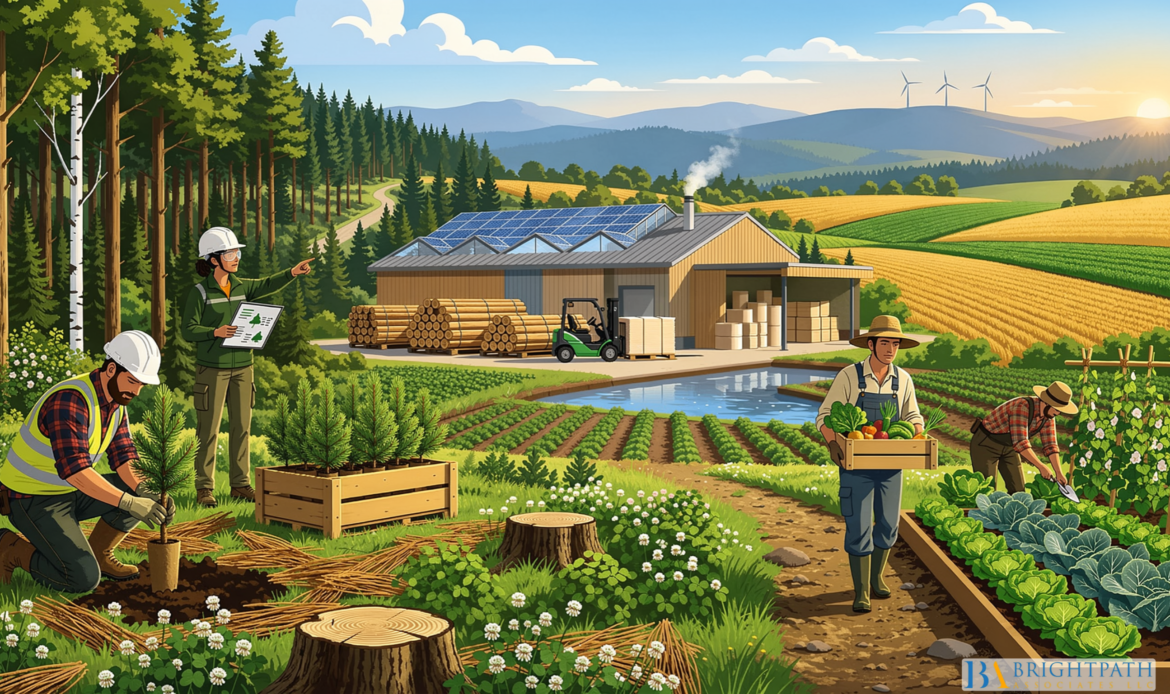
[Bethany, Connecticut – 18 November 2026] – BrightPath Associates has highlighted the growing strategic importance of sovereign agriculture and localized food systems for the United States farming sector. As food supply chains face changing market conditions, climate challenges, labor shortages, and increasing operational costs, agricultural businesses are exploring ways to strengthen regional production, improve food distribution, and reduce dependence on external suppliers. The latest industry analysis explains how agricultural leaders can build more resilient food systems through regional infrastructure, agricultural technology, sustainable farming practices, and stronger partnerships.
For C-suite executives, sovereign agriculture represents more than producing food closer to consumers. It focuses on maintaining greater control over essential food production activities, including agricultural inputs, processing, storage, transportation, financing, and market access. The approach encourages farming businesses to identify supply chain weaknesses and develop strategies that protect long-term profitability while supporting regional food security.
Sovereign Agriculture Strengthens Regional Food Systems
Localized food systems are becoming an important consideration for farming businesses seeking greater operational stability. However, producing food locally does not automatically create an independent or resilient agricultural network. Farms may still depend on distant suppliers for seeds, fertilizers, processing facilities, storage services, transportation, and financial support. These dependencies can create significant challenges when disruptions affect essential operations.
BrightPath Associates’ analysis, “Sovereign Agriculture: Strategic Importance of Localized Food Systems,” explains that “the strategic question is not whether every community can or should produce everything it consumes.” Instead, agricultural leaders should evaluate which critical activities need stronger regional control and where external dependencies create unnecessary business risks.
For US farming executives, this means investing in regional processing facilities, shared storage infrastructure, diversified suppliers, and reliable distribution networks. These improvements can help smaller and mid-sized farms access larger markets while creating opportunities for local food businesses, agricultural service providers, and regional distributors.
The detailed report on Sovereign Agriculture and the Strategic Importance of Localized Food Systems explores how regional control, infrastructure development, and stronger agricultural partnerships can support long-term industry resilience.
Agricultural Technology Drives Modern Food Production
Technology is becoming an important part of building stronger regional agricultural operations. Precision agriculture, automated equipment, advanced sensors, and data analytics allow farmers to monitor crop conditions, manage resources, and improve production decisions. These technologies can help reduce waste, improve productivity, and support more informed farm management.
Similarly, Digital Farming is changing how agricultural businesses manage daily activities. Modern Farm management software helps organizations track crop performance, monitor equipment, manage labor requirements, analyze expenses, and coordinate production schedules. When these systems are integrated into business operations, executives gain better visibility into costs, productivity, and resource utilization.
Organic farming and other sustainable production methods also contribute to localized food systems by supporting responsible land management, soil health, and consumer demand for traceable products. Combining agricultural technology with sustainable farming practices can help businesses balance production requirements with environmental responsibilities.
Sustainable Agriculture Investment Creates New Opportunities
Developing resilient regional food systems requires more than farm-level improvements. It also requires investment in processing facilities, cold storage, warehousing, packaging, transportation, and distribution infrastructure. These capabilities allow regional producers to supply larger buyers, including grocery retailers, restaurants, schools, hospitals, and food service organizations.
BrightPath Associates emphasizes that regional processing and aggregation are important because individual farms may struggle to meet the volume, packaging, food safety, and delivery requirements of institutional customers. Shared facilities can help multiple producers combine their output, improve distribution efficiency, and reach markets that would otherwise remain difficult to access.
For business leaders, Sustainable agriculture investment should therefore focus on measurable operational and financial outcomes. Investments in infrastructure, renewable energy, water management, digital systems, and modern equipment can strengthen agricultural sustainability while creating additional regional economic opportunities.
The broader Farming Industry is increasingly influenced by businesses that can combine traditional agricultural knowledge with modern technology, efficient operations, and responsible investment strategies.
Building a More Resilient Future for US Agriculture
Sovereign agriculture provides a practical framework for strengthening regional food production while improving business resilience. However, success requires more than reducing transportation distances or increasing local sales. Businesses must evaluate critical dependencies, diversify their supply chains, improve processing capacity, and establish reliable relationships with suppliers and customers.
For C-suite executives, the opportunity lies in connecting agricultural sustainability with long-term business performance. Strategic investments in infrastructure, precision agriculture, Digital Farming, and skilled leadership can help create stronger food systems that respond more effectively to economic and environmental challenges.
As the US agricultural sector continues to evolve, organizations that prioritize regional collaboration, operational efficiency, and agricultural innovation will be better positioned to support sustainable growth and long-term food security.
About BrightPath Associates
BrightPath Associates is an executive search and recruitment firm serving businesses across multiple industries in the United States. The company helps organizations identify experienced executives, senior leaders, and specialized professionals who support business growth, operational excellence, and workforce development. Its mission is to connect businesses with the right talent and build strong leadership teams that contribute to long-term success.
Media Contact:
Name: Corporate Communications Team
Company: BrightPath Associates
Email: media@brightpathassociates.com
Website: https://brightpathassociates.com